
87th Alabama Deep Sea Fishing Rodeo Set for July 17-19 on Dauphin Island
The 87th Alabama Deep Sea Fishing Rodeo returns to Dauphin Island July 17-19, adapting its massive weigh-master operation for the summer of 2020.
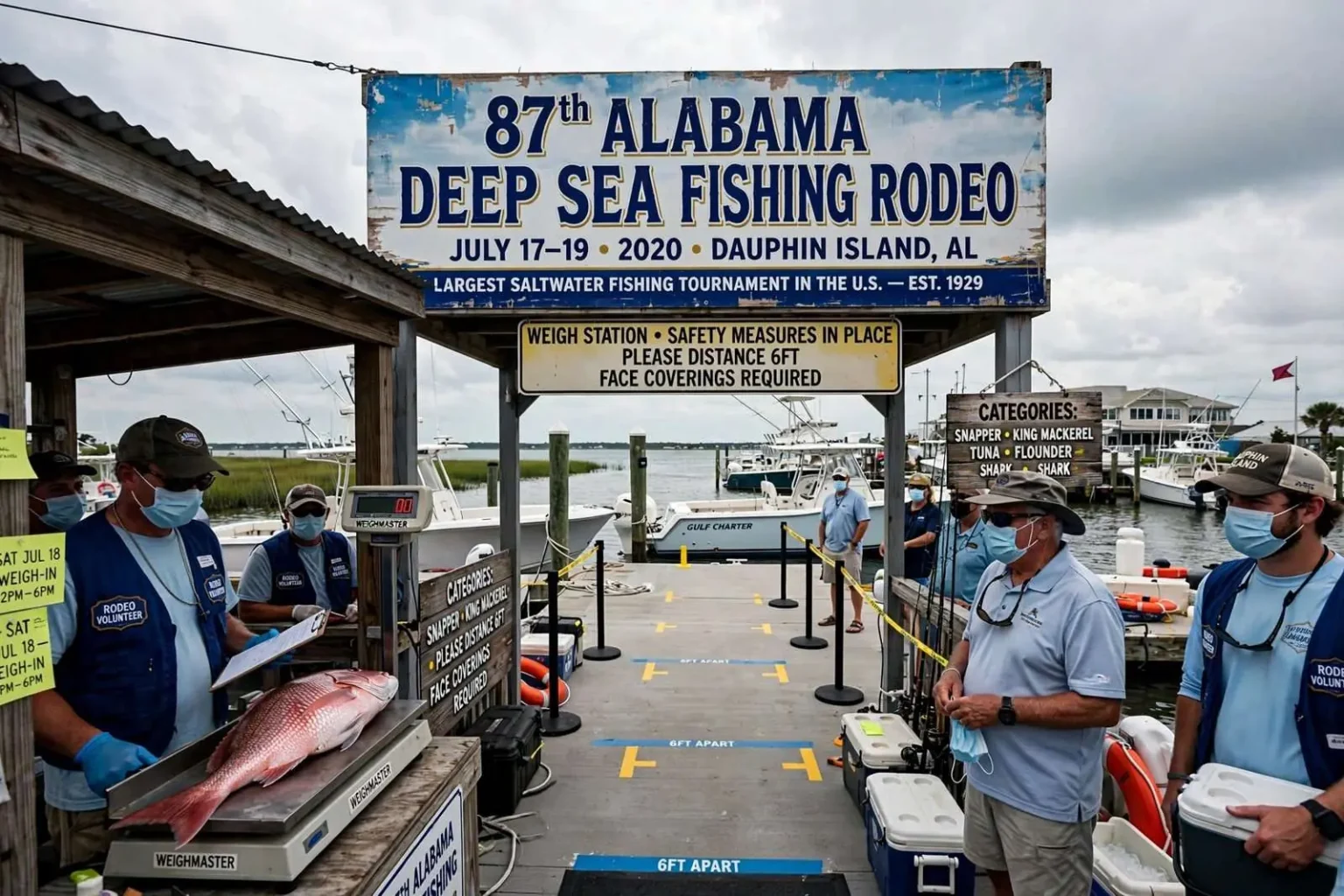
One of the Gulf Coast’s oldest fishing traditions is pressing ahead this summer, with a few changes along the way. The 87th Alabama Deep Sea Fishing Rodeo is scheduled for July 17-19 on Dauphin Island, long billed as the largest saltwater fishing tournament in the United States.
ADSFR board member Richard Rutland offered a preview of what’s different for this year’s edition as organizers adapt the massive weigh-master operation to the summer of 2020, when the coronavirus pandemic reshaped gatherings of every size across the Gulf Coast.
Anglers across the region mark the rodeo as the highlight of the season, drawing thousands of competitors and spectators to the island’s docks each July for three days of weigh-ins, competition categories and waterfront atmosphere. The event’s scale — dozens of categories, hundreds of boats and a continuous stream of fish across the scales — makes it a fixture of the Alabama summer calendar like nothing else on the coast.
A tradition stretching back to 1929
The Alabama Deep Sea Fishing Rodeo first weighed fish in 1929, making it one of the oldest saltwater fishing tournaments in the country. Through nine decades of hurricanes, wars and economic cycles, the rodeo has run nearly every summer on Dauphin Island, growing from a modest contest among local anglers into a regional institution that draws competitors from across the Southeast.
The tournament has long been organized by the Mobile Jaycees, the civic organization whose volunteers have run the event’s operations for generations. The proceeds flow back into community causes, tying the rodeo’s success to charitable work across the Mobile area — one reason the event has kept its broad local support through the years.
Its claim as the largest saltwater fishing tournament in the United States rests on the sheer numbers: thousands of anglers fishing from private boats, charter vessels, kayaks and the island’s shoreline, competing across categories that span nearly every species that swims in the northern Gulf. From snapper and king mackerel to flounder, tuna and shark divisions, the rodeo’s board covers the breadth of Gulf fishing.
The rodeo’s weigh station on the island becomes the center of the fishing world for three days each July. Spectators line the rails to watch the scales as boat after boat brings its catch to the dock, and the biggest fish of each category — hung for display — draw the crowds that make the event as much a spectacle as a competition.
What’s different for 2020
The summer of 2020 forced changes on events of every kind, and the rodeo is no exception. Organizers spent the spring adapting the operation — particularly the weigh-master line, the dense gathering point where anglers, volunteers and spectators crowd together during the peak hours of the weigh-in.
Rutland’s preview of this year’s edition centered on those adjustments, as the board worked to preserve the competition’s essential character while accounting for public health guidance in place across Alabama during the pandemic. The tournament’s volunteers, who number in the hundreds, faced the same questions every large event confronted: how to move crowds safely, how to protect the people running the scales, and how to keep the waterfront experience that defines the rodeo.
The rodeo’s timing in mid-July — after the state’s initial spring restrictions had eased — gave organizers a path to proceed where spring events had to cancel outright. Even so, the edition arriving July 17-19 was shaped by a season in which nothing about running a large public gathering could be taken for granted.
Anglers, for their part, were preparing for a competition that would look familiar on the water and different on the dock. The fishing itself — three days of chasing the heaviest fish in each category across the northern Gulf — carried on as it has for decades, while the crowds and ceremonies around the scales absorbed the year’s changes.
How the rodeo works
The competition is built around weight. Anglers bring their catch to the island’s weigh station, where certified scales and the weigh-master’s crew record the heaviest fish in each category. The structure rewards anyone — a charter captain with a bluewater tuna or a kid fishing off the pier with a category-sized flounder — because the contest is between anglers and the fish, not between fleets.
The category list reaches across the Gulf’s species. Reef fish, coastal favorites, pelagic prize fish and the heavyweight divisions for the largest specimens all carry prizes, and the rodeo’s master angler and junior categories give the event its cross-generational reach. Fishing begins with the tournament’s official start and ends at the final weigh-in on Sunday afternoon, when the last fish across the scales decides the boards.
Rules and registration are enforced with the seriousness of a major sporting event. Entrants fish under the rodeo’s published rules, and the scales operate on a schedule published in advance — details that matter to anglers running from offshore grounds timed against the Sunday deadline.
Science at the scales
One of the rodeo’s less visible roles is its contribution to marine science. Researchers have long used the event’s weigh station as a sampling opportunity, collecting biological data and specimens from the remarkable variety of fish that crosses the scales over three days. For scientists studying Gulf fish populations, the rodeo offers access to species, sizes and samples that would take months of independent fieldwork to gather.
The partnership reflects the rodeo’s standing in the research community — and the Gulf angling culture’s long engagement with the resource. Data gathered at the weigh station has supported studies of fish age and growth, population structure and the health of the Gulf’s fisheries, work that informs the management decisions that shape the seasons anglers fish under.
That cooperative spirit has become part of the event’s identity: the rodeo is at once a competition, a festival and a working snapshot of the northern Gulf’s fish populations, gathered in one place for three days each July.
Dauphin Island plays host
For Dauphin Island, the rodeo weekend is the busiest stretch of the summer. The island’s restaurants, shops and rental properties fill with competitors and their families, and the waterfront fills with boats — from center consoles trailered across the causeway to offshore-capable sportfishers running from the island’s launch points toward the deep water beyond the rigs.
The island’s geography makes it a natural tournament ground. Sitting at the mouth of Mobile Bay with direct access to the Gulf, Dauphin Island gives anglers quick routes to both the inshore grounds of the bay and the reefs and bluewater of the open Gulf. The rodeo’s docks capture all of it: bay boats and offshore rigs weighing in along the same rail.
Local businesses plan their summers around the event, and the island’s year-round residents measure the season by it. Even in a year of changes, the sound of the rodeo — the announcements from the scales, the crowds around the biggest fish, the boat traffic through the channel — is the sound of the island’s July.
The rodeo’s economic and cultural weight
The event’s economic footprint reaches well beyond the island. Hotels, marinas, tackle shops, fuel docks and charter services across Mobile County count the rodeo among the anchors of their summer season, and the influx of visiting anglers rivals the traffic of any holiday weekend on the coast.
Culturally, the rodeo functions as a reunion of the Gulf fishing community. Families fish together on the same boats generation after generation, and the stories told around the weigh station — the one that got away, the record that fell, the storm that nearly ended a Sunday run — are the folklore of Alabama’s coast, renewed each July.
The event’s continuity matters to that identity. An 87th edition means the rodeo has survived the Depression, wars, oil spills and hurricanes, and the decision to press ahead in the summer of 2020 — adapted as needed — follows the same instinct that has carried the tournament through nine decades: the fishing goes on.
Looking toward the weekend
As July 17 approached, anglers across the region made their final plans: registrations, fuel orders, bait runs and weather watching. The three-day format leaves room for strategy — which day to run offshore, which grounds to work, when to be back at the scales — and the leaderboard changes all weekend as heavier fish replace lighter ones in category after category.
Spectators headed for the island found the familiar rhythm of a rodeo weekend, with this year’s adjustments folded into the plan. Organizers urged everyone attending to follow the guidance in place at the weigh station and around the island, the same message carried by large events across the state that summer.
However the boards finished on Sunday evening, the 87th rodeo would carry forward a Gulf Coast tradition that began in 1929 — three days in July when the biggest fish in the northern Gulf come across the scales on Dauphin Island, and the region’s anglers, families and fans gather on the docks to watch, compete and carry the tradition one more year down the line.