Alabama coast lands another $26 million in oil-spill recovery funds
Mobile and Baldwin counties will share nearly $26 million in new Deepwater Horizon recovery funds for coastal habitat restoration and storm resiliency.
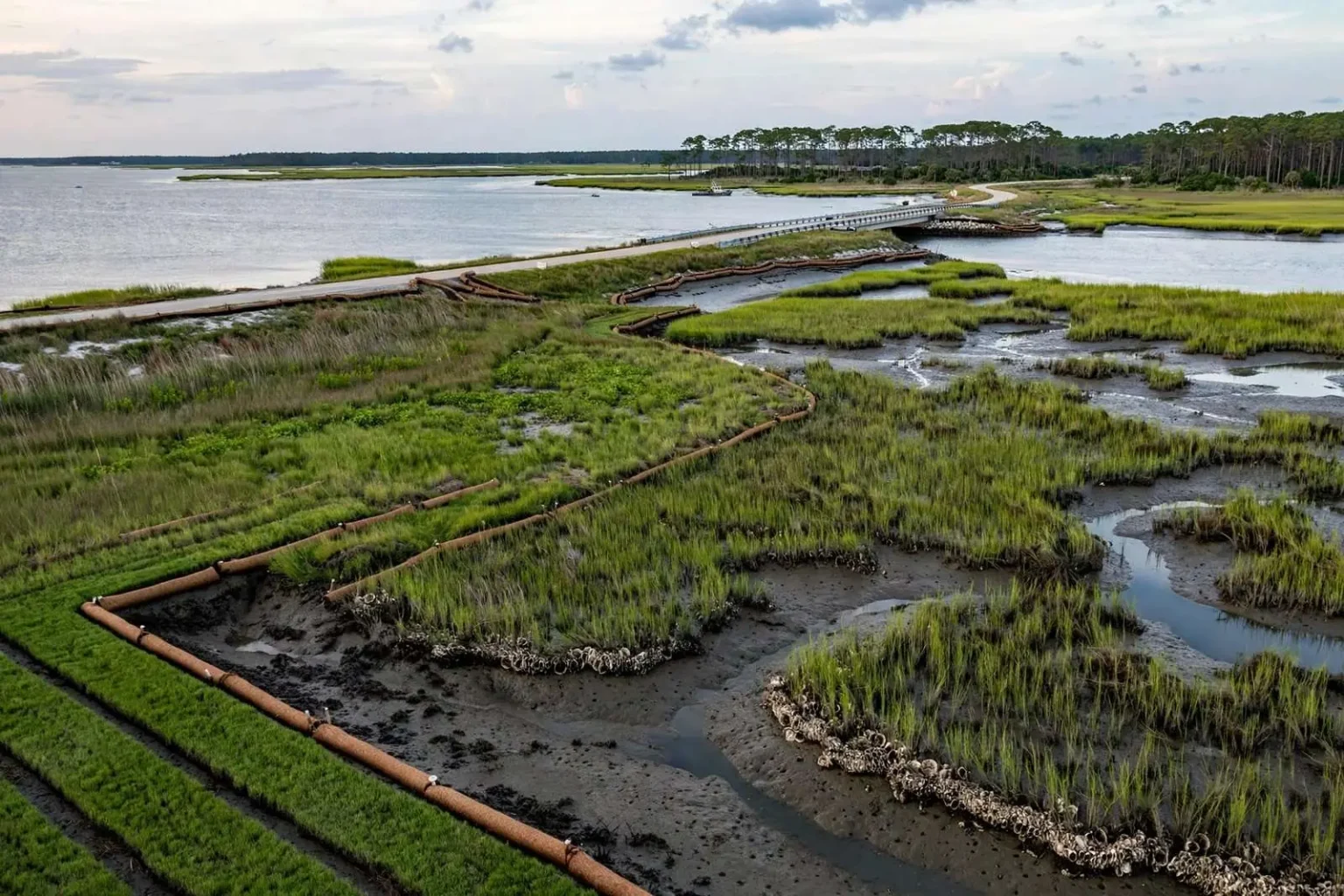
Environmental preservation and remediation projects in Mobile and Baldwin counties have been awarded nearly $26 million from the National Fish and Wildlife Foundation’s Gulf Environmental Benefit Fund, part of a long-term program created to remedy harm from the 2010 Deepwater Horizon oil spill. The awards were announced in a news release from the office of Gov. Kay Ivey, and they mark another installment in the slow, methodical work of translating the spill’s legal settlements into restored coastline.
Thirty-four Alabama projects have now been funded through the program, with a combined value of nearly $241 million. All were selected after extensive consultation with the Alabama Department of Conservation and Natural Resources, which serves as the state’s technical partner in identifying projects that repair the environmental damage of the spill and build resilience against the storms that periodically test the coast anyway.
The Gulf Environmental Benefit Fund was established in the wake of the 2010 disaster, when resolutions of criminal charges against BP and the other companies involved in the Deepwater Horizon blowout committed a combined $2.54 billion to environmental restoration across the Gulf states over nearly two decades. Alabama’s share flows through NFWF to projects chosen with the state’s conservation department, with the intent of restoring habitats — oyster reefs, marshes, dunes, streams and shorelines — that the spill damaged or that protect the coast from the next blow.
“These projects represent a continuation of Alabama’s coastal recovery from the 2010 BP oil spill,” Ivey said in a statement. “They will restore some of what was damaged, while at the same time making our coastal communities more resilient.”
Projects funded in the latest round
Bon Secour River Headwaters Restoration — Phase II ($5.1 million): Improves about one mile of streambank and builds a 70-acre wetland system to treat urban runoff reaching the lower Bon Secour River and Bon Secour Bay. The work targets the top priority identified in the Bon Secour Watershed Management Plan, addressing runoff from the city of Foley, whose growth sends sediment, nutrients and pollutants into the watershed that drains past some of Baldwin County’s most ecologically valuable lands.
Wolf Creek Headwaters Restoration — Phase I ($500,000): Completes engineering and design to improve water quality in the Wolf Creek headwaters, the largest source of sediment runoff into Wolf Bay. Plans call for about 7,000 feet of stream restoration, 36 acres of riparian wetland and a constructed wetland to blunt the impact of rapid development in Foley. Wolf Bay, an estuary behind the barrier island between Oyster Bay and Perdido Bay, has felt the pressure of Baldwin County’s building boom, and restoring the headwaters upstream is the classic first step toward restoring the bay itself.
Dauphin Island East End Beach and Dune Restoration ($1.4 million): Funds engineering, design and permitting to restore nearly a mile of beach and dune habitat on the east end of Dauphin Island. The concept calls for about 1.2 million cubic yards of sand to rebuild the shoreline that storms have stripped away at the island’s eastern tip.
A standout on the causeway
ADCNR Commissioner Chris Blankenship pointed to the Dauphin Island Causeway Shoreline and Habitat Protection Project as a standout among the latest awards. The causeway is the low, narrow road that connects the island to the mainland across Heron Bay, and it has taken a beating from hurricanes and daily wave action for decades, with the shoreline along its north side eroding steadily as storms strip away the marsh and shell berms that once absorbed the Gulf’s energy.
Protecting the causeway is not merely a road project. The shoreline it shelters is a nursery for fish, crabs and shrimp, and the road itself is the island’s only land link — the route residents evacuate on when a storm approaches and the route trucks take to restore power and water afterward. Hardened shorelines and restored habitat along the causeway protect both at once, which is why conservation officials have ranked the project among the coast’s most consequential.
Dauphin Island as a whole has become a case study in coastal vulnerability. The barachois-style barrier island absorbs wave energy for the mainland shore, protects the Port of Mobile’s approach channels and hosts communities that have rebuilt after hurricane after hurricane. Every mile of dune rebuilt on the island’s east end and every stabilized reach of the causeway extends the protection the island provides to the entire Alabama coast.
Why headwaters and runoff projects count as oil-spill recovery
Residents sometimes ask why stream restorations in Foley or wetland construction on Wolf Creek qualify as recovery from an oil spill that touched the beaches and bays, not the headwaters. The answer lies in how the restoration programs were designed: rather than paying for one-for-one repair of every oiled mile, the settlements fund projects that restore the same kinds of habitats and ecological functions the spill damaged, wherever the best return per dollar can be found.
Urban runoff is among the gravest threats to the very estuaries the spill harmed. Sediment from construction sites clouds the sea grass beds that nurseries depend on; excess nutrients feed algal blooms that pull oxygen from the water; and hardened streambanks accelerate every drop of rain toward the bay instead of letting wetlands filter it. Restoring headwater streams and building treatment wetlands addresses those pressures at their source, shoring up the ecosystem from the top of the watershed down.
That logic also explains the mix of award sizes in the latest round — from a $500,000 design grant to a $5.1 million construction phase. Early phases fund the engineering that makes later construction phases possible, and the program’s steady, multi-year rhythm is built around that sequence: study, design, permit, then build.
A catalog of Alabama projects reaching $241 million
With the latest round, the fund’s Alabama portfolio now spans 34 projects worth nearly $241 million — a body of work that reaches into every corner of the two coastal counties. Earlier rounds have funded oyster reef construction in Mobile Bay and its tributaries, marsh and seagrass restoration, dune rebuilding along the Gulf frontage of Gulf State Park, sea turtle and shorebird habitat protection, and land conservation that keeps development from erasing habitat before restoration can reach it.
The program’s managers describe the portfolio as an ecosystem-scale effort rather than a list of separate jobs. Oyster reefs filter the water that marshes need clear; marshes absorb the storm surge that dunes blunt; headwater wetlands keep the sediment out of the bays where the reefs and seagrass live. Each project strengthens the returns of the others, which is why the selection process — run through the Alabama Department of Conservation and Natural Resources in consultation with scientists and local governments — weighs where a project sits in the system, not just what it costs.
What it means for coastal residents
For people who live on the coast, the practical effects of the funding arrive in different forms. Anglers and boaters see it as clearer water and better fishing on Wolf Bay and Bon Secour Bay. Residents of Foley see it as streams that flood less violently and carry less mud after every thunderstorm. Dauphin Islanders see it as a beach and a road with a better chance of surviving the next hurricane season.
The work also sustains an economy that depends on the resource itself. Coastal Alabama’s tourism, commercial fishing and seafood industries all rest on the health of the bays and barrier islands, and every restoration project is, in economic terms, maintenance of the region’s core infrastructure — the natural kind, which is no less real for being made of sand, oyster shell and grass.
The latest $26 million round continues the recovery begun when the spill’s settlements first began flowing, and the program’s long horizon means more rounds are yet to come. For a coast that has absorbed one of the nation’s worst oil spills and a generation of hurricanes, the steady rebuilding of dunes, streams, reefs and shorelines represents the slowest but most durable form of recovery — the kind measured in ecosystems that function again, rather than headlines that fade.
Officials in both counties say the priority now is execution: turning the engineering and design work funded in this round into construction, and turning the construction into habitat that lasts. The nearly $241 million committed to date has bought Alabama a restoration program of real scale; the next several years will show how much of it the coast can bank.
The awards also land at a moment when the pressures on coastal Alabama’s habitat are intensifying rather than easing. Baldwin County’s population growth has pushed subdivisions across watersheds that were farmland a generation ago, and every acre converted to rooftops and pavement sends more runoff toward the bays that the spill settlement is working to heal. The restoration programs and the development pressures are, in effect, racing — which is why so much of the fund’s Alabama portfolio has gone to watershed-scale work upstream of the most sensitive receiving waters.
The long arc of spill money
The Gulf Environmental Benefit Fund is only one of several streams of money created by the 2010 spill, but it has a distinctive character. Administered by the National Fish and Wildlife Foundation, a congressionally chartered conservation nonprofit, it is dedicated to natural resource restoration and is dispensed through a structured, multi-year schedule rather than annual political budgeting. That design was intended to keep the money flowing to long-horizon ecological projects that grant cycles and election calendars tend to starve.
The choice of projects reflects hard lessons from past restoration efforts. Early coastal restoration programs taught planners that building a reef without addressing upstream sediment, or planting a marsh without addressing wave exposure, produces fixes that fail within a few storm seasons. The current generation of projects pairs construction with monitoring, and pairs local habitat work with the watershed management plans that keep the underlying pressures in check — like the Bon Secour plan that identified the Foley runoff the new award targets.
For the conservation department and NFWF, each completed project also builds the track record that supports the next one: engineered designs that can be permitted quickly, contractors familiar with the work, and monitoring data that demonstrates what the investments accomplish. The $500,000 design grant for Wolf Creek is a small line item, but it is the hinge on which a much larger construction phase eventually turns.
What to watch next
In the near term, residents can expect to see engineering teams on Wolf Creek and the Bon Secour headwaters, public comment periods for the Dauphin Island permits, and the early construction milestones of the causeway protection work. Each project will pass through the same gauntlet of design review, environmental permitting and public bidding before ground is broken — the unglamorous machinery that determines whether restoration dollars become restoration.
The larger question — how much additional funding rounds will add to the state’s nearly $241 million total — will be answered in future announcement cycles as the settlement schedule continues to pay out. Conservation officials have consistently described the Alabama program as one of the more disciplined in the Gulf, built around science-based priorities rather than political geography, and the latest awards follow that pattern: the money went where the watersheds and the shorelines needed it, not where the press conferences were held.