
Blind Mule Interview: The Hallers on Growing Up in Mobile’s Music Scene
Blind Mule Interview: The Hallers on Growing Up in Mobile's Music Scene — local South Alabama news from southalnews.com.
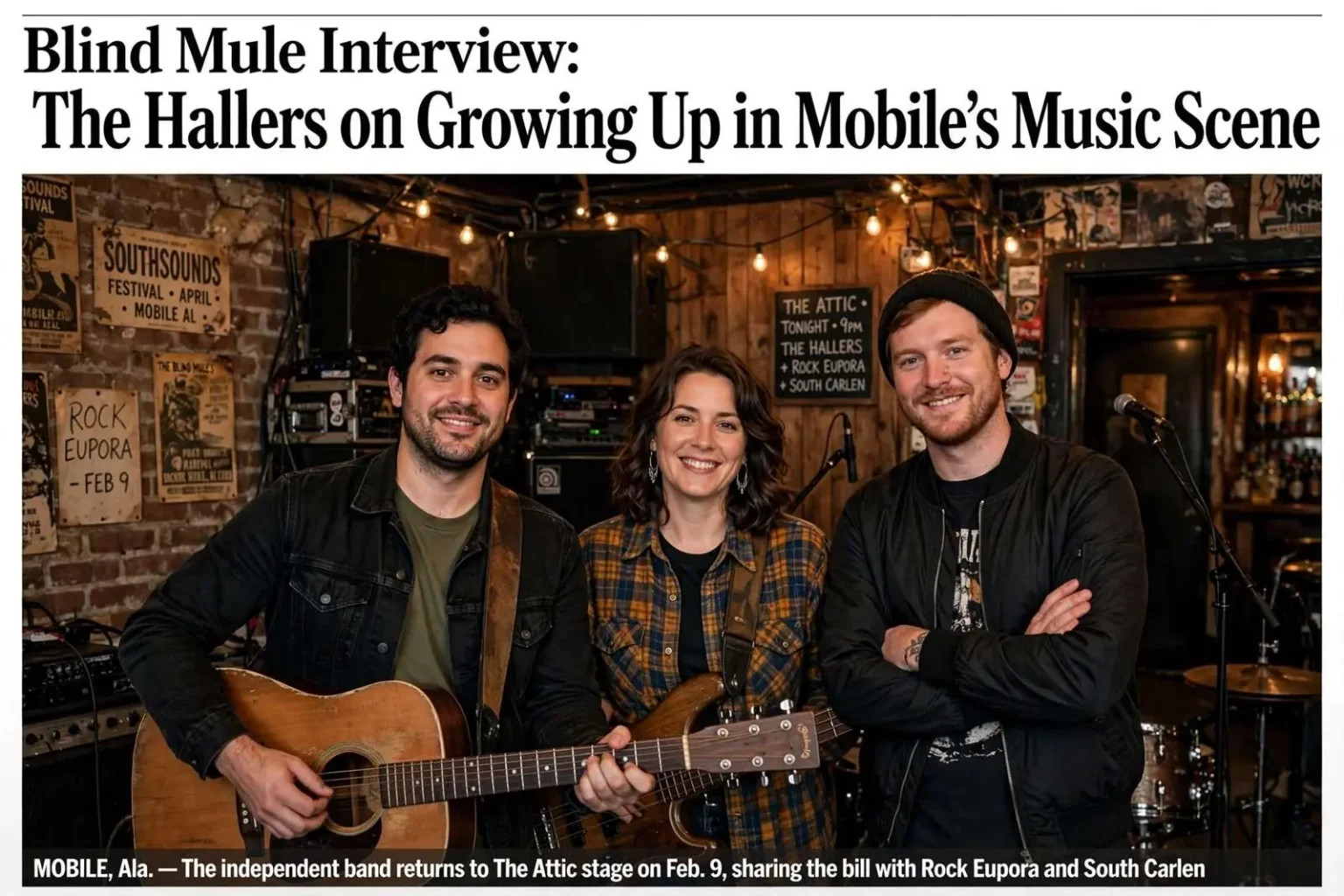
MOBILE, Ala. — The Hallers are fixtures of the Mobile music scene and SouthSounds Festival alumni who have played The Blind Mule Restaurant and Bar many times. The group returns to The Attic stage on Feb. 9, 2018, at 9 p.m., sharing the bill with Rock Eupora and South Carlen — a lineup that bundles three acts from the region’s independent circuit into one night at one of the city’s most reliable rooms for original music.
The Blind Mule, tucked into the Oakleigh Garden Historic District just south of downtown, has built its reputation as both a neighborhood restaurant and bar and a genuine incubator for Mobile music. Its Attic stage — a separate upstairs room — hosts original bands several nights a week, giving touring acts a stop between New Orleans and the Panhandle and giving local bands a home venue with attentive crowds and a sound system built for the purpose.
Mobile’s Scene Has Grown
Lead vocalist and rhythm guitarist Brendan Manceaux said the Mobile music community has grown noticeably over the past couple of years, with a steady stream of talented touring acts and supportive local bands. The growth he describes is visible in the calendar: rooms that once booked cover bands exclusively now fill weeknights with original music, festivals dedicated to regional artists have taken root downtown, and the network of musicians who swap bills and share equipment has thickened with every passing season.
He credited independent venues like Blind Mule with giving smaller acts their first chances to develop. The economics of original music are unforgiving — a young band has no songs anyone knows, no merchandise worth buying and no following to draw — and the venues that book them anyway function as the scene’s infrastructure. A band’s first dozen shows determine whether it survives long enough to get good, and in Mobile those shows happen in rooms like The Attic.
Manceaux encouraged fans to support local bands by showing up to shows, buying merchandise or albums, and sharing links with friends. The advice reflects how independent music actually sustains itself: door splits and merch tables are the revenue, and word of mouth — a shared streaming link, a tag on social media — is the marketing. For bands at the Hallers’ level, a hundred people in a room is the difference between a tour that continues and one that folds.
The Hallers played some of their earliest shows at The Blind Mule and say they would not have reached audiences without that kind of room. The venue’s willingness to book unproven local acts gave the band its start, and the relationship has held through years of returns — the kind of reciprocal arrangement that defines healthy local scenes, where venues and bands grow up together.
A February Bill Worth the Cover
The Feb. 9 show pairs the Hallers with two acts worth knowing. Rock Eupora, the project of Nashville-based songwriter Clayton Waller, layers bright power-pop melodies over fuzzed-out guitars — the kind of act that translates a home-studio catalog into an energetic live set. South Carlen brings its own take on riff-driven rock, and the three-band bill gives Attic regulars a sampler of the region’s independent sound in a single evening, starting at 9 p.m.
Bills like this one illustrate how the regional circuit works. Acts route themselves through neighboring cities, share the burden of drawing a crowd, and leave each show with new listeners. For the Hallers, a hometown date with two out-of-town acts means playing for their own fans and for strangers — the combination that turns a local band into a regional one.
More Blind Mule Shows This Spring
The Attic keeps a busy calendar through the spring, a stretch that shows how much original music the small stage absorbs. North by North, the Chicago garage-rock duo, arrives on Feb. 8 — the night before the Hallers. Doomstress and Beerwolf follow on Feb. 17, a heavier bill pairing the Houston doom-metal outfit with local riffery. The Living Deads, the duo known for its garage-blues stomp, plays March 4. And looming over the whole calendar is SouthSounds Festival in April, the downtown event that assembles dozens of independent acts from across the Southeast for a weekend of showcases.
SouthSounds has become the proving ground for the scene the Hallers describe. Alumni of the festival’s early editions have gone on to wider regional and national attention, and the festival’s showcase format — bands slotted across downtown venues over a single weekend — functions as a launchpad that rooms like The Attic feed year-round. Being a SouthSounds alumnus carries weight on the local circuit, a marker that a band has been vetted by the people who program the festival.
The spring run also demonstrates the venue’s range. In a single month, The Attic hosts power-pop, doom metal, garage blues and hometown indie — a spread of genres that few cities of Mobile’s size support. That eclecticism is deliberate: venues that survive on original music do so by building trust with audiences willing to follow them across styles, night after night.
How Local Scenes Actually Work
What Manceaux describes — showing up, buying merch, sharing links — is the complete economy of a local music scene in three actions. Door money at independent venues typically flows mostly to the bands, especially on self-booked bills, and a merch table can double a night’s take. Streaming pays fractions of a cent per play, which makes the shared link less about royalties than about reach: every friend who hears the track becomes a potential face at the next show. Scenes that thrive are the ones where fans treat these habits as part of going out, and Mobile’s has been building exactly that culture.
The Hallers’ own path shows the timeline. Bands rarely announce themselves fully formed; they assemble from other projects, rehearse in garages and practice rooms, and measure progress in the venues willing to book them. Early slots at a restaurant-and-bar stage mean playing to dining crowds who did not come for the band — an education in winning a room. From there, the milestones accumulate: a headlining date, an out-of-town weekend, a festival slot. The Blind Mule’s role in that first stage is the role every healthy scene needs filled: a room that says yes before the band has an audience.
The reciprocal relationship also runs back to the venue. Bands that cut their teeth in a room become its loyalists, filling the calendar with return dates, subbing onto short-notice bills, and bringing their own followings into the habit of coming out on weeknights. The Attic’s ability to book three solid acts for a Thursday in February depends on that ecosystem — the scene and the venue propping each other up.
The Winter-to-Spring Run
For the bands themselves, a hometown show in February also serves as a tune-up for the festival season ahead. Sets get tightened, new material gets tested on a friendly crowd, and the merch box gets restocked before the spring run of one-nighters. Bands that arrive at a festival showcase prepared — having just played a warm hometown date — tend to stand out, and the Hallers’ Feb. 9 return to The Attic fits that pattern exactly: one more hometown room, one more rehearsal with an audience, and one more chance to pay back the venue that gave them their start.
The stretch from February through the April festival is traditionally the busiest on the Gulf Coast independent calendar. Winter holidays pass, the weather cools enough for comfortable cross-state drives, and bands tour in the months before festival season consumes everyone’s schedules. Venues stack their calendars accordingly, which is why The Attic’s spring list reads like a survey of the regional circuit’s middle tier — established enough to tour, hungry enough to play weeknights.
North by North’s Feb. 8 date, the night before the Hallers’ show, gives the room a back-to-back pairing of guitar-driven acts. The Chicago duo has built a following on relentless touring and a loud, hook-forward sound that fits the Attic’s room. Doomstress and Beerwolf’s Feb. 17 pairing pulls the metal crowd mid-month, and The Living Deads’ March 4 date brings the garage-blues act that has logged thousands of miles on the road circuit through town.
Listeners who want a preview of the Hallers before the show can stream the band’s track “For You,” a ready-made introduction to the outfit’s sound and a small case study in the streaming-as-word-of-mouth model Manceaux describes. A track that circulates before a hometown show converts casual listeners into ticket-holders, and each show converts ticket-holders into the regulars a scene runs on.
For Mobile’s music community, the Feb. 9 bill is both a night out and a statement: three bands, one room, and a venue that keeps saying yes. The Hallers’ return to The Attic — where some of their earliest shows happened — closes a loop that local music depends on, and the spring calendar behind it suggests the loop has plenty of runway left.