
Bond Denied for Mobile Man Charged in Stabbing of His 2-Year-Old Daughter
Curtis Woods remains jailed after bond was denied on an attempted murder charge in the stabbing of his 2-year-old daughter in Mobile.
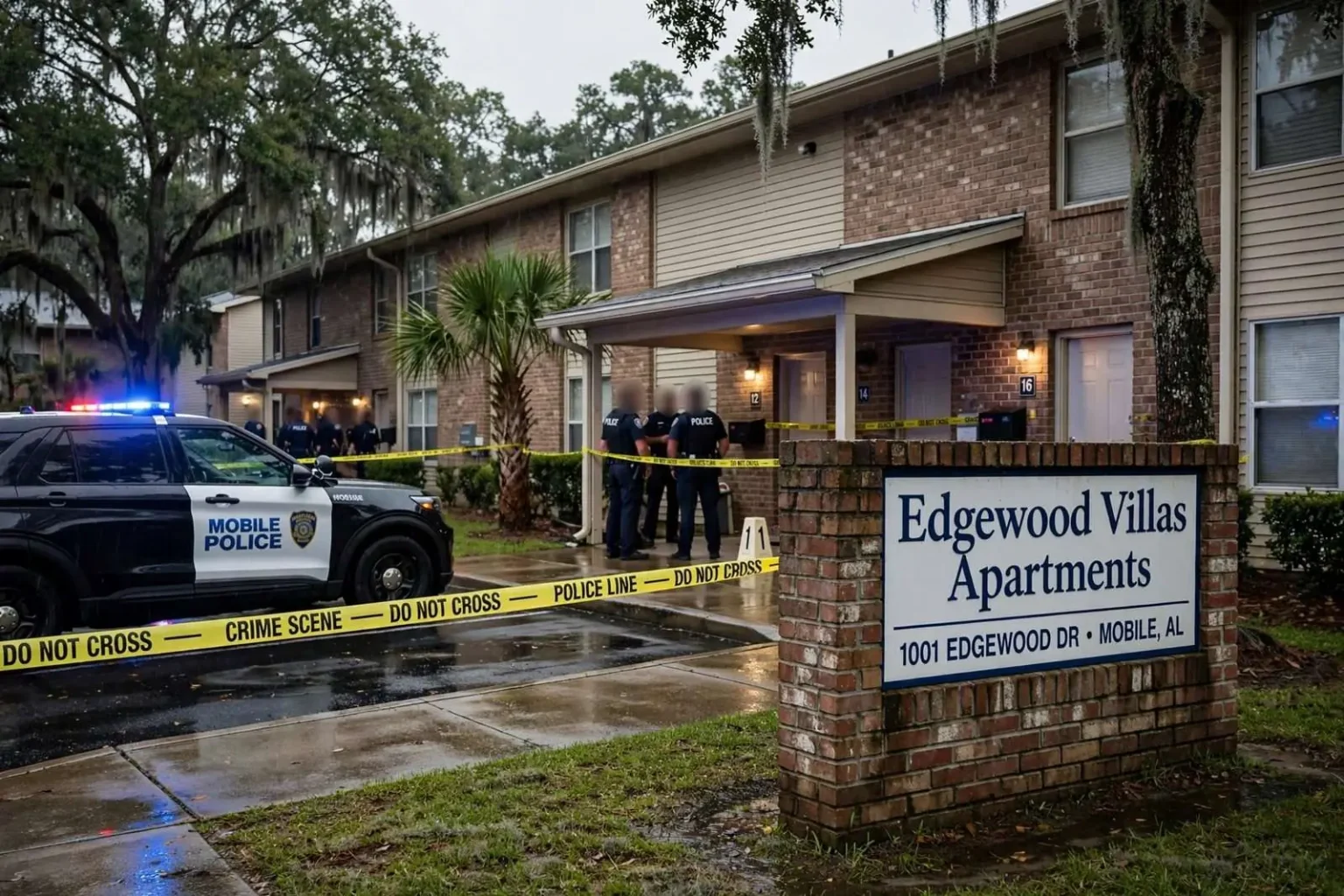
A Mobile man charged with attempted murder in the stabbing of his 2-year-old daughter will remain jailed after a judge denied bond, according to the Mobile County District Attorney’s Office. Mobile police say officers were called to the Edgewood Villas Apartments earlier this week in reference to a 2-year-old girl suffering from a stab wound. When officers arrived, they spoke with the child’s mother, who told police that her husband had stabbed their daughter. Officers located Curtis Woods and took him into custody without further incident, according to the department. The toddler was rushed to a hospital with life-threatening injuries. Her condition has not been publicly updated.
The call brought officers to the Edgewood Villas complex in Mobile on a report that would rank among the most serious any patrol shift receives: a toddler with a stab wound. First responders at scenes like this work against the clock, stabilizing the child for transport while officers secure the scene and account for everyone present. A two-year-old’s small body leaves little margin in trauma care, and the decision to rush her to a hospital as a life-threatening emergency reflected the severity of what officers found.
According to the account police provided, the child’s mother told officers at the scene that her husband had stabbed their daughter. That statement set the criminal case in motion, and investigators moved quickly from the initial response to locating the man identified in it. Curtis Woods was taken into custody without further incident, according to the police department, meaning officers located him and made the arrest without the standoff or additional violence that sometimes accompanies arrests in family-violence cases.
At the bond hearing that followed, a judge denied bond, meaning Woods will remain in the Mobile County Metro Jail while the case proceeds rather than being released pending trial. Bond denial is reserved for the most serious charges and the circumstances judges view as posing an unacceptable risk — a category that in Alabama most often includes capital offenses, cases involving violence against young children, and defendants the court considers a danger to the community or to specific victims.
The case against a young victim’s timeline
Attempted murder charges reflect both the nature of the act alleged and the intent prosecutors believe the evidence supports. In Mobile County, prosecutors present felony cases to a grand jury, which votes on formal indictments; the initial charge and arrest are the first step in that process. Cases involving injuries to young children typically build on medical evidence gathered during the child’s treatment, along with statements from the scene, physical evidence from the apartment, and interviews with everyone who had access to the child.
Child protective involvement runs alongside the criminal case from the beginning. When a child suffers life-threatening injuries in a household, the Alabama Department of Human Resources works with law enforcement to ensure the safety of the injured child and of any siblings in the home, and courts determine placement while the case is pending. The child’s medical progress, which had not been publicly updated as of the initial report, will shape both her own recovery and the charges prosecutors ultimately present.
Bond denial and what it means
Bond in Alabama is set at a hearing where the court weighs the seriousness of the charge, the evidence, the defendant’s ties to the community, criminal history, and the risk of flight or danger to others. Denial is rare in proportion to the cases heard each day, and when a judge denies bond in a family-violence case involving a child victim, it signals the court’s assessment that no set of release conditions could adequately protect the public and the victim’s family. The defense can revisit the question later as the case develops, but for now the defendant stays in custody.
For the family and the neighborhood, the hearing was one step in a case that will unfold over months. The Edgewood Villas community, like any apartment complex after an incident of this kind, is left with questions and with children of their own to reassure. Child advocates stress that the systems now engaged — police detectives, prosecutors, hospital staff, and social workers — are the same ones designed to see a case like this through from emergency response to final resolution.
Violence against very young children occupies a distinct place in the criminal law, and sentences upon conviction reflect that. Attempted murder in Alabama is a Class A felony, in the same sentencing class as murder itself, and cases involving child victims often draw additional attention from prosecutors because of the vulnerability of the victim and the breach of trust involved when the alleged attacker is a parent. A conviction can result in decades in prison, and prosecutors weigh every factor — medical evidence, witness statements, the defendant’s history — before reaching a plea or trial decision.
The arrest without incident, as the police department described it, avoided the complications that can arise when officers must take a suspect in a child-injury case into custody. Negotiated surrenders, arrests at workplaces, and warrant service with the help of family members are common in these cases, and a peaceful arrest spares everyone — including the neighborhood where officers make the contact — the risks of a confrontation. It also reflects the speed of the investigation: the man identified in the mother’s statement was located and in custody within days of the emergency call.
How the community responds
Cases involving injured children draw an outpouring of concern across the Gulf Coast, and they also draw reminders from professionals about what helps and what does not. Sharing accurate information, supporting the family members left to cope, and directing concern into the child-welfare and justice systems that can act are what investigators and advocates encourage. Speculation, harassment of witnesses or relatives, and the circulation of unverified claims can complicate a case that prosecutors must eventually present in court.
The case is also a moment when agencies repeat the reporting pathways that exist for every family under stress. Alabama’s child-abuse hotline operates around the clock and accepts reports from any citizen with reason to believe a child is in danger, and reports can be made anonymously. Domestic-violence services in Mobile, including crisis lines and shelter programs, stand ready for family members who see warning signs and need help planning a response before a situation turns violent.
What comes next
As of the initial report, the toddler’s condition had not been publicly updated, and authorities had not released additional details about the events inside the apartment beyond the account of the emergency call and the arrest. The investigation remains in the hands of Mobile police investigators, with the Mobile County District Attorney’s Office guiding the charging process as evidence develops. Updates in the case are expected to come through court filings and public announcements from the agencies involved rather than from the hospital, which does not release patient information.
The grand jury process in Mobile County convenes regularly, and cases from arrest to indictment typically take weeks to months depending on the completeness of the investigation. If the case is indicted, it will move toward arraignment and, eventually, trial or a negotiated resolution. Bond will remain a live issue as the case proceeds, with any future release decision dependent on circumstances the court can evaluate at that time.
For the two-year-old at the center of the case, the coming weeks will be about medical recovery, with her long-term future shaped by the decisions of the courts and child-welfare agencies acting on her behalf. For the community at Edgewood Villas and across Mobile, the case stands as a stark example of the stakes in child-safety reporting: the systems built to protect children only work when the people around a child act on what they see and hear, and the earliest possible call remains the difference professionals emphasize in every case of this kind.
Anyone with information relevant to the case, or who suspects a child is being harmed anywhere in Mobile County, can contact Mobile police or the state’s child-abuse hotline at any hour. Information leading to the protection of a child is treated with the same seriousness, and the same confidentiality protections, that investigators apply to any report of violence against a victim who cannot speak for themselves.
Pediatric trauma care on the central Gulf Coast gives children like the two-year-old in this case access to intensive-care medicine close to home, and the medical record built during her treatment will be central evidence in the criminal case. The nature of the wound, the surgical response it required, and the recovery timeline all factor into how prosecutors and, eventually, a jury evaluate what happened in the apartment. Medical teams in suspected child-abuse cases coordinate with investigators from the beginning for exactly that reason.
The arrest without incident, as the police department described it, avoided the complications that can arise when officers must take a suspect in a child-injury case into custody. Negotiated surrenders, arrests at workplaces, and warrant service arranged through family members are common in these cases, and a peaceful arrest spares everyone — including the neighborhood where officers make the contact — the risks of a confrontation. It also reflects the speed of the investigation: the man identified in the mother’s statement was located and in custody within days of the emergency call.
Neighbors in apartment communities often ask afterward whether they missed warning signs, and child-welfare professionals use that instinct constructively. Noise, police visits, children left unattended, or a household where an adult seems fearful are all observations worth reporting through the state’s hotline, even without certainty about what is happening. Investigators screen those reports and decide what requires a visit; the report itself costs a caller nothing and creates a record that can be matched with future reports from the same address.