Brewton police officer credited with saving choking child
A Brewton police officer, Sgt. Keyetta Jones, is credited with saving a 4-year-old child who was choking over the weekend after clearing the child's airway.
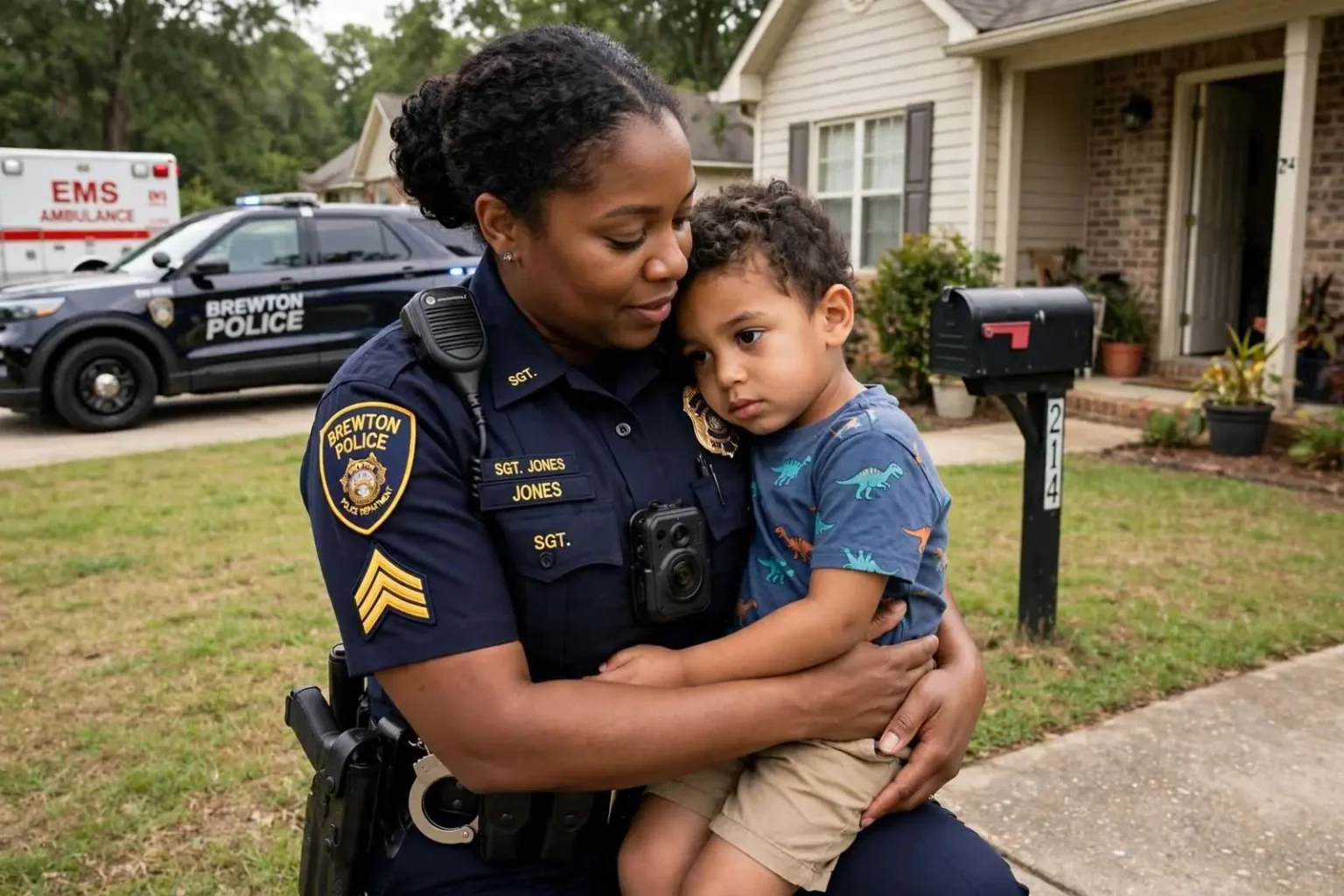
A Brewton police officer is being credited with saving a 4-year-old child who was choking over the weekend. Sgt. Keyetta Jones said she was the first to arrive on scene and quickly acted after she saw the child turning blue. She was able to clear the obstruction from the child’s airway, and the child was able to breathe again.
The weekend call came in as a choking emergency, the kind of incident that ranks among the most time-critical responses police and fire departments handle. Sgt. Jones reached the scene before medics, and by the time she arrived the child’s oxygen deprivation was already showing in the color of the child’s skin. Recognizing that a complete airway blockage was underway, she performed the maneuvers used to dislodge an obstruction and succeeded in clearing the child’s airway, restoring breathing before the ambulance arrived to evaluate and transport the child for further care.
Choking is a leading cause of injury and death among young children, and emergencies involving toddlers and preschoolers unfold in minutes. The response window is short: the brain begins to suffer damage within a few minutes without oxygen, which is why dispatchers send the closest available responder to choking calls regardless of the responder’s specific agency. In Brewton, as in most Alabama cities, that often means a police officer arrives first and must act with the training carried from basic academy instruction and periodic in-service refreshers.
What Happens in a Choking Emergency
When an object lodges in a child’s airway, the body’s response depends on whether the blockage is partial or complete. A child who can cough or speak still has airflow, and bystanders are advised to encourage coughing rather than intervene blindly. A child who cannot cough, cry or make sound has a complete obstruction, and that is when abdominal thrusts, the technique most people know as the Heimlich maneuver, become the appropriate response. For smaller children, responders adjust their technique, using back blows and chest thrusts sized to the child’s body.
The visible signs Sgt. Jones encountered, the blue discoloration that develops as oxygen levels fall, mark the later stage of an obstruction and signal that the child is on the edge of unconsciousness. Once a choking victim loses consciousness, the response shifts to chest compressions and attempts to visualize the airway, which is why speed matters so much in the first minutes. Clearing the obstruction while the child is still awake, as happened in this case, dramatically improves the outcome and often means the child can be released from medical care quickly once checked over.
Common culprits in young children include whole grapes, hot dog rounds, hard candy, nuts, popcorn, and small objects such as toy parts and coins. Pediatric safety guidance urges caregivers to cut food into small pieces for children under four, to require sitting while eating, and to keep small items off low surfaces where toddlers find them. The weekend incident in Brewton is the kind of event emergency physicians cite when they repeat those warnings to parents across the Gulf Coast region.
First Responder Training in Small-City Departments
Officers with the Brewton Police Department, like municipal officers across Alabama, receive first aid, CPR and airway obstruction training as part of their academy curriculum, and many departments reinforce those skills with periodic refresher courses. Some agencies equip patrol vehicles with masks and basic medical kits, and a growing number of officers statewide carry naloxone for overdose calls as well. The expectation in a small city is that any officer can be the first set of trained hands on a medical scene, since patrol cars routinely beat ambulances to calls anywhere in the city limits.
Southern Alabama’s volunteer and municipal ambulance services operate under the same constraints that make police first-response valuable: coverage areas are wide, and response times grow with distance and rural roads. When a patrol officer acts in the gap between the 911 call and the medics’ arrival, outcomes improve measurably, and departments point to saves like this one when they recruit new officers and justify training budgets to city councils.
Emergency physicians who treat near-drowning and choking cases describe a consistent picture of what determines survival: the duration of the oxygen deprivation and the speed of the first effective intervention. Children who receive immediate intervention from someone on scene routinely recover with no lasting effects, while even short delays in clearing an airway can lead to hospitalization. That clinical reality is the reason law enforcement administrators across the state have expanded medical training requirements for patrol officers and why officers are dispatched to medical calls at all, rather than leaving every medical response to fire and ambulance crews.
Recognition in the Community
Departments across Alabama have made a practice of publicly crediting officers who perform lifesaving saves, and for good reason. The recognition matters to the officer, who in the moment acted under pressure with a child’s life in the balance, and it matters to the department, which uses these moments to remind residents of what patrol work actually includes. Behind the enforcement duties that make headlines, the everyday call load of a small-city police department is heavy with medical assists, welfare checks and disturbances, and officers spend much of their time acting as first responders rather than law enforcers in the narrow sense.
In Brewton, where the department serves a city of roughly five thousand people as the seat of Escambia County, an officer’s connection to the community runs deep. The child saved over the weekend will likely grow up in the same town where the save happened, and the families involved will cross paths with the responding officer at school events, ballgames and church. Community policing advocates note that lifesaving responses like this one build the kind of trust between departments and neighborhoods that enforcement actions alone rarely accomplish.
The department has not released details about where the incident occurred or the relationship of the child to the caregivers present, and police generally protect the privacy of young victims in medical emergencies. What the department has confirmed is the sequence that mattered: a fast call for help, an officer on scene within moments, correct recognition of a complete airway obstruction, and quick action that restored the child’s breathing before medics took over.
Why Every Household Should Know the Techniques
Emergency medical agencies in Alabama and nationwide push a consistent message after saves like this one: the person standing next to a choking victim when the emergency begins is almost always a family member or bystander, not a professional responder. That makes civilian training the most valuable link in the chain of survival. CPR and first aid courses are offered regularly through hospitals, county health departments, volunteer fire departments and the American Red Cross across south Alabama, and many courses can be completed in an afternoon. Parents of young children are the most frequent participants, and instructors emphasize hands-on practice with manikins sized for infants and children, since the techniques differ significantly from those used on adults.
Dispatch centers add another layer of help. When a 911 caller reports a choking child, telecommunicators in the region can walk the caller through back blows and thrusts while responders are still en route, and those coached instructions have saved lives in cases where no trained responder was nearby. Emergency managers recommend saving the local dispatch number in phones and keeping the address of the home clearly visible for responders, small steps that shave seconds off every step of the response.
A Season for Extra Caution
Holiday gatherings and weekend cookouts, when tables are crowded with foods young children can gag on and adults are distracted, are statistically the moments when pediatric choking emergencies cluster. Pediatric nurses in the region advise hosts with small guests to keep an eye on snack tables, keep coins and small decorations out of reach, and make sure at least one adult present knows the child choking response. The steps take little effort, and the weekend incident in Brewton shows how quickly the knowledge can matter.
Weekend emergencies also test the relationships between agencies in a small county. Fire and rescue volunteers, county medics and city officers train together periodically across Escambia County, so scenes run smoothly when their calls overlap. A choking call that begins with a police officer and ends with an ambulance crew is the ordinary choreography of rural emergency medicine, and each agency’s role depends on the one before it doing its part fast.
For the family involved in this weekend’s incident, the episode ended with the outcome every caregiver hopes for, a breathing child and a recovery rather than a tragedy. For the department, Sgt. Keyetta Jones’s actions stand as an example of the training and composure the job demands. And for residents of Brewton and the surrounding communities, the incident is a plain-spoken reminder of both the value of quick 911 calls and the difference one trained person can make in the minutes before help arrives.