Chlorine Costs Soar and Lifeguards Run Short as Mobile-Area Pools Open for Summer
A chlorine shortage and lifeguard gap are hitting Mobile-area public pools. Chickasaw stockpiled early; Mobile opens two pools in phases.
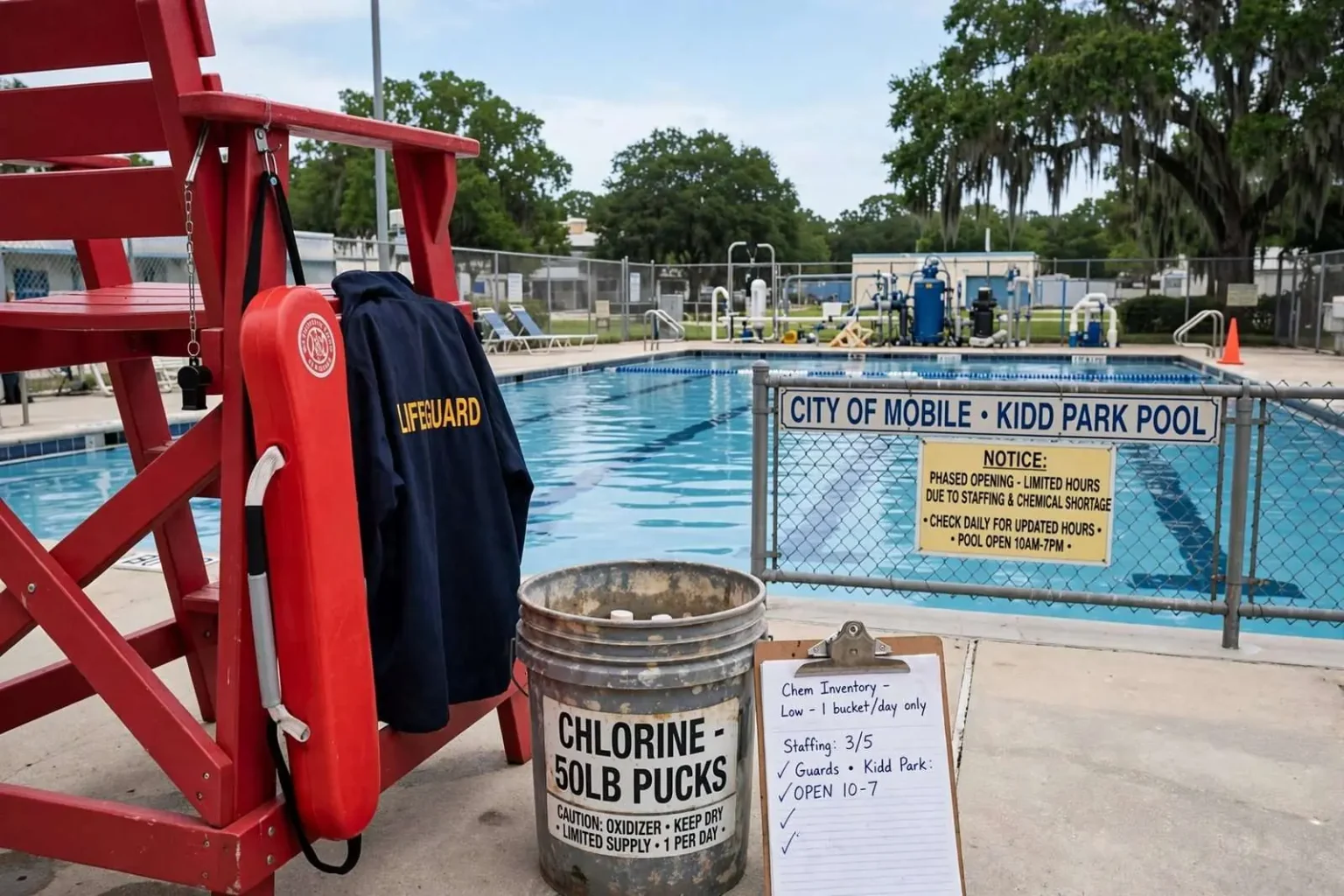
A nationwide chlorine shortage is squeezing public pools across the Mobile area just as the summer swim season gets underway, and lifeguard staffing woes are complicating openings further. The double squeeze has left municipal pool operators juggling two of the most basic ingredients of a safe pool season — sanitizer and supervision — at the same time prices climb and schedules shift week to week.
The shortage traces to a pair of pressures: pandemic-driven demand and the loss of a major chlorine manufacturing plant in Louisiana that was destroyed by fire after Hurricane Laura last year. The combination hit the market just as demand for pool chemicals surged, with millions of families nationwide spending more time at home and treating more backyard pools than usual.
Prices began creeping upward as early as February and have been fluctuating weekly, according to Hunter Burcaw, owner of Mobile Area Pool Management. Burcaw said his company can currently buy only one 50-pound bucket of chlorine pucks per day, while its technicians go through roughly a bucket and a half each week — a gap that forces constant diligence to keep supply lines stocked for the pools his crews service across the area.
The arithmetic means the company can never fall behind. A single missed supply run can leave technicians short of the tablets they need to keep pools sanitized through the brutal Gulf Coast summer, when heat, heavy use and afternoon thunderstorms all push chlorine demand higher. Pool managers have responded by budgeting more time for procurement, spreading inventory across multiple suppliers and, where possible, switching to alternative sanitizing systems.
Why the Shortage Happened
The root of the supply problem lies in the industry’s concentration. A small number of plants produce most of the chlorine tablets sold in the United States, so a single major facility going offline ripples through the entire national supply chain almost immediately. The Louisiana plant destroyed in the Hurricane Laura aftermath had been one of the country’s significant producers, and its loss removed a large chunk of capacity at exactly the moment pandemic-era demand was peaking.
Rebuilding an industrial chemical plant takes years, not months, which means industry observers expect tight supplies and elevated prices to persist through at least another swim season. Distributors have been rationing product to long-standing customers, and smaller operators without contracts have found themselves paying spot prices far above what they budgeted in the winter.
For homeowners with backyard pools, the shortage shows up as empty store shelves and higher tags on the familiar three-inch chlorine tablets that anchor most residential pool maintenance. The National Weather Service’s Gulf Coast heat makes sanitizing especially important here: warm water and heavy use burn through chlorine faster than in cooler climates, and mobile-area pool owners cannot simply skip treatments without risking algae blooms and unsafe water.
Chickasaw Bought Early
The city of Chickasaw, whose pool opened in late May, managed to get ahead of the price spike through early planning and a bit of luck. Recreation superintendent Kathy Couey said the city started hunting for deals at the beginning of the year and found a local supplier willing to sell it its full season’s supply before prices potentially tripled by midsummer.
She noted chlorine is among the most essential costs of operating a public pool — right alongside staff — and without the early buy the city might have faced a choice between paying steep prices or closing the pool. For a small municipality like Chickasaw, where the city pool is a centerpiece of summer recreation for families, neither option was attractive.
The early purchase locked in the chemicals but did nothing to solve the season’s other challenge. Staffing was Chickasaw’s tougher hurdle this year; the city filled its last certified lifeguard position only days before the pool opened. Recruiting lifeguards has become a nationwide struggle, and Gulf Coast cities compete for a small pool of certified young workers who often have multiple summer options.
Lifeguard certification through the American Red Cross requires hours of classroom and in-water training in rescue techniques, CPR and first aid, and many potential candidates lose interest once they see the time commitment. Cities that once ran large applicant pools now find themselves scraping to fill every stand, and some communities have delayed openings or shortened hours when they cannot fully staff their pools.
Mobile Pools Open in Phases
The City of Mobile reported similar difficulties finding enough lifeguards, combined with delays tied to the chlorine shortage. The result was a phased opening for the city’s summer pool program rather than the all-at-once launch residents might have expected in a normal year.
Two city pools — Kidd Park and Dotch Community Center — were set to open from 10 a.m. to 7 p.m., with the remaining pools expected online by the end of the week. The phased approach lets the city concentrate its certified staff at a few locations first, then expand service as more guards finish certification and chemical supplies arrive.
City pools play an outsized role in Mobile summers, offering supervised swimming in neighborhoods where families may not have access to private pools or beach trips. The Parks and Recreation Department’s summer program gives children a safe, structured place to spend hot afternoons, which is why officials treat the openings as a priority even in a difficult year.
What It Means for Local Families
For parents planning the summer, the message from area pool operators is to expect some flexibility in schedules and to check with individual pools about hours before heading out. A pool that opened late may still be ramping up, and special events or staffing gaps can occasionally change daily operations.
Swim lesson programs, which many municipalities run alongside open swim, are also affected by the lifeguard squeeze because the same certified staff who guard the water also teach classes. Families who count on affordable municipal lessons each summer may find sessions filling faster or running with fewer openings than in past years.
The alternative for many families — backyard and neighborhood pools — is where the chlorine shortage bites hardest. Pool supply stores across Mobile and Baldwin counties have imposed purchase limits on tablets and granular chlorine, and regular customers have learned to call ahead before driving across town.
Local pool service companies advise homeowners to take simple conservation steps that stretch limited chemicals: keep pools covered when not in use to slow chlorine loss to the sun, maintain proper water chemistry so every tablet works efficiently, and address algae problems early before they demand shock treatments that consume large amounts of sanitizer at once.
Looking Ahead to the Rest of the Season
Operators across the Mobile area say the season’s biggest uncertainties are supply and staffing, and both could ease as the summer progresses. Chemical production capacity will take far longer to recover, but the most acute price spikes may level off once distributors adjust to the new market and seasonal demand peaks.
On the staffing side, cities typically keep recruiting through the summer as teenagers finish school obligations and become available for work, and the late certification classes that many departments run can add guards mid-season. That means pool hours that look limited in late May and early June often expand by July.
Meanwhile, the experience has taught municipal operators a lesson they expect to carry into next year: order early. Chickasaw’s success in locking in a full season of chemicals at pre-spike prices is likely to become the template across the area, with cities and private operators alike starting their procurement months earlier than they used to.
For now, the pools that are open — from Chickasaw’s early-bought facility to Mobile’s Kidd Park and Dotch Community Center — are doing exactly what Gulf Coast pools are meant to do: giving residents a way to beat the heat safely, staffed by certified lifeguards and kept clean with whatever chlorine the strained supply chain can deliver.
The Bigger Picture on Pool Costs
The chlorine crunch has also changed how operators think about the economics of public swimming. In a typical year, chemicals are one of many line items in a recreation budget; this year, they became the item that could determine whether a pool opens at all. Couey’s warning that chlorine sits alongside staff as the most essential cost of running a pool has proven out across the region, as operators who waited on purchases found themselves choosing between painful invoices and dark, empty pools.
Private pool management firms have absorbed the pressure differently. Companies such as Mobile Area Pool Management service dozens of pools across the area, from apartment complexes to neighborhood associations, and their purchasing limits translate directly into routing challenges: technicians must plan their daily chemical loads around what the supplier will actually sell them that day.
The industry’s response has been innovation out of necessity. Some operators have shifted pools to salt-chlorine generators, which produce sanitizer on site from salt and reduce reliance on purchased tablets. Others have leaned on liquid chlorine, mineral systems or ozone supplementation where their equipment allows. None of the alternatives fully escapes the shortage, since most still depend on chlorine chemistry somewhere in the chain, but each tablet or jug avoided is inventory freed for a pool with no other option.
Through it all, area officials emphasize the basics have not changed: certified lifeguards on the stands, properly balanced water, and supervision of children around the water. Gulf Coast summers are long and hot, and the pools that managed to open — despite a national chemical shortage and a tight lifeguard market — remain among the safest places in the region for families to spend them.