Coast Guard Plucks Three From Life Raft After Boat Fire in Dauphin Island Bay
The Coast Guard rescued three people from a life raft after their sport fisher caught fire in Dauphin Island Bay near Billygoat Hole.
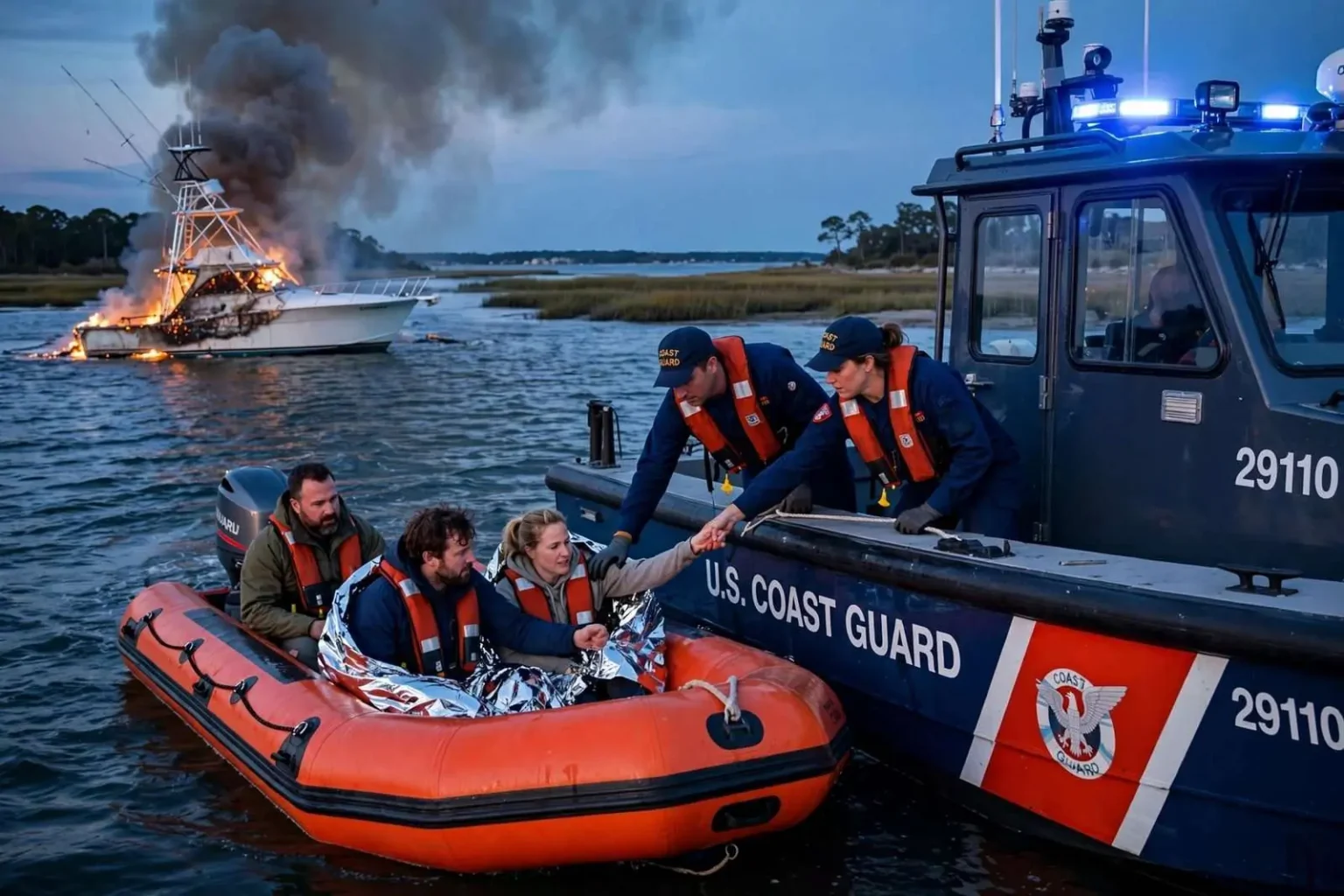
Three boaters are safe after their vessel caught fire in Dauphin Island Bay, forcing them to abandon ship into a life raft while a Coast Guard crew raced to the scene in an evening rescue that showcased the speed of the small-boat station based on the barrier island.
Watchstanders at Coast Guard Sector Mobile received the report at 5:55 p.m. Wednesday: a 36-foot sport fisher was burning about half a mile north of Dauphin Island, near Billygoat Hole, one of the better-known anchorages on the north side of the island. The Sector directed a 29-foot Response Boat-Small crew from Coast Guard Station Dauphin Island to launch, and the crew was underway within minutes of the initial call.
By the time rescuers reached the area at 6:35 p.m., the three people aboard the burning vessel had escaped onto a life raft, and the station crew located them in the water near the drifting boat. Rescuers pulled all three from the raft and carried them back to Station Dauphin Island, where EMS crews were waiting. The boaters arrived in stable condition, avoiding serious injury despite the loss of their vessel.
Dauphin Island Mayor Jeff Collier said all three were reportedly doing well after the rescue, an assessment that reflected the best possible outcome for a fire at sea — everyone off the boat, everyone accounted for and everyone evaluated by medical personnel within an hour of the first distress report.
How the rescue unfolded
The sequence, from the 5:55 p.m. report to the recovery of the crew, moved quickly even by Coast Guard standards. Sector Mobile watchstanders took the initial report, confirmed the position of the burning vessel and issued the sortie order to Station Dauphin Island, the Coast Guard unit responsible for search and rescue coverage in the waters around the island and the approaches to Mobile Bay.
The 29-foot Response Boat-Small is designed for exactly this kind of mission — quick launch, shallow-water capability and the capacity to carry survivors back to shore. Station Dauphin Island’s crews train continuously on fire response, survivor recovery and towing operations, because the waters around the island see heavy recreational traffic, commercial fishing vessels and transient boats moving between Mobile Bay and the Gulf.
Fires aboard boats pose a particularly difficult problem for their crews. A sport fisher carries fuel, electrical systems and often considerable flammable material, and a fire that starts in an engine compartment can engulf the vessel faster than anyone aboard can fight it. That is why Coast Guard officials stress that the decision to abandon ship early — before smoke and flames block escape routes — is often the difference between a rescue and a tragedy.
The three boaters made that call in time. With their life raft deployed, they were clear of the burning hull when rescuers arrived, and their position near Billygoat Hole put them close to the island station rather than far offshore, shortening the rescue run and the ride back.
Fighting the fire after the rescue
The Coast Guard boatcrew also ferried Dauphin Island Fire Rescue firefighters out to the burning vessel so they could battle the fire, a joint effort that used the station’s boat as a fire-fighting platform. Volunteer firefighters from the island’s small department worked the blaze from the water while the Coast Guard crew maintained control of the scene and kept the vessel away from other traffic.
Firefighting on the water is a specialty assignment for a small department, and Dauphin Island Fire Rescue regularly trains with the Coast Guard for marine incidents. The island’s fire department covers a barrier island community surrounded by water on three sides, where boat fires, groundings and medical evacuations from vessels are recurring calls rather than rare events.
The cause of the vessel fire remained undetermined, and no information was immediately available about where the fire started or what conditions were aboard before the first flames appeared. Vessel fire investigations typically examine engine compartment failures, electrical faults and fuel system problems, and the Coast Guard tracks such incidents as part of its recreational boating safety mission.
Billygoat Hole and the waters around Dauphin Island
The fire occurred near Billygoat Hole, a well-known anchorage on the protected north side of Dauphin Island where boaters routinely moor overnight and stage for fishing trips into the bay and the Gulf. The spot sits along the island’s northern shoreline facing Pelican Bay and the mainland shore of Mobile County, sheltered from south winds but open to traffic moving between the island and Aloe Bay.
Dauphin Island Bay and the surrounding waters are popular with anglers, crabbers and recreational boaters year-round, and summer evenings find the anchorage busy with vessels of all sizes. A burning boat in that environment is a hazard well beyond its own crew, which is why the response involved both saving the boaters and managing the drifting vessel before it could threaten others or spill fuel into the bay.
The island’s location at the mouth of Mobile Bay makes its Coast Guard station one of the busiest small-boat posts on the northern Gulf Coast. Station crews handle everything from capsized kayaks and disabled engines to medical evacuations from commercial ships awaiting pilot pickup, and the 40-minute span between Wednesday’s distress call and the recovery of the three boaters reflected the unit’s readiness posture.
Sector Mobile, headquartered in Mobile, coordinates those responses across a sector that includes the port, the bay, the Intracoastal Waterway and the coastal waters of Alabama and northwest Florida. Watchstanders there take the initial distress reports, task the appropriate stations and aircraft, and track every case until it is resolved — the behind-the-scenes work that made Wednesday’s rescue possible.
A reminder for Gulf Coast boaters
The outcome on Dauphin Island Bay illustrates the safety practices the Coast Guard preaches to recreational boaters. The three people aboard the sport fisher had a life raft available and used it promptly, keeping themselves out of the water and visible to rescuers; officials note that rafts, flotation and communication equipment routinely determine whether a vessel fire ends with survivors on a dock or a search for people in the water.
Mariners are encouraged to file float plans, carry working marine radios and keep fire extinguishers serviced and accessible, particularly in engine spaces where most boat fires begin. The Coast Guard also urges boaters to shut off fuel systems and electrical power when a fire is discovered, steps that can slow a fire’s spread during the critical minutes before help arrives.
For the three boaters rescued Wednesday, the loss of the 36-foot sport fisher was a costly ending to a day on the water, but they came through it stable and safe, with Mayor Jeff Collier confirming they were doing well. The cause of the fire remains under review, and the incident stands as a Gulf Coast example of how quickly a routine outing can turn into an emergency — and how quickly a prepared crew and a nearby Coast Guard station can turn it back.
The island’s emergency network
Wednesday’s response demonstrated how Dauphin Island’s emergency resources operate as a single system. The town’s fire department supplied the firefighters, the Coast Guard station supplied the boats and the seamanship, and EMS met the survivors at the dock with medical care already staged. That combination is the product of a small community that has built mutual-aid habits out of necessity, because the island’s geography leaves no alternative when trouble happens on the water.
The island has a long history with such incidents. Fishing vessels, sailboats and recreational craft pass the island constantly, and storms, groundings and fires over the years have given the town’s responders extensive experience with marine casualties. Local officials, including Mayor Jeff Collier, regularly communicate with residents about safety matters on and around the island, and word of a rescue like Wednesday’s spreads quickly through the close-knit community.
The Coast Guard’s response also illustrates the layered search and rescue system along the northern Gulf Coast. Station Dauphin Island handles the immediate waters around the island, Sector Mobile coordinates the wider area, and helicopters and larger cutters stand ready for cases that exceed small-boat capability. A fire close to shore, like the one near Billygoat Hole, sits in the sweet spot where the fast response boat can handle everything from rescue to firefighting support without air assets needing to launch.
Salvage and pollution concerns follow every vessel fire, and officials typically assess the burned hull for fuel and oil that could leak into surrounding waters. The Coast Guard and state agencies monitor such vessels until the hazard is resolved, another layer of the post-rescue work that continues after the survivors are safely ashore.
For boaters who frequent Dauphin Island Bay, the episode was a visible demonstration of the emergency response they can expect in those waters — and of the equipment decisions, like carrying a life raft, that give a crew a fighting chance when a fire takes hold of a vessel at anchor.