
Cold Snap Drives More People to Shelters Across Mobile and Pensacola
Near-freezing nights in Mobile and Pensacola are driving a surge in shelter demand, with Waterfront Rescue Mission reporting up to 15% more people seeking.
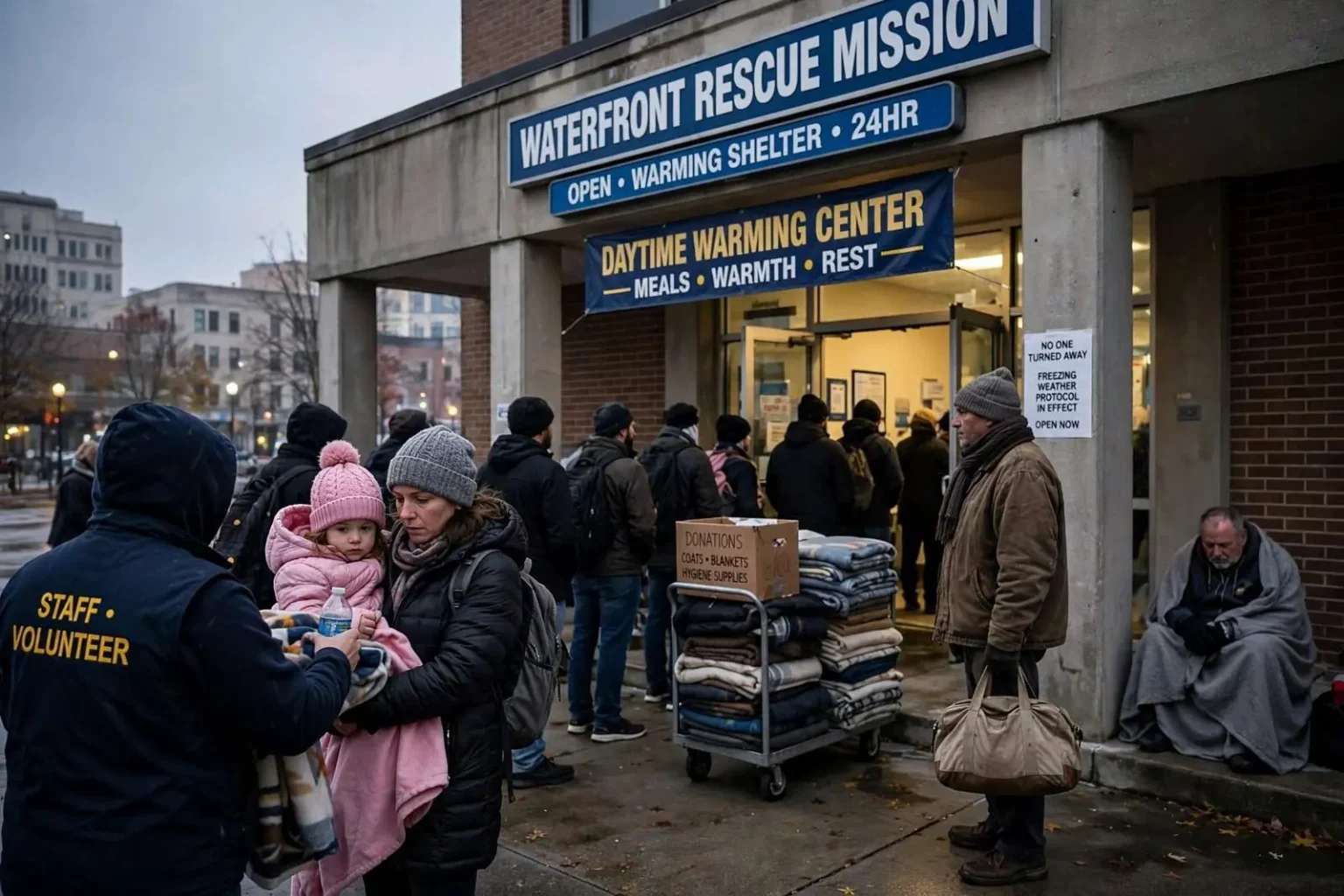
A second consecutive night of near-freezing temperatures is straining shelter capacity across the Gulf Coast, with more people in need seeking warmth at rescue missions in Mobile and Pensacola. On a windy Sunday in downtown Mobile, residents layered up against the chill as overnight lows hovered just above freezing. For the area’s homeless population, the cold is more than an inconvenience — it pushes many indoors for the first time in months.
The Gulf Coast’s relationship with cold weather is unlike anywhere else in the country. Winters here are short and mostly mild, which means the region’s shelter infrastructure — and its population of people who live outdoors — is not built for sustained freezes the way northern cities are. When an arctic air mass slides down the plains and into the Deep South, temperatures can fall from the 60s to below freezing in a matter of hours, and the people least equipped to respond — those without reliable shelter, warm clothing or transportation — feel it first and hardest.
That is precisely what has been unfolding. The Waterfront Rescue Mission, which operates facilities in both Mobile and Pensacola, reported a jump of up to 15 percent in demand on colder nights, housing roughly 130 men across its two locations. The Mobile site has also broadened its daytime programs to keep services available beyond overnight beds, so that men who would otherwise be out in the wind and cold during the day have somewhere warm to stay until the overnight intake begins.
‘We Are No Strangers to Weather Issues’
Mission President Clay Romano said the organization has seen increased traffic from men, women, mothers with children, and small families as temperatures drop. “We’re always prepared for these situations,” Romano said. “We are no strangers to weather issues and we’re prepared to take on additional individuals to the missions.”
That preparedness is the product of a long institutional history. Waterfront Rescue Mission has served the Gulf Coast for generations, operating in two cities that share the same weather patterns and the same seasonal rhythms of need. The mission’s staff know the cycle by heart: demand holds steady through the fall, spikes with the first real cold snap, and stays elevated through the winter months, with the worst nights — the ones where the wind strips the Gulf’s usual humidity out of the air and the mercury dips well below freezing — producing lines at the door.
The people arriving with the cold do not fit a single profile. Some are the long-term homeless men the mission serves year-round, men who camp in woods and vacant lots around the two cities and normally make it through mild stretches without help. Others are newly displaced — workers who lost a room when a job ended, families doubled up with relatives who have run out of space, mothers with young children for whom a night in a car is no longer survivable when the temperature reaches the freezing mark. The mission’s intake has to be ready for all of them, and Romano said the staff has seen each group come through the doors as the cold has settled in.
Sheltering families presents its own logistics. Facilities built around dormitory-style quarters for single men must find separate, appropriate space for women and children, and the mission’s two-city structure gives it flexibility to move resources toward whichever location is seeing the heaviest demand. The roughly 130 men housed across Mobile and Pensacola on cold nights represent only the beds actually filled; the behind-the-scenes work — extra meals, extra blankets, added mats on floors when beds run out — scales with every degree the temperature drops.
Bracing for a Long Winter
Romano said cold-weather surges are a familiar pattern along the northern Gulf Coast, where brief but sharp freezes can catch vulnerable residents off guard. The mission keeps extra capacity in reserve so no one is turned away during dangerous cold snaps.
That no-turn-away policy is the operational backbone of the mission’s cold-weather response. Shelters that run at or near capacity on ordinary nights have to create space when a freeze arrives, and Waterfront does it the way missions across the South have always done: mats and cots in meeting halls and common areas, extended hours, and staff and volunteers rotating through to keep watch overnight. The 15 percent surge the mission reported is within the range its facilities can absorb, but the margin narrows with each additional freezing night in a row — which is why the second and third nights of a cold snap, not the first, are when the strain really shows.
The pattern along the northern Gulf Coast is well documented: freezes here tend to arrive in short, sharp bursts — a week or ten days of cold sandwiched between stretches of Gulf-influenced mildness — and each burst catches someone unprepared. Pipes burst, heating systems fail in older homes and apartments, and the people living at the margins of the housing market are the first to lose their footing. Emergency rooms and first responders see the other side of the same weather event, treating hypothermia cases that often involve people who tried to ride out the cold outdoors.
The risk is amplified by wind. A night that hovers just above freezing in calm conditions can feel far colder when a steady north wind blows down Mobile Bay and across the open blocks of downtown, stripping away body heat and making exposure genuinely dangerous. Sunday’s downtown Mobile weather — windy, with lows near the freezing mark — was exactly the combination that drives people indoors, and the mission’s doors reflected it by nightfall.
How to Find Help During a Freeze
Local officials encourage anyone needing shelter during freezing weather to contact area rescue missions or dial community assistance lines for the nearest warming location. In Mobile and Pensacola, the united way’s community assistance line can point callers to open beds, and police officers and first responders routinely transport people to shelters when they encounter them in the cold during their rounds.
Residents can also help. Missions like Waterfront run on donations of blankets, coats, hygiene items and cold-weather supplies, and winter is when those shelves empty fastest. Volunteers are needed for meal service and overnight support during cold snaps, and financial donations give mission staff the flexibility to buy what is actually needed as demand shifts night to night. Officials also urge residents to check on elderly neighbors and anyone living alone during freezing weather, since the same cold that fills shelter beds endangers seniors and people with medical conditions in their own homes.
For now, the forecast — not the calendar — determines the mission’s workload. As long as overnight lows hover near freezing across the two cities, Waterfront Rescue Mission will keep its extra capacity open, its daytime programs running and its doors unlocked, preparing for the long winter the way it always has: by planning for the worst nights and taking everyone who comes in from the cold.
The daytime programs the Mobile mission has broadened matter as much as the beds. Homelessness does not pause between sunrise and intake, and a person with nowhere to go faces a long, cold, wind-whipped day before any shelter opens in the evening. By keeping daytime services running — meals, warmth, restrooms, and a place to sit — the mission closes that gap and reduces the incentive for people to remain outside all day, which is when much of the weather-related harm actually happens. Outreach teams and street ministers across the two cities perform the same function for those who will not come inside, handing out coats and blankets and encouraging holdouts to come in before the temperature falls.
The connection between cold weather and health outcomes is stark. Exposure drives hypothermia, worsens chronic conditions, and turns minor injuries into serious ones for people living outdoors; respiratory illness spreads quickly in crowded quarters even as the cold pushes people inside. Shelter operators walk that line every winter — taking in everyone they can while managing the sanitation and spacing that keep a full house healthy. Decades of operating through Gulf Coast winters have taught the mission’s staff how to run a building near capacity without letting it tip into crisis, which is precisely the experience Romano was pointing to when he said the organization is prepared to take on additional individuals.
A Regional Network Under Pressure
Waterfront is not the only organization activated by the cold. Salvation Army facilities in both cities, church-based warming programs that open on the coldest nights, and the region’s homeless service nonprofits all see demand rise together, and they coordinate informally when one location fills. The winter surge also draws attention to the longer-term work those agencies do — case management, transitional housing, and the day-to-day effort of moving people from the street to stability — which continues after the weather warms and the emergency numbers fall back to baseline.
For the men, women and children who came through the mission’s doors during this freeze, the immediate arithmetic was simple: temperatures near freezing with a biting wind outside, and warm beds, hot meals and staff who expected them inside. The mission’s count of roughly 130 men across Mobile and Pensacola — up as much as 15 percent on the coldest nights — is the kind of number that stays modest until the night it doesn’t, and the reason the organization keeps extra capacity in reserve is that on the Gulf Coast, the next sharp freeze is never more than a cold front away.


