
Creola house fire destroys home, no injuries reported
A house fire in Creola destroyed a home on Wednesday. Creola and Satsuma fire departments responded, and no injuries were reported.
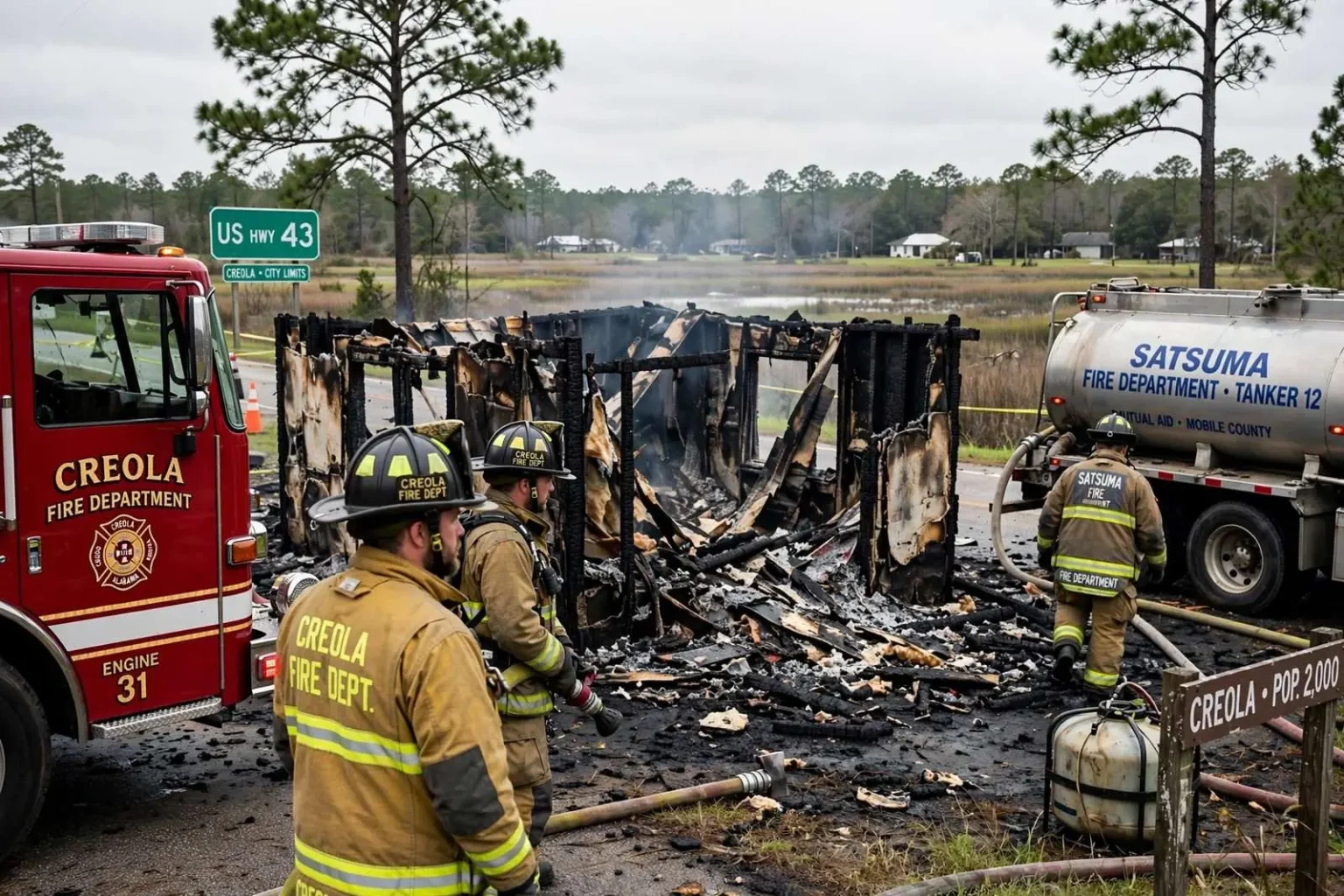
CREOLA, Ala. — A house fire in Creola destroyed a home Wednesday, but no one was hurt, according to local fire officials. The blaze left the residence a total loss, though crews were able to keep the flames from spreading beyond the structure and no injuries were reported among residents or responding firefighters.
The Creola Fire Department responded to the blaze and found flames heavily visible at the residence when units arrived. Firefighters launched an initial attack on the fire, working to knock down the main body of flames while assessing the structure and confirming that everyone was clear of the building. After that initial attack, crews called in the Satsuma Fire Department to provide additional water supply, a routine but essential step in rural portions of Mobile County where public hydrants are limited.
The home did not withstand the fire and was ultimately destroyed. Officials confirmed that no injuries were reported. The names of the residents were not released, and details about the cause of the fire were not immediately available in the initial report.
A fast-moving response in north Mobile County
Creola sits along U.S. Highway 43 in the northern reaches of Mobile County, a small city of roughly 2,000 residents tucked between the Mobile River delta wetlands and the growing suburbs to the south. The city’s fire department protects a mix of older neighborhoods, rural acreage, and commercial property along the highway corridor, and like many small municipal departments in south Alabama, it relies heavily on trained volunteer and combination staffing to cover calls around the clock.
When a fire reaches the point that flames are visible from outside the structure on arrival, the first minutes of the response are critical. Crews must simultaneously confirm that no one is inside, establish a reliable water supply, and begin attacking the fire before it extends into attics, wall cavities, or nearby structures. Heavy visible fire on arrival often means the interior has already been compromised, which narrows the window in which a home can be saved.
The decision to call for additional water supply early in the incident reflects the practical realities of fighting structure fires outside Mobile’s urban core. In neighborhoods without pressurized public hydrants, the first engine on scene carries only the water in its tank — typically 750 to 1,000 gallons, which can be exhausted in a matter of minutes when flows needed for a working house fire run to several hundred gallons per minute. Once that initial tank water is gone, the operation depends on tankers and relay lines feeding the scene.
Why mutual aid matters here
That is where mutual aid agreements come in. Departments across north Mobile County — including Creola, Satsuma, Saraland, Axis, and the volunteer companies that serve the unincorporated communities between them — maintain standing arrangements to send apparatus and personnel to neighboring jurisdictions when called. The system is informal in the sense that a radio request brings the help, but it is backed by years of coordinated training, compatible hose fittings, and a shared understanding of who covers which area when units are committed elsewhere.
Satsuma, the neighboring city to the south along Highway 43, responded to the request for additional water supply in Wednesday’s fire. Shuttle operations of that kind typically involve a tanker filling at a distant hydrant or drafting source, hauling water to a portable drop tank at the scene, and returning for another load in a continuous cycle. Each rotation keeps a steady supply moving into the attack engines even when the fire ground itself sits miles from the nearest reliable water main.
Fire officials across the region consistently point to water supply as one of the deciding factors in whether a rural or small-town house fire ends in a saved structure or a total loss. A working fire can consume tens of thousands of gallons before it is brought under control, and no single engine carries anything close to that amount. The willingness of neighboring departments to answer a call within minutes of the request is often the difference between confining a fire and losing the building entirely.
For the family whose home was destroyed, the aftermath of a fire like Wednesday’s extends far beyond the hours crews spend on scene. A total-loss house fire typically means the loss of clothing, furniture, documents, keepsakes, and in many cases transportation and pets’ belongings along with the structure itself. Displaced residents in situations like this commonly turn to family and neighbors for immediate housing while insurance carriers and, where applicable, disaster assistance organizations help with longer-term recovery needs.
Local fire officials urged residents in Creola and surrounding communities to take basic precautions that dramatically reduce fire risk in the home. Working smoke alarms remain the single most effective life-safety tool available to households — alarms should be installed inside each sleeping room, outside each separate sleeping area, and on every level of the home, and they should be tested monthly. Batteries should be replaced at least once a year, and any alarm older than ten years should be replaced outright, because sensor reliability degrades with age even when the unit appears functional.
Common causes and what residents can do
National fire data has shown for years that the leading causes of home fires include unattended cooking, heating equipment placed too close to combustibles, electrical distribution problems, and improperly discarded smoking materials. Cooking fires in particular spike during evening hours and holidays, and a stovetop fire can spread to cabinets and upper structure within minutes if a lid and a functioning extinguisher are not immediately at hand.
Fire safety specialists recommend that every household maintain a fire escape plan with two ways out of each room and a designated meeting place outside, and that families practice the plan at least twice a year. In a working structure fire, occupants typically have only two to three minutes from the activation of a smoke alarm to escape before conditions become unsurvivable — a window that has shortened dramatically in recent decades as modern furnishings burn hotter and faster than older materials.
Space heaters deserve particular caution during the cooler months that stretch through south Alabama’s winter. Heating equipment should sit at least three feet from curtains, bedding, upholstery, and paper, should never be left running while occupants sleep, and should be plugged directly into wall outlets rather than extension cords or power strips. Chimneys and wood stoves, common in the rural portions of the county, should be inspected and cleaned annually.
Residents were also reminded that once a fire starts, the priority is evacuation rather than suppression. Belongings can be replaced; people cannot. Closing doors behind escaping occupants slows fire spread and buys time for arriving crews, and no one should ever re-enter a burning structure for pets, documents, or valuables.
What comes next in the investigation
As with most structure fires, investigators will work to determine where the blaze originated and what caused it. Origin-and-cause work typically involves examining burn patterns, interviewing occupants and witnesses, and ruling out accidental, natural, and potentially criminal explanations. In Mobile County, smaller departments frequently request assistance from the state fire marshal’s office or from neighboring departments with dedicated investigators when a fire involves a total loss or a fatality.
The findings matter for practical reasons beyond closure for the family. Insurance claims generally require a documented cause, and patterns from local fires inform public education campaigns — if a cluster of heating-related fires emerges each January, for example, departments can target their outreach accordingly. When investigators conclude a fire was intentionally set, the documentation becomes the foundation for prosecution.
Homeowners were encouraged to photograph damaged property before cleanup begins and to keep receipts for any expenses related to temporary housing or replacement essentials, steps that streamline both insurance adjustments and applications for aid. Local congregations, civic clubs, and neighborhood groups in small communities like Creola frequently organize donations of clothing, furniture, and household goods for fire families in the days after a loss, and school officials typically step in quickly when affected students need supplies or transportation support. Residents who want to help were advised to coordinate through established organizations rather than collecting items informally, which can overwhelm a family’s temporary space.
Wednesday’s response also underscored the value of the regional system that supports small departments. The Creola Fire Department’s ability to summon the Satsuma Fire Department for water supply mid-incident, without delay or negotiation, is the product of exactly the kind of cooperation that south Alabama’s smaller fire services have built over decades. No injuries were reported, the fire was brought under control, and the surrounding properties were protected — outcomes that the region’s fire chiefs consistently attribute to that mutual readiness.
South Alabama News will provide updates on this story as additional information becomes available from the Creola Fire Department and Mobile County officials.