Dauphin Island Named One of the Best Hidden Beaches in the U.S.
Fodor's Travel named Dauphin Island one of the 13 best hidden beaches in the U.S., the only Alabama beach on the list.
Dauphin Island has earned a spot on Fodor’s Travel’s list of the 13 best hidden beaches across the United States, the only Alabama beach to make the cut and one of just three recognized in the Southeast. The nod from a publication that has shaped American travel plans for generations puts the little barrier island in company it rarely shares with the Gulf Coast’s bigger-name destinations. For a town of barely more than a thousand residents at the mouth of Mobile Bay, the recognition lands as both an honor and, residents know, a bit of a double-edged sword — the very qualities that earned the listing are the ones locals hope a little fame won’t wear away.
The travel guide, which has offered expert trip advice for more than 80 years, also included Crescent Beach in Sarasota, Florida, and Shell Key Preserve in St. Petersburg, Florida, among its picks. That Southeast trio leans toward quiet stretches of sand rather than resort strips, and Dauphin Island fits the mold. There are no high-rise condominium towers lining its shore, no amusement parks, and no traffic jam on the causeway into town. What visitors find instead is a working fishing village wrapped around some of the most naturally beautiful — and least developed — beachfront on the northern Gulf Coast.
A quiet island 45 minutes from the city
Dauphin Island sits about 45 minutes from Mobile and is home to roughly 1,300 permanent residents — a stark contrast to the larger crowds at better-known Alabama destinations like Orange Beach and Gulf Shores. The island is reachable by a single bridge over the Intracoastal Waterway and Mobile Bay, which keeps through-traffic low and the pace slow. Where the beach towns to the east measure their summers in parking shortages, Dauphin Island measures its in tide changes, and the difference is exactly the point.
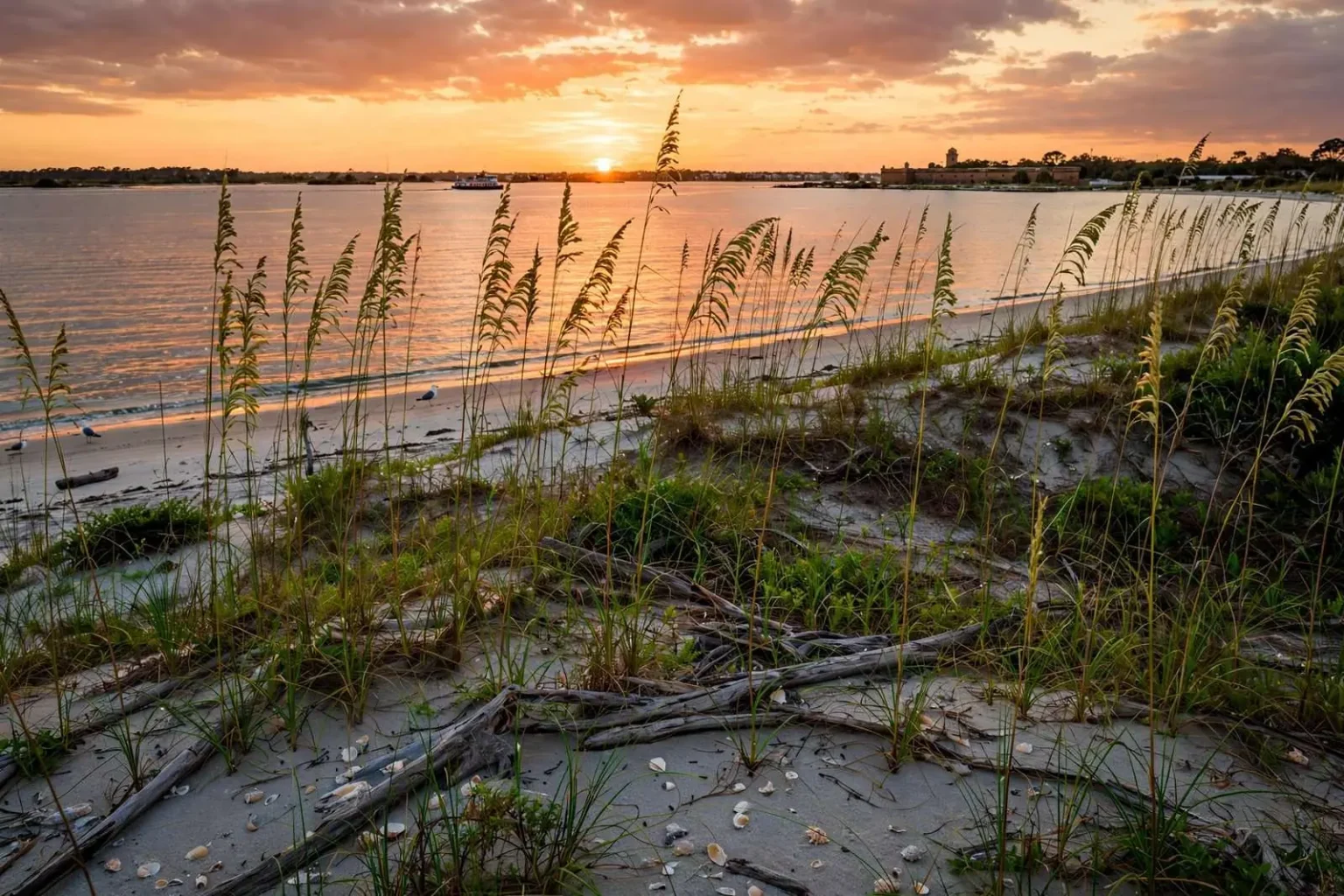
That low-key character is a big part of its appeal as a hidden gem. Much of the island’s east end is protected land, and wide stretches of the shoreline remain in their natural state, bordered by sand dunes, sea oats and maritime forest rather than seawalls. Birders have long considered the island one of the premier migration stopover sites on the Gulf Coast, and the Audubon Bird Sanctuary at the island’s east end draws visitors from across the country each spring and fall. The beaches themselves are known for shells, gentle waves and the kind of horizon-broken sunsets that don’t need a filter.
The Sunset Capital of Alabama
The island was also designated the “Sunset Capital of Alabama” by the Alabama Tourism Department in 2013, a title still promoted on billboards approaching the island. It is more than a marketing line: facing south and west at the mouth of Mobile Bay, the island gets an unobstructed view of the sun dropping into the Gulf, and evening brings residents and visitors to the west-end beaches with coolers and cameras for the nightly show. On calm evenings, the reflection across the water turns the entire bay mouth copper and gold.
The Fodor’s recognition adds a national spotlight to a resume of smaller honors the island has collected over the years. Travel writers have repeatedly singled out Dauphin Island for the same handful of reasons — uncrowded sand, abundant wildlife, historic sites and a genuine small-town feel — and the latest listing may be the widest audience yet for a place that has always relied on word of mouth rather than billboards and brochures to fill its rental houses in summer.
What visitors will find
Visitors will find three public beach accesses, the Mobile Bay Ferry running to Fort Morgan from 8 a.m. until dark, summer family movie nights, local shops such as Beach Planet and a handful of restaurants and churches. The public accesses make it easy for day-trippers to enjoy the sand without staying overnight, and the ferry adds a genuinely unusual option: crossing Mobile Bay by water to Fort Morgan peninsula, where the historic fort that guarded the bay since before the Civil War still stands open to tours. The ferry run is popular with cyclists and families, and it connects two of the region’s most historic shorelines in a single trip.
The island’s other attractions fit its unhurried personality. Fort Gaines, perched at the east end beside the ferry landing, played a famous role in the Battle of Mobile Bay. The Dauphin Island Sea Lab operates its Estuarium on the island, giving visitors a close look at the fish, turtles and habitats of Mobile Bay and the northern Gulf. Anglers work the public fishing pier and the surf, and families gravitate to the shallow, calm waters on the bay side, where small children can wade without the heavier waves of the open Gulf.
Why hidden matters
Being labeled a hidden beach is a delicate thing for a community of 1,300 people. The town has deliberately kept development modest, and its infrastructure — a two-lane bridge, limited parking, a small business district — is built for the crowds it has, not the crowds a national list could bring. Local leaders have generally encouraged respectful tourism while protecting the dunes, nesting areas and wildlife habitat that make the island what it is. Visitors who come because of the listing are effectively being asked to enjoy the island the way its residents do: slowly, and with care.
The timing of the recognition is good for the local economy, which lives on seasonal visitors, vacation rentals and the small shops and restaurants that serve them. A mention in a guide with Fodor’s reach can introduce the island to travelers who might otherwise drive straight past the turnoff on their way to the beaches to the east. For a town that has weathered hurricanes, oil spills and the slow erosion of its west end, a little positive national attention is a welcome change of headline.
Planning a visit
Travelers inspired by the listing will find the island easiest to enjoy in the shoulder seasons of spring and fall, when temperatures are mild and the bird sanctuaries are at their busiest. Summer brings the family movie nights and the full ferry schedule, along with the warm water that makes the Gulf beaches such a draw. Sunrise walks on the east-end beach, an afternoon at the Estuarium, a climb through Fort Gaines and a sunset from the west end make a full day without ever standing in a line.
For now, Dauphin Island wears its new title lightly, as it has worn all the others. The billboards on the way in still promise the best sunsets in Alabama, the ferry still leaves for Fort Morgan at 8 a.m., and the beach still belongs, first and foremost, to the gulls, the ghost crabs and the handful of families who walk it each evening. Fodor’s may call it hidden, but the people who love it have always known exactly where it is — and they are happy to share, one sunset at a time.
An island shaped by water and weather
Part of what makes Dauphin Island distinctive is its geography. The island is a classic barrier island — a long, low strip of sand that stands between the open Gulf and the mainland, absorbing waves and storms so the estuaries behind it can thrive. Those sheltered waters around the island are among the most productive nursery grounds on the northern Gulf Coast, and the sea grass beds, mudflats and marshes that fringe the island support fish, crabs, shrimp and the birds that feed on them. Protecting that natural infrastructure has long been a community priority, from dune restoration projects to the rules that keep vehicles off the nesting beaches.
Storms have written much of the island’s modern history. Hurricanes have repeatedly reshaped the shoreline, cut new passes and tested the bridge that links the island to the mainland, and each rebuilding effort has come with hard questions about how much development the barrier can support. The community’s answers have tended toward restraint — elevate, rebuild modestly, protect the dunes — and that shared ethic is visible in the low-slung beach houses and the wide, undeveloped stretches of shore that earned the island its hidden-beach designation in the first place.
A small town with a full calendar
Despite its size, the island keeps a community calendar that surprises first-time visitors. In addition to the summer movie nights, the island hosts seasonal festivals, fishing rodeos, and holiday events centered on the town green and the businesses along Bienville Boulevard. The island’s Mardi Gras traditions run deep as well; the parades there are small by Mobile standards and all the more charming for it, with krewe members throwing doubloons to children on bicycles rather than to shoulder-to-shoulder crowds.
The churches and civic groups that anchor the island’s social life also double as its safety net, organizing relief drives after storms and supporting the volunteer efforts that keep the town running. Restaurants double as gathering places after football games and fishing tournaments, and the island’s small shops — from bait and tackle to the souvenir shelves at Beach Planet — serve a mixed crowd of locals, anglers and beachcombers year-round. It is the kind of place where the person renting you a kayak is likely also the person who will tell you where the shells are best that morning.
The bottom line for travelers
For Alabamians who have never made the trip, the national recognition is a reminder that one of the state’s best beach experiences sits less than an hour from Mobile. The formula is simple: cross the bridge, park near one of the three public accesses, and let the island set the pace. Bring shells home, leave the dunes undisturbed, stay for the sunset the billboards promised, and the listing will make sense within an hour of arrival.
Dauphin Island did not court this spotlight, but it has earned it — through eight decades of Fodor’s expertise pointing the way, through a tourism department that crowned it the Sunset Capital of Alabama in 2013, and through the quiet stewardship of the 1,300 or so residents who keep its beaches clean, its wildlife protected and its welcome genuine. The 13 best hidden beaches in the United States is a short list, and only one Alabama beach is on it. Locals will tell you that’s exactly as it should be: the best-kept secrets, like the best sunsets, are the ones that never have to shout.