
Dauphin Island Zip Code Posts Alabama’s Lowest Poverty Rate
Census data shows Dauphin Island's 36528 zip code has Alabama's lowest poverty rate at 1.3%, while Calvert posts the state's highest.
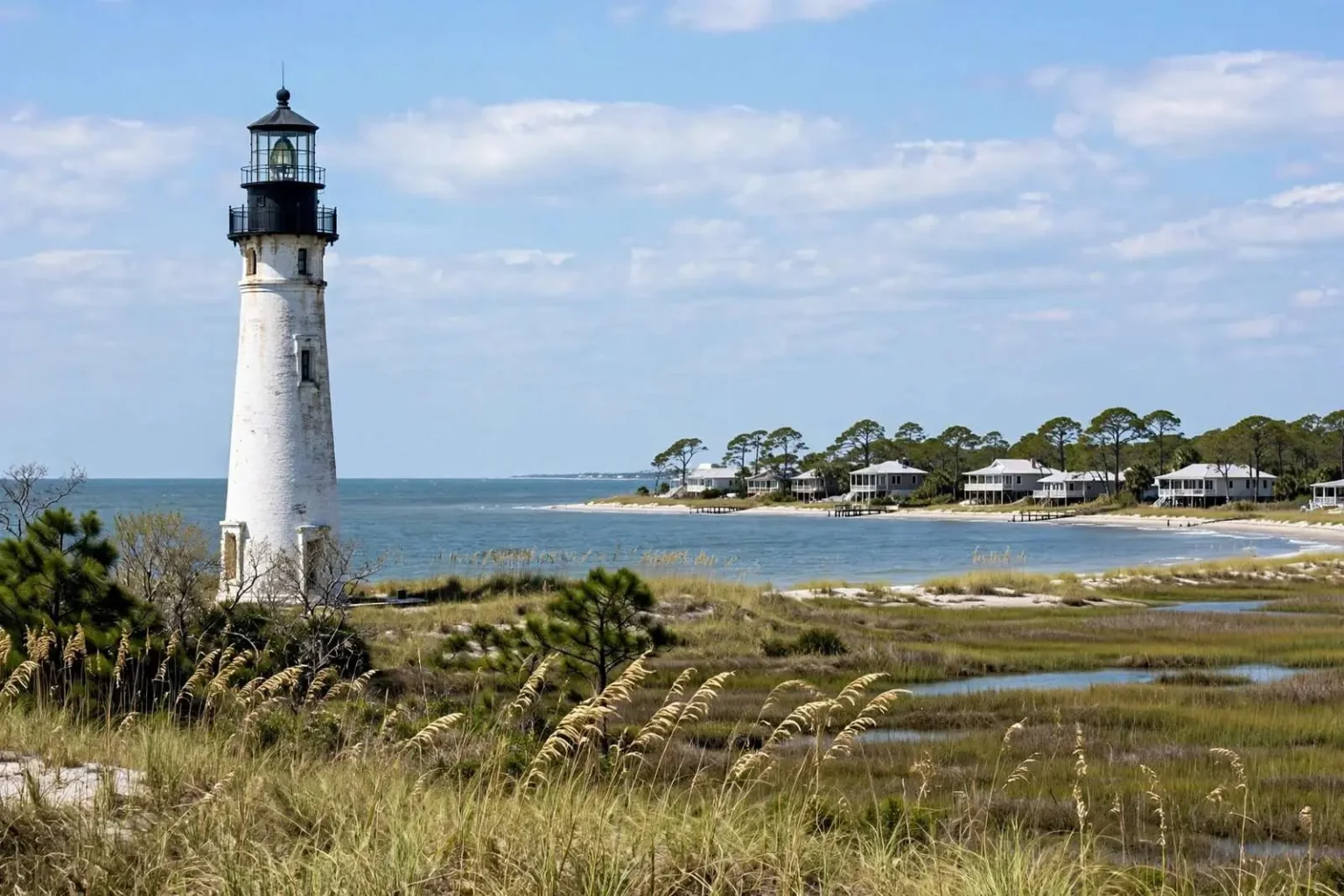
DAUPHIN ISLAND, Ala. — A new breakdown of U.S. Census Bureau figures shows that Dauphin Island is home to the lowest poverty rate of any zip code in Alabama, a distinction that sets the barrier island community apart from every other address in the state.
The island’s 36528 zip code recorded a poverty rate of just 1.3 percent, putting it at the top of the statewide ranking. The Census-based analysis ranked every zip code in Alabama, and the result confirms what property values on the island have long suggested: Dauphin Island’s permanent residents are among the most economically secure in the state.
Several other South Alabama communities also landed near the top of the list, an indication of how the region’s Gulf-front and suburban communities compare with the rest of Alabama when household incomes are measured zip code by zip code.
South Alabama’s strong performers
Spanish Fort’s 36527 zip code came in at number 12 statewide with a 4.2 percent poverty rate, while Orange Beach’s 36561 checked in at number 35 with a rate of 7.0 percent. Both communities sit in the arc of prosperity that runs along the Bay and the coast — Spanish Fort on the Eastern Shore of Mobile Bay, Orange Beach on the resort coastline of Baldwin County.
Spanish Fort has grown into one of the fastest-developing communities on the Eastern Shore, anchored by major retail along Highway 98 and subdivisions that have drawn families from across the region. Its schools, part of the Baldwin County system until the city’s recent breakaway, and its position on the I-10 corridor between Mobile and the beaches have made it a destination for higher-income households.
Orange Beach, meanwhile, built its economy on tourism and second homes, and its permanent population skews toward business owners, professionals and workers in the high-value end of the hospitality industry. A 7.0 percent poverty rate — far below the state’s double-digit average — still placed it 35th, a measure of how sharply Alabama’s top zip codes are clustered at the very low end of the scale.
The other end of the list
At the other end of the spectrum, the state’s highest poverty rate also belongs to Lower Alabama. Calvert, zip code 36513, sits along the line dividing Mobile and Washington counties and posted a poverty rate of 69.5 percent — the worst figure recorded anywhere in Alabama.
Calvert is a small community in the timber and paper country of northwest Mobile County, the kind of unincorporated settlement where the closing of industrial payrolls and the pullback of rural services have compounded across generations. A rate approaching 70 percent means more than two of every three residents live below the federal poverty line — a figure more common in the rural Deep South than anywhere else in the state’s urban corridors.
The distance between 1.3 percent on Dauphin Island and 69.5 percent in Calvert is less than a hundred miles by road, and both fall within the coverage area of the same newspapers and the same regional economy. The Census figures put numbers on a divide that residents of both places know from daily life.
What makes Dauphin Island different
Dauphin Island’s position at the top of the list reflects its unusual economics. The island’s permanent population is small — a few thousand residents in an unincorporated-to-small-town barrier island community at the mouth of Mobile Bay — and its housing stock is a mix of owner-occupied homes and high-value vacation property. Property on the island carries the price tag of Gulf-front land, and the people who can afford to live there year-round are, by definition, households with substantial means.
The Census poverty threshold is a national income standard adjusted for household size, and communities dominated by retirees with savings, professionals and owners of vacation rental portfolios routinely post rates far below the national average. Dauphin Island’s 1.3 percent fits that profile: few residents, high property values, and little of the rental poverty or industrial decline that drives rates up elsewhere.
The island’s economy itself is narrow — tourism in the summer, fishing, and the small commercial base that serves residents and visitors. But its resident population is not supported primarily by island wages, and that disconnection between where people live and where their income comes from is what makes resort-community statistics look the way they do.
Reading Alabama’s poverty map
Zip-code-level poverty figures reward careful reading. A zip code is a delivery area, not a neighborhood, and its boundaries can group very different places together. Rural zip codes across the Black Belt and the state’s western counties routinely post rates in the 30-to-50 percent range, while suburban zip codes in Huntsville, Birmingham and along the coast post single digits. The analysis ranked all of them on the same scale.
What the statewide ranking shows is the shape of modern Alabama prosperity: concentrated along the coast, the Eastern Shore, the Huntsville corridor and the suburbs of the major cities, with rates rising quickly as the map moves into small towns and rural areas. Mobile and Baldwin counties contain both ends of that spectrum — some of the lowest rates in the state and, in Calvert, the highest.
The federal poverty line itself is a blunt instrument, set at an income level that varies only with household size and unchanged by local costs of living. In a state where housing costs vary enormously from Dauphin Island to Calvert, the same dollar figure describes very different standards of living, and analysts caution against treating the percentages as anything other than the standardized measure they are.
Calvert and the rural pocket economy
Calvert sits in the northwest corner of Mobile County, straddling the line with Washington County along the railroad and highway corridor that runs toward Jackson, Alabama. It is paper-mill and sawmill country — the region’s economy for a century was built on timber, and the communities that grew up around the mills and the rail lines rose and fell with them. When the mills modernized, automated or consolidated, the towns around them lost the payrolls that had anchored their Main Streets.
The result shows up in Census tables exactly as it does in Calvert’s 69.5 percent figure: a population left behind by the regional economy’s growth poles, with older housing, fewer working-age earners and a commercial base reduced to a handful of businesses. Residents who work commute long distances to jobs in Mobile, Jackson or Thomasville, and fixed incomes predominate among those who remain.
The community’s placement on the Mobile-Washington county line also means its residents straddle two school districts, two health care service areas and two county governments, none of which alone has the resources to reverse the economic picture that the Census recorded. It is one of a string of small communities along the rivers and rail lines of southwest Alabama with similar profiles.
The regional contrast, quantified
The figures highlight a sharp economic contrast within the region — from the prosperous Gulf-front communities of Baldwin and Mobile counties to small rural pockets along their western and northern edges. Within a single metropolitan area, the analysis found the state’s best poverty rate on an island in the Gulf and its worst in a timber-country crossroads an hour’s drive inland.
That pattern has consequences for how services are planned and funded. School systems on the coast draw on property tax bases buoyed by beachfront values, while rural systems in the state’s poorest zip codes depend heavily on state funding formulas and federal Title I support. Health care access follows the same gradient, with the region’s hospitals and specialty care clustered where the insured and affluent populations live.
For local officials, the ranking is a mix of bragging right and caution flag. A 1.3 percent poverty rate speaks to the security of a community’s residents; a 69.5 percent rate in the same coverage area speaks to the work that remains in the communities the growth has passed by. The Census figures will be updated in the years ahead, and both ends of the Mobile Bay region will be watching where the numbers move.
What the numbers mean for residents
For Dauphin Island, the distinction is unlikely to change daily life — the island’s challenges are erosion, hurricanes and the bridge that is its only link to the mainland, not poverty. But the ranking underscores the island’s character as a place apart: a small, secure, self-selected population on a strip of sand at the mouth of Mobile Bay, statistically unlike anywhere else in Alabama.
For Spanish Fort and Orange Beach, top-40 placements in a 500-plus zip code state confirm their standing among Alabama’s most prosperous communities, driven by the Eastern Shore’s growth and the Baldwin County coast’s resort economy. Both communities have used that prosperity to fund some of the region’s newest schools and infrastructure.
And for Calvert and communities like it across Lower Alabama, the number is a reminder that the region’s prosperity is unevenly shared — that within sight of the state’s lowest poverty rate, on the same Census tables, sits its highest, waiting on the economic development that has yet to reach the crossroads towns of the timber belt.