
Downtown Mobile Streets Close Around Mardi Gras Park Ahead of T-Pain Concert
Streets near Government and Royal close at 5 p.m. Friday for the T-Pain concert at Mardi Gras Park, with Bankhead Tunnel restrictions through the night.
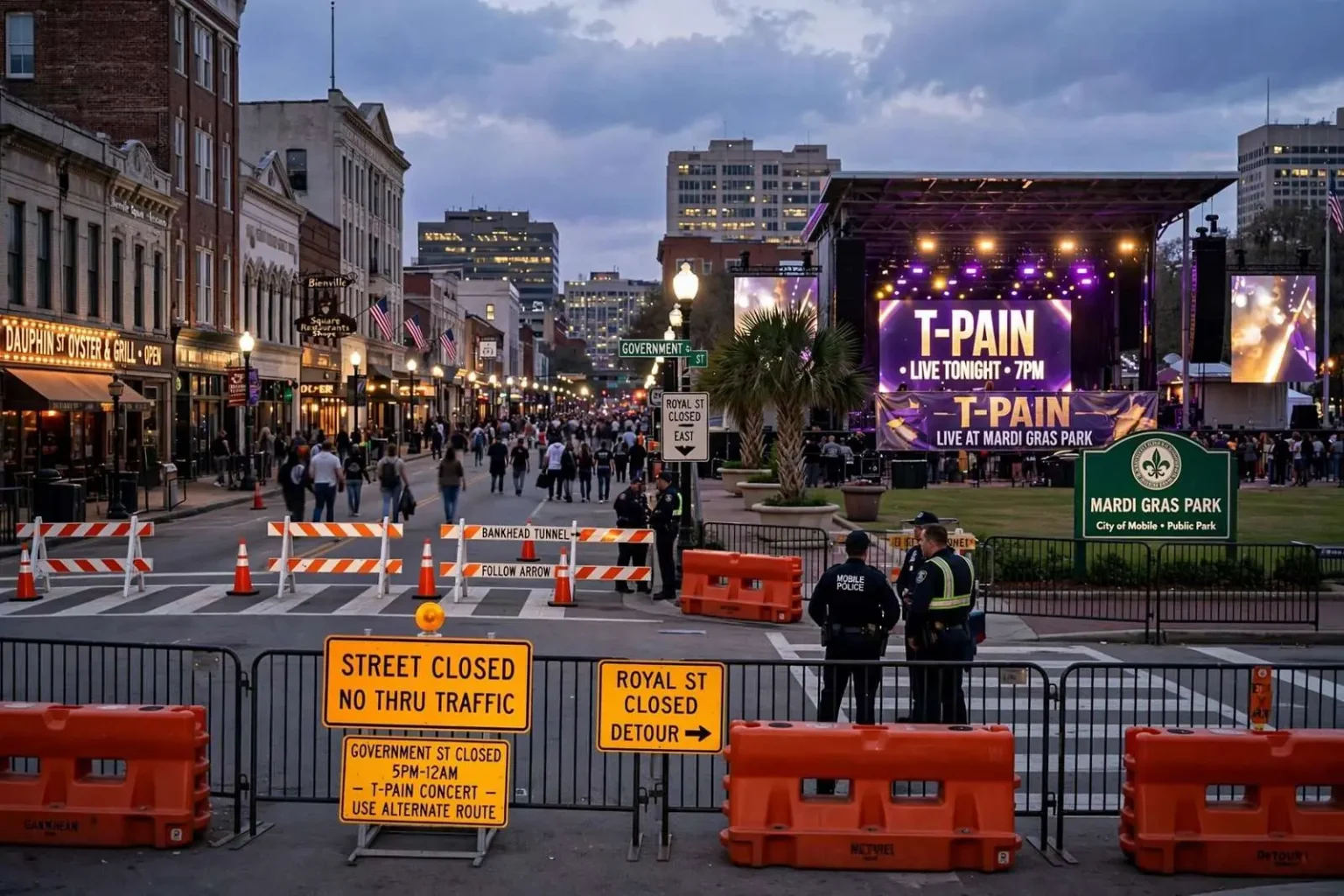
Downtown Mobile turned into a construction-free maze Friday evening as multiple streets closed at 5 p.m. to make way for the T-Pain concert at Mardi Gras Park. The closures were concentrated in the area of Government and Royal Streets, with drivers advised to plan alternate routes well before showtime. The street shutdowns converted the blocks around the downtown waterfront park into a pedestrian zone for the evening and reshaped the commute for thousands of drivers who pass through the heart of downtown Mobile on weeknights.
The affected blocks sit in the busiest section of downtown’s street grid. Government Street feeds traffic toward the waterfront and the Government Street corridor, while Royal Street runs through the historic core that Mobile’s Mardi Gras celebrations have used for generations. Closing those streets at the height of the Friday evening rush required coordination among the city, police and concert promoters, and officials gave drivers a straightforward instruction: expect the closures, plan around them, and use alternate routes rather than attempting to thread through downtown as showtime approached.
Mardi Gras Park, the downtown green space the city built on the site of the old Mobile Government Plaza parking areas, sits amid that grid between Government and Royal Streets. The park has become the city’s downtown stage for public events, positioned within walking distance of restaurants and bars that pick up concert crowds before and after shows. A Friday night concert there draws both ticketed attendees and the downtown dinner crowd, which is why the closures extended across multiple blocks rather than just the park’s edges.
How Traffic Moved Through the Evening
Access to the Bankhead Tunnel and northbound Conception Street remained open, but the east side of the tunnel was shut during the concert itself. The Bankhead Tunnel, the 1940s-era tube that carries Government Street traffic beneath the Mobile River shipping channel, is a critical artery connecting downtown with the eastern shore routes, and keeping its western approach open preserved a path for through-traffic even as the surrounding blocks closed for the show.
Once the show let out, officials closed the tunnel entirely to both eastbound and westbound traffic, funneling departing crowds and vehicles onto surface streets while crews worked the area around the park. The decision reflected the reality of a large crowd dispersing on foot through a downtown street grid: with hundreds of concertgoers walking toward parking areas and nearby bars, the safest configuration closes the tunnel approaches and lets police manage the surface intersections where pedestrians and vehicles meet. Drivers leaving downtown faced slower trips on surface streets, but the arrangement kept cars and crowds separated during the peak departure window.
Concertgoers were encouraged to arrive early, carpool where possible and expect delays on Government, Royal and surrounding blocks through the end of the night. The advice anticipated both directions of the traffic problem — the pre-show crunch as attendees converged on downtown between 5 p.m. and showtime, and the post-show wave as the crowd dispersed. Carpooling reduced the number of vehicles competing for limited downtown parking, and early arrivals had the pick of lots and garages within walking distance of the park.
A National Act for Downtown’s Stage
T-Pain’s stop brought a major national touring act to the downtown waterfront park, continuing Mobile’s push to book big-name entertainment between Mardi Gras seasons. The artist — one of the defining voices of mid-2000s pop and hip-hop, known for a run of chart-topping hits — drew the kind of multigenerational crowd that downtown businesses plan around. For Mobile, landing a national touring act at Mardi Gras Park serves a purpose beyond the single night: it builds the park’s reputation as a concert venue and downtown’s reputation as an entertainment district capable of hosting touring production.
The city’s effort to program downtown between Mardi Gras seasons addresses a long-standing challenge. Mobile’s economy surges during the weeks of carnival, when the streets fill for parade season, but the rest of the year requires the city to give residents and visitors reasons to come downtown. Concerts at Mardi Gras Park — with the park’s setting among Government Street’s civic buildings and Royal Street’s historic blocks — put crowds in front of downtown restaurants and bars on nights that would otherwise be quiet, and each successful show strengthens the case for booking the next one.
Downtown Businesses and the Concert Economy
The closures ripple outward from the park into the surrounding business district. Dauphin Street’s entertainment blocks, Bienville Square’s edges and the restaurants around Bienville Square and St. Louis Street all sit within a few minutes’ walk of Mardi Gras Park, and a Friday-night concert delivers those establishments a crowd that arrives early and lingers after the encore. Servers and bartenders downtown plan staffing around event nights, and a national act’s draw extends the benefit well beyond the ticket-holding crowd, pulling in residents who come downtown for dinner and stay for the atmosphere around the park.
The night also tested the logistics the city has refined through years of downtown event management. Mobile closes streets regularly for Mardi Gras parades, festivals and runs, and the crews that stage barricades, redirect traffic and manage intersections move through the checklist with practiced speed. A concert adds variables the parade calendar does not — a load-in schedule for stage and sound equipment, a security perimeter, and a dispersal pattern tied to the show’s end time — but the underlying machinery is the same one the city uses every carnival season.
Getting Home After the Show
The tunnel closure at show’s end deserves particular attention from commuters who use the Bankhead Tunnel nightly. Drivers accustomed to entering the tube from downtown’s east side found the route shut during the concert and closed in both directions once the crowd spilled out, pushing them onto the surface alternatives — the causeway routes north and the streets threading through the downtown grid. For eastbound travelers the detour added time to a Friday evening trip, but officials accepted that cost to keep departing crowds away from tunnel traffic at its most dangerous moment, when pedestrians cross paths with vehicles funneling toward the river.
Rideshare pickups and parking garage exits also converged after the show, and police staged around the park to keep the intersections near Government and Royal moving. The guidance to expect delays through the end of the night proved accurate: between the dispersing crowd, the closed tunnel and the crews working the barricade lines, downtown’s normal Friday-night traffic pattern did not fully resume until well after the concert let out.
For the city, the night counted as another step in the campaign to make Mardi Gras Park a genuine downtown anchor. The park was conceived as a year-round gathering space in the heart of the civic district, and each booking that fills it — concert, festival or public celebration — moves downtown Mobile closer to the seven-night-a-week activity that its restaurants, bars and hotels have sought since the park opened. T-Pain’s Friday show, with streets closed, crowds downtown and a national touring act on the waterfront stage, fit the pattern exactly: a logistical headache for commuters, and a marker of progress for downtown’s entertainment ambitions.
What the Closures Meant for Commuters
For the daily drivers who cross downtown Mobile without stopping, the evening was an inconvenience with a purpose. The blocks around Government and Royal carry commuters between the eastern suburbs and the central business district, and a 5 p.m. closure lands squarely in the Friday exodus. Officials’ advice to plan alternate routes reflected the scale of the disruption: detours pushed traffic onto streets that rarely carry surge volumes, and drivers unfamiliar with downtown’s grid needed extra time to find their way around the closed core.
Regular event-goers in Mobile have learned to treat these closures as part of the price of a livelier downtown. The city’s event calendar — parades, festivals, races and now concerts — periodically converts the downtown grid into a pedestrian space, and each conversion follows the same public-information pattern: announce the closures, name the affected corridors, keep the critical arteries like the Bankhead Tunnel and Conception Street open as long as safety allows, and close them fully only when the crowd requires it.
The Park Between the Seasons
Mardi Gras Park’s role in the city’s calendar has grown steadily since it opened downtown. The green space gives Mobile a flexible downtown venue in a location where parade routes, government buildings and the historic business district converge, and its concert bookings fill the long stretch between carnival seasons with activity that keeps the downtown core in use. Booking a national touring act like T-Pain into that space requires the full machinery on display Friday: street closures, police details, traffic staging and the crews who reset the blocks once the crowd goes home.
The show also connected two eras of downtown Mobile entertainment. The blocks around Royal Street have hosted public celebration since the earliest Mardi Gras traditions, and the park now carries that role into a concert era, with national acts playing a stage set among the same buildings where revelers gather each carnival. For the fans who filled the park Friday night, the setting added a Mobile signature to the show — a national touring act playing downtown, blocks from the waterfront, with the city’s oldest streets closed around it.
By the end of the night, crews had begun reopening the streets around the park, the Bankhead Tunnel returned to both-direction traffic, and downtown’s normal rhythms resumed. The delays on Government, Royal and the surrounding blocks faded with the crowd, and the city turned its attention to the next date on the calendar — another chance to bring a big-name act downtown and another evening when the streets around Mardi Gras Park belong to the crowd.