University of South Alabama Mobile
EXCLUSIVE: University of South Alabama Professor Accused of Double-Dipping, Undercutting Private Businesses While on Public Payroll
University of South Alabama professor Michael Black is accused of using his public salary to subsidize private IT consulting and expert witness work.
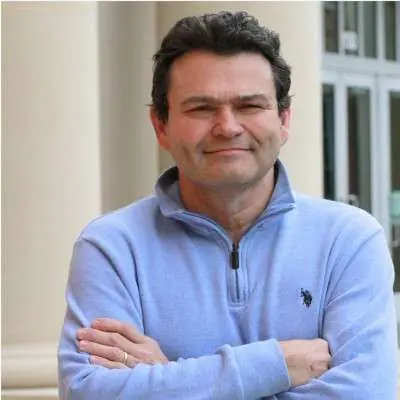
MOBILE, Ala. – Dr. Michael E. Black, an associate professor in the University of South Alabama's School of Computing, is facing mounting accusations of ethics violations and unfair competition, as evidence emerges that he is using his publicly funded position to subsidize a private IT consulting empire. According to financial records obtained from the university's spending transparency portal, Black has collected more than $91,177.41 from the state of Alabama for the 2026 fiscal year. However, critics and local business owners allege that while he is on the taxpayer's dime, Black is simultaneously operating a lucrative private consulting business—managing information technology infrastructure for companies across the Mobile area and traveling the country to testify as an expert witness in courtrooms.
A Professor's Side Hustle University directories list Black as the Cybersecurity Coordinator and an associate professor in the Department of Information Systems & Technology. His official biography on the university's website boasts that he "has consulted as a network security/design engineer with several manufacturers" and "regularly testifies as a digital forensics' expert in legal proceedings for both state and federal court." While universities often allow limited outside professional activities, sources tell this publication that Black has crossed the line from permissible consultation into full-scale business operations that directly compete with private sector IT firms. Multiple business owners along the Gulf Coast, speaking on the condition of anonymity for fear of retaliation, have stated that Black is actively managing their information technology infrastructure.
These sources describe him as a one-man IT department for several local companies, handling everything from network security to systems administration. Unfair Competition: Taxpayer-Subsidized Rates The most damning accusation against Black comes from established IT companies throughout the Mobile Bay area and the broader Gulf Coast. These business owners, who have spent years building their practices and investing in their employees, say they cannot compete with Black's pricing structure. Michael Black at the University of South Alabama "How can we?" asked one Mobile-based IT firm owner, who wished to remain anonymous. "He's getting a guaranteed six-figure salary from the state. He doesn't have to worry about making payroll or covering health insurance for employees.
He can offer services at rock-bottom prices because his bills are already being paid by Alabama taxpayers." This sentiment was echoed by multiple sources, who allege that Black is able to undercut legitimate private businesses precisely because his University of South Alabama salary subsidizes his consulting activities. By leveraging his state-funded position, Black effectively creates an unfair marketplace where private companies—which must cover overhead, employee benefits, and taxes—are priced out of contracts. "It's textbook unfair competition," said a Gulf Shores-based IT consultant. "He's using public resources—his salary, his university email, his credentials—to win business that should be going to private firms.
Meanwhile, we're struggling to keep our doors open." Expert Witness for Hire: Traveling the Country on the Public's Dime Perhaps even more troubling is Black's extensive work as an expert witness. University records confirm that Black "has conducted numerous digital forensics investigations for clients" and "regularly testifies as a digital forensics' expert in legal proceedings for both state and federal court." Sources indicate that Black travels across the country to provide testimony and witness services to law firms, commanding substantial fees for his expertise. Critics argue that while Black is jetting across state lines to appear in courtrooms, he continues to collect his full University of South Alabama paycheck—a practice they describe as blatant double-dipping. "It's one thing to consult on the side.
Background and Context
It's another thing entirely to be running a national expert witness practice while you're supposed to be a full-time professor," said a legal ethics attorney who reviewed Black's activities. "When he's in a courtroom in Texas or Florida, he's not in his office at Shelby Hall. He's not advising students. He's not doing research. And yet, the state of Alabama is still paying him." A Pattern of Double-Dipping The term "double dipping" has a long and controversial history in Alabama. The Alabama Ethics Commission has previously grappled with the issue of public employees holding multiple positions and collecting multiple salaries.
While the most prominent debates have centered on legislators holding jobs with government entities, the underlying principle remains the same: public employees should not be paid for work they are not performing, nor should they use their public positions for personal gain. The University of South Alabama's own policies on "Conflict of Interest and Conflict of Commitment" require faculty to disclose external professional activities and limit consulting to ensure that their primary commitment remains to the university. However, it remains unclear whether Black has properly disclosed the full scope of his outside work or whether he has exceeded the allowable limits.
"Each and every time an employee does consulting outside the University with a new entity, the employee is required to complete and file an External Professional Activities for Pay form," reads the university's policy. The policy also states that "if a faculty member chooses full-time employment at the University for the summer semester, the total 36 days for consulting services applies to the calendar year." Given the scale of Black's outside activities—managing IT infrastructure for multiple businesses, providing expert witness services across the country—critics question whether he has complied with these disclosure requirements or whether he has simply ignored them. An Ethics Violation Waiting to Be Investigated The Alabama Ethics Commission has jurisdiction over conflicts of interest and the use of public office for personal gain.
State law prohibits public employees from using their official positions for personal benefit, and critics argue that Black's activities constitute a clear violation of these principles. "This is exactly the kind of case the Ethics Commission was created to handle," said a government watchdog who has reviewed Black's situation. "You have a public employee who is using his position—his title, his credentials, his university affiliation—to generate private income while competing against the very businesses that are trying to make an honest living in this community." The Alabama Ethics Commission accepts complaints from individuals with credible and verifiable information. Given the mounting evidence and the chorus of complaints from local business owners, many are calling for an official investigation.
"The university needs to answer for this," said a local chamber of commerce member. "Is Dr. Black allowed to do this? Has he been approved for these activities? If so, why is the university allowing a professor to compete with private businesses? And if not, why hasn't he been disciplined?" The University's Response The University of South Alabama has not yet responded to requests for comment on Black's activities. However, the university's faculty handbook and policies on external professional activities make clear that faculty members have a primary obligation to the university and that outside work must not interfere with their teaching, research, and service responsibilities.
Background and Context
The policy on "Conflict of Interest and Conflict of Commitment" explicitly states that it applies to all employees, including faculty, and that conflicts must be identified and managed. It remains to be seen whether the university will take action or whether it will continue to turn a blind eye to what critics describe as a clear conflict of commitment. A Call for Accountability As the 2026 fiscal year progresses and Black continues to collect his taxpayer-funded salary, the questions surrounding his outside activities grow louder. IT companies across the Gulf Coast are watching closely, hoping that someone—whether the university or the Alabama Ethics Commission—will step in to address what they see as a clear injustice. "We're not asking for special treatment," said one IT business owner.
"We're just asking for a level playing field. Dr. Black shouldn't be able to use his state job to compete with us. It's not fair, and it's probably not legal." The Alabama Ethics Commission has previously ruled that "nobody can receive two salaries for work done at the same time." While Black may not technically be receiving two salaries, critics argue that the principle is the same: he is being paid by the state while simultaneously running a private business that generates income—income that is made possible by his state-funded position. Whether the Ethics Commission will take up this case remains to be seen. But one thing is clear: the drumbeat of criticism is growing louder, and Dr. Michael E. Black's double-dipping may soon face the scrutiny it deserves.
Wider Significance for Coastal Alabama
This story is part of a broader set of changes playing out across Mobile, Baldwin and the wider Gulf Coast region. Local residents, businesses and government agencies have been watching developments like this one closely, because decisions made in Mobile and Baldwin counties often ripple outward into neighboring communities across south Alabama, Mississippi and the Florida Panhandle. Public meetings, council work sessions and state legislative hearings have all carried echoes of the underlying concerns, with stakeholders ranging from neighborhood associations to industry groups weighing in on what the outcomes will mean for daily life along the Gulf Coast. Reporters and editors in the region have worked to document how these issues affect ordinary people, from commuters on Interstate 10 to families visiting the public libraries and parks that anchor so many of the Port City’s neighborhoods. The deeper context often emerges over months rather than days, as projects move from announcement to planning to construction, and as the people most directly affected find their voices in the public record. Continued coverage remains important, both for accountability and for the historical record, and the unfolding situation is one that warrants attention from anyone with a stake in the future of south Alabama.
Looking ahead, observers across the region expect the conversation to continue evolving. Local officials have signaled their intent to monitor outcomes closely, and community organizations have indicated they will remain engaged as new information becomes available. The intersection of state policy, local implementation and on-the-ground impact is precisely where stories like this one tend to develop their lasting significance. For Mobile and Baldwin residents, the practical effects will play out over time, in everything from tax bills and utility rates to traffic patterns and the availability of public services. Following the developments requires patience and attention to detail, but it is also a reminder of how civic life in coastal Alabama continues to be shaped by decisions that begin far from the neighborhoods they ultimately touch. Residents who want to stay informed can do so by following local government meetings, attending public hearings when significant issues arise, and reading the regional reporting that tracks how these stories progress from one phase to the next.
Local news organizations continue to follow this story closely, and updates are expected as more details emerge. The developments have generated discussion across the region, with attention from both longtime residents and newcomers who are following the issue for the first time. Community leaders have emphasized the importance of staying engaged with local government and participating in public meetings when significant decisions are being made. As the situation continues to unfold, residents are encouraged to remain informed through reliable local reporting and official city and county communications channels. The story remains active, and additional information is anticipated in the coming days and weeks as the relevant agencies and stakeholders complete their work.