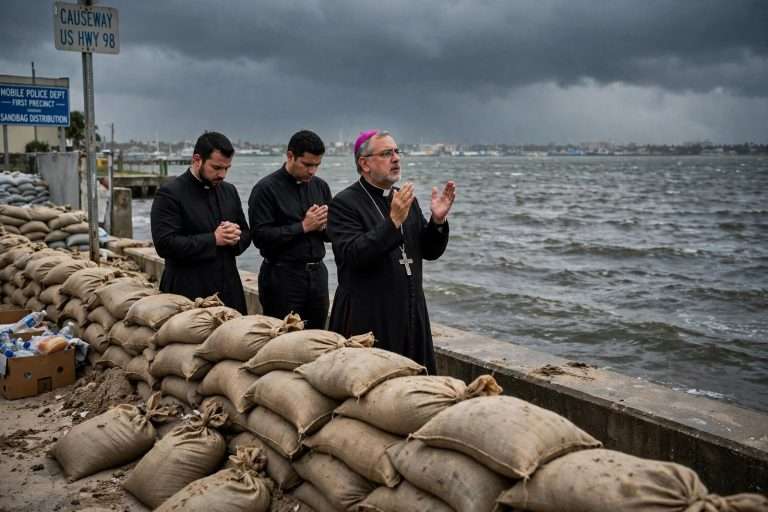
Fairhope’s Dragonfly Foodbar offers free meals to emergency responders and linemen
A Fairhope restaurant is offering free meals to emergency responders and utility linemen working through the aftermath of Hurricane Sally.
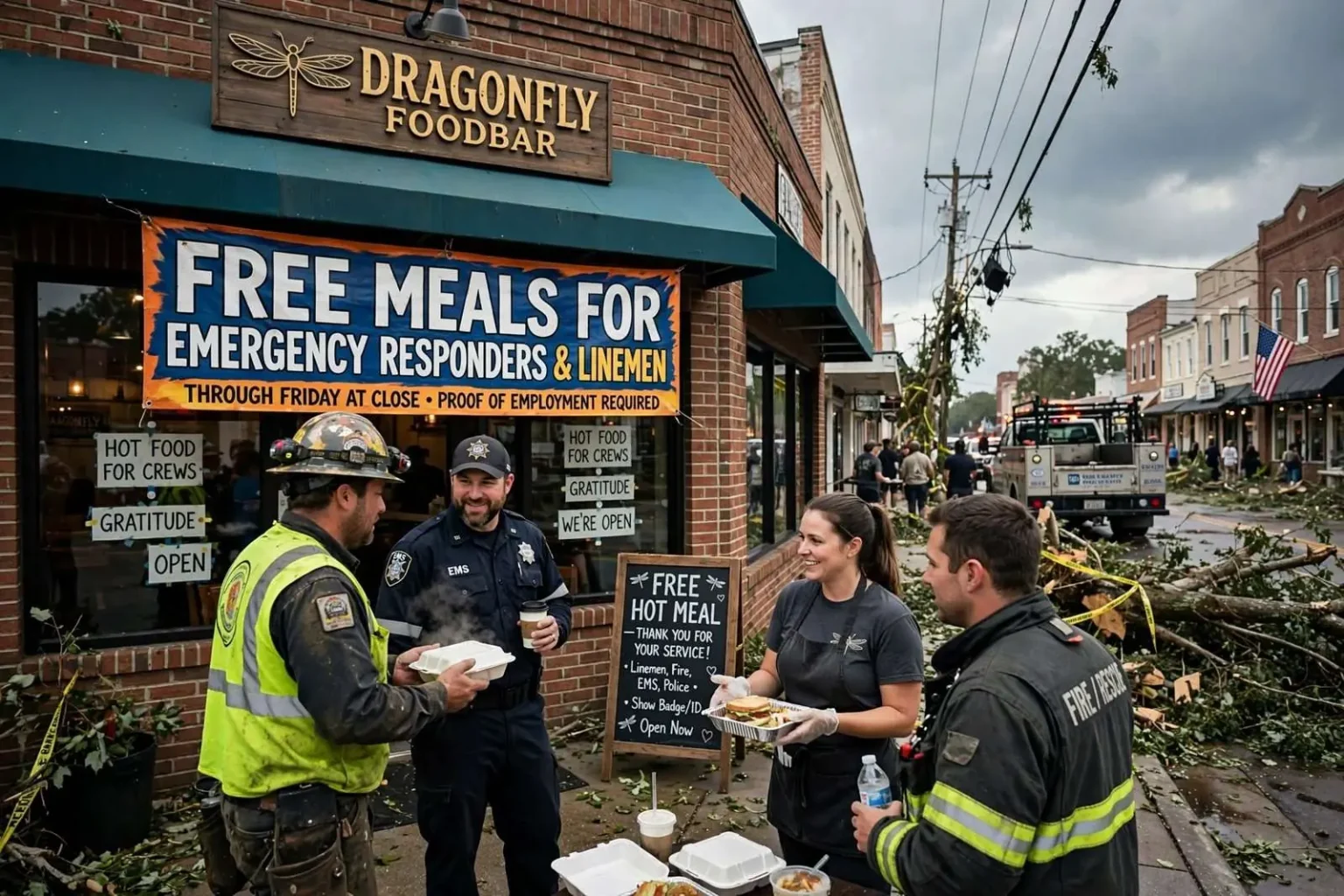
FAIRHOPE, Ala. — A Fairhope restaurant is offering a free meal to emergency responders and utility linemen working through the aftermath of Hurricane Sally, joining the wave of community support that followed the storm’s damaging run across the Gulf Coast. The offer came as crews from across the region poured into Baldwin County to restore power and respond to the calls that followed the hurricane’s landfall.
Dragonfly Foodbar announced that it will serve emergency response crews and linemen free of charge through Friday at close. The restaurant, a familiar spot in downtown Fairhope, opened its doors to workers who had spent long shifts clearing roads, restoring lines, and answering emergency calls in the days since the storm moved through the area.
Recipients must show proof of employment to receive the meal — a work badge, utility identification, or similar credential — ensuring the offer reaches the responders and line crews it was intended for. The gesture fit a pattern seen across the storm zone, where restaurants, churches, and businesses found ways to feed the workers who had come to help them recover.
The offer is a small show of support for the crews restoring power and responding to calls across the Gulf Coast as communities recover from the storm. For line workers and responders putting in sixteen-hour days away from their own homes, a hot meal from a local kitchen is one of the few comforts available during the grind of storm recovery.
Hurricane Sally’s Strike on the Gulf Coast
Hurricane Sally came ashore in September 2020 as a slow-moving Category 2 storm, making landfall near Gulf Shores with winds around 105 mph. Its pace — crawling at just a few miles an hour — turned what might have been a one-night blow into a prolonged ordeal, dumping extraordinary rainfall across the coastal counties and driving a significant storm surge into Pensacola Bay and the communities along the coast.
Baldwin County, which includes Fairhope, took a direct hit from the storm’s eastern side. Damage ranged from downed trees and power lines to battered piers and flooded streets. The region’s signature landmarks took their lumps, and neighborhoods spent days without electricity as crews worked through a tangle of fallen limbs and broken lines.
The storm’s slow movement also meant a long recovery. Unlike a fast-moving hurricane that passes in hours, Sally lingered, and its rain bands kept up for a day and more after landfall. Emergency responders worked through the storm itself and into the long cleanup that followed, while utility companies staged armies of line workers across the two coastal counties to begin the job of rebuilding the electrical grid.
The Work of Power Restoration
Restoring power after a hurricane is a massive logistical operation. Utility companies bring in mutual-assistance crews from across the region, staging them in tent cities and hotel blocks near the damage zone. Work proceeds in a deliberate order: transmission lines and substations first, then main distribution lines, then the smaller lines that feed individual streets, and finally the service drops to individual homes.
Line work is among the most physically demanding jobs in the country under normal conditions. After a hurricane it is compounded by blocked roads, damaged equipment hidden in tangled debris, and long hours in heat and humidity. Crews routinely work dawn to dusk, seven days a week, living out of trucks and temporary housing until the grid is back.
That is where gestures like the one from Dragonfly Foodbar land. A restaurant meal — something hot, prepared by someone else, eaten sitting down — is a small thing that stands in sharp contrast to the convenience-store food that dominates a line crew’s storm diet. Businesses across Baldwin and Mobile counties made similar offers in the days after Sally, feeding crews at no charge as a way of saying thanks.
Fairhope After the Storm
Fairhope sits on the bluffs above Mobile Bay in one of Baldwin County’s most visited communities, and the storm’s impact on the city was part of the broader picture across the eastern shore. Trees came down across streets, signals went dark, and residents spent days clearing limbs and waiting on power while the community’s small businesses assessed their own damage and their own losses.
Restaurants in particular occupy a complicated place in a storm’s aftermath. Many lost perishable inventory to power outages, faced structural or equipment damage, and had to decide whether reopening was feasible. That a restaurant in the middle of that recovery would turn around and give away meals speaks to the tight relationship between the town’s businesses and the community that supports them.
Downtown Fairhope’s eateries are a fixture of the city’s identity, drawing visitors from across the bay and around the region. In the days after the storm, as crews in buckets and trucks worked the streets, those same businesses became part of the recovery infrastructure — feeding responders, hosting neighbors, and serving as informal gathering points in neighborhoods without power.
Emergency Responders in the Storm’s Wake
The emergency response to a hurricane begins before the storm arrives and runs for weeks afterward. Fire departments, police agencies, and EMS units in Baldwin County worked through Sally’s landfall answering calls where conditions allowed, then shifted into the recovery phase — checking on residents, clearing roads, staffing shelters, and handling the surge of calls that follows every storm, from generators fires to medical emergencies in darkened neighborhoods.
Utility linemen and first responders share the same rhythm after a storm: long shifts, unfamiliar streets, and work that cannot wait. Both groups came into Fairhope and the surrounding communities from elsewhere as well as from within, and both found restaurants and residents looking for ways to thank them. Offers of free meals, discounted fuel, and donated supplies spread across the storm zone through word of mouth and social media in the days after landfall.
The proof-of-employment requirement in the Dragonfly offer reflected practical realities rather than distrust. With crews pouring into the area from multiple states and companies, identification was the simplest way for a small restaurant to keep the offer workable while making sure the meals went to the people working the storm.
Community Support as Part of Recovery
Across south Alabama after Sally, the response from businesses and residents became one of the storm’s defining stories. Churches opened as supply points, neighbors with generators and chainsaws worked street by street, and restaurants that could operate became feeding stations for anyone working the recovery. It is a pattern the Gulf Coast has repeated through every major hurricane, from Frederic in 1979 through Ivan, Katrina, and Sally itself.
Local officials consistently point to that mutual aid as the thread that holds recovery together in the early weeks. Government crews and utility companies restore the infrastructure, but it is the day-to-day generosity of a community — a free plate lunch for a line crew, coffee carried out to deputies working traffic — that keeps the response moving through the grind.
Dragonfly Foodbar’s offer ran through Friday at close, giving crews several days to take advantage of it as restoration work pushed on across Baldwin County. For the responders and linemen who came through its doors, the meal was one stop among many in the long recovery from Sally — and, for the restaurant, a way of pitching in that cost little and meant a good deal to the people who took them up on it.
Sally’s Place in the Region’s Storm History
Hurricane Sally was one of several storms to strike or graze the Alabama coast in recent decades, and its slow forward speed put it in a category residents know well. Fast storms bring wind damage; slow storms bring water. Sally’s rainfall totals — measured in feet in some coastal communities — flooded homes and roads well inland of the coast, and its extended duration wore down trees and structures that might have survived a quicker storm.
The recovery that followed stretched on for weeks. Outages that began the night of landfall lasted days in some areas and longer in the hardest-hit pockets, and debris cleanup continued into the fall. Schools reopened on staggered schedules, businesses that lost buildings found temporary quarters, and the region’s familiar cycle of insurance claims, contractors, and rebuilding got underway.
Against that backdrop, the small gestures carried weight. A free meal for a crew that has been on a bucket truck since dawn does not restore a power line, but it signals something to the workers and to the community watching: the town notices, and the town is grateful. Restaurants like Dragonfly Foodbar, embedded in a walkable downtown where residents and crews crossed paths daily, were well placed to make that signal.
Why Linemen and Responders Draw Special Attention
The public’s focus on linemen and emergency crews after a storm reflects the nature of their work. Utility linework is consistently ranked among the most dangerous jobs in the United States, and hurricane restoration removes many of the normal safeguards — working in damaged neighborhoods, on compromised equipment, in heat and exhaustion. The crews who came to Baldwin County after Sally were doing work that residents could see from their front porches, which made the gratitude personal.
Emergency responders drew similar attention for work that continued while the storm was still onshore. Fire and rescue personnel answered calls through landfall, and police and sheriff’s deputies worked streets blocked by debris and signals without power for days. Many of the responders working Baldwin County were doing so while their own homes, outside the storm zone or within it, sat without power.
The free-meal offers that spread across the region in the storm’s wake were aimed squarely at those workers. For the duration of Dragonfly Foodbar’s offer, the restaurant’s kitchen joined the recovery effort in the most direct way a small business can — putting hot food in front of the people doing the hardest work of the storm’s aftermath, on the house, through Friday at close.