Foley Weighs Six-Month Moratorium on Data Centers and Crypto Mining
Foley is considering a six-month moratorium on data center, cryptocurrency mining and server farm applications while it reviews its zoning and environmental rules, Mayor Ralph Hellmich said.
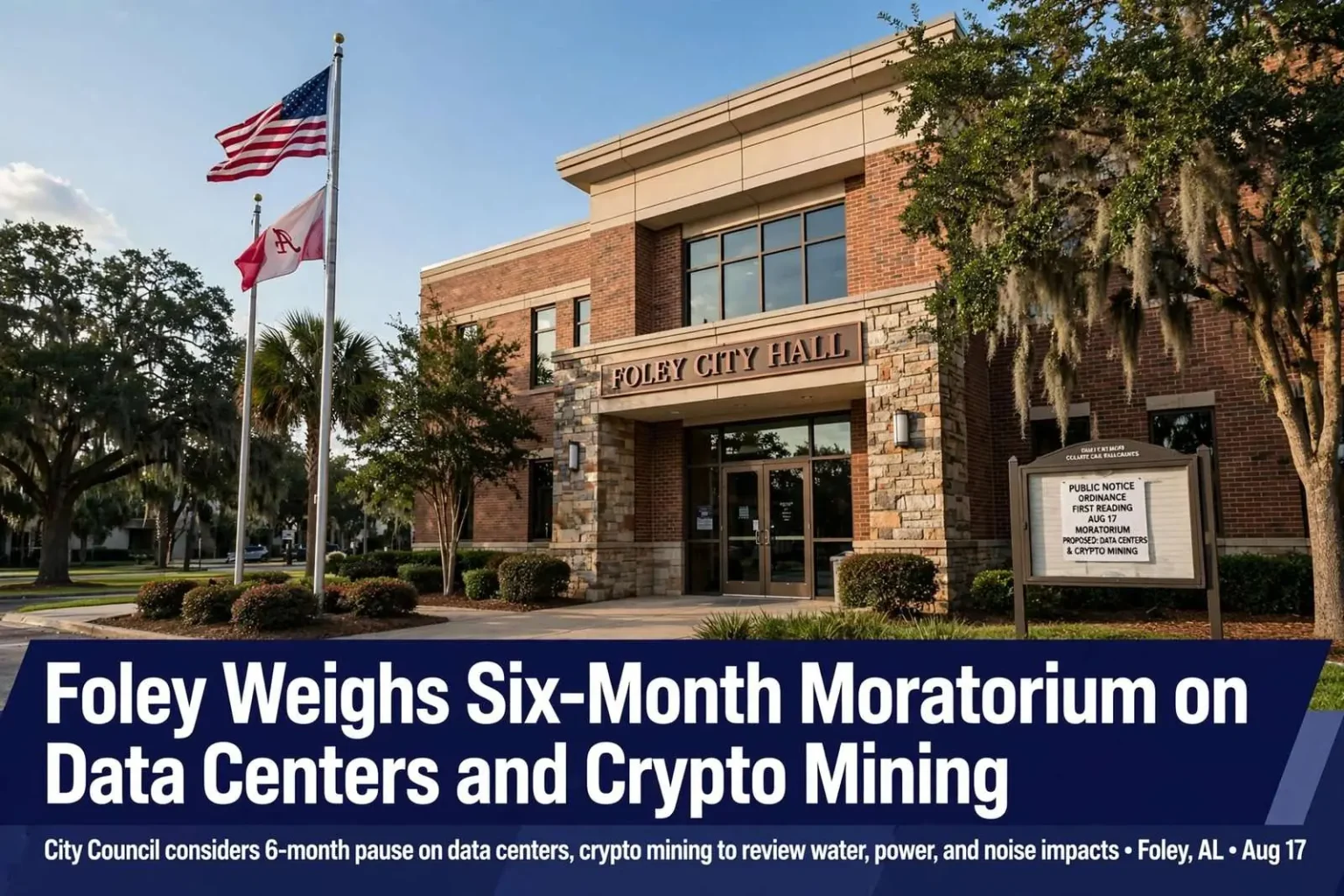
FOLEY — The City of Foley is taking a proactive approach to the growing data center trend, introducing an ordinance that would impose a temporary six-month moratorium on accepting or processing applications for data centers, cryptocurrency mining facilities and similar high-demand computing operations within city limits.
According to documents, the ordinance would impose a “temporary moratorium on the acceptance, processing, approval and consideration of applications for data centers, Bitcoin and cryptocurrency mining facilities, server farms and similar, technically oriented, use, facility or operation that is primarily used for computing, data processing, data storage, cryptocurrency generation or similar technology and that is characterized by high electrical demand and/or high water consumption.”
The proposal received its first reading during the city council’s regular meeting on Monday, Aug. 17.
Mayor Cites Three Key Concerns
Foley Mayor Ralph Hellmich said that while the city already has a variety of zoning and environmental protections to work with, he wants to “make sure that our city is positioned for the future” by making sure that “all of our regulations are working in conjunction together.” He identified three primary areas of concern: water consumption, noise and the use of power.
“We’re trying to be proactive to make sure that our area is prepared if one ever approaches us,” Hellmich said. He confirmed that no developer or company has yet approached the city about building such a facility within Foley’s limits.
“Our goal is just basically to make sure that our zoning and environmental restrictions (are set so that if one ever wants to come to this area, we’re prepared to address it and to make sure the citizens know that they’re protected,” Hellmich said.
Utility Providers Already Have Safeguards
Hellmich noted that the region’s utility landscape adds another layer of protection. “Here in Baldwin County, a couple cities have their own utility department, but mostly it’s EMC, Alabama Power or Riviera,” Hellmich said.
“Of course, the city owns Riviera and they already have a policy in place to protect current customers so that they don’t have to absorb any costs if a data center comes to Baldwin County. The basic bottom line from their standpoint is if you want to be a data center, you got to bring the power with you and it has to be provided to cover whatever you need. Totally separate of what our system is, and that’s pretty common throughout the industry now as data centers move around the United States.”
What a Moratorium Does
A temporary moratorium pauses the acceptance and processing of new applications while a city studies its rules. It is a common tool for local governments that want breathing room to catch up with a fast-moving land-use trend.
If approved by the city council, the moratorium would last six months while Foley conducts a comprehensive review of its municipal code and protections. During that window, city planners and attorneys can review how other jurisdictions handle data centers, weigh water and noise standards, and write ordinances that reflect local priorities before any developer files paperwork.
Hellmich expressed confidence that the review could be completed within that timeframe but acknowledged the possibility of an extension if significant gaps are discovered. “We’re pretty well in good shape already, but we just wanted to look at a couple of issues,” Hellmich said. “I think we should be able to accomplish any changes we need in those six months, but in the off chance something is discovered lacking that we’re not ready to properly have the right ordinances written up, then we could always extend it.”
The Data Center Boom
Across Alabama and the broader Southeast, communities are grappling with a wave of interest from data center developers drawn by cheap land, available power and favorable tax climates. These facilities power everything from cloud computing to artificial intelligence, and their footprints can be enormous.
A single hyperscale campus can consume as much electricity as a small city and draw millions of gallons of water a day for cooling, raising alarms in places where infrastructure and aquifers are already strained. Baldwin County, with its mix of utility providers and fast-growing cities, has become part of that regional conversation, and neighboring communities have weighed similar concerns.
Why Foley Is Acting Now
Foley has transformed over the past two decades from a small farming town and quiet agricultural crossroads into one of Baldwin County’s fastest-growing cities and busiest tourism and retail hubs, anchored by the Tanger Outlets and its proximity to the Gulf beaches.
That growth has brought both opportunity and the kinds of complex land-use questions, from traffic to utilities, that fast-changing communities must navigate. City leaders are keenly aware that the kinds of large industrial users arriving in other parts of the country can arrive at their doorstep with little warning. The proposed moratorium is, in Hellmich’s words, a precaution rather than a response to a specific proposal.
What Comes Next
The proposal will go through the required advertising period, with a second reading and potential council vote expected in September before it can take effect. Residents who want to follow the discussion can attend council meetings or review the ordinance once it is published.
For now, Foley’s stance is one of measured preparation: ready to welcome responsible development, but determined to protect its citizens, its utilities and its character first.