
Former Bayou La Batre housing authority employees under investigation by Mobile County Sheriff’s Office
Bayou La Batre Housing Authority employees are under investigation by the Mobile County Sheriff's Office after years of resident complaints at Safe Harbor.
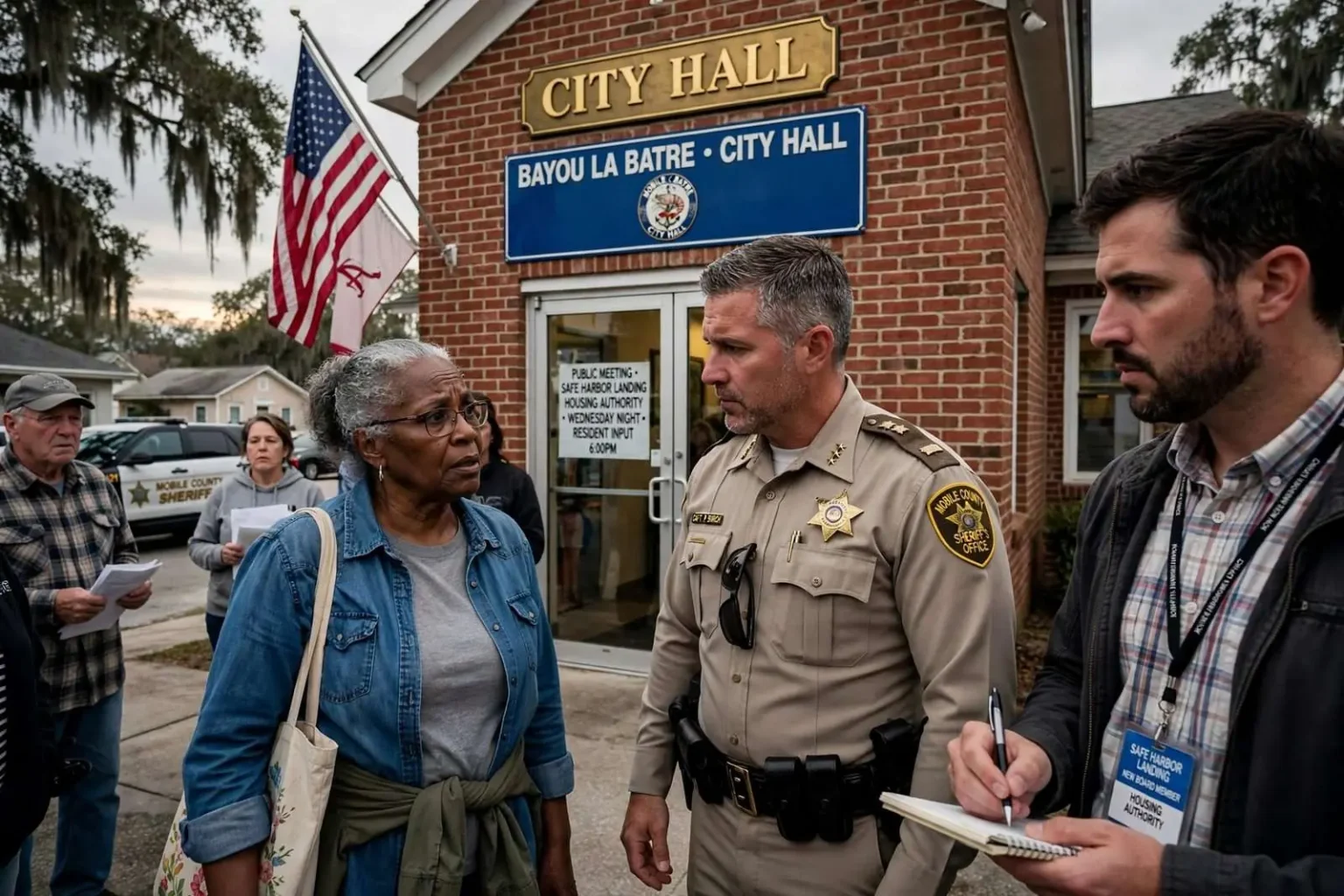
BAYOU LA BATRE, Ala. — Former employees of the Bayou La Batre Housing Authority are under investigation by the Mobile County Sheriff’s Office, following years of complaints from residents about living conditions at a local public housing community. The inquiry moves a long-running local grievance into the criminal justice system, with sheriff’s investigators now examining how the authority’s money was spent during the years residents say their requests for basic repairs went unanswered.
A meeting Wednesday night at Bayou La Batre City Hall drew residents concerned about their homes and the housing authority’s new board members. The gathering gave tenants of the authority’s Safe Harbor Landing community a chance to hear directly from the people now in charge and to describe, in their own words, what conditions have been like. For many in the room, it was the first public accounting of a situation that had built up over years.
All of those being investigated have resigned from the authority and the board, clearing the way for a new board that says it plans to get the neighborhood back on track. The turnover represents a clean break with the management that residents held responsible for the conditions at Safe Harbor Landing, and it places the authority’s recovery in the hands of new leadership working alongside the sheriff’s office.
Years of Complaints About Living Conditions
For years, residents of Safe Harbor Landing reported problems including mold, rodents and even floors giving way. Those are not cosmetic issues. Mold in a humid coastal climate like the Alabama Gulf Coast’s can affect the health of everyone in a household, particularly children and older residents; rodent infestations make apartments difficult to keep livable; and structural failures like collapsing floors make homes dangerous. The complaints that accumulated over the years described housing that had fallen well below the standard public housing residents are entitled to expect.
Linda Blake, who has lived there for eight years, said previous management ignored work orders. “They put us through a lot, because they wouldn’t take care of stuff. You could never get nothing fixed out there,” Blake said. Her account describes the daily experience behind the formal complaint record: requests submitted through the proper channels that produced no repair, no response and no improvement, leaving tenants to live with the problem or attempt fixes on their own.
The work-order backlog described by residents points to the core obligation of a housing authority. Public housing operates on a simple compact: residents pay what rent they owe, and the authority maintains the units it manages. When maintenance fails across years — when mold, pests and structural decay go unaddressed despite repeated requests — the failure is institutional, not individual. It is the kind of pattern that eventually draws the attention of oversight agencies, funding authorities and, in this case, law enforcement.
A Sheriff’s Captain With Two Roles
Mobile County Sheriff’s Office Capt. Paul Burch is serving double duty on this case — as a new board member and as part of the investigation. The dual role puts the law enforcement perspective directly inside the authority’s new governance while keeping the investigative work within the sheriff’s office. It also signals how intertwined the two jobs have become: rebuilding the board’s operations and determining what happened to its money are parts of the same recovery.
“There is a substantial amount of money that comes in and not a dime has been used to improve or maintain the houses. There certainly appears to be a misappropriation of funds, to put it nicely,” Burch said. The statement is a stark assessment. Housing authorities are funded by federal subsidies and tenant rent — public money entrusted to local officials for a specific purpose — and Burch’s description suggests investigators found revenue flowing in while the properties it was meant to maintain visibly deteriorated.
Burch said investigators are in the early stages but have requested subpoenas through the District Attorney’s Office for financial records to determine where the money went. Financial investigations of this kind move through bank statements, contracts, purchase records and account histories, and they take time to assemble into a picture of what happened and who was responsible. He acknowledged that some figures do not add up — a candid signal that the numbers investigators have examined so far already show discrepancies worth pursuing.
The New Board’s Task
The new board says it plans to get the neighborhood back on track, a commitment that covers everything from catch-up maintenance to restoring residents’ trust. Housing authority boards are responsible for governance — setting direction, overseeing the director and staff, and safeguarding the federal and tenant funds that pay for operations. A board that takes over after a financial investigation inherits both the practical work of fixing properties and the institutional work of rebuilding the controls that failed before.
The challenges are considerable. Deferred maintenance compounds: a roof leak that goes unfixed becomes floor damage, mold and structural rot, and years of neglect turn routine repairs into major rehabilitation. The authority must address the mold, the pests and the structural problems residents described while operating under the scrutiny that follows an investigation, with every spending decision examined against the record of what went wrong before.
Burch’s dual role is part of that recovery. Having the sheriff’s office represented on the board gives residents a direct line to the investigation and gives investigators a seat in the room where the authority’s new financial practices are being built. For the residents who attended the Wednesday night meeting at City Hall, the presence of law enforcement inside the new leadership structure is the most concrete assurance yet that the complaints they filed for years are being taken seriously at last.
A Small Fishing City’s Housing Struggle
Bayou La Batre is a small seafood and shipbuilding community on the western edge of Mobile County, home to a working fleet and families who have fished the Gulf for generations. It is a city of modest means, where public housing plays an outsized role in providing homes for older residents, disabled residents and working families priced out of the private market. When a community’s housing authority fails, the people hurt most are those with the fewest alternatives — the residents who cannot simply move when the roof leaks or the floor sags.
The city has weathered its share of hardship, from hurricanes to the Deepwater Horizon oil spill’s impact on its seafood industry, and its housing stock has long been under strain. Safe Harbor Landing’s problems unfolded against that backdrop, in a small city where the housing authority is one of the larger institutions and its failures were felt across the community. The years of ignored work orders that residents described were, in effect, a local crisis playing out unit by unit.
The involvement of the Mobile County Sheriff’s Office rather than city police also reflects the scale of the community. Bayou La Batre’s small police force is supplemented by county law enforcement for major matters, and a public-corruption-style financial investigation into a housing authority is exactly the kind of case that falls to the county level. The District Attorney’s Office subpoenas requested by investigators formalize that partnership.
Residents Finally See Action
Residents say they are thankful someone is finally stepping in. “People on this board now, the sheriff’s office, all of them are just a Godsend,” Blake said. The gratitude reflects how long the situation persisted — eight years of her tenancy, and longer for others, with complaints rising through channels that produced nothing. For tenants who watched every work order disappear into the same system, seeing a captain of the sheriff’s office quote their living conditions back at a public meeting is a reversal of everything they had come to expect.
What happens next depends on two tracks that will run in parallel. The criminal track moves at the pace of financial investigations: subpoenas, records, accounting, and ultimately whatever charges the evidence supports. The housing track moves at the pace of maintenance and governance: repairs at Safe Harbor Landing, new financial controls, and a board demonstrating that the authority’s money now goes where it is supposed to go.
The Bayou La Batre case is a reminder of why oversight of small public agencies matters. Housing authorities manage millions in federal funds with limited local scrutiny, and when internal controls fail, the damage lands on the residents least able to absorb it. The years of mold, rodents and collapsing floors at Safe Harbor Landing were visible to anyone who visited; the money that should have fixed them was, until now, accounted for only by the people who spent it. The new board, the sheriff’s investigation and the residents who kept complaining together represent the correction — slow, overdue and, for the people of Safe Harbor Landing, welcome.