Gulf Shores Names Veteran Mobile Fire Chief Mark Sealy to Lead Fire Rescue
Gulf Shores has hired retiring Mobile Fire-Rescue Chief Mark Sealy as its new fire chief, succeeding Hartley Brokenshaw after nearly three decades of.
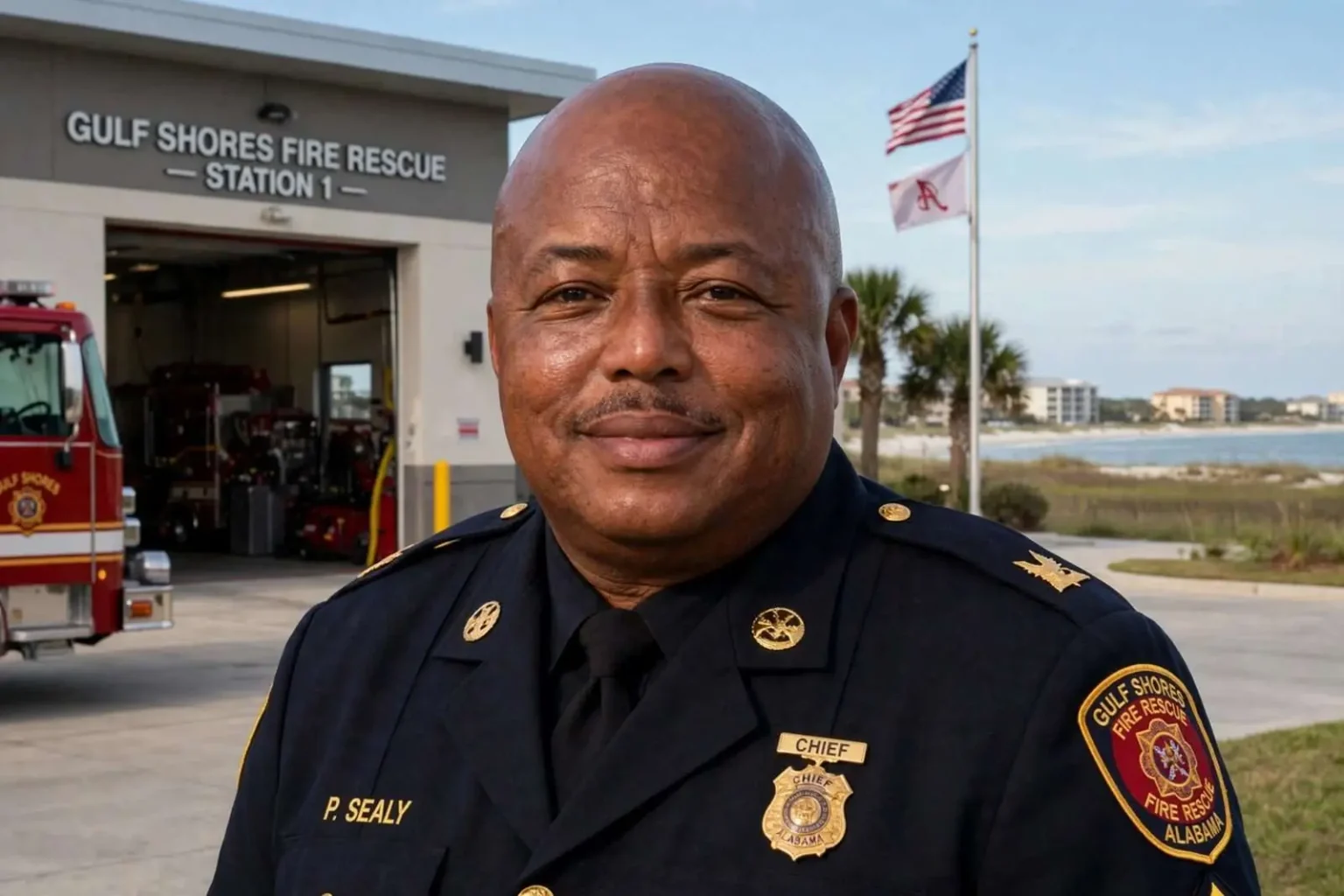
The City of Gulf Shores has named Paul “Mark” Sealy as its new fire chief, with Mayor Robert Craft and the City Council announcing the hire at the council’s August 10 meeting. Sealy, who retired this summer after 29 years with the Mobile Fire-Rescue Department — the last three as its chief — took over the top job effective immediately.
Sealy succeeds Chief Hartley Brokenshaw, who recently retired from the department. City officials credited Brokenshaw with guiding Gulf Shores Fire Rescue to an upgraded ISO Public Protection Classification of 1, the highest grade the insurance industry rating organization awards — a distinction reached by fewer than one percent of fire departments nationwide.
“We are excited to welcome Chief Sealy to City of Gulf Shores Fire Rescue Department,” Craft said in the announcement, citing the new chief’s specialty training in hazardous materials and urban search and rescue along with his credentials as an SCBA specialist, nationally registered paramedic and fire instructor.
Sealy will oversee all five Gulf Shores fire rescue stations, which provide first-responder and lifesaving services to residents and visitors across the beachfront city. The job is one of the most demanding fire chief positions in Alabama: Gulf Shores’ population multiplies dramatically during tourist season, its beachfront condominium towers require high-rise response capability, and summer brings water rescues, traffic collisions on the beach highway corridors and medical calls in numbers few cities its size ever see.
A Career Built in Mobile
A Mobile native, Sealy began his career as a Marine Corps sergeant in a reconnaissance unit before starting as a firemedic and rising through the ranks of the Mobile department — driver, captain and district chief in both operations and training — until his appointment as Mobile’s fire chief in 2017. The path gave him command experience at every level of a major urban fire department, from the seat of an engine to the executive floor.
He holds a fire science degree from Columbia Southern University and is enrolled in the National Fire Academy’s Executive Fire Officer Program, the federal government’s premier executive development course for fire service leaders. His specialty credentials — hazmat, urban search and rescue, SCBA — map closely onto the risks a coastal resort city faces, where hazardous materials travel the port corridors and structural collapse rescues demand specialized training.
The ISO Class 1 rating he inherits is itself a rarity worth understanding for Baldwin County homeowners. The Insurance Services Office grades fire protection on a scale from 1 to 10, weighing a department’s personnel, equipment, training and water supply, and insurers use the grade in setting property premiums. A Class 1 department signals both superior service and, for residents, a tangible financial benefit on homeowners’ policies.
Brokenshaw’s department earned that grade through years of investment in staffing, apparatus and training — and in a city that swells each summer, maintaining it is a permanent challenge. Sealy’s task will be to hold the standard while absorbing growth along the beachfront and in the city’s expanding residential districts, where new subdivisions and short-term rental towers keep adding calls to the log.
Two Chiefs in One Month
His arrival closes out a busy leadership season on Alabama’s coast: Mobile simultaneously promoted Jeremy Lami to succeed Sealy as its fire chief, meaning both neighboring departments changed hands within the same month. The coordination was coincidental in timing but consequential in practice, since Mobile Fire-Rescue and Gulf Shores Fire Rescue share personnel pipelines, mutual-aid habits and a regional culture in which departments borrow each other’s specialists without hesitation.
Gulf Shores, one of the fastest-growing cities on the Alabama coast, has watched its year-round population climb while its tourist counts multiply far beyond it. The city’s beaches, anchored by Gulf State Park and the public beach districts, draw visitors from across the Southeast every summer, and the fire rescue department’s five stations stand between those crowds and the region’s most common coastal emergencies — rip currents, heat illness, roadway crashes and the occasional hurricane.
The department’s first-responder model means nearly every call involves medical care, which is why the paramedic credential in Sealy’s resume carried weight in the hiring. Fire-based emergency medical services deliver the fastest response in the city, often reaching a patient minutes before a transport ambulance, and the chief sets the training standards that keep those responses sharp.
What the Hire Means for Gulf Shores
For residents, the transition lands mostly in the details: response times on West Beach, staffing on summer weekends, the pace of hiring to match new development. Gulf Shores officials have consistently tied public safety spending to growth, and the choice of a chief from a much larger department signals that the city expects its fire rescue operation to keep scaling without losing the Class 1 standard.
For the region’s emergency network, the dual transition binds the two cities closer. Mutual aid along the coast moves firefighters between Mobile and Baldwin County for major incidents, and a chief who spent 29 years in Mobile knows exactly which Baldwin County engines, boats and specialists to call. Gulf Shores also cooperates with neighboring Orange Beach Fire Rescue and Baldwin County’s volunteer districts, relationships that depend on the kind of long-standing personal networks Sealy brings with him.
The August 10 announcement also resolved a question that had hung over both departments since the summer. Sealy’s retirement from Mobile created two vacancies with one man, and the quick sequence — Lami’s promotion in Mobile, Sealy’s appointment in Gulf Shores — meant neither department faced an interim leadership vacuum heading into the busiest stretch of the coastal calendar.
Fire chiefs on the Alabama coast describe the job as equal parts administration and anticipation. The administrative half covers budgets, apparatus replacement and the personnel evaluations that keep a department eligible for its ISO grade. The anticipation half is meteorological: every June 1, the coast watches the tropics, and the fire chief is a key voice in each city’s hurricane preparations, from pre-landfall staging to the door-to-door searches that follow a major storm.
Hurricane Country’s Demands
Gulf Shores took direct hits and near misses over the past two decades — Hurricane Ivan in 2004, Hurricane Katrina’s outer bands a year later, Hurricane Sally’s punishing 2020 landfall just up the coast — and each storm has shaped how the city preps. Fire rescue stations double as anchors for the city’s emergency operations, and chiefs are expected to know their fleets, their fuel contracts and their high-water vehicles intimately.
Sealy’s hazmat and urban search-and-rescue background speaks directly to that world. Post-storm work involves collapsed structures, gas leaks, entrapments and water rescues — scenarios that specialize beyond ordinary firefighting — and a chief who has commanded those operations in Alabama’s largest city arrives in Gulf Shores with the playbook already written.
City officials framed the hire as a continuation of momentum rather than a rebuild. With the Class 1 rating secured, stations staffed and the summer season’s demand known, Gulf Shores handed its new chief a department in strong condition and a simple mandate: keep the best fire protection on the coast running as the city grows around it.
Sealy’s route to the coast’s top fire job also reflects a career pattern the fire service loves to celebrate: the Marine Corps reconnaissance sergeant who came home to Alabama, pinned on a firemedic badge and never stopped climbing. The discipline of military reconnaissance — small teams, hard terrain, decisions under pressure — translates naturally into rescue work, and veterans of that background have long been overrepresented in the fire service’s technical rescue specialties.
His training portfolio has practical value for the department’s own pipeline as well. As a fire instructor, Sealy has taught the next generation of Alabama firefighters, and chief officers who come up through training assignments tend to run departments that emphasize drills, certification and safety culture. Gulf Shores’ five stations will feel that influence in everything from equipment checks to promotion exams.
Looking Ahead on the Coast
The transition caps a remarkable stretch for the Sealy family name in Alabama fire service, and it leaves both cities with leadership in place for years to come. Mobile, under Lami, retains a chief who rose through the same ranks; Gulf Shores gains one who commanded the state’s largest fire department through three years that included a pandemic and a major hurricane.
For Gulf Shores residents and the millions who visit each year, the practical takeaways are straightforward. The department’s Class 1 protection, its paramedic-level first response and its storm readiness all continue under new leadership, and the city’s announcement made clear that the council expects nothing less. Beach flags will fly, lifeguards and firefighters will patrol their summer beats, and five stations will keep answering the phone.
The August 10 council meeting where the hire was announced was, by local government standards, a moment of ceremony in a busy agenda — a handshake between a mayor and a chief, a round of applause, and a city staff photograph. What follows is the harder part: the budget hearings, the response-time statistics, the next hurricane season. On the evidence of his first three decades in Alabama fire service, Mark Sealy has spent his career preparing for exactly that.
Residents with questions about Gulf Shores Fire Rescue services, station locations or the department’s programs can contact Fire Rescue through City Hall. For information about the ISO rating and how it affects homeowner insurance, residents can also consult their insurance carriers, who apply the Class 1 classification to policies across the city.