
Gulf Shores to Auction Surplus Items Through GovDeals
The City of Gulf Shores is holding a surplus auction through GovDeals, with items available for viewing by appointment at its Public Works Facility.
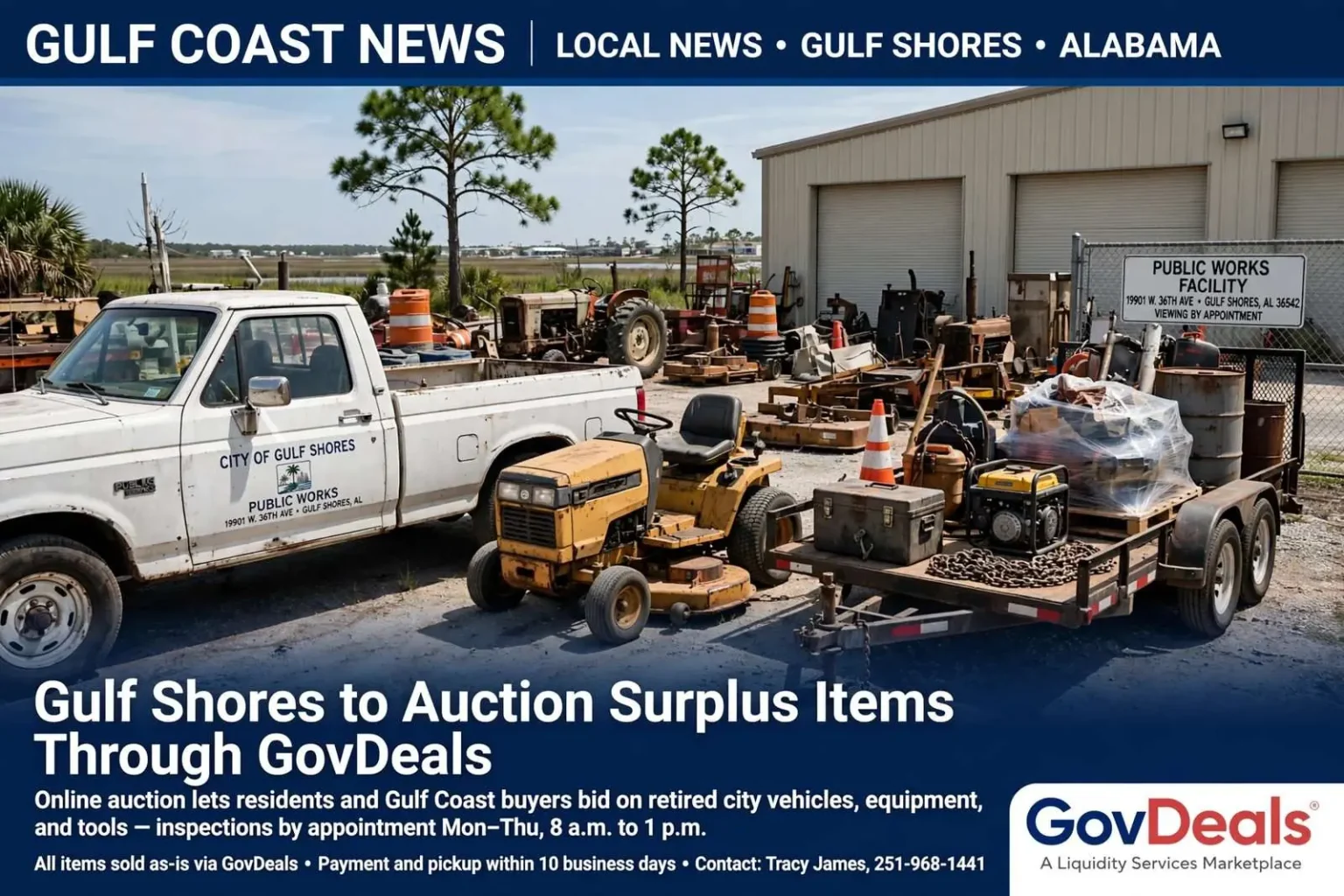
The City of Gulf Shores is holding a surplus auction, with items sold online through GovDeals. The auction gives residents and bargain hunters across the Gulf Coast a chance to bid on equipment the city no longer needs, while helping the municipality clear space and recoup value from property that would otherwise sit idle. Like most municipal surplus sales, everything moves through the GovDeals online marketplace rather than a traditional live auction.
Viewing by appointment Auction items may be reviewed during the auction by appointment only at the Public Works Facility, located at 19901 W. 36th Avenue, Gulf Shores, AL 36542, behind Mobile Lumber on Highway 59. To schedule a viewing, call Tracy James at 251-968-1441. Appointments are available between 8 a.m. and 1 p.m., Monday through Thursday. Anyone planning to bid is strongly encouraged to look over the items in person before the auction closes, because what buyers see is exactly what they get.
Terms and pickup All items are sold “as is” and must be paid for and picked up within ten business days from the end of the auction. All payments will be made through GovDeals, so no cash changes hands at the Public Works Facility. The city noted that it is not responsible for loading auction items. Successful bidders must come prepared to jump start vehicles or equipment, change batteries, repair flat tires, and load or tow their purchases.
How GovDeals auctions work
GovDeals is an online auction service that handles surplus property for cities, counties, school systems and state agencies across the country. Buyers create an account, browse listings with photos and descriptions, and place bids over a set window of days, with each listing closing at a scheduled time. The platform works much like other familiar auction sites, though everything sold through it comes from government inventory rather than private sellers.
For governments, the appeal is reach. A traditional yard sale or courthouse auction draws mostly local buyers, while an online listing puts a Gulf Shores truck or mower in front of bidders in other states who are willing to pay more and handle pickup themselves. Competition from a wider pool of bidders typically drives final prices higher, which means more money returned to the city for equipment it sold off.
Municipalities in Alabama routinely declare equipment surplus once it ages out of dependable service or no longer fits the city’s needs. Governing bodies formally declare property surplus before it can be sold, a step that protects the public interest by making the disposal open and documented. Auctioning through a service such as GovDeals is one of the standard methods cities use to complete that process.
What typically goes on the block
Cities generally rotate items through surplus auctions as they age out of the fleet. Common listings include pickup trucks, sedans and sport utility vehicles that have logged years of municipal service, along with mowers, tractors, trailers, small tools, office furniture and shop equipment. For budget-conscious buyers, retired municipal vehicles and equipment can be a way to pick up machinery at prices well below retail, provided they understand what they are buying.
That understanding matters, because municipal equipment has usually lived a hard working life. Vehicles retired from a public works fleet have often spent years on beach roads, job sites and routine routes, and they are sold exactly as they came off duty. The city’s instructions about jump starts, batteries, flat tires and towing are a candid warning that buyers should expect to do some work before anything purchased rolls or drives home.
Inspecting before you bid
The appointment-based viewing at the Public Works Facility is the single most important step for serious bidders. Photographs on an auction listing can hide rust, leaks, missing parts and other flaws, and an as-is sale offers no recourse after the hammer falls. By calling Tracy James at 251-968-1441 and scheduling a visit between 8 a.m. and 1 p.m. Monday through Thursday, bidders can check fluid levels, kick the tires, look over frames and beds, and generally decide for themselves what an item is worth.
The facility itself sits behind Mobile Lumber on Highway 59, the main corridor running through Gulf Shores. W. 36th Avenue is a side street serving the city’s operations complex, where public works crews stage vehicles and equipment that keep the city’s streets, beaches and facilities running. Buyers who visit should plan for the layout of a working yard rather than a showroom, with items lined up and presented in the condition they left service.
Experienced surplus bidders bring a short checklist to viewings. For vehicles, they look at mileage, body condition, tire wear and whether the engine turns over; for equipment, they check hydraulics, blades, belts and signs of deferred maintenance. Bringing a flashlight and asking questions during the appointment can save hundreds of dollars in surprises, and it is the only chance most buyers will have to see the items up close before bidding.
The terms that bind every buyer
The ten-business-day window for payment and pickup is firm, and it is one of the most common trip-ups for first-time GovDeals buyers. Bidders who win an item need a plan for getting it home quickly, including transportation, help with loading and the time to complete payment through the website. Because payments are made entirely through GovDeals, buyers should make sure their account and payment method are in order before the auction ends rather than scrambling afterward.
The loading rule deserves special attention. The city is not responsible for loading auction items, which means the buyer supplies the muscle and the equipment. Vehicles that run can be driven onto a trailer; equipment that does not has to be winched or forklifted by the buyer. The city’s note that purchasers must be prepared to jump start vehicles, change batteries and repair flat tires is not boilerplate — it reflects the reality of buying equipment that has been sitting in a city yard.
Buyers should also keep the as-is condition in mind when setting their maximum bid. There are no warranties, no returns and no repairs promised on the back end, so the winning price has to account for whatever work an item needs. Savvy bidders price in the cost of a battery, a tow or a trip to a mechanic before they ever click the bid button, which keeps the bargain a bargain even after the hidden costs come due.
Why the auctions matter to the city
Surplus auctions are more than a convenience for bargain hunters; they are a routine part of how a growing city manages its assets. Gulf Shores has been one of the fastest-growing communities on the Alabama Gulf Coast, with a tourism economy that puts extraordinary demands on its public works fleet, from beach cleanup equipment to the vehicles that maintain streets and public facilities. Retiring worn equipment and selling it through auction keeps the fleet fresh and turns old assets back into budget dollars.
The proceeds from surplus sales flow back into municipal operations, helping offset the cost of replacements. For taxpayers, the alternative — letting equipment rust in a yard or giving it away without open competition — would be a poor use of public property. The online auction model has become the standard because it documents every sale, maximizes the return and opens the process to anyone willing to register and bid.
For local residents, the auctions also carry a bit of appeal beyond the savings. Municipal surplus sales have a way of turning up oddities and useful workhorses alike, and on the Alabama Gulf Coast they have become a quiet tradition among handymen, small contractors and collectors who watch the listings for the next auction to open. Anyone interested in this round can start by scheduling a viewing appointment and registering on GovDeals before the bidding closes.
Tips for first-time surplus bidders
Anyone new to government surplus auctions can improve their odds with a little preparation. Set a maximum bid before the listing closes and stick to it, since the excitement of an auction can push prices past the point of a real bargain. Read every line of the listing and the terms, because language such as “as is,” “untested” or “condition unknown” is doing real work in the description. And confirm pickup logistics before bidding — the distance from the Public Works Facility to home, the availability of a trailer and a helper, and the ten-business-day deadline all factor into whether a deal is truly worth it.
Timing matters as well. Bidding on GovDeals often accelerates in the final minutes of a listing, so buyers who want an item should watch the close and be ready to bid rather than assuming an early lead will hold. Payment is completed through the platform, and the sooner the transaction is finished, the more time remains to arrange pickup inside the window. Bidders who plan the whole sequence — inspection, bidding, payment, loading, hauling — tend to be the ones who walk away satisfied.
The city’s surplus auction is a recurring feature of municipal life on the Alabama coast, and the current round follows the same playbook the city has used before: online bidding through GovDeals, appointment-only viewing at the Public Works Facility behind Mobile Lumber on Highway 59, and strict as-is terms with a ten-day window for payment and pickup. Residents with questions about the items or the viewing process can reach the city’s contact for the auction at 251-968-1441 during the appointment hours of 8 a.m. to 1 p.m., Monday through Thursday.

