Jackson police: 11-year-old shot his mother at family home
Jackson police say an 11-year-old shot his mother at their family home; the mother was released from the hospital with minor injuries.
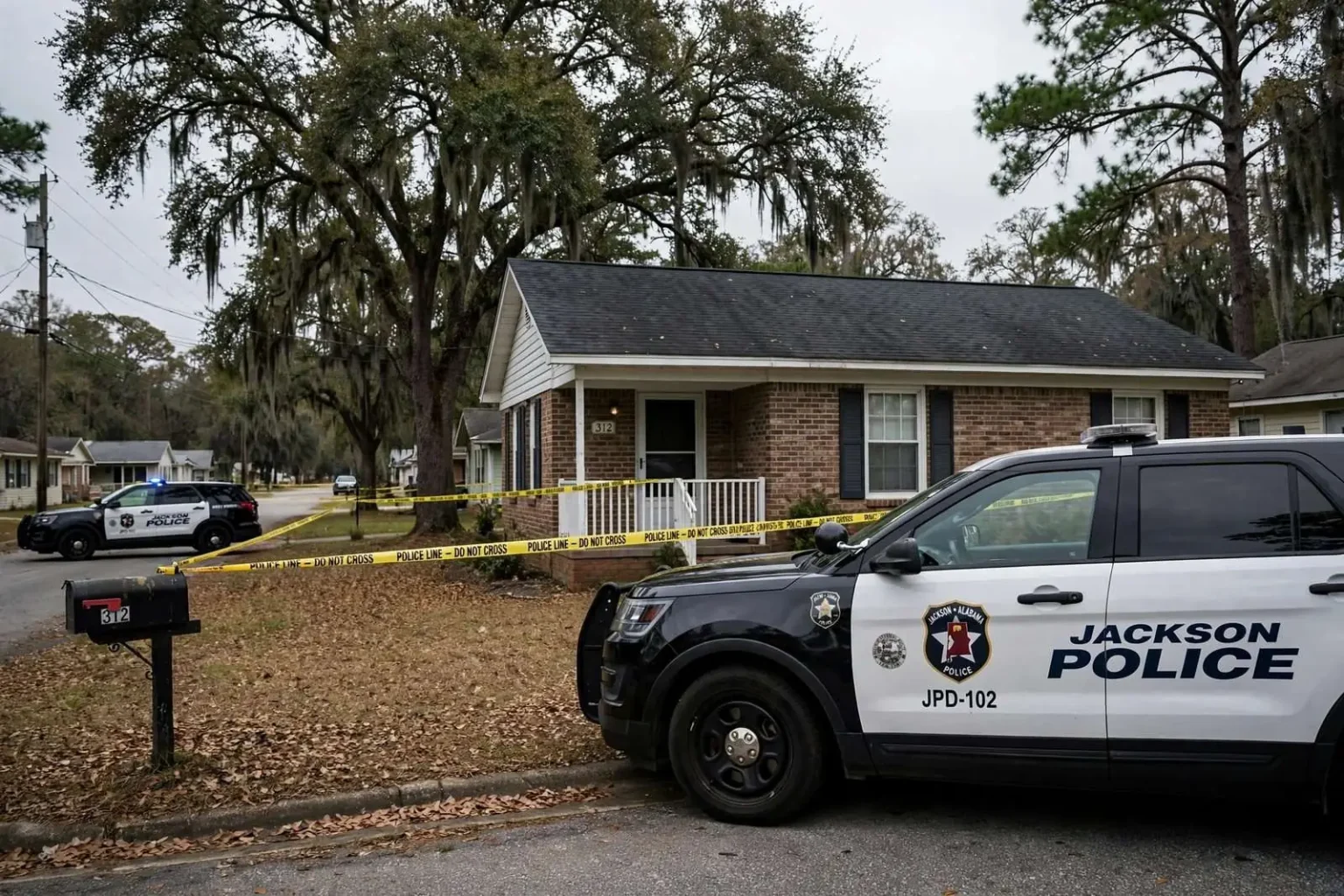
JACKSON, Ala. — Jackson Police confirm an 11-year-old child shot his mother at the family’s home over the weekend. The mother has since been released from the hospital with minor injuries, according to police. Investigators said the shooting happened at the family residence and that the district attorney’s office is working with Jackson Police on the case. No other details have been released, and the investigation is ongoing.
The incident has shaken this small Clarke County community, where news of a child involved in a shooting at a family home travels quickly and leaves neighbors searching for answers. Jackson, the county seat of Clarke County, is a city of roughly 5,000 residents along U.S. Highway 43 between Grove Hill and Thomasville, a place where the police department knows its residents by name and incidents of this kind are rare enough to register deeply across the town.
Because the person who pulled the trigger is 11 years old, the case sits at the intersection of criminal investigation and the juvenile justice system, where proceedings are handled very differently than they are for adults. Police confirmed the basic facts — that the child shot his mother, that she suffered minor injuries, and that she has been released from the hospital — but declined to release further details, a restraint that is common in cases involving minors and family members.
How juvenile-involved shootings are handled in Alabama
When a child under a certain age is involved in a shooting, the response involves multiple agencies rather than a single investigation. Police document the scene, interview family members and witnesses, and secure any firearms involved. The district attorney’s office, which Jackson Police confirmed is working with them on this case, determines how the juvenile justice system will treat the matter, consulting state law and the child’s age. In Alabama, matters involving children of this age generally move through the juvenile court system, where the focus blends accountability with questions of supervision, treatment, and family circumstances.
Juvenile proceedings in Alabama are confidential by design. Records are sealed, hearings are closed, and officials are limited in what they can say publicly. That is why, in cases like this one, the public may never learn the precise circumstances — whether the shooting was intentional, accidental, or the result of a child gaining access to an unsecured weapon. The confirmation that the mother’s injuries were minor and that she has been released from the hospital is one of the few concrete details authorities have offered.
The involvement of the district attorney’s office from an early stage signals that prosecutors are treating the case with the seriousness it requires. In Clarke County, the district attorney’s office prosecutes cases from the circuit that includes Clarke, and its role in a juvenile matter includes reviewing evidence, advising police, and deciding whether and how the case proceeds in juvenile court.
Small-town policing and family incidents
For a department the size of Jackson’s, an incident inside a family home carries a particular weight. Small-city police officers investigate the full range of cases but do so with fewer personnel and in a community where the people involved are often known to them personally. Weekend calls to family residences are among the most difficult work a small department does, and a shooting involving a child magnifies the challenge.
Departments in communities like Jackson typically lean on support from county and state partners when needed, including the Clarke County Sheriff’s Office and the Alabama Law Enforcement Agency, which can provide additional investigators or specialized services. Neither police nor prosecutors have said whether outside agencies are involved in this case, and the absence of further public details reflects the careful handling that incidents involving minors demand.
What authorities have confirmed is limited by design: an 11-year-old child, a shooting at the family’s home over the weekend, a mother treated for minor injuries and released, and an active investigation conducted with the district attorney’s office. Everything beyond those facts — the circumstances inside the home, the source of the firearm, and what happens next for the child — remains within the confidential channel of the juvenile system.
Children and unsecured firearms: a recurring Gulf South problem
Incidents in which children gain access to firearms are a persistent concern across Alabama and the broader Gulf South, where household gun ownership is common and widely accepted. Safety organizations that track unintentional shootings involving children consistently find that many occur when a loaded, unsecured weapon is within reach at home. Public health researchers have long encouraged secure storage — lockboxes, trigger locks, and storing ammunition separately — as the single most effective step families can take to prevent both accidents and impulsive harm.
Alabama law generally leaves storage decisions to parents and guardians, and unlike some states, it does not impose a broad criminal storage mandate. That reality places heavy practical responsibility on households with children, and pediatricians and sheriff’s offices across the state periodically distribute free locks and storage guidance to reinforce the message. National data on child-involved shootings show they peak during hours when children are home from school, on weekends and during summer months, and often involve weapons that belonged to a parent or relative.
No cause has been established in the Jackson case, and authorities have not said how the child obtained the weapon. But the case is the kind that gun-safety advocates and school counselors alike point to when urging families to talk directly with children about firearms, to secure them without exception, and to treat a child’s access to a loaded gun as an emergency rather than a rite of passage.
The toll on schools, neighbors, and families
When a family incident of this kind becomes public in a town the size of Jackson, the effects spread beyond the household involved. Children at local schools may hear fragments of the story from classmates, and school districts typically prepare counselors to respond when students are affected by crises at home. Clarke County’s public schools serve families across the county seat and surrounding communities, and incidents involving students or their families are usually met quietly, with support offered rather than attention drawn.
Neighbors, meanwhile, often struggle with the gap between what they know — a siren, an ambulance, police cars parked outside a house they pass every day — and what authorities are able to confirm. In cases involving minors, that silence is intentional and protective, but it can feed speculation. Community leaders in small Alabama towns generally respond by encouraging restraint, respecting the family’s privacy, and allowing investigators and prosecutors to do their work without pressure from rumor.
For the mother who was shot and released from the hospital, recovery will involve far more than healing minor physical injuries. Family members involved in incidents like this face a long aftermath — investigators’ questions, court involvement, and the strain of an event that altered their household in an afternoon. Support services, from victim advocates at the district attorney’s office to family counseling resources in the region, exist precisely for these situations.
What comes next in the investigation
Jackson Police have said only that the investigation remains ongoing, which in practice means detectives are still completing interviews, reviewing evidence from the home, and consulting with the district attorney’s office about how the juvenile case will be handled. Once a determination is made, any proceedings would occur in Clarke County’s juvenile court, where a judge weighs the child’s circumstances, any services the family may need, and the appropriate response under Alabama law.
The timeline for such cases is often measured in weeks or months, and the outcome is rarely public. For the rest of the community, the case stands as a stark local reminder of two things at once: that serious incidents can unfold inside ordinary homes in small towns, and that the region’s institutions — police, prosecutors, courts, and schools — have established processes for handling even the hardest cases with care.
Authorities have asked that anyone with relevant information contact the Jackson Police Department, and they continue to urge patience while the investigation proceeds. Until investigators and prosecutors finish their work, the confirmed facts remain what police have stated: an 11-year-old child shot his mother at the family’s home over the weekend, her injuries were minor, she has been released from the hospital, and the district attorney’s office is working with Jackson Police as the investigation continues.
Jackson has weathered hard news before, as small county seats along Highway 43 always have, and the pattern of response tends to look the same each time: initial shock, careful official silence, and then a community absorbing what happened and moving forward. What families in the area can take from this case is practical as much as emotional — secure firearms at home, talk with children honestly and often, and treat early warning signs in a household as something to act on rather than hope away.