Last sunken boats pulled from Pensacola Bay weeks after Hurricane Sally
Crews used a crane and divers to pull the last sunken boats from Pensacola Bay's Palafox Pier marina weeks after Hurricane Sally made landfall.
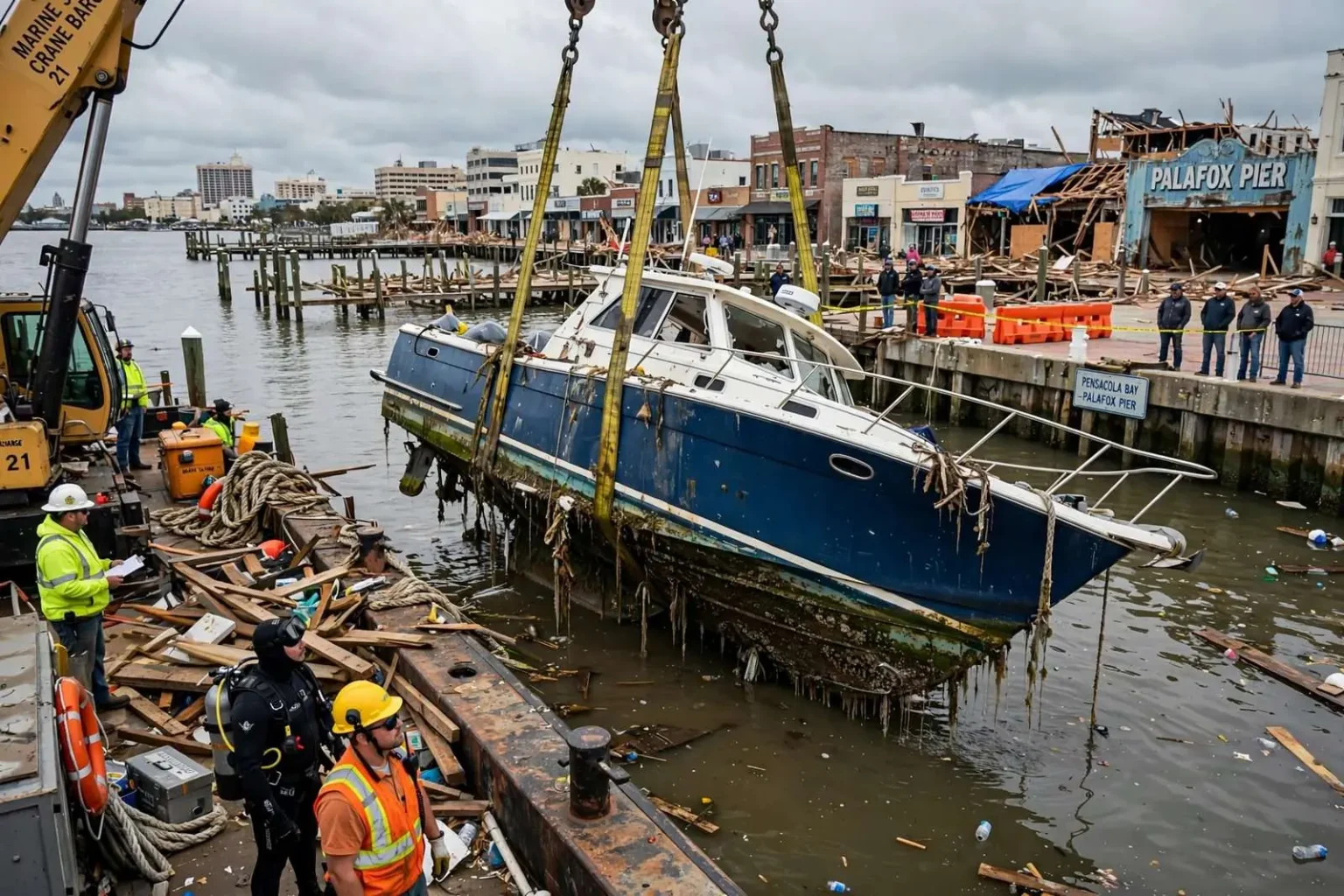
PENSACOLA, Fla. — The final boats submerged in Pensacola Bay after Hurricane Sally were lifted out of the water Thursday afternoon, wrapping up a recovery effort that began weeks earlier. The last lift closed out one of the most visible cleanup operations in the Panhandle following the storm, and it returned the downtown waterfront closer to the place residents remembered before Sally rearranged it in a single night.
When Sally came ashore on Sept. 16, boats at the Palafox Pier marina were left in disarray — some partially submerged and others completely underwater. Lines snapped, slips filled, and vessels broke loose from their moorings as the bay rose. By the time the storm moved on, the marina at the foot of Palafox Street was a jumble of hulls, pilings, and scattered gear, with boats resting on top of one another or sinking where they sat.
Sally made landfall as a Category 2 hurricane along the Alabama Gulf Coast, but its slow forward speed meant communities across the Pensacola area endured hours of punishing onshore wind. That steady push piled water into Pensacola Bay and Escambia Bay, flooding low-lying neighborhoods, tearing apart docks, and driving storm surge well inland along the waterfront. Downtown Pensacola, where Palafox Pier anchors the retail and restaurant district near the end of Palafox Street, took some of the most-photographed damage of the storm, with the famous fishing vessel and surrounding docks battered and portions of the Three Mile Bridge knocked out.
A marina turned upside down
The scene at Palafox Pier in the days after landfall was hard to overstate. Boats that had spent years tied up in their slips were found resting against seawalls, lodged under piers, or resting upright on the bay bottom in a few feet of water. Some owners arrived to find their vessels gone entirely, only to learn days later that they had been spotted wedged beneath a neighboring structure or pushed up against the breakwater.
The mess was not limited to the boats themselves. Dock boxes, fuel lines, lumber, and pieces of torn-apart piers joined the vessels in the water, creating a submerged obstacle course that made even simple salvage work dangerous. Before anything could be raised, crews had to determine what lay under the surface, where each hull sat, and which boats could be lifted without damaging the marina’s remaining infrastructure or nearby vessels.
That is where the recovery effort that ended Thursday began. In the weeks after the storm, a coordinated group of salvage workers, crane operators, and divers took on the job of clearing the bay bottom section by section, working outward from the worst of the pileup near the marina.
The operation unfolded on two levels at once. On the surface, crews used a crane mounted on a barge to hoist vessels one at a time from the water. Below, divers went down to rig each boat, attach lifting straps, and clear debris from around the hulls so the crane pulls would be safe and controlled. The divers loaded the vessels onto the barge, which ferried them to shore as space allowed.
Officials described the work as a slow, methodical process, and the pace reflected the conditions. Pensacola Bay’s water is murky even on a good day, and after a hurricane the visibility near the bottom can drop to nearly nothing. Divers frequently worked by feel, navigating around hulls, pilings, and loose debris while planning each lift. Every boat had to be assessed for structural integrity before it came out — a hull that breaks apart mid-lift can drop its contents, fuel, and oil back into the bay, undoing days of work.
Environmental care was a quiet but constant part of the operation. Sunken vessels almost always release something — fuel, oil, hydraulic fluid, batteries — and salvage crews working in the bay had to contain those materials as each boat came up. Removing the boats was only half the job; officials stressed that crews were clearing not just the vessels but the debris that sank to the bottom of the bay, from dock lumber to personal belongings that washed off the marina.
A scene unlike anything locals had seen
For people who gathered along the seawall to watch the work, the recovery was its own attraction. One onlooker said the scene was unlike anything they had seen, with boats stacked on boats and vessels wedged underneath waterfront structures. The image stuck with many who came down to Palafox Street in the weeks after the storm: cranes swinging hulls into the air, divers surfacing between lifts, and barges stacked with the remains of boats that had spent months, in some cases years, tied up comfortably just a few feet away.
The salvage job also served as a visible measure of the city’s recovery. With so much attention on roof damage, power outages, and downed trees across Escambia County, the effort to clear the bay was a reminder that the storm’s impact reached well past the treeline. Pensacola’s identity is tied to its waterfront, from the anglers who launch at dawn to the families who stroll Palafox Pier on weekend evenings, and each boat lifted from the bay signaled a step back toward normal for the people who use it.
Salvage work of this scale is uncommon for a single marina, and it demanded coordination well beyond the typical tow-and-recover calls that follow a storm. Boats that sank in the bay became the responsibility of their owners and insurance carriers once they were located, but removing them safely required specialists: heavy-lift crane operators, commercial divers, and marine contractors who could judge how a waterlogged hull would behave as it broke the surface. The Coast Guard and state environmental agencies also keep a close watch on operations like these, since every raised vessel carries the potential for a fuel or oil discharge into the bay.
For boat owners, the weeks of waiting were their own ordeal. A vessel that sits submerged for long takes on water in the cabin, soaks upholstery and electronics, and can suffer hull damage from shifting against debris on the bottom. Insurance adjusters generally encourage owners to begin salvage as quickly as conditions allow, both to limit further loss and to document the damage. In a marina as crowded with wrecks as Palafox Pier was after Sally, the queue meant some owners waited while crews worked through the pileup slip by slip.
The work also required patience from the businesses that line the downtown waterfront. Restaurants and shops near the pier depend on foot traffic from the marina, and blocked-off sections of the waterfront kept some customers away even after power was restored and roads reopened downtown. Clearing the boats was, in that sense, an economic recovery project as much as a maritime one.
What comes next for the waterfront
With the last boat out of the water, most of the debris and boats appear to have been cleared from the bay near the pier. Some areas along Palafox Pier remained blocked off as crews finished returning the waterfront to normal, a final phase that includes inspecting docks, repairing utilities, and making sure nothing hazardous remains below the surface where boaters and pedestrians move.
Full recovery of the marina will take longer than the salvage operation itself. Rebuilding damaged dock systems, replacing pilings, and rewiring shore power are the kinds of jobs that stretch across months, and marina staff will work through slip assignments as owners decide whether to repair their vessels or replace them. Storm-damaged boats that were lifted onto the barge now face their own evaluations, and some will be repaired while others are declared losses.
The episode leaves lessons for the rest of the hurricane season and for storms to come along the Gulf Coast. Marina operators and boat owners across the Panhandle have long known the drill: double up lines, remove valuable electronics, and haul out vessels when a serious storm threatens. Sally showed how quickly those preparations can be overwhelmed when surge and wind combine in the wrong way, and how much labor it takes to undo that damage after the fact.
For now, the focus in Pensacola shifts from lifting boats to rebuilding routines. Anglers are returning to the bay, tour and charter operators are resuming trips, and the waterfront path along Palafox Street is reopening section by section as crews pull back the barricades. The final lift Thursday did not restore the marina to what it was before Sept. 16, but it removed the most visible reminder of the storm from the water and gave the city a clear shot at finishing the job.
The recovery effort that ended this week was, in the end, measured in patient, repetitive work: one boat rigged, lifted, and set on a barge at a time, one section of bay bottom cleared after another, until the last hull came out of the water Thursday afternoon. What Sally scattered in hours took weeks of methodical labor to undo — and the sight of an unobstructed bay at the foot of Palafox Street is the payoff that residents, business owners, and boaters have been waiting to see.