Mobile City Council Weighs Rewrite of Downtown Panhandling Rules
Mobile's City Council Public Safety Committee is revising its downtown panhandling ordinance, with a vote expected by the end of September.
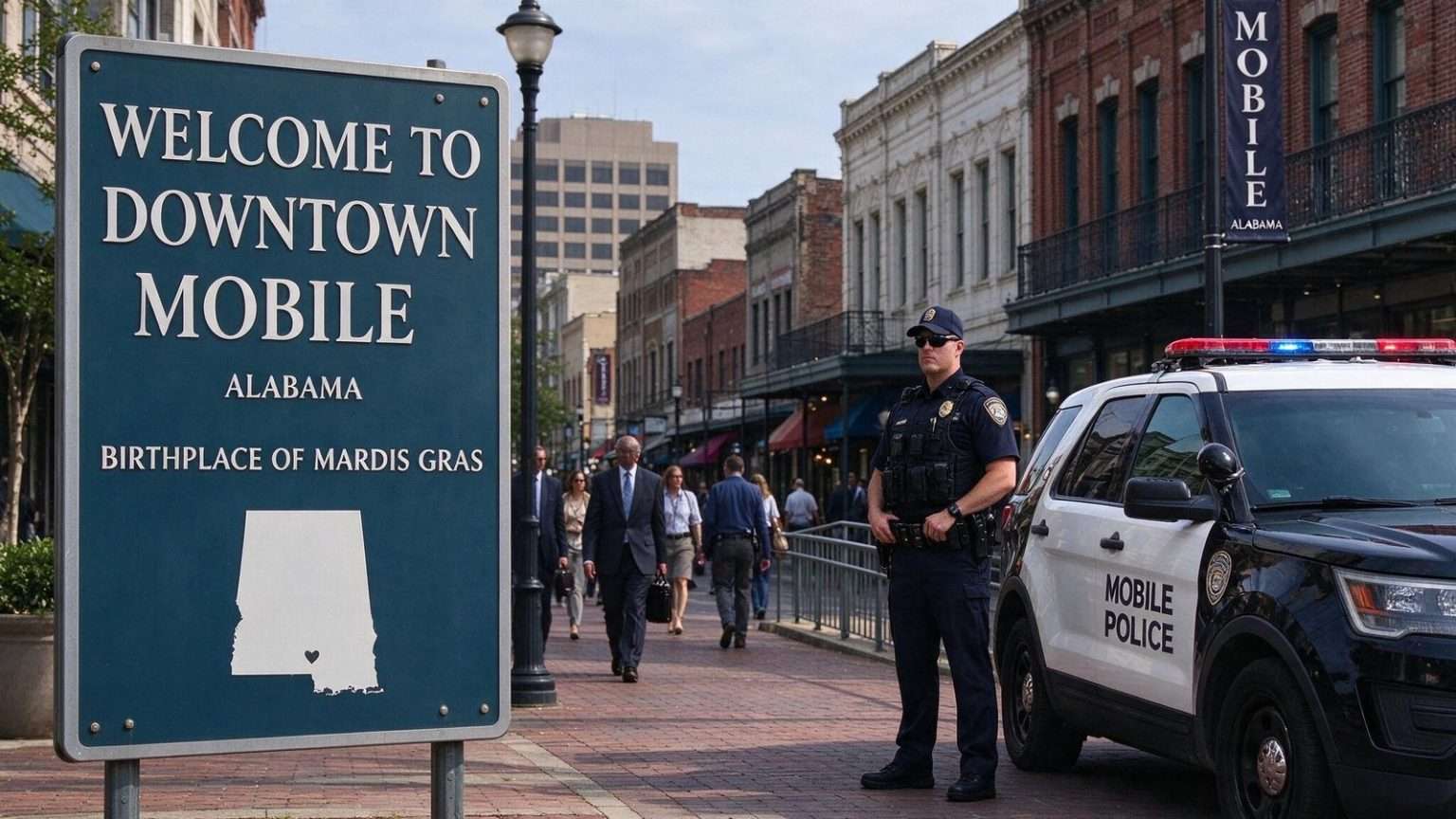
Mobile Moves to Rewrite Downtown Panhandling Rules
Mobile city officials are moving forward with a rewrite of the ordinance governing panhandling in the downtown business district, following a Tuesday meeting of the City Council’s Public Safety Committee. The session brought together some of the most influential figures in city government, including Mobile Police Chief Tyrone Williams, Council President Reggie Copeland and Councilman Fred Richardson, who has taken the lead on the panhandling cleanup effort. Representatives of organizations that assist Mobile’s homeless population also took part in the discussion, giving the committee a view of the issue from both the enforcement and the service side. According to those present, there was broad agreement among committee members that an updated ordinance should move forward.
The main point of ongoing debate is how violations would be enforced and punished, an issue officials say still needs to be worked out before a final draft is ready. That question matters because panhandling ordinances across the country have repeatedly run into legal challenges when penalties are seen as too harsh or when the conduct they target is protected expression. Committee members are weighing whether violations should be treated as minor municipal offenses, what fines or citations would look like, and how repeat encounters should be handled. Until those details are settled, the committee cannot send a finished product to the full council.
The committee plans to meet again on September 14 to continue hashing out the details. Richardson has said he expects the revised ordinance to be ready for a full City Council vote by the end of September. That timeline gives the panel roughly one more working session to resolve the enforcement questions, and it sets up a busy stretch for a council that has already devoted significant attention to conditions in the downtown core. City officials have signaled that the goal is to have new rules on the books before the end of the year, when downtown foot traffic typically picks up with the start of Mardi Gras season.
Cities across the country have grappled with how to regulate panhandling downtown without running afoul of free speech protections. The most common approach has been to restrict aggressive panhandling, panhandling near ATMs and intersections, or panhandling after dark, rather than banning the activity outright. Courts have generally been skeptical of blanket prohibitions on asking for money in public spaces, treating the act as a form of speech, but they have been more receptive to rules aimed at conduct that is intimidating or that creates safety hazards. Ordinances that focus on where and how solicitation happens, rather than whether it happens at all, have tended to hold up better.
It is not yet clear which approach Mobile’s revised ordinance will take, though city leaders have said the goal is to balance concerns from downtown merchants and visitors with the needs of homeless residents. Business owners in the downtown district have complained for months that aggressive solicitation is driving customers away from restaurants, bars and shops, particularly along the Dauphin Street entertainment corridor. At the same time, advocates for the homeless have warned that criminalizing the requests of people in genuine need does nothing to solve the underlying problems of poverty, addiction and mental illness. The committee’s challenge is to write rules that give police a usable tool without sweeping in conduct that courts would strike down.
Advocacy Group Reports Fewer Incidents Downtown
As the ordinance rewrite works its way through committee, members of a local advocacy group say they are already seeing a difference on the street. David Rasp, owner of the downtown bar Heroes and organizer of the group End Panhandling In Downtown Mobile, told members in a mid-September update that panhandling activity downtown appeared to have dropped noticeably compared to a month earlier. The group, which formed in response to complaints from downtown business operators and their customers, has been tracking conditions in the district and reporting back to city officials. Rasp’s update was the first concrete sign that the stepped-up enforcement is having a visible effect before any new ordinance has been adopted.
Rasp credited increased enforcement by the Mobile Police Department, saying officers under Lt. Tommy Menton had made significant headway addressing panhandling even before any new ordinance is in place. The detail is notable because it suggests much of the improvement has come from applying existing tools, such as enforcement of obstruction and aggressive-solicitation provisions already on the books, rather than from new law. A visible police presence in the blocks around Bienville Square, the Saenger Theatre and the main downtown intersections appears to have changed behavior quickly, according to the group’s observations. That kind of short-term result, however, is often easier to sustain during a concentrated push than over the long term.
Rasp urged downtown visitors and residents not to give money, cigarettes or other items directly to panhandlers, arguing that doing so undercuts the outreach services already available to homeless residents and can end up supporting people who beg as a livelihood rather than out of genuine need. His position reflects a view shared by many outreach organizations: that cash given on the street often goes toward alcohol or drugs, while established providers can offer food, shelter, transportation and case management aimed at getting people off the street entirely. The group has instead encouraged the public to direct generosity toward the agencies that work with the homeless population day to day.
He also encouraged the public to thank officers working the issue downtown, a reminder that the enforcement effort depends on beat officers who have taken on duties beyond their normal patrol workload. Rasp’s group has framed the campaign as a partnership between the business community, residents and the police department rather than a confrontation with the city’s poor. The approach has won support from downtown stakeholders who want the district to remain welcoming for families attending events at the convention center, the theaters and the waterfront. It has also drawn some criticism from those who see the effort as pushing the city’s most vulnerable people out of public view.
Enforcement and Compassion Both on the Agenda
City officials have said they still see the ordinance rewrite as necessary to give police clearer enforcement tools, even as current patrol efforts show early results. The distinction matters because the voluntary group effort and the department’s temporary emphasis can both fade, while a properly drafted ordinance gives officers a consistent, legally tested basis for responding to complaints. Officials involved in the drafting have said they want language that is specific enough that officers know exactly what conduct crosses the line, and defensible enough that the city is not drawn into costly litigation. The September 14 session is expected to focus on exactly that language.
The homeless organizations that attended the committee meeting have their own list of concerns. They want any new ordinance paired with real referral pathways, so that a police encounter ends with a person being connected to shelter or services rather than simply issued a citation. Mobile has a limited stock of beds for its homeless population, and outreach workers have said that a citation-heavy approach can make it harder to build the trust needed to move people into programs. Whether the final ordinance includes that service component could shape how much support it receives from the advocacy community.
For now, the two-track approach continues: stepped-up patrols and public education downtown, alongside the committee’s drafting work at Government Plaza. The interplay between the two tracks will likely determine whether the improvement Rasp’s group reports holds through the fall. If enforcement pressure eases before a new ordinance is adopted, downtown stakeholders fear the problem will return quickly. If the ordinance is adopted and includes clear, constitutional standards, officials hope the gains can be locked in permanently.
What Happens Next for the Ordinance
The next milestone is the September 14 committee meeting, where members will take up the enforcement and penalty questions that remain open. Richardson has said he expects the revised ordinance to be ready for a full City Council vote by the end of September, which would put the measure on the council agenda within weeks of the final committee session. A vote by the full council would make Mobile one of a number of Gulf Coast cities that have updated their panhandling rules in recent years as downtown districts have become busier entertainment destinations. The council’s agenda in the coming weeks will show whether the draft makes it in time for that target.
The outcome will matter most for the people who work, visit and, in some cases, live in the downtown business district. Merchants along Dauphin Street and the surrounding blocks have made it clear that they view the current rules as inadequate, and the police department’s recent results suggest that a firm but focused enforcement posture changes street behavior. Homeless advocates, meanwhile, will be watching to see whether the final language treats solicitation as a nuisance to be pushed elsewhere or as a symptom that Mobile’s service network is expected to address. The balance the council strikes will shape conditions in the district for years to come.
South Alabama News will continue to follow the ordinance as it moves through committee and toward a council vote, including the specific enforcement standards the final draft contains and any changes made at the September 14 session. Readers with questions about the proposal can follow the council’s published agendas, and downtown residents and business owners who witness aggressive panhandling are encouraged to report specific incidents to the Mobile Police Department so officers can respond under the tools currently available.