
Mobile County to Begin Hurricane Sally Debris Removal Sept. 28
Mobile County will begin curbside Hurricane Sally debris removal Sept. 28, covering unincorporated areas and Dauphin Island.
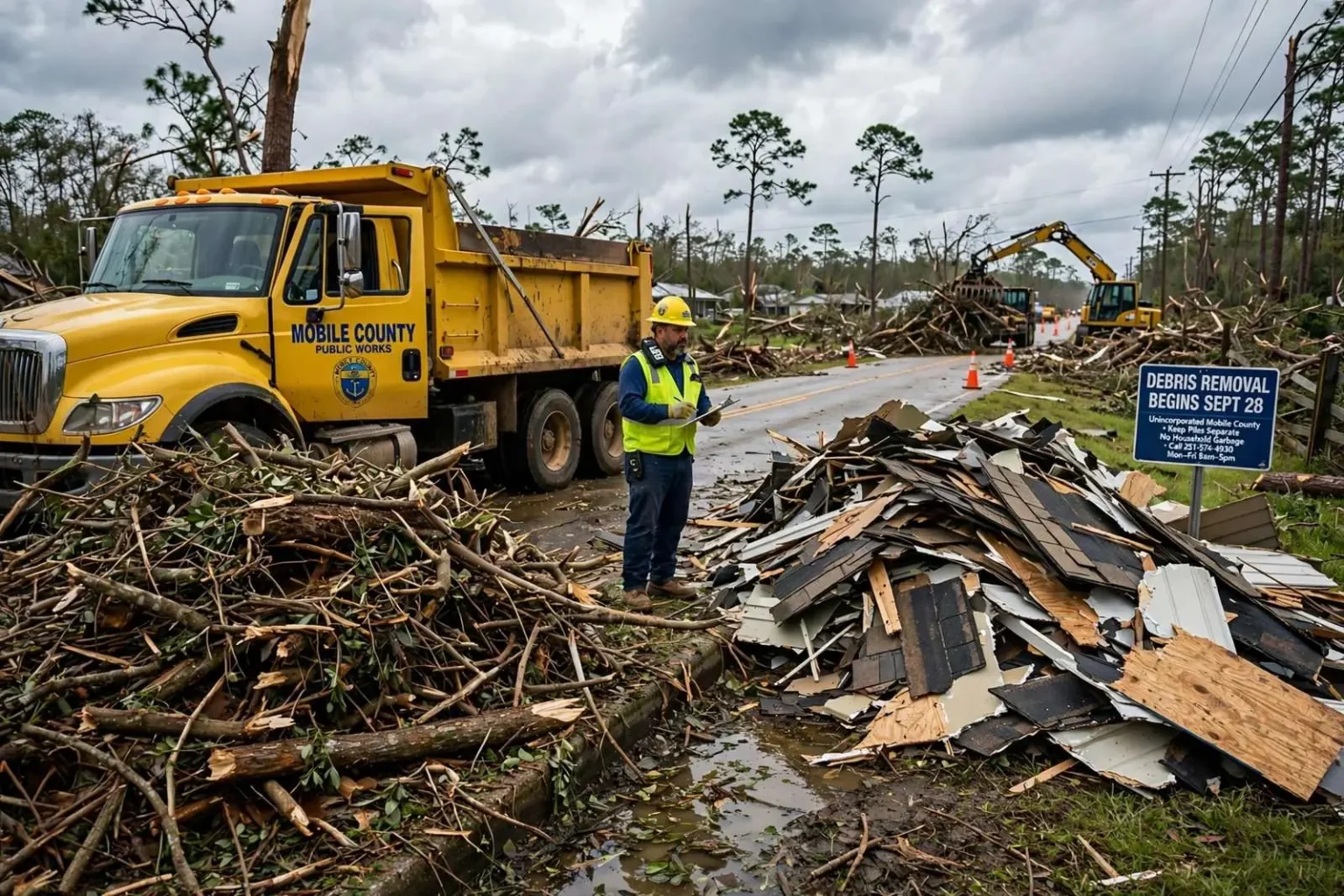
MOBILE COUNTY, Ala. — The Mobile County Commission will start removing Hurricane Sally debris on Monday, Sept. 28. The two-week scramble after Sally’s landfall had left roads, yards, and drainage ditches across the county choked with fallen trees, limbs, torn roofing, and flood-damaged belongings, and the commission’s start date put the county’s contracted removal machinery in motion for the hardest-hit areas.
Sally had come ashore in mid-September as a Category 2 hurricane near the Alabama-Florida line, and its slow movement punished the central Gulf Coast with prolonged winds and heavy rain. Trees and power lines came down across Mobile County by the hundreds, blocking rural roads in the unincorporated areas and leaving neighborhoods without electricity for days. Once the immediate emergency passed and roads were cleared for travel, the cleanup itself became the largest task facing local government: gathering and disposing of a hurricane’s worth of debris from thousands of properties.
The county will handle debris pickup in all unincorporated areas outside the county’s 10 municipalities, with one exception: the Town of Dauphin Island, which will be the only municipality to receive county-managed debris removal. The barrier island’s exclusion from the general rule reflects its unique situation as a coastal community with a small municipal government and a storm-damage load disproportionate to its size, sitting directly in the path of Gulf storms with limited disposal capacity of its own.
Residents are not required to report debris, but those who want to can do so through an online survey on the county’s website or by calling the Hurricane Sally Debris Removal Line at 251-574-4930, staffed weekdays from 8 a.m. to 5 p.m. Crews sweep the unincorporated areas methodically, so a report is not necessary to be included, but the survey and phone line give residents a way to flag heavily damaged properties, ask questions, and confirm that their area is on the pickup map.
How Hurricane Debris Removal Works
Storm debris programs sort materials into separate streams, and residents are typically asked to pile them apart at the curb so collection runs efficiently. Vegetative debris such as limbs, logs, and yard waste goes in one pile; construction and demolition material, including roofing, siding, drywall, and fencing, goes in another; appliances and other household metal, known as white goods, are collected separately; and electronics are handled on their own. Household garbage continues to be collected by the regular service and should not be mixed into storm piles, since the debris contractors are not licensed to take it.
The segregation matters beyond convenience. Debris removal after a federally declared disaster is reimbursable through the Federal Emergency Management Agency, but only when materials are documented and sorted according to FEMA’s categories. Contracted haulers separate loads at the curb and take them to different processing sites, where vegetative debris may be ground into mulch and construction debris sorted for landfill disposal. Mixing piles can delay pickup and complicate the county’s documentation for reimbursement, which is why officials repeatedly ask residents to keep the streams separate.
Timing also works in stages. The first passes focus on clearing roads and drainage so traffic can move and stormwater systems function if another storm threatens; later passes return to residential streets for the full curbside pickup. After a storm like Sally, which dropped trees across both rural and suburban areas of the county, residents should expect multiple rounds and should keep placing material at the right-of-way as they clear their properties, rather than hauling it themselves to disposal sites.
Where the Rules Differ Around the County
The commission’s plan drew the usual line between county and municipal responsibilities. Mobile County’s unincorporated areas, from the rural stretches north of Citronelle to the communities along the Bayou La Batre highway corridor and the subdivisions south of the city, fall under the commission’s services, while incorporated cities and towns run their own collection programs or hire their own contractors. That division is why the county’s announcement applied to unincorporated Mobile County, with Dauphin Island’s special arrangement standing as the lone municipal exception.
Residents inside municipal limits were advised to watch their own city’s channels for pickup schedules, since those programs operate on separate contracts and timelines. The county’s debris line and online survey exist for unincorporated-area residents and Dauphin Island, and calls from municipal residents are generally redirected to the appropriate city hall.
The County’s Hurricane Sally Information Hub
The county’s website also hosts a Hurricane Sally newsroom with updates on debris removal, FEMA assistance and frequently asked questions. Centralizing the information gave residents one place to track pickup progress, learn the rules for stacking debris, and find out how to register for federal help. After major storms, rumor and confusion spread quickly through neighborhoods, and local officials use these online hubs to correct bad information and keep the cleanup moving.
The FEMA component matters for many households. When the president declares a major disaster, assistance can become available for home repairs not covered by insurance, temporary housing needs, and other storm-related expenses, and registration is handled directly with FEMA rather than through the county. The county’s newsroom points residents toward that registration process and answers the questions that come up most often, from what documentation is needed to what damages qualify.
For property owners still clearing their land, officials’ standard advice after Sally applied: place debris at the curb or roadside right-of-way, not in the roadway itself, and keep it away from fire hydrants, water meters, mailboxes, and low-hanging lines so loading equipment can reach it. Contractors working for hire were reminded that only the county’s contracted haulers collect storm debris under the federal reimbursement program, and residents were warned to be wary of anyone demanding payment to remove material the county will pick up at no charge.
A Long Cleanup Ahead
Debris removal after a significant hurricane runs for weeks or months, and Sally’s damage in Mobile County was widespread enough that residents were told to expect a sustained operation. The commission’s Sept. 28 start date marked the transition from emergency response to recovery, a phase measured not in days but in rounds of pickup, documentation, and reimbursement. County officials urged patience as crews worked through the unincorporated areas street by street, with the debris line and online survey standing by for questions and reports weekdays from 8 a.m. to 5 p.m. at 251-574-4930.
For Dauphin Island, the county-managed removal brought particular relief. The town’s two-mile-long strip of land had absorbed Sally’s winds and storm surge with its small public-works capacity already stretched thin, and the county’s decision to include the island in its program meant residents there would see the same curbside process as their neighbors in the unincorporated county. Together, the pickup plan, the reporting line, and the online newsroom formed the county’s framework for dragging its communities out from under the storm.
Lessons From Past Gulf Storms
Mobile County’s debris program followed a playbook refined through decades of Gulf hurricanes, from Frederic in 1979 through Ivan and Katrina in the mid-2000s. Each storm taught local governments the same core lessons: pre-negotiated contracts get haulers on the road faster than emergency procurement, accurate documentation determines how much of the cost FEMA reimburses, and clear communication with residents prevents the pile-sorting mistakes that slow everything down. By the time Sally struck, the county’s emergency management and public works teams had those systems ready to activate.
The scale of a hurricane cleanup surprises most residents the first time they see it. A single large storm can generate millions of cubic yards of debris across a county, enough to fill entire landfills on its own, which is why contractors grind vegetative material and recycle what they can before disposal. Monitoring crews follow the haulers, recording load volumes and locations for the reimbursement file, and the whole operation is audited after the fact. The paperwork side is as demanding as the trucking side, and it runs until the final reimbursement is settled with the federal government.
What Residents Should Keep Handy
During the cleanup, residents in the pickup areas were reminded to keep a few things at hand: the county’s debris line number, 251-574-4930, staffed 8 a.m. to 5 p.m. weekdays; the address of the county’s Hurricane Sally newsroom for schedule updates; and their FEMA registration confirmation if they had applied for federal assistance. Questions about private property, such as trees down inside fenced yards or material on private roads beyond the county right-of-way, follow different rules, and the debris line is the fastest way to get an answer before paying for removal out of pocket.
The Sept. 28 launch began that longer recovery for the unincorporated county and Dauphin Island. As trucks worked their routes and the piles along the roadsides shrank, the county’s documentation grew into the record that would determine how much of the cleanup the federal government repaid. For the residents who rode out Sally, the sight of debris trucks on their street was the most tangible sign yet that the county was moving from responding to the storm to recovering from it, one street at a time.