Mobile County WIC Renovates Breastfeeding Room at Keeler Memorial Building
Mobile County's WIC program has renovated its breastfeeding room at the Keeler Memorial Building, adding new amenities for nursing mothers.
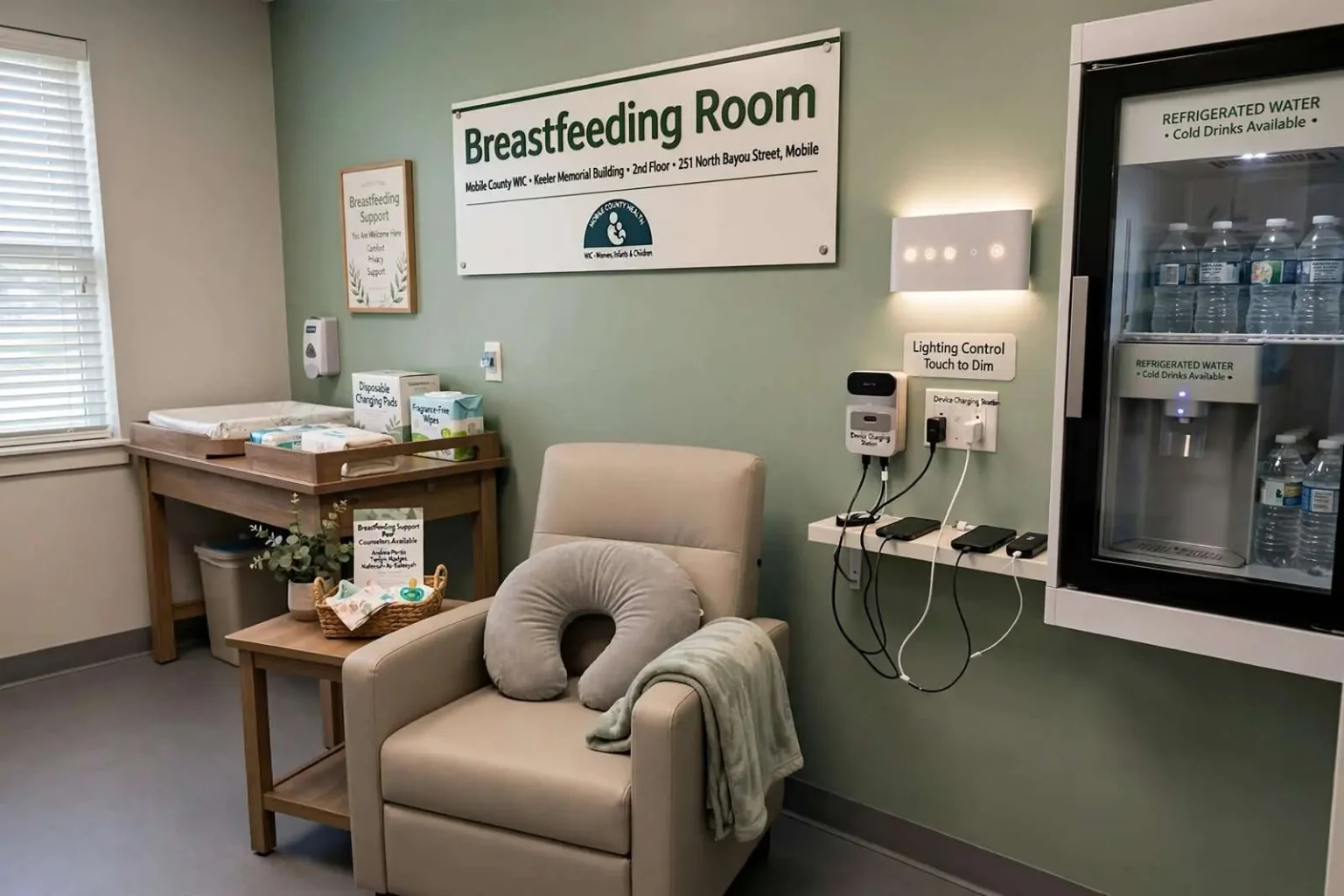
The Mobile County Health Department’s Women, Infants & Children (WIC) program has renovated its nursing room at the Keeler Memorial Building, 251 North Bayou Street in Mobile, part of a broader push to expand breastfeeding support services for local families. The project turned a functional corner of the busy clinic building into a purpose-built space where mothers can nurse comfortably, pump privately or simply take a quiet moment during a visit.
The refreshed space, located on the building’s second floor, now includes refrigerated water, a changing table stocked with disposable pads, touch-controlled lighting and a charging area for phones and other electronics. Each of those details answered a complaint or a need that staff had heard from mothers over the years: a cold drink within reach, a clean surface for diaper changes, light that could be dimmed without hunting for a switch, and a place to revive a phone drained by a morning of appointments.
“Our newly remodeled and freshly painted breastfeeding room allows our moms to breastfeed in style as well as comfort,” said LaDina Hudson, WIC’s Breastfeeding Coordinator. The remark captured the program’s intent, which went beyond bare utility. A mother who feels welcome and respected in a clinic setting, coordinators have long observed, is more likely to return for appointments, stay engaged with services and keep working toward her feeding goals.
The Keeler Memorial Building on North Bayou Street houses a range of Mobile County Health Department programs, and its WIC offices see a steady stream of families from across the city. For many participants, a monthly trip to the building is the anchor of their contact with the program, which made the condition of its patient spaces a natural priority for improvement.
Why the program invests in lactation support
WIC is the federal nutrition program that serves pregnant women, new mothers, infants and young children in low-income households, and breastfeeding support has been at the center of its mission for decades. Federal guidance directs every WIC agency to provide lactation education and counseling, and agencies that do it well have seen longer breastfeeding durations among their participants, with benefits measured in healthier infants and lower feeding costs for families.
The Mobile County program’s approach pairs physical improvements with human support. WIC provides nutrition education, breastfeeding support and supplemental food assistance to income-eligible pregnant women, new mothers, and children under age five in Mobile County, and the renovated room gives the clinical side of that work a home that matches its ambition. Families who visit the second-floor space now find an environment designed for the realities of nursing an infant, not a converted storage room.
Public health researchers have documented the gap that programs like this aim to close: breastfeeding initiation and continuation rates have historically tracked closely with income, and mothers returning to work or school without support often stop earlier than they intended. Peer counseling, comfortable clinic spaces and responsive staff are the tools WIC agencies use to move those numbers, one family at a time.
In Mobile County, where the health department serves one of Alabama’s largest populations of WIC-eligible families, even a single renovated room represents hours of care for hundreds of mothers each year. The department treated the upgrade not as a cosmetic refresh but as part of its public health strategy for the county’s youngest residents.
The health department’s WIC Breastfeeding Peer Counselor Program is staffed by three counselors — Andrea Portis, Terilyn Hodges and Nafeesah-As-Saleeyah — who work directly with new mothers on supply concerns and other common breastfeeding barriers. The peer counselor model puts mothers alongside women who have nursed babies of their own, training them to offer practical advice and reassurance from lived experience rather than from a textbook alone.
Common challenges the counselors field include worries about milk supply, latching difficulties, soreness in the early weeks, questions about pumping and storing milk, and the logistics of continuing to breastfeed after returning to work. Many new mothers encounter at least one of these obstacles, and the difference between stopping and pushing through often comes down to whether someone knowledgeable is a phone call away.
Peer counselors occupy a distinctive position in the program. Because they come from the same communities as the families they serve, they can speak to the specific pressures Mobile mothers face — work schedules, family expectations, transportation and the sheer exhaustion of the newborn months — in a way that feels like advice from a trusted friend rather than a lecture from an institution.
WIC families can reach the peer counselor program through the Mobile County Health Department for one-on-one support in addition to the physical space upgrades. The counseling is available not just during clinic visits but between them, so that a mother struggling at two in the morning or facing a difficult first week back on the job has somewhere to turn before frustration hardens into a decision to quit.
Renovations planned beyond one building
Hudson said the department intends to extend similar renovations to additional WIC clinic locations across the county as funding and scheduling allow, continuing an effort to make lactation spaces more comfortable and accessible for participating families. The Keeler Memorial Building room served as the template, and its lessons — what worked, what mothers appreciated, what the staff would change — will shape the upgrades that follow.
The phased approach reflects the reality of public health budgets. WIC agencies across Alabama operate on federal grants that are carefully allocated, and facility improvements have to be sequenced alongside the program’s core spending on food benefits and nutrition services. Committing to the expansion publicly signaled that the Keeler room was the first step of a countywide effort rather than a one-off project.
Mobile County’s WIC clinics serve families from Prichard, Saraland, Tillman’s Corner, Theodore and communities across the county, and not every participant can easily reach the North Bayou Street building. Extending the improvements to outlying sites means mothers will find comparable accommodations close to home, wherever in the county they enroll.
The effort also aligns with the department’s broader emphasis on maternal and child health. The same building and its sister clinics host prenatal services, immunizations and family planning programs, and the WIC improvements fit into a larger picture in which the county treats healthy beginnings as an investment that pays dividends for years.
The response to the renovated room from mothers using the clinic has been the kind that staff had hoped for: longer, more relaxed visits and fewer mothers cutting appointments short because they had nowhere comfortable to nurse. Small amenities such as refrigerated water may look minor on a budget sheet, but for a mother feeding a hungry infant in a busy clinic, they shape the whole experience of the visit.
The project also gave the program’s breastfeeding message a concrete expression. WIC staff spend considerable time explaining the benefits of human milk — its protection against illness, its digestibility, its role in bonding — and a clinic that visibly supports nursing reinforces the same message the counselors deliver in words. Environment, coordinators say, is policy made visible.
Alabama’s breastfeeding rates have been climbing for years, but they remain below the targets public health agencies have set, and the gap between initiation and sustained breastfeeding is where most support is needed. Programs like Mobile County’s peer counselor service exist precisely to hold mothers’ hands through that middle stretch, after the hospital bracelets come off and the daily challenges begin.
The renovated room also serves mothers who attend WIC nutrition education classes, which are a required part of the program for many participants. A mother can attend a class, feed her baby comfortably between sessions and charge her phone before heading back to work or home — practical accommodations that respect the demands on her time.
How families can take part
Families in Mobile County who want to use WIC services can apply through the Mobile County Health Department, which determines eligibility based on income and nutritional risk. Pregnant women, postpartum mothers, infants and children under five all qualify for consideration, and services include the food package, nutrition counseling, health screenings and referrals — along with the breastfeeding supports the Keeler renovation highlights.
Mothers already enrolled in WIC who want one-on-one help with nursing can ask at any appointment to be connected with the peer counselor program, and the three counselors — Portis, Hodges and Nafeesah-As-Saleeyah — work with families across the county’s clinic sites. No question about breastfeeding is considered too small for the service, from the first latch to weaning.
The department encourages fathers, partners and grandparents to support the breastfeeding relationship as well, since family attitudes are among the strongest predictors of whether a mother continues. WIC’s education sessions often address the whole household for that reason.
For the health department, the renovated room at Keeler Memorial Building stands as both a finished project and a promise of more to come. As funding and schedules permit, mothers visiting other Mobile County WIC clinics can expect the same standard: comfort, privacy, support and the message that the county stands behind them in the weeks and months after a baby arrives.