Mobile Fire-Rescue Rescues Woman Trapped by Fallen Tree During Hurricane Sally
Mobile Fire-Rescue rescued a woman pinned in her bed by a fallen tree during Hurricane Sally, as first responders answered calls across the city.
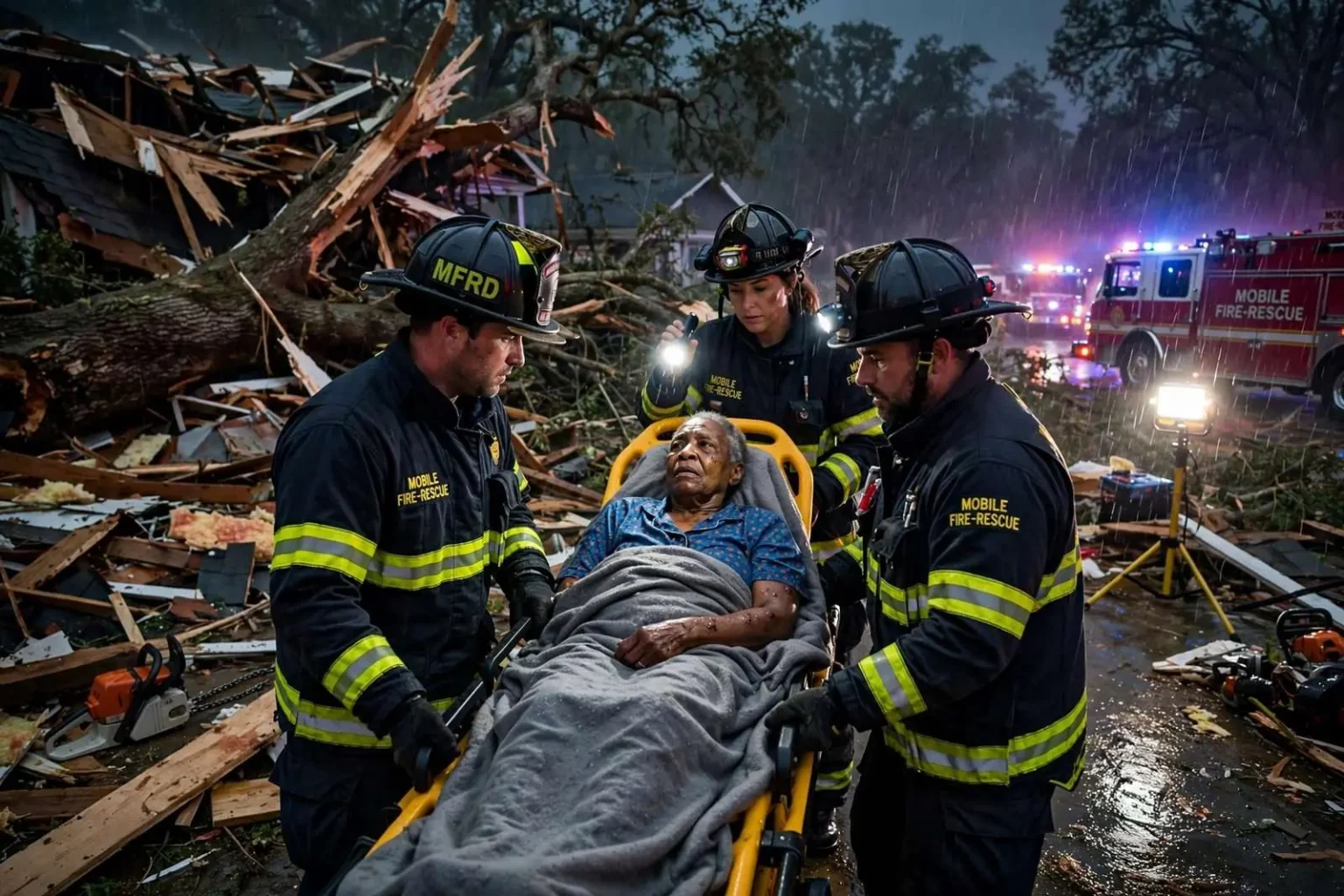
MOBILE, Ala. — Mobile Fire-Rescue pulled a woman from her home during one of the most frightening nights of Hurricane Sally, after a tree crashed through her house while she slept. At 4:35 a.m. on Sept. 16, a tree fell onto Rosetta Kimbrough’s home and pinned her in her bed. Trapped beneath the partially collapsed structure and stung repeatedly by bees from the tree, she could only wait and pray, according to MFRD spokesperson Stephen Millhouse. The rescue highlights the dangers that downed trees and debris posed across Mobile as Sally moved through, and the work of first responders during the storm.
The circumstances of the call reflected the chaos Sally left behind. Hurricane Sally made landfall as a slow-moving Category 2 storm near Gulf Shores on Sept. 16, 2020, crawling north at speeds that let its rain bands and winds punish the Gulf Coast for hours. Mobile County endured sustained tropical storm conditions, widespread power outages and heavy tree damage, particularly in older neighborhoods where mature oaks and pines line narrow streets. Across the region, the storm’s slow track dumped extraordinary rainfall totals — in places exceeding two feet — flooding roads, collapsing drainages and toppling trees into homes, vehicles and power lines.
For Kimbrough, the danger arrived without warning. A tree crushing a house at night creates a scene that even seasoned rescuers describe as among the most disorienting they face: structural collapse, darkness from lost power, severed utilities, and the constant risk that weakened beams will shift further while rescuers work. The stings she suffered from bees disturbed in the fallen tree added another layer of ordeal to an already life-threatening situation. That she survived pinned beneath a collapsed roof is a testament both to her endurance through hours of waiting and to the speed of the crews who reached her.
How Mobile Fire-Rescue Handles Storm Emergencies
Mobile Fire-Rescue operates as the primary emergency response agency for the city of Mobile, running a network of fire stations staffed around the clock by crews trained for far more than fires. Department personnel respond to medical emergencies, vehicle extrications, hazardous material incidents and the technical rescue situations that severe weather produces. During hurricanes, the department stages resources before landfall, suspends normal operations when winds make travel unsafe, and redeploys as soon as conditions permit crews to move. Citizens are asked to shelter through the worst of the storm and call for help once winds drop to safe levels, precisely because first responders cannot operate safely in the peak conditions that generate emergencies like the one on Kimbrough’s street.
The department’s storm posture depends on preparation that begins days before a hurricane enters the Gulf. Station crews check generators, chain saws, boats and high-water vehicles; command staff coordinate with city emergency management officials at the city’s Emergency Operations Center; and mutual aid arrangements stand ready if local capacity is overwhelmed. When Sally passed, the department’s challenge was to prioritize a flood of calls reporting downed trees, trapped residents, gas leaks and wires — triaging each scene so that life-threatening situations like a pinned homeowner rose to the top of the response list.
Spokesperson Stephen Millhouse’s account of the rescue underscored a detail that responders across the county encountered repeatedly: victims trapped by fallen trees often survived the initial impact but faced hours of exposure, bleeding, crushing injuries and sometimes insect attacks before help could cut through. Technical rescue teams carry specialized shoring, hydraulic and saw equipment for exactly these situations, and the work of freeing a trapped victim demands a balance of speed and caution, because a collapsed structure can shift at any moment. Rescues conducted during the first hours after a hurricane frequently determine outcomes long before hospitals are fully operational again.
Sally’s Toll Across Mobile and the Gulf Coast
Hurricane Sally became one of the costliest storms in Alabama’s recorded history, with damage estimates across the region running into the billions of dollars. Baldwin County took a direct hit from landfall winds and a record storm surge along Perdido Bay and Ono Island, while Mobile County’s dominant story was water and trees. Dauphin Island saw significant surge damage. In the city of Mobile itself, days without electricity followed the storm as crews worked to restore power to hundreds of thousands of customers across south Alabama, many of whom remained in the dark for a week or longer in the hardest-hit areas.
The tree damage pattern in Mobile followed a logic residents know well. The city’s iconic canopy — live oaks, water oaks and pines planted generations ago along residential boulevards — becomes a liability when saturating rains soften root soil and sustained winds push from an unusual direction. Sally approached from the south and lingered, combining wind stress with ground saturation in a way that felled even healthy-appearing trees. Municipal crews, utility line workers and private contractors spent weeks clearing debris, and the green waste collected from Mobile streets after the storm filled vast staging areas before disposal.
Public safety agencies urged residents afterward to treat the storm’s lessons as preparation for the next one: keep trees trimmed near structures, secure an emergency plan that accounts for overnight events, maintain supplies of water, food and medications, and remember that 911 response times can stretch dramatically when every street is blocked. The rescue of Rosetta Kimbrough — a woman who woke to find her home collapsed around her and spent the night waiting and praying before rescuers freed her — stands as both a survival story and a reminder of how quickly an ordinary bedroom can become the center of a disaster. For the crews of Mobile Fire-Rescue, it was one call among many that September morning; for Kimbrough and her family, it was the one that mattered most.
Overnight Calls and the Anatomy of a Storm-Night Rescue
The timing of the 4:35 a.m. call placed the rescue in the most difficult window of any hurricane response. Sally’s winds over Mobile were still tapering in the pre-dawn darkness, rain continued to fall, and streets throughout the city were choked with downed limbs, tangled power lines and standing water. Reaching a trapped resident in those conditions requires crews to navigate around blocked roads, contend with live wires that may be draped across the very debris they must cut, and work by portable lighting in a neighborhood without power. Every minute of that journey is measured against a victim’s condition beneath the wreckage.
Once on scene, responders typically work through a familiar sequence: assess the stability of the collapsed structure, shut off gas and electricity where possible, establish safe access to the victim, and begin the careful job of lifting or cutting away debris. A person pinned in bed beneath a fallen tree often must be freed without disturbing the load above them in ways that could cause further collapse. Crews may crib the structure with wooden shoring, use airbags or hydraulic jacks to raise sections of roof, and cut with chain saws and reciprocating saws while monitoring the patient’s condition. Injuries from crushing incidents carry additional medical risks, including complications that emerge after the pressure is relieved, so medics remain with the patient through and after extrication.
The bees that stung Kimbrough repeatedly illustrate a hazard few residents anticipate. Fallen trees frequently contain active hives, and the violence of the collapse can agitate entire colonies. For a trapped, immobile victim, repeated stings are more than painful; they compound stress, trigger allergic reactions in vulnerable individuals and complicate medical care in a confined space. Responders arriving at tree-collapse scenes learn to look for signs of insect activity as part of their initial assessment.
What Sally Meant for Mobile County’s Storm Memory
Longtime residents often measure hurricanes against Frederic in 1979, the storm that defined a generation of Mobile’s preparedness thinking, and against Ivan in 2004 and Katrina in 2005. Sally earned her own place in that sequence precisely because she did not arrive as a major hurricane. Forecasters repeatedly warned that the greatest danger from Sally came not from her category but from her speed, or lack of it. Storms that stall over the Gulf Coast produce catastrophic rainfall, and Sally’s crawl ashore pushed some of the highest rainfall totals ever recorded from a single tropical system in Alabama, with reports of more than two feet of rain near the coast.
The economics of that damage continue to shape the region. Insurance claims after Sally numbered in the hundreds of thousands across Alabama and the Florida Panhandle, and disputes over tree damage, flood coverage and wind claims became a lasting part of the storm’s aftermath for many households. Roof damage that seemed minor in September revealed itself in the months that followed, and some Mobile homeowners spent a year or more completing repairs. Municipal budgets absorbed the cost of debris removal on a scale few routine years approach.
For the family of Rosetta Kimbrough, though, the storm’s story is simpler and more visceral: a tree fell in the night, a house gave way, and a woman survived because she was found in time. The account Mobile Fire-Rescue shared through Millhouse gave the public a window into what responders actually do in the hours when a hurricane is still exiting the region — the calls they run in the dark, the risks they accept, and the outcomes that hinge on preparation conducted years before a storm ever forms. Every resident who saw the story received the same quiet instruction that storm veterans repeat after each hurricane: when the warnings name your street, take the oldest advice on the coast seriously, because the tree that falls rarely announces itself first.