
Mobile Gives Animal Control Officers Power to Immediately Seize Abused Pets
Mobile's City Council voted to let the city's top animal control officer immediately remove pets from cruelty situations, speeding up protection for abused.
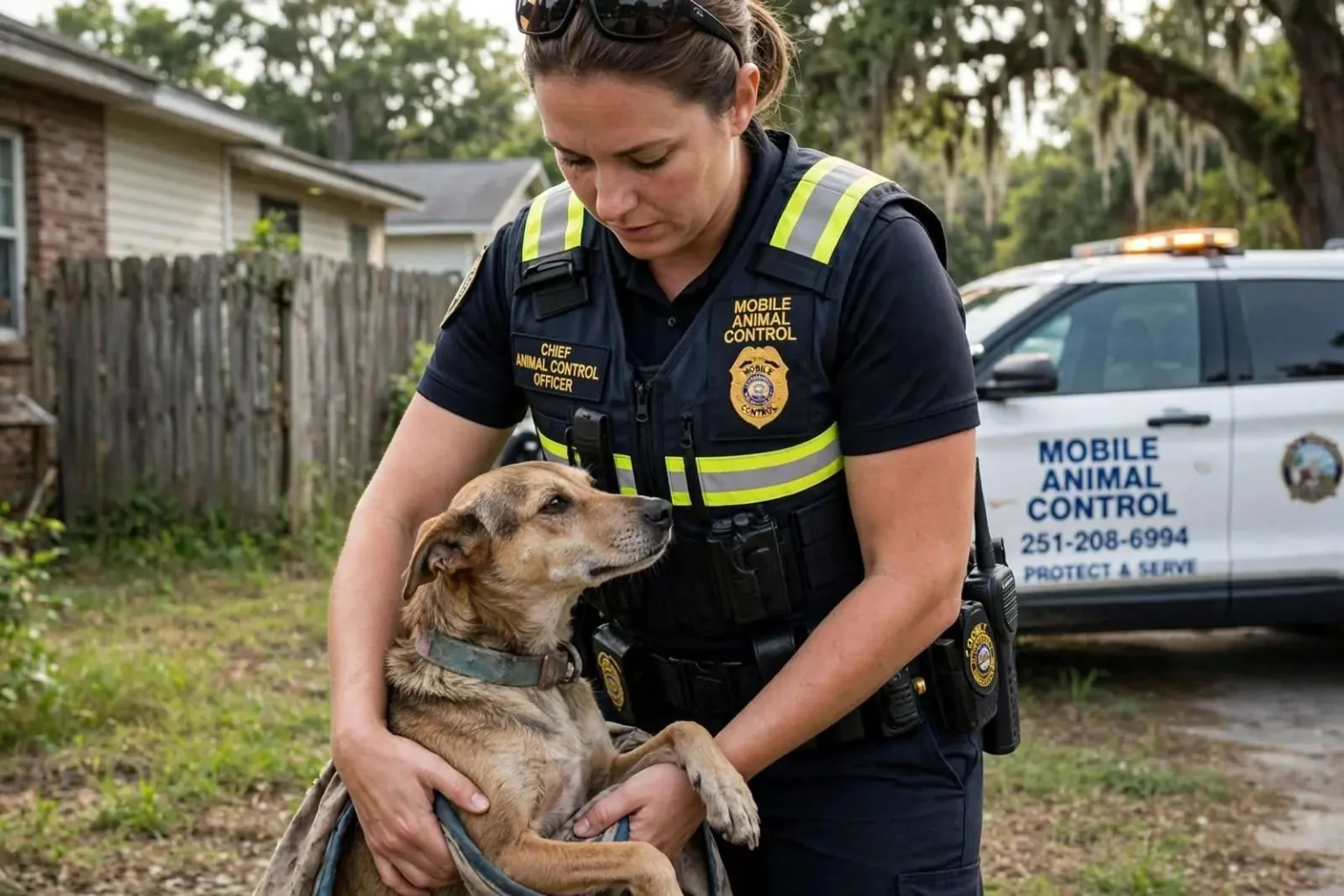
Mobile’s top animal control officer now has the authority to immediately remove a pet from its owner when there is evidence the animal is being subjected to cruelty, after the City Council approved the change during its Tuesday meeting. Previously, city animal control staff who suspected an animal was being abused or neglected often had to work through a slower process before a pet in an active cruelty situation could be taken into protective custody. Under the newly approved authority, the city’s chief animal control officer can act on the spot when cruelty is observed, removing the animal to safety without waiting on that process to play out.
Why the change was made: city officials and local animal welfare advocates have pushed for years to give Mobile’s animal control division more tools to intervene quickly in cruelty cases, arguing that delays can leave an animal in a dangerous situation for days or weeks while a case moves forward. In cruelty investigations, time is rarely neutral — an animal left without food, water or shade through a Gulf Coast summer can deteriorate from neglect to a medical emergency in a matter of days, and Mobile’s heat and humidity compress that timeline further than in most of the country.
Similar “emergency removal” provisions already exist in a number of other Alabama municipalities and are commonly recommended by state humane organizations as a baseline protection for pets. The change brings Mobile’s practice into line with what animal welfare groups have described as a modern standard: the officer who is standing in the yard looking at an starving dog should not need a separate legal step before the animal can be carried out.
What the New Authority Covers — and What It Does Not
The expanded authority applies specifically to cases involving apparent cruelty or neglect, such as animals left without food, water or shelter, or showing signs of physical abuse. It does not change the process for routine animal control matters like stray pickups or licensing enforcement. A loose dog, a barking complaint or an expired license will be handled exactly as before; what has changed is the tool available when an officer encounters an animal in active distress.
That distinction matters for pet owners as much as for officers. The authority is vested in the city’s chief animal control officer — a single, senior official — rather than in every field employee, which builds a layer of judgment into the process. An emergency removal requires evidence of cruelty, not merely a poor living situation, and the decision to exercise it is expected to be documented and reviewed as part of the case that follows.
Animal control officers in Mobile already respond to thousands of calls a year across the city’s districts, from loose livestock on the outskirts to injured strays downtown. The division’s work runs on complaints from the public, and officials note that most neglect cases begin with a neighbor’s call. Residents who see an animal without water in the heat, chained without shelter, or showing signs of injury can report it to the city’s animal control division, and officers can now act immediately when the situation meets the new standard.
What Happens to Seized Animals
Animals removed under the new authority are expected to be taken to the city’s animal shelter, where they can receive veterinary care while the underlying cruelty case is investigated. The shelter setting gives the animal food, water, medical attention and safety — the basics that were allegedly missing — while investigators build the record needed for any criminal case.
Removal also changes the animal’s legal status in practical terms. A pet in protective custody can be evaluated by a veterinarian, photographed for evidence, and treated for the conditions that prompted the removal, all of which creates documentation that prosecutors can use later. Shelter staff become witnesses to the animal’s condition on intake, which is often the clearest evidence a cruelty case has.
Owners facing allegations of animal cruelty could still be subject to criminal charges under Alabama’s animal cruelty statutes, separate from the civil act of removing the animal itself. Alabama law distinguishes between first-degree aggravated cruelty — knowingly torturing or seriously injuring a dog or cat, a felony — and second-degree cruelty, the failure to provide necessary food, water, shelter or veterinary care, a misdemeanor that can still carry jail time and fines. An emergency removal does not convict anyone; it preserves an animal’s life while the criminal process determines what happened.
Part of a Broader Shift in How Alabama Handles Cruelty
City leaders framed the vote as a straightforward public-safety and animal-welfare measure, giving officers already trained to spot cruelty the ability to act rather than watch a bad situation continue while paperwork catches up. The framing reflects research that has reshaped animal welfare policy nationwide: communities with strong animal cruelty enforcement tend to see benefits that go well beyond the animals themselves.
Studies and law enforcement experience have repeatedly linked animal abuse to other forms of violence, including domestic abuse, and the FBI now collects animal cruelty cases through its national crime reporting system as a Group A offense. Police and prosecutors across Alabama have increasingly treated cruelty complaints as potential indicators of broader problems in a household, and cross-reporting between animal control and human services has become standard practice in departments that can manage it.
For Mobile, the ordinance also aligns the city with the direction neighboring communities have already moved. Municipalities across Baldwin County and the rest of Alabama have adopted similar emergency-removal language at the urging of humane organizations, and shelters in the region coordinate on large seizure cases that overwhelm any single facility. A city of Mobile’s size taking on the same standard gives regional agencies a more consistent baseline when a case spans jurisdictional lines.
The practical effect of Tuesday’s vote will be measured in individual cases — the dog that no longer spends a week tied in the sun while a case file grows, the cat that reaches a veterinarian before dehydration becomes irreversible. For the officers who respond to those calls, the change removes the most frustrating step in the job: knowing what needs to happen and finally being able to do it on the spot.
The vote also arrives at a moment when the city’s animal services are under familiar seasonal pressure. Gulf Coast summers are the hardest stretch of the year for the division: heat-related calls climb as animals are left outside without shade or water, heartworm and parasite cases spike among untreated pets, and the shelter’s intake numbers rise through the late spring and summer months. Giving the chief animal control officer the ability to remove an animal immediately during that season addresses the period when each day of delay carries the greatest risk.
How the process will work in practice: when a complaint comes in, a field officer responds and assesses the animal’s condition on scene. If the situation meets the standard for apparent cruelty or neglect — no food, water or shelter, visible physical abuse, or a medical condition left untreated — the officer documents the scene and the case moves to the chief animal control officer, who can direct an immediate removal. The animal goes to the city shelter for veterinary evaluation and care, and the evidence gathered at the scene supports whatever referral follows.
That referral is the second half of the system. Emergency removal protects the animal; the criminal statutes are what hold an owner accountable. Mobile police and the district attorney’s office handle cruelty prosecutions under state law, and the ordinance gives those cases a stronger starting point: animals that survived, medical records from intake, and photographs taken before conditions changed. Prosecutors have long noted that the strongest cruelty cases are the ones built in the first hours after an animal is found.
For pet owners, the message from city officials is that the ordinance is aimed at the worst situations, not at hard times. Facing a financial crisis does not make someone a criminal, and the city’s answer to a family that cannot afford food or vet care is assistance and referral, not seizure. The authority exists for the cases where an owner will not or cannot act while an animal suffers — the situations officers describe as the ones they cannot leave behind at the end of a shift.
Residents can support the system by reporting concerns early, before an animal’s condition becomes an emergency. Animal control’s complaint line handles everything from loose dogs to suspected neglect, and reports can be made anonymously. Officials note that most successful cruelty cases begin with a neighbor who noticed something and called — the same first step that brings an officer to the yard where the new authority now applies.
Advocacy groups in the region praised the change as long overdue. Alabama’s humane organizations have spent years lobbying municipalities to adopt emergency-removal language, distributing model ordinances and pointing to cases across the state where animals died waiting out legal process. Mobile’s adoption of the standard puts the state’s largest city squarely behind the model language, and animal welfare groups say the remaining question is simply how quickly officers can put it to use.
What comes next is routine: the ordinance takes effect as city law, the animal control division updates its field procedures, and the first cases under the new authority will test the balance between swift protection and due process that every such law must strike. City Council members who supported the change say they expect it to be used sparingly — most owners, after all, comply once an officer explains the situation. The point of the ordinance is the minority of cases where they do not, and where the animal’s clock runs out before the paperwork does.