Mobile Museum of Art Hosted a Morning of Family-Friendly Mardi Gras Fun in 2011
The Mobile Museum of Art celebrated Mardi Gras with a family-friendly morning of parades, crafts, brass band performances, and costume contests in February.
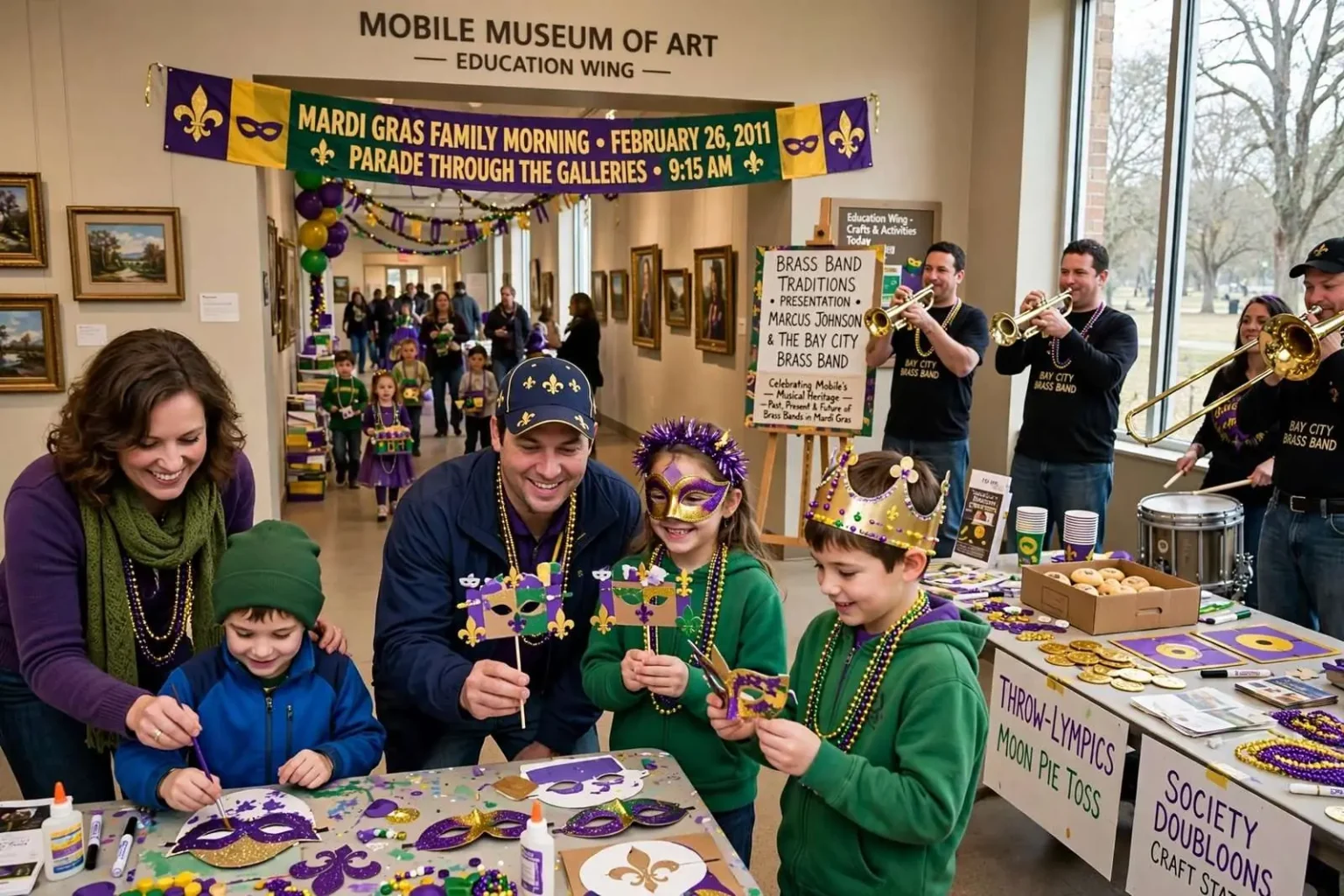
The Mobile Museum of Art welcomed families to its annual Mardi Gras celebration on Saturday, February 26, 2011, offering a full morning of art activities, performances, and parades designed to immerse visitors in the creative traditions behind Mobile’s famous carnival season. The event gave the museum’s galleries over to the city’s defining celebration, folding the creativity of Mardi Gras into an institution built to preserve and teach the visual arts.
The museum, set in Langan Park in west Mobile, has long used the carnival season to draw families through its doors, and the 2011 edition packed the calendar with hands-on activities that connected children and parents to the crafts that make Mobile’s Mardi Gras distinctive — the floats, the masks, the throws and the music that fill the streets each winter.
A Parade Through the Galleries
The festivities kicked off at 9:15 a.m. with a parade through the museum’s galleries, setting the tone for a day packed with hands-on activities. The indoor parade inverted the usual order of the season — instead of crowds lining the street to watch floats pass, families marched their own procession past the artwork, with the museum’s halls standing in for the route down Government Street.
Visitors of all ages could try their hand at mini-float design in the Education Wing, Mardi Gras mask decoration, and society doubloon crafting. Each activity mirrored a piece of the real carnival economy: the float builders who construct Mobile’s iconic displays, the mask tradition that predates the city’s modern celebration, and the doubloons that mooning societies have thrown from floats since the mid-twentieth century.
A new addition to the lineup, “Throw-lympics,” tested revelers’ accuracy with Mardi Gras throws and included a Moon Pie toss. The event turned the practiced art of catching — and now throwing — carnival throws into a game of skill, with the Moon Pie, the confection that has been a Mobile throw tradition for generations, playing its familiar starring role.
Guests who arrived in Mardi Gras attire received free museum admission and were eligible to enter a costume contest. The dress incentive tied the museum’s celebration to the costuming impulse that drives the season itself, and the contest gave the morning’s most elaborately attired visitors a moment in the spotlight.
Live Performances and Presentations
The event featured Marcus Johnson and The Bay City Brass Band, who presented on the future of brass band traditions in Mobile. The presentation connected the museum audience to the living musical heritage of the season, exploring how the brass bands that soundtrack Mardi Gras parades and balls carry their traditions forward to the next generation of Mobile musicians.
Debra Morrow and Aaron Ferguson led a teen ballroom dance session exploring the history of dancing at Mardi Gras balls through the ages. The session traced the ballroom culture that grew up around Mobile’s mystic societies, where the season’s formal balls have long paired debutante traditions with the dance floors that anchor society celebrations each carnival year.
Additional participants included the Springhill Recreation Center Marching Wildcats, Boy Scout Troop 227, and Society Dell’Arte, each contributing to the festive atmosphere. The mix of local performers and youth groups gave the morning the community flavor of a neighborhood celebration, with the museum serving as host to organizations from across the city.
The programming reflected the museum’s broader approach to family engagement: rather than simply staying open during the season, it built an event that taught the history and craft behind the celebration visitors were watching in the streets downtown, giving children a creator’s view of the traditions they experience as spectators.
More Family Activities in Langan Park
Families looking for even more fun could sign up for the Girl Scouts of Southern Alabama’s Thin Mint Sprint and free health fair taking place in adjacent Langan Park, with race registration beginning at 6:30 a.m. and the run starting at 8 a.m. The Girl Scouts’ event, named for the cookies that fund so much of the organization’s programming, paired a morning run with health resources for families, and its timing let runners join the museum festivities as the carnival activities got underway.
Langan Park, the large municipal park surrounding the museum, provided the setting for both events, with its trails, lake and open grounds hosting the run while the galleries handled the parade and crafts. The pairing made the park a one-stop destination for families on a Saturday morning in the heart of carnival season.
Art and carnival in the city that started it
The museum’s galleries remained open throughout the day, giving visitors the chance to explore the permanent collection alongside the Mardi Gras festivities. The pairing of carnival celebration with the museum’s standing collection underscored Mobile’s unusual cultural position as the home of the oldest organized Mardi Gras celebration in the United States, a tradition that stretches back to the city’s colonial era and long predates the better-known celebration in New Orleans.
Mobile’s carnival culture runs deep enough to sustain its own material culture — the costumes, doubloons, float designs and ball gowns that accumulate in attics and society archives across the city. Events like the museum’s family celebration feed that culture by putting the crafts in children’s hands, and the museum itself has served as a repository and showcase for carnival art as part of its mission to document the city’s creative heritage.
The Education Wing, where young visitors designed mini-floats, represents the museum’s investment in the next generation of Mobile artists and audiences. Programs built around the seasons and traditions the city already celebrates have proven to be among the most effective ways to bring first-time visitors through the doors of an art museum.
A morning of tradition, by design
For the families who filled the galleries that Saturday, the 2011 celebration offered a compressed course in what makes Mobile’s Mardi Gras what it is: the floats, the masks, the throws, the brass bands and the balls, each represented by an activity a child could try. The costume contest and the gallery parade added the performance element that ties the whole season together.
The event also demonstrated the reach of the city’s cultural institutions during carnival season. Between the museum’s indoor festivities and the Girl Scouts’ run and health fair in Langan Park, a single morning offered Mobile families a full schedule without leaving the park — a combination that made the museum’s annual celebration a fixture of the season’s family calendar.
As the morning wound down, visitors carried their doubloons, masks and mini-float designs out of the galleries and into the park, taking a piece of the crafting home with them. The season itself would continue on the streets downtown in the days that followed, with the museum’s celebration having done its part to prepare a new generation of revelers for the parades to come.
The museum’s role in the city’s cultural life
The Mobile Museum of Art, operated within the city’s parks system and supported by community partnerships, functions as both a repository of fine art and a gathering place for the kinds of programs that fill a family’s calendar. Its position inside Langan Park makes it a natural anchor for events that blend indoor exhibits with outdoor activities, and its Education Wing serves as the workshop space for programs that run throughout the year.
The 2011 Mardi Gras celebration fit a pattern the museum had built across its family programming: take the traditions Mobile residents already love, then give them an educational frame. A child who decorates a mask at the museum sees the masks in the downtown parades differently afterward; a teen who learns the history of ballroom dancing at carnival balls hears the season’s music with new context. That transformation — from spectator to participant with knowledge — is the quiet goal behind events of this kind.
The community partners who joined the day each brought their own audiences. The Springhill Recreation Center Marching Wildcats gave young performers a stage, Boy Scout Troop 227 added volunteer hands and community presence, and Society Dell’Arte connected the museum to the city’s performing arts community. The brass band presentation and ballroom dance session tied the day to the musical and social history of the season itself.
For parents, the free admission offered to guests in Mardi Gras attire lowered the barrier to a museum visit that might otherwise have waited for another weekend. Combined with the health fair and the Thin Mint Sprint outside, the morning made a compelling case for a family to spend the entire day in Langan Park, and the museum’s galleries stayed busy between the parade, the crafts and the performances.
The 2011 celebration remains an example of how Mobile’s cultural institutions embrace the season that defines the city’s public life. Mardi Gras belongs to the streets, but on that February Saturday it belonged, too, to the galleries — where the traditions were measured out in construction paper, doubloons and Moon Pies for the youngest hands in the city to try.