Mobile Musician Ingrid Marie Traces Her Musical Journey From Classical Roots to Gulf Coast Jazz
Mobile-based musician Ingrid Marie shares her journey from classical training in Rochester to performing across the Gulf Coast with her jazz sextet.
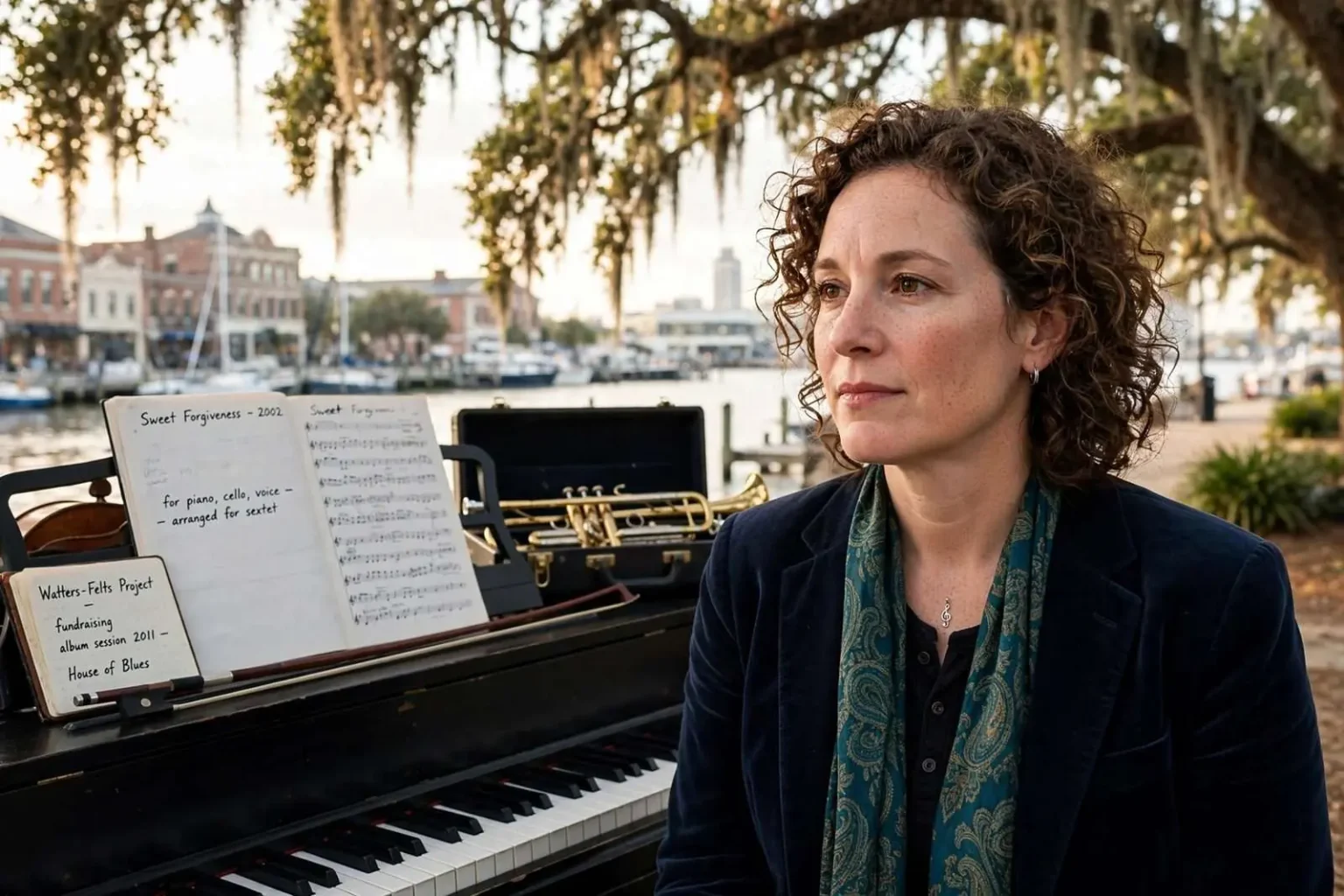
For Mobile-based musician Ingrid Marie, music has been a lifelong companion. Born into a household where the sound of a Steinway piano filled the rooms, she grew up immersed in classical music from an early age. Her mother, a classically trained pianist who later pursued a doctorate in microbiology, planted the seeds of musical passion that would shape her daughter’s career—a combination of art and science, of disciplined practice and disciplined inquiry, that shows up in everything her daughter has done since.
Early training and musical education
Ingrid began formal music training as a child, studying cello at the prestigious Eastman Theatre in Rochester, New York, starting at age eight. The Eastman is the performing home of the Rochester Philharmonic Orchestra and one of the great concert halls of upstate New York, and for a young student to study there was to grow up in the shadow of one of America’s most serious music institutions. A year later, her father introduced her to the flute, giving her a second instrument and a second language in which to think about melody.
Those formative years also included exposure to iconic performers, with young Ingrid attending concerts by Peter, Paul and Mary, Gordon Lightfoot, Judy Collins, and Yo-Yo Ma at venues across upstate New York. The mix was telling: alongside the classical giants, she absorbed the folk revival and singer-songwriter tradition of the era, the music of voices and stories that would later pull her toward the piano bar and the stage rather than the orchestra pit.
Her performing career began in community theater, where she landed her first lead role as Lili in “Carnival” at age 15, followed by starring turns in “Annie Get Your Gun” and “Oklahoma.” Musical theater demands a performer who can act, sing and command a stage simultaneously, and the repertoire of those classic shows—built on standards that audiences already knew by heart—taught her how to sell a song to a room. She soon transitioned to playing piano bars, honing the versatile performance skills that would define her career. The piano bar is one of the hardest rooms in music: an audience that requests anything, on a moment’s notice, from any decade.
College years and life on the road
While attending Virginia Tech, Ingrid toured with The New Virginians and a group called Blues and Diamonds, as well as the James Jelassic Band. The New Virginians, the university’s long-running touring ensemble, crisscrosses the region performing big-band and contemporary arrangements, and a seat in that group is a demanding apprenticeship in showmanship. During that period, she had the opportunity to perform alongside jazz legend Maynard Ferguson and his saxophonist Chip McNeill—a formative brush with big-league jazz for a college musician, and a memory that kept pulling her toward the road even as classical training tugged the other way.
After college, her path took an unconventional turn. In the winter of 1999, she found herself living on the streets of New Orleans and Chicago, performing as a street musician under the name “Princess” — an experience that deepened her connection to raw, unfiltered musical expression. Jackson Square and the Chicago L platforms are unforgiving stages, but they are also schools, and street performance strips music down to its essentials: a voice, an instrument, and a stranger deciding in thirty seconds whether to stop and listen.
Recording career and move to Mobile
Ingrid released her first single, “Waking,” in 2001, followed by her debut album “Sweet Forgiveness” in 2002, recorded at FTM Studios in Denver. The project, described as a musical review, was funded through grassroots support—friends, fans and small contributors rather than a label advance—a DIY model that independent musicians of the era embraced out of necessity and that has since become the industry norm. The Denver sessions gave her a recorded catalog and the experience of producing a full project end to end.
Her move to Mobile opened new creative doors. She collaborated with Ray Norman of Dogwood Studios, known for his work with acts like Moonbread and Amnesia, and with Pat Murphy at Backdoor studio, producing tracks including “So” and “Home To You.” The Gulf Coast’s recording scene is smaller than the coastal cities’ performance scenes, but studios like Dogwood gave her a base where a seasoned multi-instrumentalist could write, record and release at her own pace.
In 2009, she connected with veteran musician Rick Hirsch and traveled to his Los Angeles studio to record “Breakin Free” and “Famous.” The Los Angeles sessions put her material in front of a production veteran with decades of studio experience, and the two songs marked another step in her evolution from performer to recording artist with a defined sound of her own.
Current projects and new direction
As of mid-2011, Ingrid — who now performs exclusively under the name Ingrid Marie — had just completed a vocal and piano session at the House of Blues recording studio with Grammy Award-winning engineer Mike Paragone. The House of Blues sessions, tracked in a studio attached to one of the most recognizable live-music brands in the country, represented the highest-profile production work of her recording career to that point.
She was working to secure financing for a full album project with her jazz sextet, the Watters-Felts Project, a Huntsville-based jazz ensemble featuring trumpeter Ken Watters of The Watters Brothers. The Huntsville ensemble gave her the kind of sophisticated instrumental backing her classical and jazz training had always pointed toward—a horn section and rhythm team capable of handling demanding original arrangements—and the planned album would be her most ambitious project yet: a full-length collaboration rather than a series of singles and sessions.
Her journey from classical training in Rochester to the vibrant music scenes of New Orleans, Denver, Los Angeles, and Mobile illustrates the winding path many independent musicians travel in pursuit of their art. There is no single ladder in this business—no conservatory-to-orchestra track for a singer-songwriter who has played theater stages, street corners, piano bars and professional studios in the same lifetime. What the road has produced instead is a performer equally at home in nearly any room, and a catalog built one city, one studio and one song at a time.
The Mobile chapter of her career deserves its own attention, because the city has quietly built one of the Gulf Coast’s most distinctive music cultures. The port city’s tradition runs from the rhythm-and-blues and swamp soul recorded here in the 1950s and 1960s to the Mardi Gras anthem tradition that keeps live horn bands employed every winter, and the venues from Dauphin Street to the Eastern Shore give working musicians steady rooms in which to sharpen a live act. For a versatile player with a jazz vocabulary and a singer-songwriter’s repertoire, Mobile offers something rare: audiences fluent in several idioms at once, and close enough to New Orleans to keep the standard high.
The Watters-Felts Project places her in that jazz current directly. A sextet built around the trumpet work of Ken Watters—whose playing career has stretched from New York clubs to Huntsville stages—brings the small-group jazz format, with its room for improvisation and interplay, to material that Ingrid writes and sings. For a musician who began with cello lessons at eight and never stopped collecting instruments, languages and collaborators, the sextet format is the logical destination: enough structure to showcase arrangements, enough freedom to stretch out.
The financing challenge she faced in mid-2011 was familiar to independent artists everywhere in that era. The collapse of the traditional label system meant that recording budgets now came from crowdsourced contributions, patronage, grant programs and the musicians’ own gig earnings, project by project. Ingrid’s grassroots-funded debut a decade earlier had anticipated that world; the difference was scale. A sextet album carries costs the solo projects did not—more players, more studio time, more arranging—and the search for backing became its own full-time undertaking alongside the music.
What ties the pieces of her biography together is versatility sustained over decades rather than a single breakthrough. Classical training gave her technique; musical theater gave her presence; the piano bar circuit gave her repertoire and stamina; the street corners of two great cities gave her fearlessness; and the studios of Denver, Mobile and Los Angeles gave her the craft of recording. Each stage of the path built on the last, and each left its trace in the music she now makes under the name Ingrid Marie—a Gulf Coast artist whose resume reads like a map of American vernacular music.
Her story also mirrors Mobile’s own position in the music world: neither a major label center nor a footnote, but a genuine scene where serious musicians build careers outside the spotlight. The Gulf Coast has always exported players to New Orleans, Atlanta, Nashville and Los Angeles, and imported influences back—jazz, country, gospel and Gulf soul moving up and down the interstate for generations. Artists like Ingrid Marie, who chose to base a national-scope career on the Alabama coast, are part of what keeps that exchange running in both directions.