
Mobile Police Investigating Fatal Shooting of 55-Year-Old Man on Calhoun Road
Mobile police are investigating the fatal shooting of 55-year-old Michael Flores Sr. on Calhoun Road. No arrests have been made as the investigation.
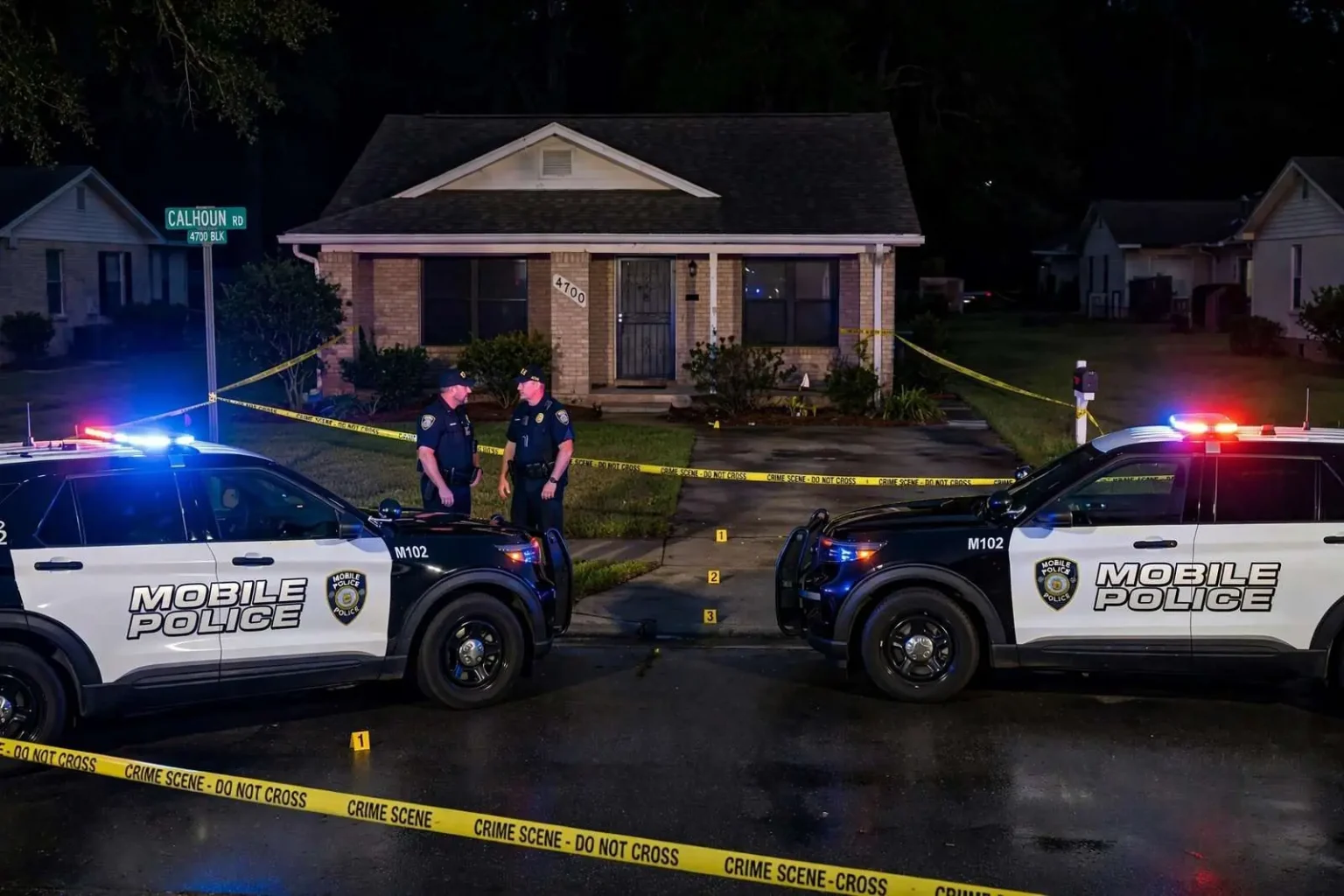
Mobile police are investigating a homicide after a man shot inside a home in west Mobile late last month died from his wounds. Officers were sent to the 4700 block of Calhoun Road at about 11:12 p.m. on Wednesday, July 30, after reports of an assault, according to the Mobile Police Department.
When they arrived, they found 55-year-old Michael Flores, Sr., inside the residence with a life-threatening gunshot injury. He was rushed to a local hospital, where he later died, becoming the city’s latest homicide victim in a year that has kept Mobile’s detectives busy across every precinct.
Police say no arrests have been made and detectives have not released information about possible suspects. The department said it is withholding additional details while the investigation remains active, a stance it takes routinely in cases where early disclosures could compromise witness interviews or the eventual prosecution.
What the first hours of a homicide case look like
A late-night shooting call sets a demanding sequence in motion. Dispatchers route officers and medics to the scene simultaneously, and the first officers on site have two immediate jobs: secure the scene so that evidence is not disturbed, and begin life-saving measures until medics take over. In cases like the Calhoun Road shooting, where the victim was still alive, that second job comes first, and Flores was transported while officers held the scene for investigators.
Once the victim is en route to the hospital, the detective work begins. Mobile Police Department homicide detectives respond to the scene along with crime scene unit technicians, who photograph and document the residence, collect physical evidence and canvass the neighborhood for witnesses and camera footage. The 4700 block of Calhoun Road sits in a residential part of west Mobile, an area of homes and side streets where overnight activity is normally quiet, which investigators count on when they ask residents whether they heard or saw anything unusual near the time of the shots.
The victim’s condition shapes the early investigation in another way. When a shooting victim survives transport, detectives attempt to interview him if his condition allows, and family members at the hospital become the first source of information about the circumstances. When the victim dies, as happened here, the case proceeds on physical evidence and witness accounts, and the department’s public posture typically shifts from “investigating an assault” to “investigating a homicide” once the death is confirmed and the coroner is involved.
Investigating while withholding details
The department’s decision to withhold additional details is standard practice in an active homicide investigation. Detectives protect the details they hold, what was found in the home, what witnesses have said, whether evidence points to a known relationship between the victim and a suspect, precisely because releasing them can taint witness memories, tip off a suspect or complicate a later trial. Prosecutors with the Mobile County District Attorney’s Office prefer cases built on carefully documented evidence, and early public detail is a common source of defense challenges.
That restraint leaves neighbors and readers with legitimate questions unanswered: whether the shooting was random or targeted, whether anyone else was in the home, and what led to the gunfire. Investigators typically can and do answer those questions eventually, either through an arrest announcement that lays out the case or through the trial itself. Until then, the department’s message to the public is the one it repeated in this case: the investigation is active, and anyone with information should come forward.
Mobile’s homicide caseload has drawn sustained attention in recent years, with the department’s investigations stretching across the city from downtown to west Mobile neighborhoods. The Calhoun Road case joined a list that detectives work in parallel, and clearance rates in the city depend heavily on community cooperation, which is why every press release from the department ends with the same request for tips.
How to report information
Anyone with information about the Calhoun Road case is asked to call the Mobile Police Department at 251-208-7211. Tips can also be submitted anonymously by texting 844-251-0644 or through the department’s online tip portal, which allows people to leave information without giving a name.
Anonymity matters in homicide cases. Witnesses who fear retaliation, or who simply do not want to be drawn into the court process, are far more likely to share what they know through anonymous channels, and detectives have repeatedly credited anonymous tips with breaking cases that had gone cold. Mobile Area CrimeStoppers additionally offers cash rewards for information that leads to arrests in homicide cases, giving tipsters a financial incentive in addition to the civic one.
Detectives stress that no detail is too small. A car seen leaving the block at speed, a raised voice heard before the shots, a visitor to the home earlier in the day — fragments like these, gathered from dozens of neighbors and assembled into a timeline, are how homicide cases get built in residential neighborhoods. Investigators typically canvass a scene like the 4700 block of Calhoun Road within days of a killing, but people who remember something later are urged to call anyway, because late tips routinely fill the gaps in an established timeline.
The context of gun violence in Mobile
The fatal shooting of a 55-year-old man inside his own home fits a pattern that has concerned Mobile officials for years: gun violence that touches victims across ages and circumstances, from street-corner disputes to violence inside residences. City leaders and police commanders have responded with a combination of enforcement and prevention programs, including focused deterrence efforts, youth outreach and partnerships with community organizations, though the city’s homicide totals have remained a persistent public safety talking point.
Homicides inside homes present distinct investigative challenges compared with public shootings. There may be no stranger witnesses on a sidewalk, and the pool of people with knowledge of what happened is often limited to family, friends and neighbors, the very people who may be reluctant to speak. Domestic-context shootings also raise safety questions that detectives and victim advocates assess alongside the criminal investigation, particularly when children or other family members live in the home.
The department’s practice in such cases is to determine the relationship between victim and suspect early, because it shapes both the investigative strategy and the public safety messaging. A targeted killing inside a residence generally poses little danger to the surrounding neighborhood, while a random or burglary-related shooting does, and police tailor their warnings accordingly. The department’s silence on that question in the Flores case leaves the neighborhood’s questions open, and detectives have indicated only that the investigation remains active.
For the family of Michael Flores, Sr., the investigation’s pace is measured in grief. Families of homicide victims in Mobile are supported by advocates connected to the district attorney’s office and by community groups that help relatives navigate the court process when arrests come. The police department’s request remains the same as it was on the night of the shooting: if you know something about what happened in the 4700 block of Calhoun Road, call 251-208-7211, text 844-251-0644, or submit a tip through the online portal, and let the detectives turn that information into an arrest.
West Mobile and the neighborhood around Calhoun Road
Calhoun Road runs through a residential section of west Mobile, an area of the city characterized by mid-century neighborhoods, established churches and the commercial corridors along Airport Boulevard and Moffett Road that frame it. The part of the city west of I-65 has grown steadily for decades and now counts some of Mobile’s most densely populated residential districts, with a mix of longtime homeowners and newer arrivals that makes the area’s neighborhood watch groups and civic clubs active participants in public safety conversations.
A fatal shooting on a residential block reverberates through that fabric quickly. Neighbors talk at mailboxes and on porches, social media groups light up with questions and secondhand accounts, and the police department’s canvas of the block becomes the first structured effort to separate what people saw from what they believe happened. Detectives working a case like this one typically return to the neighborhood repeatedly over the following weeks, because relationships built after the initial canvass often produce the tips that matter.
The 4700 block sits among the residential streets that branch off the area’s main arteries, close enough to the corridors that a late-night caller could reach responders quickly. That response time mattered in this case: the initial call came in as an assault just after 11 p.m., officers were on scene fast enough to find Flores alive, and medics transported him to a local hospital where medical staff worked to save him before his death was confirmed.
What happens when an arrest comes
If the investigation produces an arrest, the case will move into the court system through the Mobile County District Attorney’s Office, where a grand jury would consider murder charges. The evidence gathered in the first days, the scene documentation, the medical findings from the hospital and the coroner, the witness interviews and any camera footage, becomes the foundation of the prosecution. Murder cases in Mobile County move from arrest to trial over a period that typically stretches well past a year, and the department’s early discipline about public details protects the case through every stage of that process.
The department’s homicide unit handles these cases from the first call through the trial, with detectives testifying to their work and remaining the point of contact for the victim’s family. That continuity matters to families, who measure an investigation’s seriousness by whether the detectives who knocked on their door the night of the killing are still answering their calls a year later.
Until an arrest is made, the case file remains open, and the department’s public request stands. The Calhoun Road investigation is one of the cases Mobile detectives are carrying into the second half of the year, and its resolution depends on the same thing every unsolved homicide in the city depends on: someone in the neighborhood, or someone who knew the victim, choosing to pick up the phone and tell investigators what they know.