Mobile Rock Band The Grey Releases ‘Myself Alive’ Music Video
Mobile rock band The Grey drops a new music video for Myself Alive from their debut album Anatomy of Society, with plans for a second album and national.
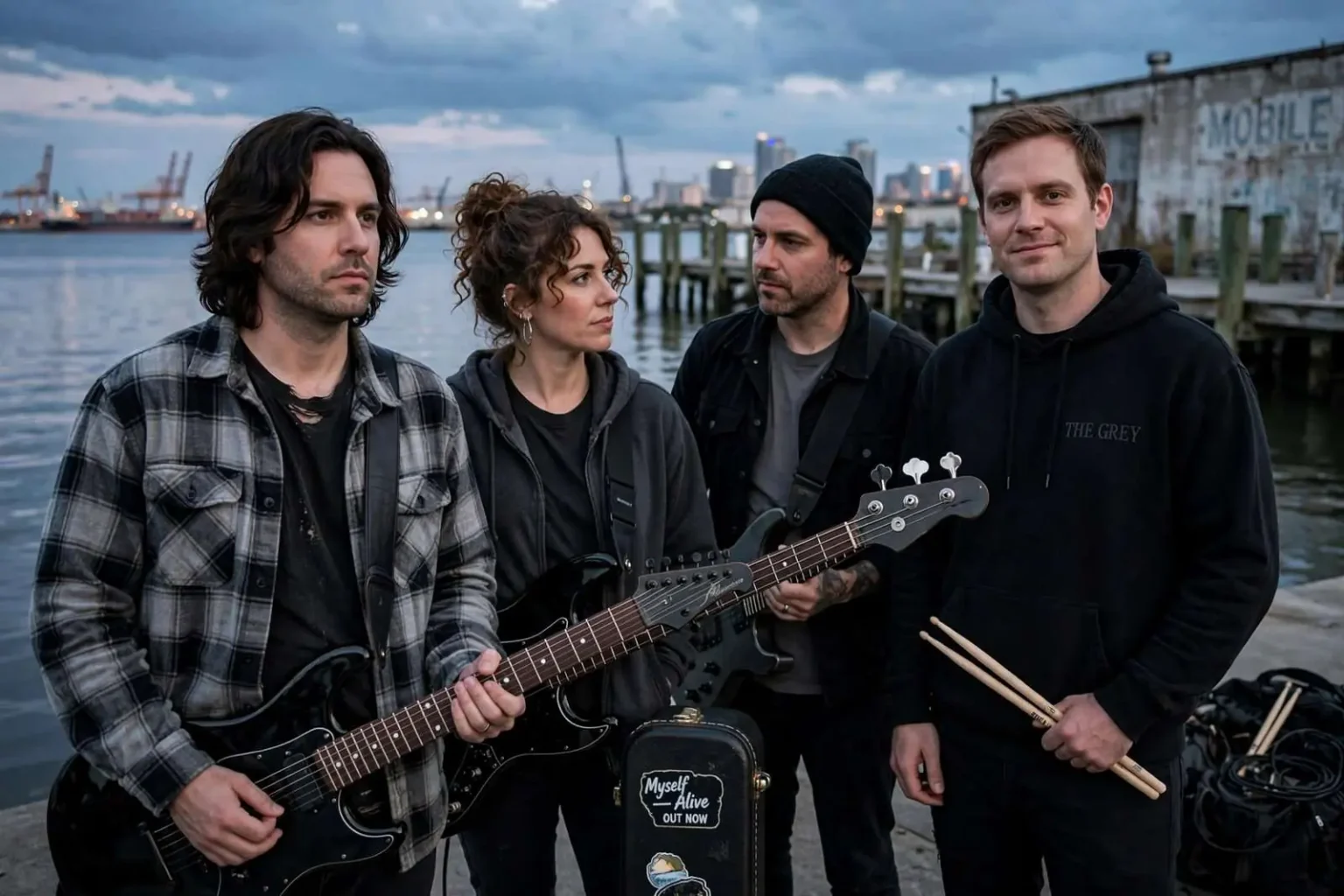
Mobile-based rock band The Grey has released a new music video for their track “Myself Alive,” taken from their debut album Anatomy of Society. The video marks a significant step forward for the local group as they continue to build momentum in the regional and national rock music scene, giving the band a visual calling card to match the recorded track as it circulates online.
The Grey’s members have known each other for years, and while the band’s lineup has evolved over time, the group says they have settled into a solid formation. That stability matters for a working rock band. Mobile’s music scene has produced countless acts that flared and faded as members drifted toward other commitments, and the bands that endure are the ones whose chemistry survives lineup churn. The Grey says that chemistry has translated into a growing local following and performances at major events, including an appearance at Bayfest 2010, the downtown music festival that for years ranked among the largest events of its kind on the Gulf Coast.
Bayfest’s stages historically hosted a mix of national touring headliners and regional acts, and a slot on that lineup has long served as a rite of passage for Mobile-area bands. For a group working its way up from local club shows, playing the festival placed The Grey in front of tens of thousands of potential fans and gave the members a credential they carry into every booking conversation since.
The band is now setting its sights on recording a follow-up album in Orlando with producer Brett Hestla, who is known for his work with rock acts such as Framing Hanley and Tantric. Hestla’s resume spans both the stage and the studio — as a veteran of the late-1990s and 2000s rock scene, he has spent years shaping records for bands in the hard rock and post-grunge lane where The Grey operates. The Grey previously collaborated with Hestla on Anatomy of Society and chose to return to him based on the success of that first effort, a continuity that producers and bands alike value when the goal is a cohesive follow-up.
Orlando has grown into a meaningful recording hub for Southern rock acts, drawing bands from across the Southeast who want big-city production resources without Nashville or Los Angeles price tags. For a Mobile band, the city is an accessible drive, allowing the members to settle into the focused stretch of recording sessions that album projects demand.
Plans for the Road Ahead
Once the new album is completed, The Grey plans to set a firm release date and hit the road to support it with a tour. Touring remains the proving ground for rock bands at this stage of their development — the place where a local following either converts into a regional base or reveals itself as a hometown phenomenon. A tour routing out of Mobile puts the band within easy striking distance of the Gulf Coast circuit, from Pensacola and Destin east to New Orleans and the Mississippi coast, with Birmingham, Atlanta and the broader Southeast beyond as the tour scales.
The band has expressed enthusiasm for playing large-scale events like Bayfest and other national festivals, viewing them as key opportunities for exposure at this stage of their career. Festival slots compress what club circuits take months to build: a single afternoon set can introduce a band to thousands of listeners who arrived to see the headliners and leave humming the opener. For unsigned and developing acts, festival performances also function as auditions of a sort, with talent buyers, radio promoters and label scouts paying attention to which bands move crowds they did not bring themselves.
A major CD release event is also in the works, with the band planning radio promotion, press outreach, and new merchandise to accompany the launch. The full-launch approach reflects how much the album cycle still matters to working rock bands even in a streaming-dominated era. A coordinated release — with radio pushing singles, press building the story and merchandise giving fans a physical connection to the record — concentrates attention into a window the band can convert into ticket sales and return bookings.
In the meantime, the “Myself Alive” music video has been generating positive reception online since its release. For a regional band, a video is leverage: it anchors social media pushes, gives radio stations and venues something visual to share, and lets casual listeners sample the band’s energy before committing to a show. The early response to “Myself Alive” suggests the track has the hooks to carry that weight as the band builds toward its Orlando sessions.
The Grey’s trajectory — from a Mobile act with deep local roots to Bayfest stages and a follow-up album with a producer whose credits include national rock acts — tracks the path that Gulf Coast bands have chased for decades. The difference now is the toolkit: digital distribution, video platforms and social promotion let a regional band reach listeners in every market without waiting for a label to open the doors. What remains unchanged is the work in the studio and on the road, and the follow-up album will show whether The Grey can turn local momentum into a national audience.
The release of “Myself Alive” also adds another chapter to Mobile’s rock lineage. The Port City has periodically punched above its weight in the regional music economy, and bands that emerged from its club scene have historically relied on the same combination The Grey is deploying: relentless local gigging, festival showcases and strategic recording partnerships outside the market. Anatomy of Society established the band’s recorded identity, and the decision to keep producer Brett Hestla in the fold for album two is the kind of consistency that separates acts building careers from acts releasing one-off projects.
Hestla’s work with bands like Framing Hanley and Tantric gives The Grey a producer who understands both the creative and commercial sides of the hard rock lane. Records made with producers who have national credentials also carry weight with radio programmers and festival bookers, who read a production credit as shorthand for a certain level of polish and market awareness. That matters as the band positions its follow-up for the radio promotion push planned around the release.
For Mobile audiences, the band’s rise is a familiar story playing out in real time. Local fans who caught the group’s early shows and its Bayfest 2010 appearance are watching the members convert hometown support into regional reach, and the “Myself Alive” video gives newcomers an entry point ahead of the album’s release. The band’s plans — a firm release date, a supporting tour, a major CD release event with radio, press and merchandise — sketch out the next year of a band working deliberately toward bigger stages, with the local scene watching to see how far the momentum carries.
The video release also serves the practical purpose of refreshing the band’s catalog presentation while studio work proceeds. Bands in the middle of album cycles face a long quiet stretch between announcements — sessions, mixing, mastering and label planning can consume a year without anything public to show for it. A new video keeps the band visible during that window, maintaining the local following’s engagement until the album campaign gives them something bigger to promote.
The band’s Orlando plans also reflect the realities of album production economics for independent rock acts. Booking concentrated blocks of studio time with a producer the band trusts, in a city within driving distance of home, keeps overhead manageable while allowing the members to remain hands-on through every stage of recording. Producers like Hestla, who have worked with nationally touring acts, bring arrangement instincts and studio efficiency that turn a band’s raw material into finished records faster than self-production typically manages.
As for Anatomy of Society, the debut continues to serve as the foundation of the band’s live set and its online presence. Debut albums carry a band’s origin story, and for The Grey the record’s success with Hestla is precisely why the collaboration is being repeated. If the follow-up captures the same chemistry with sharper focus, the band’s plans for a release date, tour and full launch campaign position it for the biggest chapter yet in a career that started with members who simply knew each other in Mobile and decided to make music together.
Behind the release plans sits a band that has learned the value of patience and momentum in equal measure. The Grey’s decision to hold the album until a firm release date is set — rather than rushing material out between projects — reflects the discipline of a group that watched its debut, Anatomy of Society, succeed by doing things in order: record with the right producer, build the live following, then expand outward with video, radio and press working together.
For fans tracking the band’s progress, the sequence to watch runs from the Orlando sessions through the album announcement, the CD release event and the tour dates that follow. Each step builds on the reception “Myself Alive” is already generating online, and each gives the band another milestone on the road from Mobile’s local stages toward the national festivals the members have set their sights on.