Mobile Singer-Songwriter So Brown Prepares Debut Album ‘Point Legere’ From Brooklyn
Mobile native So Brown readies her debut album Point Legere from Brooklyn, a Gulf Coast-inspired record blending delta blues and old country with 14.
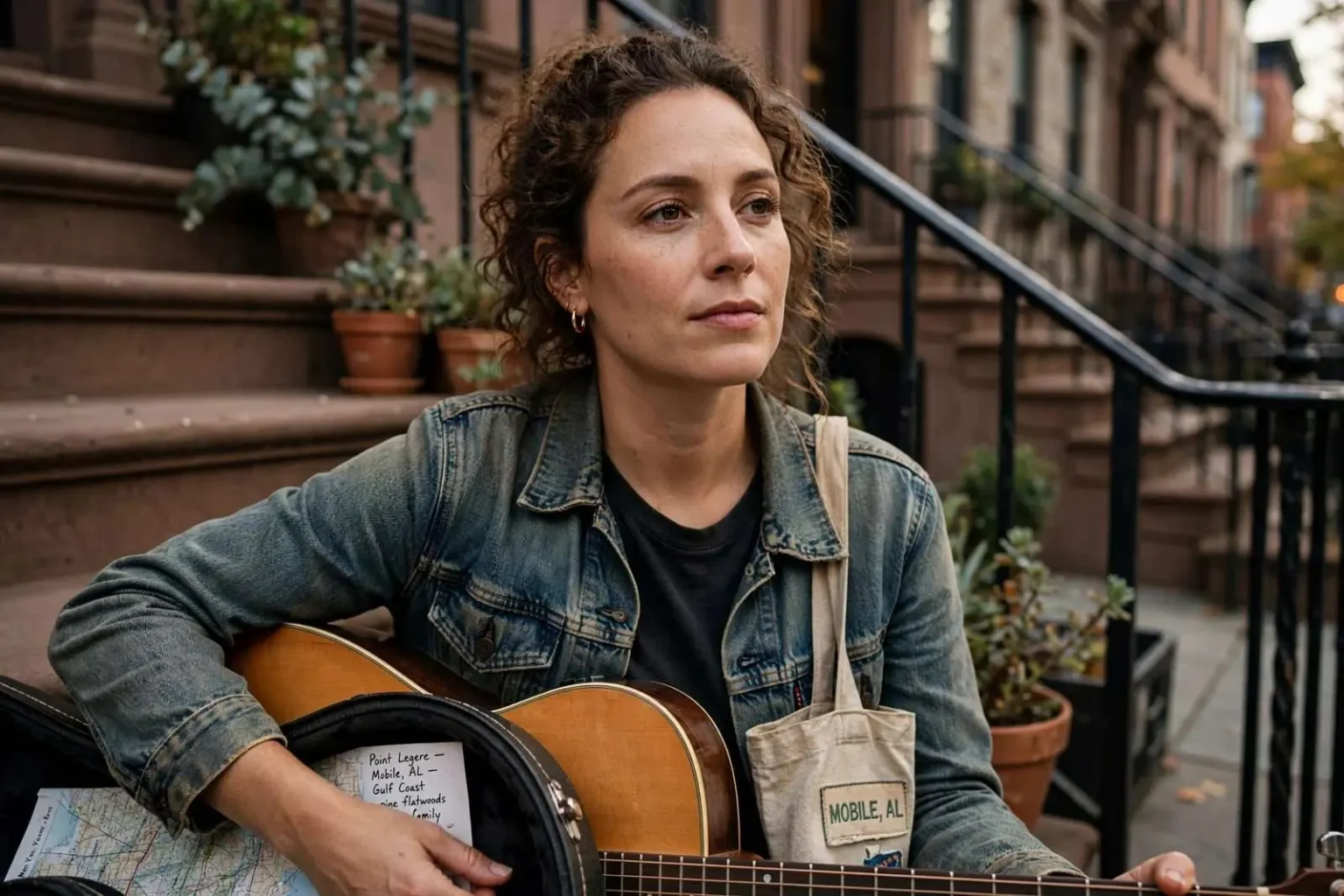
Mobile native So Brown is putting the finishing touches on her debut album, Point Legere, a record steeped in the landscapes, characters, and history of rural South Alabama’s Gulf Coast. Speaking from her home in Brooklyn, where she relocated nearly four years ago, So Brown described the long journey toward completing the project — a process that has stretched from Mobile to New York and drawn on a deep bench of collaborators along the way.
After moving to New York, she assembled a trio and began reaching out to additional musicians interested in contributing to the record. What started as a modest endeavor grew into a collaboration involving 14 musicians, a roster that gives the album the texture of a community effort even as it remains squarely the product of one songwriter’s vision. The gradual build — a core band expanding outward — is a familiar pattern for independent records, but the scale of the assembled group reflects how much material and how many arrangements the project ultimately demanded.
Brooklyn’s music scene has long drawn songwriters from across the country, and the city’s studio infrastructure — engineers, session players and rooms built for analog work — made it a practical base for a Mobile artist determined to record her debut on her own terms rather than rushing to finish it close to home.
A Record Rooted in the Gulf Coast
The album takes its name from Point Legere, a peninsula along the Gulf Coast where So Brown’s maternal family has lived for four generations. She described the area as her deepest personal root and said the record is meant to capture the spirit of that rural, off-the-map corner of Alabama rather than the more commonly depicted city life and Mardi Gras celebrations of Mobile.
“I want anyone who picks up the CD and listens to it to be transported into the world of rural Alabama,” So Brown said. “The music and the art both serve that purpose.”
The distinction matters. When outsiders picture the Mobile area, the imagery tends toward the port city — carnival seasons, antebellum architecture, Mardi Gras societies. Point Legere points instead to the quieter landscape south and west of the city, where tidal marshland, pine flatwoods and small family communities line the upper Gulf Coast, and where generations of families have lived close to the water and the land that surrounds it.
That sense of place runs through the songwriting itself. Rather than writing about a city or a scene, the record is anchored in a specific peninsula and the family history tied to it, giving the album a geographic and emotional center that few debuts attempt.
Delta Blues, Old Country and Live-to-Tape
Musically, the album draws heavily from delta blues and old country traditions. So Brown said she wanted to make a record with an old-school feel, citing influences like Sun Records and early Neil Young. Those reference points span both sides of the American songbook — the raw, stripped-down blues and early country recordings cut in Memphis, and the early-1970s singer-songwriter work that valued feel and atmosphere over studio polish.
The bulk of the recording was done live to tape at Trout Recording Studio in Brooklyn, run by engineers experienced with that classic approach. Live-to-tape recording leaves little room for the endless overdubs and digital corrections that define modern sessions; the band plays together, the tape rolls, and the performance that lands is the one that stays. For an album built on blues and country textures, the method is as much an aesthetic choice as a technical one.
The choice also mirrors the record’s themes. A project about a rural, off-the-map corner of Alabama benefits from a production style that sounds human and immediate — room noise, breath, the natural decay of instruments — rather than the compressed uniformity of a fully digital production.
The Norah Jones Connection
During the album’s development, the 2010 Deepwater Horizon oil spill brought unexpected attention to So Brown’s songwriting when Norah Jones covered her song “Dauphin Island.” The connection helped raise the profile of her work and underscored the Gulf Coast themes that run throughout the record.
The spill, which sent crude oil toward the Gulf coastline for months, weighed heavily on coastal communities across Alabama, Mississippi and Louisiana — and on the artists who write about them. Dauphin Island, the barrier island at the mouth of Mobile Bay, sat directly in the path of concern, and a song named for the place took on a resonance neither the writer nor the famous interpreter of it could have planned.
A cover by an artist of Jones’s stature introduced So Brown’s writing to a national audience at the exact moment her home region was in the national news, and it linked her catalog permanently to the Gulf Coast landscape the spill threatened. For a songwriter preparing a debut built on those same landscapes, the timing reinforced the record’s sense of purpose.
Artwork Shot in Mobile and Brooklyn
So Brown spent much of the past year working on album artwork, shooting photographs in both Mobile and Brooklyn to create a visual companion to the music. The two-city approach mirrors the record itself — an album about South Alabama, made in New York — and the photographs are intended to do the same transporting work that the songs do.
For an independent release, treating the visual presentation as a core part of the project rather than an afterthought is a deliberate choice. The artwork extends the album’s argument: that the world of rural Alabama — its water, its buildings, its light — deserves the same careful framing as the songs written about it.
The dual geography also reflects the realities of a working songwriter’s life. Many artists from the Gulf Coast who relocate to New York find that distance sharpens rather than dulls their connection to home, and the record was assembled across that distance, with trips back to Mobile shaping both the material and the images that will accompany it.
What Comes Next
Point Legere is expected to arrive as the capstone of a project that has occupied its creator for years, from the first sessions with a trio in Brooklyn to a final tally of 14 contributing musicians. The debut pairs the oldest materials in American music — delta blues, old country, live-to-tape fidelity — with a story that is specifically and personally Alabamian.
For Mobile-area listeners, the album promises a portrait of home from an artist who left it, studied it from afar and returned to it again and again to get it right. For listeners elsewhere, it offers an introduction to a part of the Gulf Coast that rarely makes it onto record at all.
Why Place Matters on a Debut
Debut albums often chase a sound or a scene. Point Legere instead chases a place, and the difference shapes every layer of the project — the arrangements built for 14 players, the analog recording methods chosen for their warmth, the photographs shot on location, and the title taken from a peninsula where four generations of one family have lived along the Gulf.
The record joins a tradition of Southern songwriting in which geography is not a backdrop but a subject. The delta blues So Brown draws from were themselves records about specific rivers, roads and towns; the old country records she cites were filled with place names their listeners knew firsthand. Writing about rural South Alabama in that lineage means writing about the coast as it actually is — marsh and pine and small communities — rather than as tourism renders it.
It is a portrait that could only come from someone with standing to paint it. Family roots four generations deep on Point Legere give the album an authority that a visiting songwriter could not manufacture, and the care taken with the recording process suggests an artist who understood what the material required.
The Long Road to Release
From Mobile to Brooklyn and back, the making of Point Legere has followed the same route as so many Gulf Coast stories: leaving home, working elsewhere and carrying home along the entire way. The album’s completion brings that journey to a resting point — 14 musicians, a year of photography, live-to-tape sessions at a Brooklyn studio and a title borrowed from a family peninsula.
As So Brown readies the record for release, the songs stand as both an artistic debut and a document of a part of Alabama that its own artists too rarely commit to tape. For the communities and landscapes that inspired it, the album is a rare and careful portrait; for So Brown, it is the record she spent nearly a decade’s worth of moving and writing and recording learning how to make.