Pit Bull Attacks Mobile Woman at Her Home, Severely Injuring Her Hands
A Mobile woman suffered severe hand injuries when her pit bull attacked her as she separated it from other dogs on Government Boulevard.
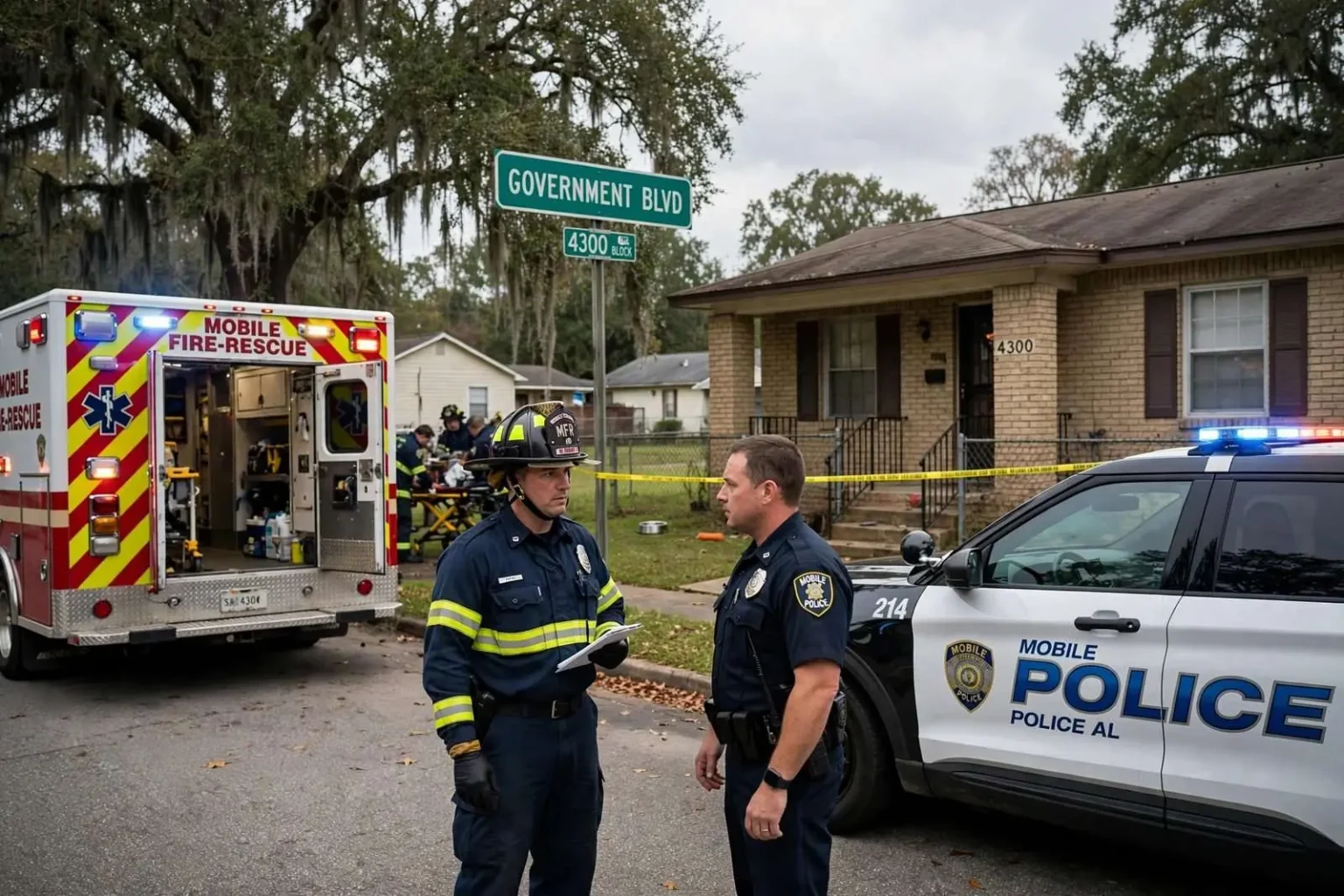
MOBILE, Ala. — A woman suffered severe injuries to her hands Thursday when a pit bull attacked her at her home on Government Boulevard, according to Mobile police. Officers and Mobile Fire-Rescue crews responded to the 4300 block of Government Boulevard after the attack was reported, and the woman’s injuries — concentrated in her hands, the part of the body most often hurt when someone tries to fend off or separate fighting dogs — were serious enough to draw a full emergency response.
According to a person close to the family, the dog belonged to the woman who was attacked. That person said the animal had a history of not getting along with other dogs in the household, and that the woman was trying to separate it from the others when it turned on her. The detail transforms the incident from a case of a stray or unknown animal into something both more common and more painful for the family involved: an attack by the family’s own pet, in its own home, during an attempt to keep the peace among the household’s dogs.
The extent of the woman’s treatment and the dog’s disposition — whether the animal was surrendered, quarantined, or euthanized — were not immediately known. Authorities said the circumstances remained under review, and no charges or citations were announced in the immediate aftermath of the attack.
The scene on Government Boulevard
Government Boulevard is one of Mobile’s longest and busiest east-west corridors, stretching from the heart of the city west toward the growing suburbs beyond Schillinger Road. The 4300 block sits in the central-western stretch of the boulevard, an area where older residential streets thread between the commercial strips that line the main road. Homes along the connecting streets often sit on modest lots, the kind of close-in neighborhoods where multiple dogs in one fenced yard is a common arrangement and where emergency crews can reach scenes quickly from stations along the corridor.
The response combined police and fire-rescue units, the standard pairing in Mobile for a serious injury call. Police secure the scene — essential when an aggressive dog is involved, both to protect paramedics and to contain the animal — while fire-rescue medics assess and treat the patient. Severe hand injuries from a dog attack can involve deep punctures, torn tissue, and damage to tendons and nerves, and they typically require prompt transport for surgical evaluation, since hand wounds from animal bites carry a high risk of infection on top of the structural damage.
The decision to involve police also reflects the investigative obligations that follow any significant dog attack in Mobile. Animal control becomes part of the process when the dog’s status is resolved, and the disposition of an animal that has seriously injured a person is a formal matter, not a family decision alone. Quarantine periods to check for rabies, evaluations of the dog’s history, and determinations about the animal’s future all follow from the initial report.
When household dogs turn on family
Serious dog attacks most often involve a dog known to the victim, and the household with multiple dogs presents one of the most familiar patterns. Dogs that live together but do not get along exist in a state of managed tension, and fights between them can erupt over food, territory, attention, or seemingly nothing at all. When the human in the house steps in to separate fighting dogs — a reflex almost no dog owner can resist — the person’s hands and arms are exactly where the dogs’ teeth are, and injuries of the kind reported on Government Boulevard are the predictable result.
Animal behavior specialists consistently warn owners against physically intervening in a dog fight with their hands. The recommended approaches — making loud noises, throwing water, using a barrier such as a chair or board, or pulling dogs apart from behind by their hind legs — are meant to keep human hands out of the reach of jaws that are, in the middle of a fight, biting first and identifying targets later. A dog that redirects its aggression onto the person pulling it away is not behaving unusually in that moment; it is reacting to being grabbed in a state of high arousal. That offers little comfort to the person bitten, but it explains why family dogs that have never shown aggression toward people can nonetheless inflict severe injuries on an owner in exactly these circumstances.
The reported history of conflict among the household’s dogs is the kind of detail animal control officers and behavior evaluators weigh heavily. Multiple-dog households where fights have happened before face a known risk of escalation, and shelters and rescue groups routinely counsel adopters that dogs with a history of conflict with other dogs need management — separate feeding areas, supervision, and sometimes physical separation — that many families are not equipped to provide indefinitely.
The pit bull question
The breed of the dog — a pit bull — will inevitably shape how the incident is discussed in the community. Pit bulls are the subject of a long-running national argument: advocates point to the dogs’ historical reputation as loyal family animals, their popularity as pets, and the difficulty of identifying breeds reliably by sight, while critics cite bite statistics and the severity of injuries when attacks do occur. Municipalities around the country have gone back and forth for decades between breed-specific regulations and laws that target dangerous behavior by any dog regardless of breed.
What is not seriously disputed is the mechanics of injury. A powerful, determined dog of any breed can inflict devastating wounds on a human hand, and when the victim’s hands are caught between dogs or used to push them apart, the resulting tissue damage can require surgery, leave lasting loss of function, and take months of recovery. The severity of this woman’s injuries, rather than the breed label alone, is what drives the medical and legal response.
In Alabama, the legal framework for dog attacks rests largely on general negligence and dangerous-animal principles rather than a single statewide dog-bite statute, which means the circumstances of an attack — whether the owner knew the animal was dangerous, whether local leash and containment ordinances were followed — determine the consequences. Municipal ordinances in Mobile require dogs to be contained and prohibit allowing animals to run at large, and a serious bite triggers reporting requirements and a quarantine review through the city’s animal services operation.
What happens to the dog — and the family
The dog’s disposition, which was not immediately known, will be resolved through the review authorities described. Animal services will typically verify rabies vaccination status and impose a quarantine period, either at the owner’s home or at a shelter facility, to rule out rabies transmission — a step required even for family pets whose vaccination history is current. Beyond the quarantine, the outcome can range from the dog’s return with conditions to a dangerous-dog designation to surrender or euthanasia, depending on the assessment of the animal and the decisions of the family.
For the family, the aftermath involves more than the formal process. A household pet that severely injures a family member creates a set of choices no owner wants to face, and families in these situations often describe grief that mixes guilt, love for the animal, and anger over the injuries. The fact that the attack happened during an attempt to protect the household’s other dogs — an act of care toward the animals — adds another layer to that emotional arithmetic.
The woman’s physical recovery, meanwhile, will be shaped by the specifics of her hand injuries. Hand trauma from animal bites frequently involves infections that complicate healing, and recovery can include wound care, possible surgical repair, and hand therapy to restore grip and range of motion. Emergency crews who responded Thursday evaluated her on scene and transported her for treatment, and the extent of her treatment was not immediately known publicly.
A reminder for multi-dog households
Episodes like this one prompt the standard advice from trainers and animal control officers, and it bears repeating precisely because the situation is so ordinary. Households with multiple dogs that have shown friction should not assume the problem will resolve itself; separate spaces, supervised interactions, and, where tension is persistent, professional evaluation are the accepted precautions. Feeding dogs separately, removing high-value items like bones and toys that trigger guarding, and knowing each dog’s triggers all reduce the odds of the fight that owners dread.
And when a fight does break out, the guidance is to keep hands out of it — a lesson that runs against every instinct an owner has in the moment, and one that, on Government Boulevard on Thursday, may have been learned the hardest way possible. Police said the circumstances remained under review, and further details about the woman’s condition and the dog’s fate were expected to emerge as the investigation and quarantine process moved forward.