Resurfacing on Celeste Road in Saraland to begin Wednesday
Resurfacing on Celeste Road in Saraland from I-65 to Lafitte Road begins Wednesday, with daily lane closures expected.
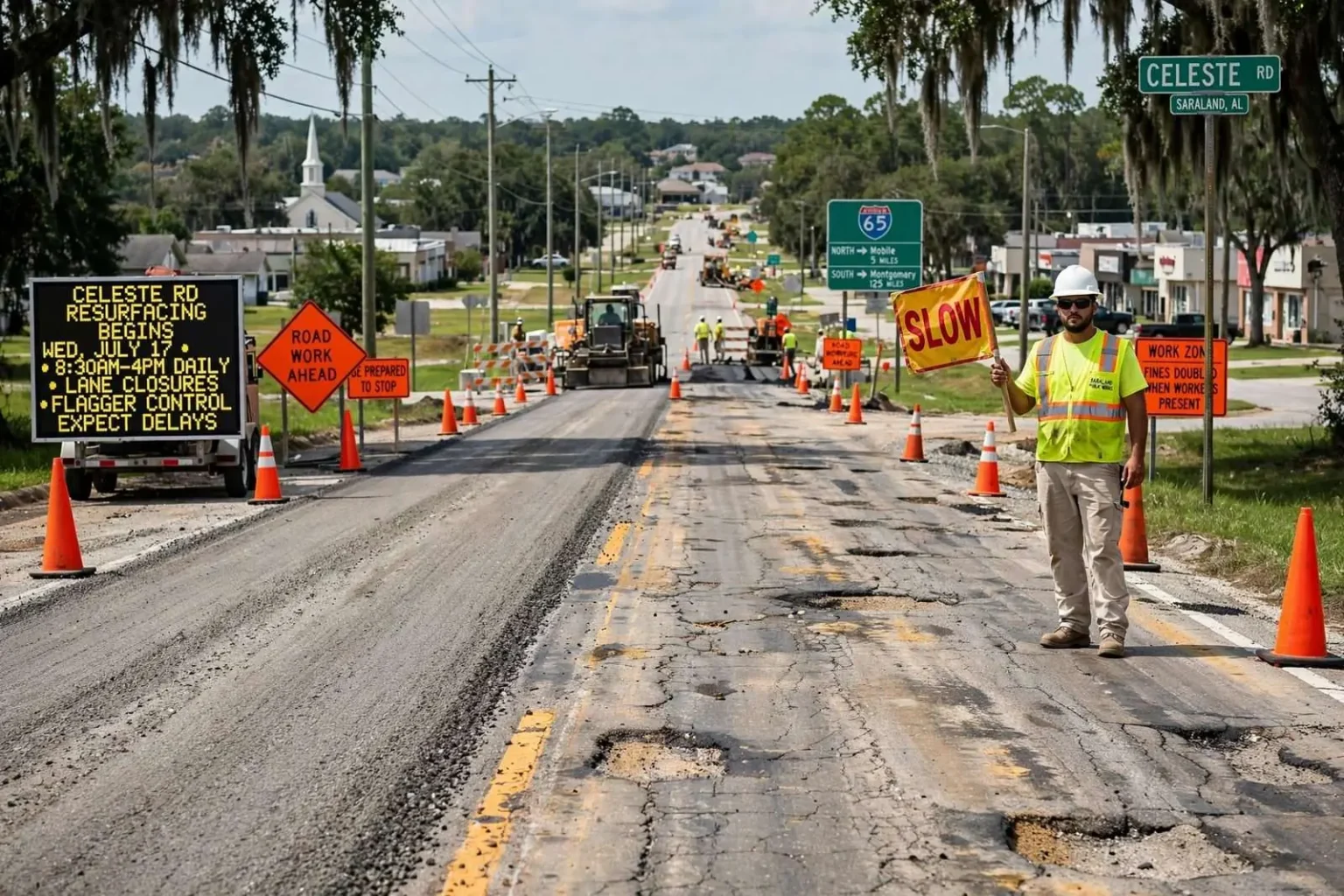
SARALAND, Ala. — Resurfacing work on Celeste Road in Saraland is set to begin Wednesday, July 17, launching a project that will cover the stretch from Interstate 65 to just past Lafitte Road and smooth out roughly two miles of rough pavement. Crews will work between 8:30 a.m. and 4 p.m. daily, and drivers should expect lane closures, with flagmen on site to help direct traffic through the work zone while the project moves down the corridor.
The timing of the daily work window matters for commuters. Celeste Road serves as a major north-south connector in Saraland, carrying traffic between the Interstate 65 interchange area and the residential neighborhoods that extend toward Lafitte Road and beyond. The 8:30 a.m. start allows the morning commute to clear before crews occupy the roadway, and the 4 p.m. cutoff leaves the lanes open for the evening rush, though drivers crossing the work zone midday should budget extra time and expect delays.
What the Project Covers
The project’s reach — from Interstate 65 to just past Lafitte Road — covers the busiest stretch of one of Saraland’s most-traveled local corridors. Pavement along a route like Celeste Road deteriorates under the combined weight of commuter traffic, school buses, delivery trucks, and the heavy vehicles that use the interchange area, and once cracking and rutting take hold, patching only postpones the inevitable. A full resurfacing pass grinds away the failing surface layer and lays fresh asphalt, restoring a smooth ride and extending the road’s service life by years, which is why public works departments treat resurfacing as maintenance rather than luxury: every dollar spent on time saves multiples in deferred rebuilding costs.
Roughly two miles of resurfacing is a substantial undertaking for a municipal corridor. Crews typically work the road in sections, milling the old surface in one stretch while paving behind, so that no more of the road is closed at once than the schedule requires. Motorists should expect loose gravel at transitions, uneven lanes where one side has been milled and the other has not, and temporary striping until the final paint lines go down after the asphalt cures.
How Work Zones Will Operate
Lane closures and flagmen will define the driving experience through the work zone for the life of the project. Flag operations on a two-lane road alternate traffic direction, holding one side while the other passes, which means wait times build during peak midday traffic even though the work window avoids the heaviest commute hours. Drivers should therefore plan for a slower passage through the corridor than usual and expect moderate delays at busy intersections along the route. Drivers are asked to reduce speed through the zone, obey the flagmen’s signals, and avoid passing vehicles in line — work zones run on the cooperation of the drivers passing through them.
The midday schedule also puts the crews at work during the hottest part of July days on the Gulf Coast, when pavement temperatures can exceed what the air temperature suggests by a wide margin. Asphalt paving is hot work under any conditions; fresh mix arrives at the paver at roughly 300 degrees, and crews layer protective clothing and hydration against the summer heat. Residents along the route should expect the noise of milling machines and pavers during the work window and the smell of fresh asphalt for the duration of the schedule.
Celeste Road and Saraland’s Growth
Celeste Road anchors a growing part of Saraland, one of Mobile County’s fastest-developing cities. Saraland’s population has climbed steadily over recent decades as residential growth pushed north from Mobile along the Interstate 65 corridor, and with that growth has come pressure on the city’s road network. Corridors like Celeste Road have absorbed subdivisions, schools traffic, and commercial development, and keeping their pavement in good condition is part of how the city manages the wear that growth produces, street by street and mile by mile across the map.
The stretch between the interstate and Lafitte Road links drivers to a web of local destinations: neighborhoods, schools, churches, and the commercial centers along the Highway 43 and Shelton Beach Road spines nearby. For residents of the subdivisions along and beyond Celeste Road, the resurfacing will be felt directly — in a smoother commute, quieter rides, and fewer pothole repairs — but only after a few weeks of flagmen, lane closures, and adjusted driving habits.
Advice for Drivers During the Project
The practical guidance for the project’s duration is straightforward. Drivers who can shift their trips outside the 8:30 a.m. to 4 p.m. work window will find the road largely unobstructed. Those who must travel through midday should add time, follow the flagmen’s directions, and stay alert for workers and equipment operating close to the travel lane. Motorcycles and bicycles should use particular caution on milled surfaces, where loose material can affect traction, and drivers of low-clearance vehicles should watch the transitions at driveways and side streets.
Residents along the work zone should also plan around temporary access changes. Paving crews coordinate driveway access so that homes and businesses along the route remain reachable, but there are periods when a driveway’s apron is fresh asphalt that needs time to set. Crews typically notify affected property owners in advance of those short restrictions, and the delays measured in hours rather than days. Mail delivery, trash collection, and emergency access continue through resurfacing projects, though schedules can shift slightly while work is active.
Businesses along the corridor face the same calculus with their customers. Experience from past paving projects suggests the strongest step a business can take is communication: signage at the entrance, updated directions on social media, and reassurance that the parking lot remains open while the road in front is under construction. The disruption is temporary and predictable, and the payoff — a freshly paved corridor that presents a better face to every customer who drives it — accrues to those same businesses once the crews move on.
School traffic is another consideration, though the July start dates the project before the academic year resumes. When classes return, the morning and evening school runs will again share Celeste Road with commuter traffic, and the city will benefit from the fact that the heavy paving work will already be behind it. Parents driving the route in August should still watch for residual work — striping crews, shoulder cleanup, and punch-list items often trail the paving itself by days or weeks.
Why Resurfacing Projects Run in Summer
Summer is the natural season for asphalt work across the Gulf Coast. Asphalt plants operate year-round, but paving performs best in warm weather: the fresh mix stays workable longer, compaction is more consistent, and the finished surface cures properly without the cold-weather challenges that complicate winter paving. A July start on Celeste Road gives crews the long daylight hours and stable conditions that a two-mile corridor project requires, and it front-loads the disruption into a period when schools are out of session, sharply reducing the conflicts with school traffic that a fall project would face.
Resurfacing schedules do depend on the weather, and Gulf Coast afternoons in July bring the real possibility of thunderstorms that can shut down paving on short notice. Rain halts paving operations because fresh asphalt must be laid on a dry surface, and a storm can leave crews waiting for the pavement to dry before work resumes. That means the July 17 start date should be understood as the beginning of a schedule that may flex day to day with the afternoon weather pattern, with the daily 8:30 a.m. to 4 p.m. window holding steady while the sequence of sections adjusts.
What Drivers Should Watch For Next
As the project moves from Interstate 65 toward and past Lafitte Road, the active work zone will travel with it, and drivers will want to stay alert to changing conditions from day to day. Fresh asphalt looks deceptively finished before striping is complete, and the new surface’s skid resistance improves as the final surface course is placed. Motorists are reminded that fines are doubled for speeding in work zones when workers are present, and that the flagmen directing traffic through Celeste Road are working just feet from the travel lane.
For Saraland, the Celeste Road resurfacing is the kind of infrastructure maintenance that residents notice most when it is done: a two-mile stretch of daily driving that no longer rattles, fights, or chews at a vehicle’s suspension. From Wednesday, July 17, until the project wraps, patience through the lane closures and flag operations is the price of that smoother pavement — a fair trade along a corridor that carries so much of the city’s daily traffic, and one that drivers will feel under their wheels long after the flagmen have packed up and gone home for the final time.