
Rock and Roll Hall of Famer Dr. John Headlines Dauphin Island Music Festival
Dr. John and the Dirty Dozen Brass Band headline the Dauphin Island music festival on May 14, 2011, joined by Mobile favorites Grayson Capps and Ryan.
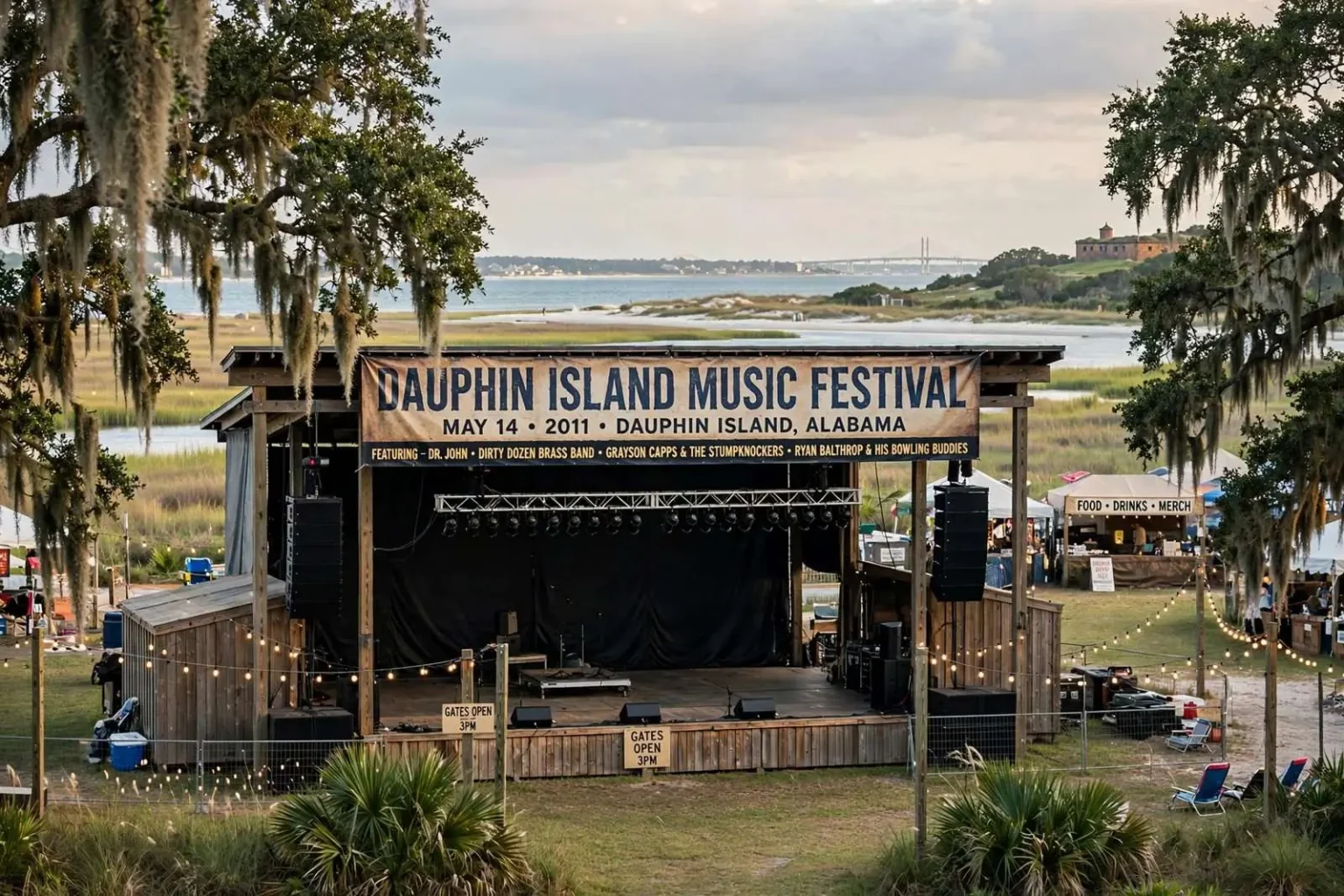
Dauphin Island is set to welcome one of the most iconic figures in American music when Dr. John takes the stage at the island’s annual music festival on Saturday, May 14, 2011. The legendary New Orleans pianist and singer, born Mac Rebennack, will headline the event alongside the equally renowned Dirty Dozen Brass Band. The festival lineup also features homegrown talent from the Mobile area, with Grayson Capps and the Stumpknockers as well as Ryan Balthrop and His Bowling Buddies opening the show. Gates are scheduled to open at 3 p.m.
The booking placed a living piece of Gulf Coast music history on an Alabama barrier island for one afternoon and evening. Dauphin Island, connected to the mainland by a single bridge across the sound, has long traded on its separation from the mainland — a place where beaches, fishing piers and live oaks set a pace that the cities across the water do not keep. An annual music festival gives the island’s calendar a centerpiece, and the 2011 edition gave it a headliner whose name alone could draw audiences from Mobile, Baldwin County and beyond.
A Living Legend on the Gulf Coast
Dr. John’s appearance on Dauphin Island comes just weeks after one of the highest honors in popular music. On March 14, 2011, he was officially inducted into the Rock and Roll Hall of Fame, cementing a career that has spanned more than five decades and helped define the sound of New Orleans.
The timing made the festival appearance something of a celebration. Induction into the Rock and Roll Hall of Fame places an artist alongside the foundational figures of American popular music, and for Dr. John the honor ratified a career built far from the industry centers — in New Orleans, the city whose musical language he carried to the world.
Rebennack’s route to the Dr. John persona ran through decades of New Orleans music making. A session guitarist and pianist in the city’s studios before his performing career took off, he absorbed the piano traditions of Professor Longhair and the other architects of New Orleans rhythm and blues — a style built on rolling left-hand figures, Caribbean rhythmic shading and a second-line beat that came up from the streets.
Known for his distinctive blend of blues, R&B, boogie-woogie, and psychedelic rock, Dr. John first gained national attention in the late 1960s performing as “The Night Tripper,” a persona steeped in New Orleans voodoo mysticism and Mardi Gras tradition.
The Night Tripper image — the feathers, the gris-gris trappings, the stage talk drawn from Carnival tradition — was theatrical packaging around serious musicianship, and audiences across the country took both. His early albums introduced national listeners to a sound rooted in New Orleans but filtered through the psychedelic era, and the persona made him one of the most visually and sonically recognizable figures in American music.
His catalog includes enduring classics such as “Right Place, Wrong Time” and “I Walk on Guilded Splinters,” songs that remain deeply familiar to audiences along the Gulf Coast.
“I Walk on Guilded Splinters,” from his late-1960s debut, became one of the era’s most distinctive recordings — a slow-building voodoo groove that generations of rock, funk and hip-hop artists have since sampled and covered. “Right Place, Wrong Time,” released in the early 1970s, put him on top-40 radio nationwide and remains his signature hit, its horn-driven New Orleans funk instantly identifiable decades later. Along the Gulf Coast, where New Orleans radio and travel have always flowed freely across state lines, those songs occupy the status of local anthems.
By the time of his Dauphin Island appearance, Dr. John had also become an elder statesman of American roots music — honored with Grammy Awards, sought out by rock and country artists for collaborations, and widely regarded as the leading living interpreter of the New Orleans piano tradition he inherited.
The Dirty Dozen Brass Band
Joining Dr. John on the bill is the Dirty Dozen Brass Band, another New Orleans institution. Founded in 1977, the group is widely credited with helping to modernize the traditional New Orleans brass band sound, fusing jazz, funk, and R&B into a style that has influenced generations of musicians in the Crescent City and beyond.
The brass band tradition that the Dirty Dozen reinvented runs through the heart of New Orleans life. Brass bands historically supplied the music for funerals, parades and second lines — the street processions that follow the band, dancing — and by the 1970s the tradition risked becoming ceremonial nostalgia. The Dirty Dozen’s innovation was to play brass-band instrumentation with the repertoire and rhythms of contemporary funk, R&B and jazz, turning the format into something that could fill clubs and festivals on its own terms.
The group’s influence is audible across the generations of New Orleans bands that followed, and it reached well beyond Louisiana. Rock and jam-band audiences encountered brass-band music through the Dirty Dozen’s touring and their collaborations with nationally known artists, and the band became a fixture of festival bills across the country — the kind of act that turns a festival afternoon into a block party.
Pairing Dr. John with the Dirty Dozen Brass Band gave the festival a double headliner of New Orleans royalty: the pianist who carried the city’s sound into American popular music, and the band that carried its street tradition into the modern era. For Gulf Coast audiences, the two acts on one bill was a rare concentration of the music that Mobile and New Orleans share across a century of exchange.
Local Openers, Island Setting
The undercard kept the day rooted in Mobile. Grayson Capps and the Stumpknockers, and Ryan Balthrop and His Bowling Buddies, brought the local scene to the stage ahead of the headliners — the festival’s usual balance of drawing names and hometown favorites, and a showcase of the songwriting and band culture that the Mobile area sustains on its own.
The setting completed the appeal. Dauphin Island’s festival grounds put music within reach of the Gulf, on an island whose Audubon sanctuary, Fort Gaines and public beaches give day-trippers reasons to arrive early and stay late. Crossing the bridge for an afternoon of music — gates at 3 p.m., music running into the evening — made the event a full island outing rather than a downtown concert stop.
The island itself adds character that no urban venue can replicate. Reached by bridge across the sound, Dauphin Island sits apart from the mainland’s pace, and festivalgoers arriving mid-afternoon found themselves in a setting of sand, live oaks and salt air — an environment that has made the island a favored destination for Mobile-area families for generations.
The combination of national headliners and local favorites promises a memorable afternoon and evening of music on one of Alabama’s most beloved barrier islands.
Mobile and New Orleans: A Shared Musical Coast
The festival’s New Orleans flavor reflected a musical kinship that predates either city’s recording industry. Mobile claims the older Mardi Gras, but the two ports have exchanged musicians, styles and audiences for well over a century, and the Gulf Coast functions culturally as one region when it comes to rhythm and blues, brass music and Carnival tradition. Gulf Coast listeners grew up with New Orleans radio and drive west for concerts as routinely as they cross Mobile Bay, so a bill built around New Orleans legends plays to an audience that treats the music as its own.
That exchange runs both ways. New Orleans players have always worked Mobile’s clubs and festivals, and Mobile musicians have long made their fortunes in New Orleans studios and bands. A festival that books the leading interpreter of New Orleans piano alongside the leading modern brass band is, in effect, inviting the neighboring city’s tradition across the state line for the day — a tradition the Alabama coast considers part of the household.
Festivals and the Island Economy
For Dauphin Island, an annual festival is more than entertainment. The town’s economy is built on tourism and fishing, and shoulder-season events give the island’s restaurants, shops and vacation rentals traffic beyond the summer beach months. Music festivals in particular draw overnight stays, since an afternoon-and-evening bill with out-of-town headliners convinces more visitors to book a place for the weekend.
The formula has worked for festival organizers across the Gulf Coast: a scenic setting that a downtown venue cannot match, headliners with regional draw, and local openers who keep the community invested. Dauphin Island’s edition followed the pattern, and the 2011 lineup — a Hall of Fame inductee weeks after his induction, plus one of New Orleans’ most celebrated bands — represented the strongest possible expression of it.
For the audiences who crossed the bridge on May 14, the day offered the rare pairing of two New Orleans institutions on an Alabama island, with Mobile’s own musicians opening the door. Gates at 3 p.m. opened more than a show; they opened one of the Gulf Coast’s great musical traditions onto one of its most beloved islands.