
Shooting reported at west Mobile residence on Stuardi Court
A shooting was reported late Sunday night at a residence on Stuardi Court in west Mobile, according to the Mobile County Sheriff's Office crime map.
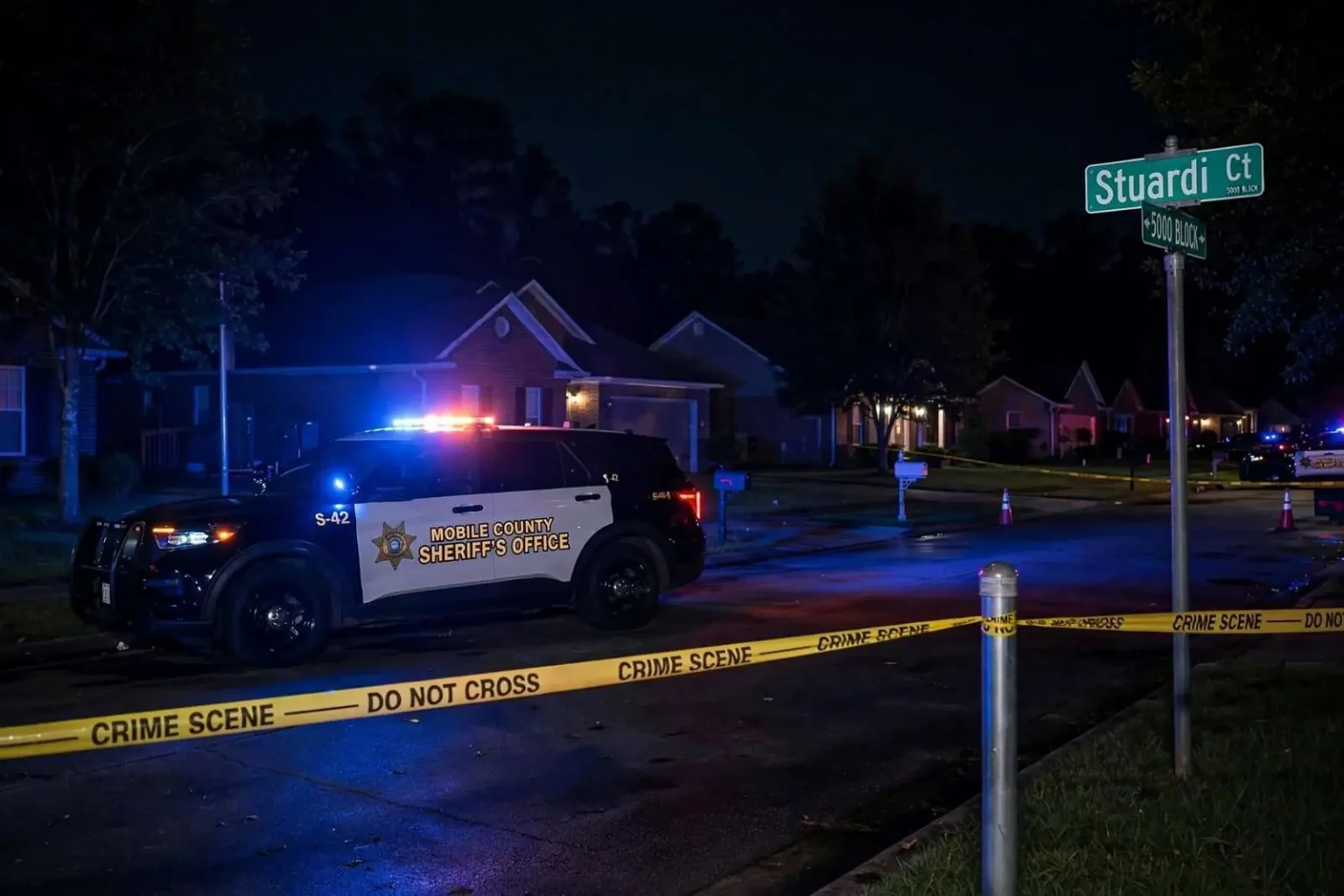
A shooting was reported late Sunday night at a residence on Stuardi Court in west Mobile, according to the Mobile County Sheriff’s Office online crime map. The Sheriff’s Office logged the incident at about 10:15 p.m. Sunday, placing it among the reports entered into the agency’s public tracking system as the weekend wound down. The crime map entry did not include information about injuries, suspects or whether anyone had been arrested, and the Sheriff’s Office had not released additional details about what took place at the home.
The listing is based on reports submitted to the Mobile County Sheriff’s Office, which serves as the primary law enforcement agency for unincorporated Mobile County and for communities that do not have their own police departments. As with any entry drawn from initial reports, the map reflects what deputies documented when the call came in, not a final account of the incident. Details often change, or fill in gradually, as detectives interview witnesses, gather physical evidence and review whatever camera footage may exist in the area.
Where the report was made
Stuardi Court sits off Overlook and Middle Ring roads in the western part of Mobile County. The area is a patchwork of residential subdivisions, older family properties and commercial corridors that has grown steadily over the past several decades as development pushed west and north from the city of Mobile along major routes such as Schillinger Road, Snow Road and Highway 98. Streets in this part of the county are served by a mix of city and county jurisdictions, which is why residents often see different agencies listed on incident maps depending on exactly where a call originates.
West Mobile’s growth has brought more traffic, more rooftops and, with them, more demand on law enforcement. Neighborhoods that were rural a generation ago are now surrounded by schools, churches and shopping, and the Sheriff’s Office has adjusted its patrol coverage over the years to keep up. Late-night calls, like the one logged on Stuardi Court, are a routine part of that workload, though any report of a shooting draws heightened attention from both deputies and nearby residents.
What the crime map does — and doesn’t — show
The Mobile County Sheriff’s Office maintains a public crime map that lets residents track reported incidents by location and date across the county. The tool plots calls for service and reported offenses on a map of the county, allowing anyone to search by address or zoom in on a particular neighborhood to see what has been logged nearby in recent days and weeks. Entries typically include the type of incident, the approximate location and the time it was reported. For residents deciding whether to install a camera, attend a neighborhood meeting or simply keep a porch light on, that information can be practical rather than abstract.
What the map does not provide is the full story behind each entry. The Stuardi Court listing, for example, did not include information about injuries, suspects or whether anyone had been arrested. That is common in the early stages of an investigation, when deputies are still sorting out what happened and detectives have not yet announced any findings. An entry can also change category as an investigation progresses, and some incidents logged on the map are later determined to involve no criminal conduct at all.
Sheriff’s officials have long described the map as a transparency tool rather than a real-time news feed. It gives residents a way to see what is happening around them without waiting for a press release, and it helps neighborhood associations and community groups spot patterns they might want to raise with deputies at community meetings. At the same time, officials caution against drawing conclusions from a single listing, since the circumstances behind each report are not always what they first appear to be.
Reported incidents and the path of an investigation
There is an important distinction between an incident that is reported and a case that has been solved. When someone calls 911 to report a shooting, dispatchers route the call to the appropriate agency, and deputies respond, secure the scene, look for victims and evidence, and write up a report. That report generates the crime map entry. Only later, after detectives have done their work, do investigators determine whether a crime occurred, whether someone was hurt, and whether charges are appropriate.
In a case like the one reported on Stuardi Court, investigators typically work through a familiar checklist. They canvass the neighborhood for witnesses and doorbell or security cameras. They check whether any victim has turned up at a hospital. They look for shell casings, vehicle descriptions or anything else that points toward what happened and who was involved. None of that work shows up on the public map, which is why entries can sit for days with limited information.
The Mobile County Sheriff’s Office investigates reported crimes across a wide and varied jurisdiction, from the suburbs west of Mobile to communities along the Mobile River delta and down toward the county’s southern reaches. The agency works alongside municipal police departments, including the Mobile Police Department within the city limits, and with state and federal partners when cases call for it. Major incidents, including shootings, often draw support from specialized units that handle evidence collection and interviews.
It is also worth remembering that a listing on a crime map is an accusation at most, not a finding of guilt. Anyone eventually charged in connection with an incident is presumed innocent unless and until prosecutors prove the case in court, and many reports never result in charges at all. That legal reality is one reason agencies are careful about the details they release early in an investigation, even as neighbors naturally want answers quickly.
What residents can do
Anyone with information about the shooting is asked to contact the Sheriff’s Office. Tips from neighbors and witnesses are frequently what move a case forward, especially when there are no confirmed victims or arrests in the public record. Residents who live near Stuardi Court and who may have heard or seen something around the time the incident was reported — a vehicle, raised voices, gunfire — are the people investigators most want to hear from, even about details that may seem minor.
People who are hesitant to come forward can ask about providing information in ways that limit their exposure, and community members who are unsure whether what they noticed is relevant are generally encouraged to report it anyway and let investigators decide. Information that seems small on its own, such as a car that was parked in an unusual spot or a person walking through the neighborhood late at night, can be the piece that completes a timeline.
The Sheriff’s Office also encourages residents to use the crime map as part of ordinary awareness rather than alarm. Looking up reported incidents on one’s own street, signing up for alerts where available and paying attention to community policing updates are all ways neighbors keep informed without relying on rumor. In west Mobile, where subdivisions sit close together and word travels quickly on social media, deputies have repeatedly emphasized that the map and the agency’s official channels are the most reliable sources for what has actually been reported.
Organized neighborhood watch groups remain one of the more effective ways residents in unincorporated Mobile County stay ahead of problems. Watch programs don’t ask anyone to confront suspects or take on police work; they simply encourage neighbors to know one another, notice what is out of place and report it promptly. Deputies who attend watch meetings can pass along crime prevention tips, from lighting and camera placement to how to describe a suspicious vehicle in a way dispatchers can use. In fast-growing areas like west Mobile, where new houses rise next to long-established family properties, those connections take deliberate effort to build.
Gun incidents leave a wider mark
Even a shooting with no reported injuries unsettles a neighborhood. Families near the scene of a late-night shooting report losing sleep, worrying about stray bullets and children playing outside, and asking questions about street lighting, patrols and camera coverage. Community groups across Mobile County have pressed for years for faster information flow after violent incidents, and tools like the crime map are one answer to that demand.
The ripple effects show up in practical ways. Homeowners’ associations revisit security contracts. Parents change walking routes. Residents who never thought about surveillance cameras suddenly price them. Sheriffs’ offices across the country have found that quick, accurate public information after an incident tends to calm those anxieties faster than silence, because rumors fill any gap that official information leaves open.
For now, the Stuardi Court entry stands as it was logged: a reported shooting, late Sunday night, at a residence off Overlook and Middle Ring roads, with no injuries, suspect or arrest information included in the listing. If the Sheriff’s Office releases more details, updates would follow through the agency’s official channels, and the map entry could be revised as the record becomes clearer. Until then, anyone with knowledge of the incident is asked to contact the Mobile County Sheriff’s Office.