Oscar-Nominated Documentary ‘The Alabama Solution’ Examines State Prison System
'The Alabama Solution,' an Oscar-nominated documentary about Alabama prisons, has been followed by a federal lawsuit from three incarcerated men featured in the film.
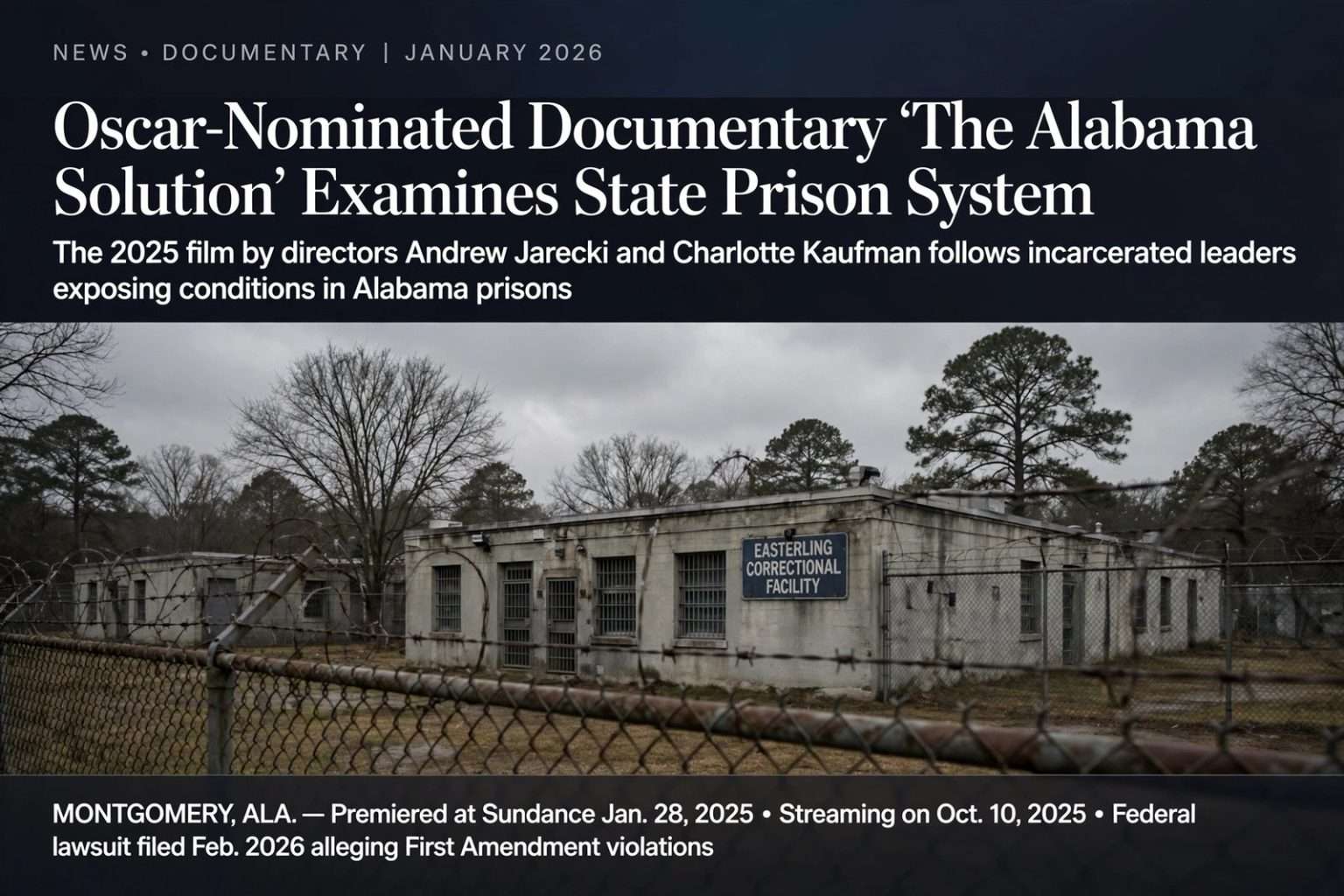
MONTGOMERY, Ala. — “The Alabama Solution,” a 2025 documentary directed by Andrew Jarecki and Charlotte Kaufman, examines Alabama’s prison system from the perspective of incarcerated leaders. The film was nominated for Best Documentary at the 98th Academy Awards.
Release
The film had its world premiere at the Sundance Film Festival on Jan. 28, 2025, and was released for television and streaming on Oct. 10, 2025. It received widespread critical acclaim upon its release.
How the Film Began
In 2019, Jarecki and Kaufman visited Easterling Correctional Facility to film a religious revival meeting. During the visit, incarcerated men approached them off camera with accounts of abuse and systemic failures in the prison system. That began a six-year investigation during which incarcerated men used contraband cell phones to document conditions and communicate with the filmmakers.
Subjects of the Documentary
The documentary centers on the death of Steven Davis, an incarcerated man who, according to the film, was beaten to death by prison guards. It follows Davis’ mother, Sandy Ray, as she seeks answers about her son’s death.
The film also profiles incarcerated activists Robert Earl Council and Melvin Ray, who co-founded the Free Alabama Movement and organized protests from inside the prison system.
The title refers to a phrase used by Gov. Kay Ivey, who has maintained that the state can address its prison problems without federal intervention.
Federal Lawsuit
In mid-January 2026, Council, Ray and Raoul Poole were placed in what was described as “extreme” solitary confinement following their appearance in the film and their calls for another prisoner strike. In February, the three men filed a federal lawsuit against the Alabama Department of Corrections alleging, among other claims, violations of their First Amendment free speech rights related to their involvement “in protected speech and association” with the film. The allegations in the lawsuit have not been decided by the court.