
The Tiles Reunite in Mobile: Willis Garrett on the Band’s Return and New Project The Suzies
Mobile indie rock band The Tiles reunite after a two-year hiatus, with plans for new recordings and a debut show at The Blind Mule.
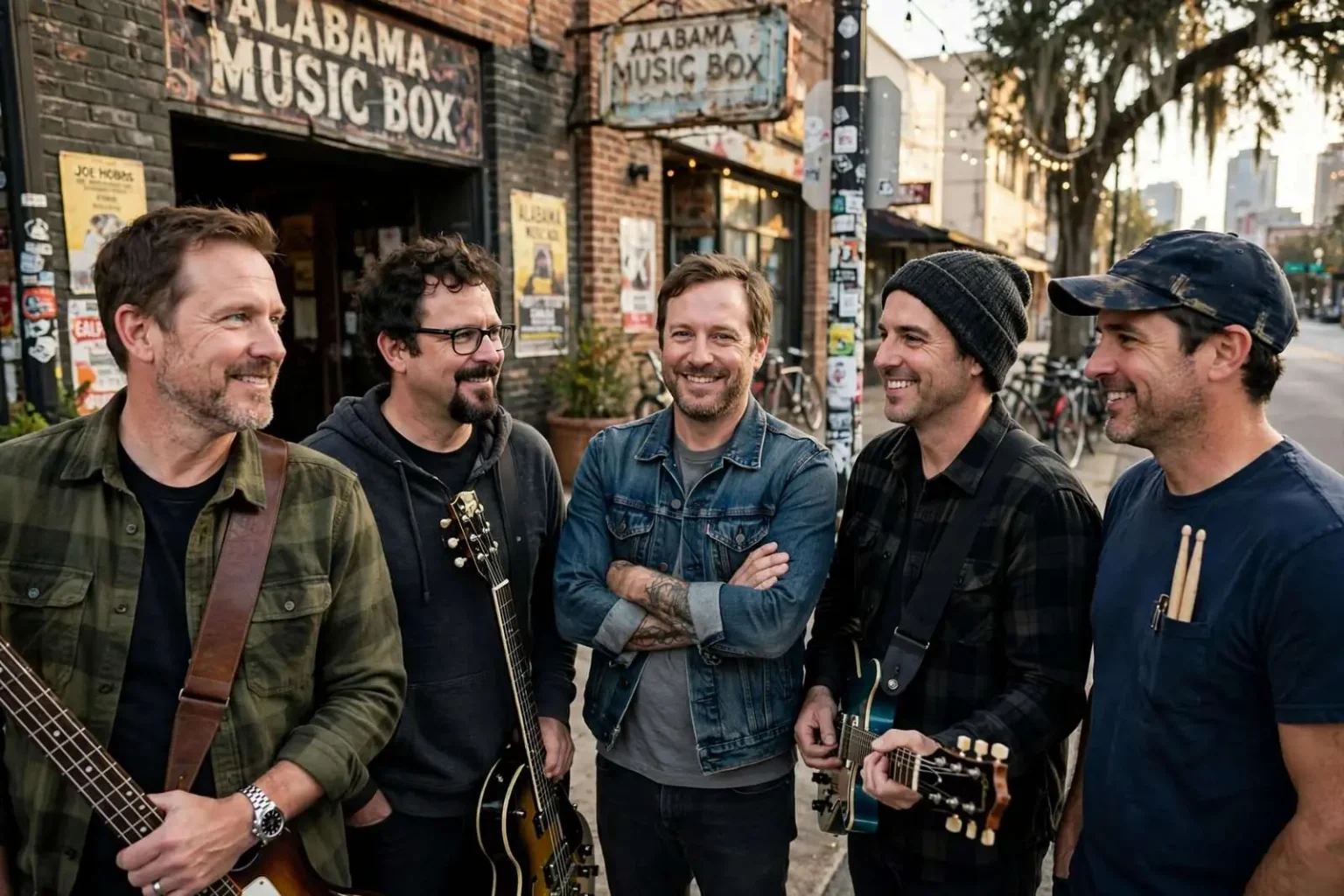
After a two-year hiatus, Mobile indie rock band The Tiles are back together and ready to hit the stage again. Bassist Willis Garrett recently shared details about the group’s reunion, their plans for new music, and an exciting new side project called The Suzies.
Why The Tiles Went Away — and Why They Came Back
The Tiles originally called it quits in late 2008 when guitarist and vocalist Craig Ricci relocated to Washington, D.C. The band had already scaled back its touring schedule, and the move felt like a natural conclusion to a strong run. Their farewell performance at the Alabama Music Box in December 2008 was, by all accounts, one of their tightest sets ever.
But when Ricci moved back to Mobile in the summer of 2010, the pull of making music together proved too strong to resist. While the group has no plans to resume touring, they are eager to get back in the studio and continue performing around Mobile and the Gulf Coast.
New Music on the Horizon
The Tiles have accumulated a significant amount of unrecorded material since their last studio effort, the 2006 “Some Songs EP.” The band is weighing whether to continue releasing EPs or finally record a follow-up full-length album to their 2005 debut, “Please.”
Their immediate plan is to record a split EP with The Suzies, a new band born directly out of the reunion period. Split releases have long been a staple of independent rock, letting two bands share pressing costs, cross-pollinate their audiences and document a scene’s moment in a single record. For two Mobile bands with overlapping membership and a shared set of influences, the format is a natural fit.
Garrett says the songs accumulated during the hiatus give the band real options. Rather than rushing a full album, the group intends to let the material decide the format — enough strong songs make a record, and the split EP gives both bands a deadline and a deliverable without forcing either to overreach.
Introducing The Suzies
The Suzies began as a collaborative project between Garrett and Ricci shortly after Ricci’s return to Mobile. With Tiles drummer Brad Lepik busy with another group, the Self-Destructing Messengers, the duo brought in friend Luke Buckley on drums. As the project evolved, Buckley transitioned to guitar, having written much of the band’s material.
When Lepik became available for The Tiles reunion, Ricci shifted his focus back to The Tiles, leaving The Suzies to continue with a lineup of Garrett, Buckley, lead guitarist Jeremy Padot, and drummer Joe Hobbs. The close ties between the two bands have fostered a spirit of collaboration rather than competition, with members moving fluidly between projects and sharing songs, stages and studio time.
The arrangement is typical of Gulf Coast indie rock, where the pool of dedicated musicians is close-knit and most bands share members, gear and practice spaces. Rather than thinning out the scene, that overlap has historically strengthened it: a member committed to two bands doubles the number of shows they play and the number of listeners exposed to both.
The Mobile scene that shaped them
The Tiles came up through a Mobile circuit that has long punched above its weight for a city of its size. The Alabama Music Box, the scene’s most reliable mid-size room, hosted the band’s farewell and remains a touchstone for touring acts passing along the Gulf Coast between New Orleans and the Florida panhandle. Neighborhood bars, campus-adjacent stages and art spaces round out the circuit that keeps local original bands working week to week.
That geography matters to a band’s life cycle. Mobile sits within easy driving distance of New Orleans, Pensacola and the beaches, which lets a regional band build an audience across state lines without the cost of full national touring. The Tiles’ scaled-back touring schedule reflected those practical realities, and their return is framed around the same geography — Mobile and the Gulf Coast first, with no promises beyond it.
Reunions in scenes like this one succeed or fail on the strength of the relationships behind them. By every account, the Tiles’ split was amicable and their reunion eager, and the fact that the same core of players immediately spun off a second band together says more about the health of those relationships than any quote could.
What the reunion means for local listeners
For audiences around Mobile, the return of The Tiles restores one of the scene’s familiar names to active duty. A band with a catalog spanning “Please” and the “Some Songs EP” can build a set list from material longtime listeners already know, while the promise of new songs gives the reunion a forward momentum that pure nostalgia acts lack.
Local music scenes run on exactly this kind of renewal. Rooms like the Alabama Music Box depend on a rotating cast of homegrown bands to fill dates between national tours, and every reunion that works keeps that ecosystem stocked. The Tiles’ return, paired with the launch of The Suzies, effectively adds two working bands to the Gulf Coast calendar from a single group of friends.
The band’s decision to record rather than tour also mirrors how regional acts have adapted to a changed industry. With touring costs up and record sales no longer the measure of success, a documented body of new material plus regular local and regional shows is the sustainable model. The split EP, in particular, is a low-risk way to put new music into circulation while keeping the financial commitment modest for everyone involved.
Between two bands
The parallel existence of The Tiles and The Suzies puts Garrett and Ricci in an unusual position, with songwriting responsibilities in two active projects. Garrett’s account of the arrangement suggests the boundaries are clear: The Tiles carry the reunion catalog and the accumulated unrecorded songs, while The Suzies are Buckley’s vehicle as a writer, with Garrett anchoring the low end and the newer lineup building its own identity.
That division of labor reflects lessons learned from the band’s first run. Groups collapse when songwriting credit, workload and calendar collide; they survive when each project has its own purpose. With Lepik back behind the kit for The Tiles and Hobbs drumming for The Suzies, both bands have stable lineups and no reason to compete for the same drummer — the resource that first forced the two projects to diverge.
Padot’s addition on lead guitar gives The Suzies a fullness that the original two-piece collaboration never aimed for, and Buckley’s move from drums to guitar — a switch made precisely because he had written so much of the band’s material — means the songs are performed by the person who knows them best. It is the kind of pragmatic lineup evolution that only happens in scenes small enough for everyone to know everyone, and loose enough to let roles change without drama.
Looking ahead
The immediate calendar for both bands centers on the studio: the split EP first, then a decision about whether The Tiles’ next release is another EP or the long-delayed follow-up to “Please.” Live dates around Mobile and the Gulf Coast will follow as the bands settle into their new arrangements.
Recording decisions like this one carry real weight for a regional band. EPs are faster and cheaper, and they keep a band visible with regular releases; an album, by contrast, makes a statement that a band has something substantial to say, and it becomes the document a scene remembers a group by a decade later. The fact that The Tiles are weighing the question seriously, rather than defaulting to whatever is easiest, reflects how much unrecorded material the band has banked since 2006 — and how much of it the members believe is worth preserving properly.
For a scene that watched the band sign off with one of its tightest shows in December 2008, the reunion picks up almost exactly where the farewell left off. The players are the same, the rooms are the same, and the material — old, unrecorded and brand new — is more abundant than when the band walked away. What changed is the ecosystem around them: a second band, more songwriters and a Gulf Coast circuit still hungry for local rock.
Two years is not a long hiatus by the standards of rock reunions, but in the life of a regional band it is enough time for rooms to change hands, lineups to reshuffle and audiences to drift. The Tiles’ return, with The Suzies alongside them, suggests Mobile’s scene held together through those two years well enough that the band had somewhere to come back to — which may be the most telling detail in the whole story.