Troopers identify pedestrian struck and killed in Mobile County
Alabama State Troopers identified 62-year-old Billy Elton Smith Jr. of Wilmer, struck and killed on Cuss Fork Road in Mobile County.
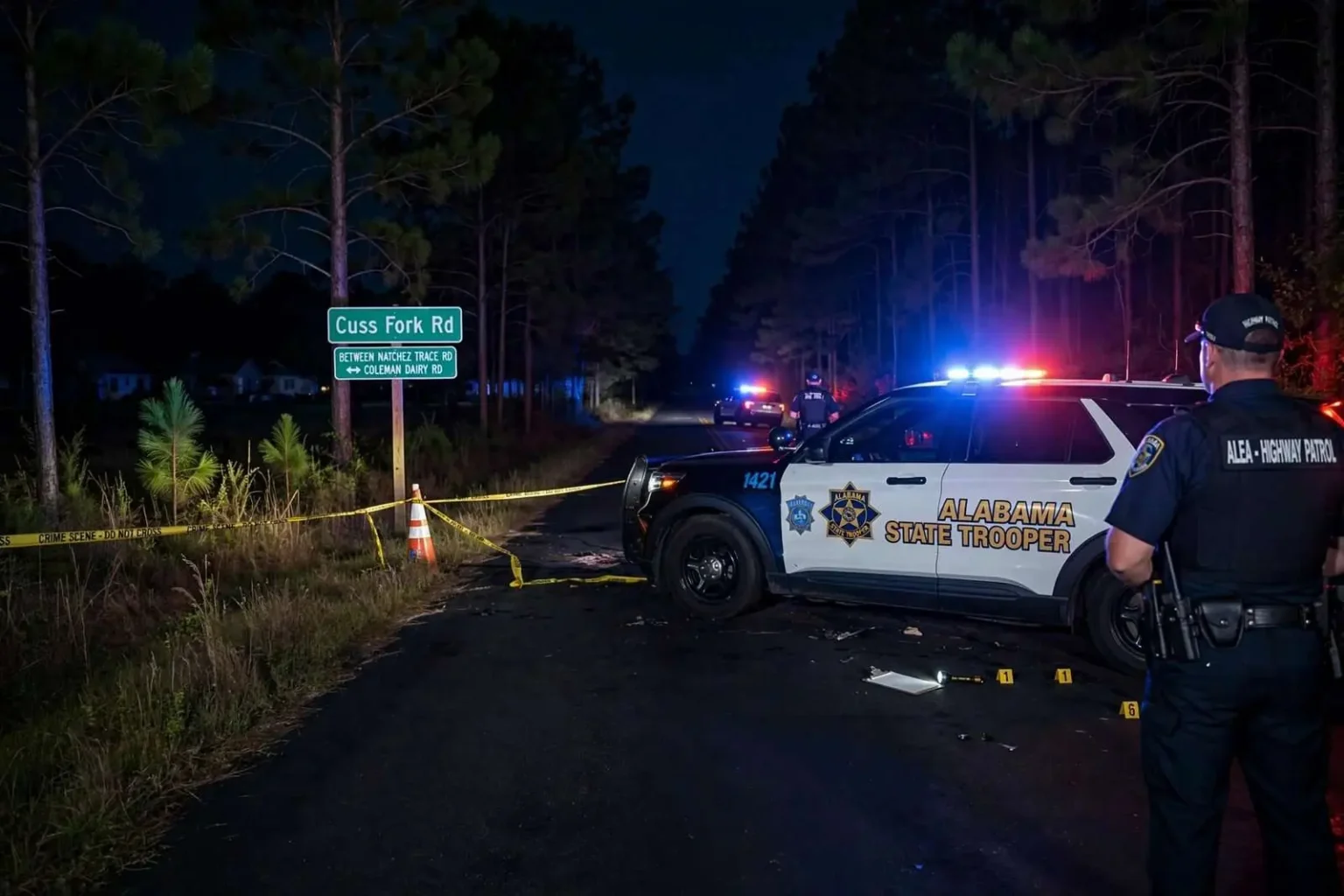
MOBILE COUNTY, Ala. — Alabama State Troopers have identified a man who was struck and killed while walking along a rural Mobile County road over the weekend. At about 9:15 p.m. Sunday, troopers say 62-year-old Billy Elton Smith Jr. of Wilmer was hit by a vehicle traveling north on Cuss Fork Road between Natchez Trace Road and Coleman Dairy Road. The investigation into the crash is ongoing.
Alabama State Troopers have identified the pedestrian killed in a weekend crash in rural northwestern Mobile County as 62-year-old Billy Elton Smith Jr. of Wilmer. According to troopers, Smith was struck at about 9:15 p.m. Sunday by a vehicle traveling north on Cuss Fork Road, in the stretch between Natchez Trace Road and Coleman Dairy Road. The investigation into the crash remains ongoing as authorities work to establish the full circumstances of the collision.
The crash occurred on a rural road in the Wilmer area, where unlit two-lane roads, scattered homes, and long stretches without sidewalks or lighting are the norm. Pedestrian crashes on roads of this kind are among the most serious incidents troopers investigate, because at night a person walking along or near the travel lane can be difficult for a driver to see until the vehicle is close. Troopers documented the scene, examined the vehicle involved, and began working to determine why Smith was in the roadway and what factors contributed to the collision.
The Crash Site and the Wilmer Community
Wilmer is a rural community in the northwestern corner of Mobile County, near the Mississippi state line, an area of pine woods, small farms, and homes scattered along county roads. Cuss Fork Road runs through this countryside, connecting the local road network between Natchez Trace Road and Coleman Dairy Road and carrying the daily traffic of residents moving between the community and Highway 45 or the state line. The area is served by Mobile County Sheriff’s deputies and, for state highway and serious crash investigations, the Alabama Law Enforcement Agency’s Highway Patrol.
Rural roads like Cuss Fork Road present particular dangers after dark. There are no streetlights, shoulders are narrow or nonexistent, and drivers encounter pedestrians, riders of ATVs and horses, and slow-moving vehicles with little warning. Speeds that feel comfortable on an empty rural road leave drivers with very little reaction distance at night, and crashes involving pedestrians at those speeds are frequently fatal, as this one was.
Residents of the area knew the Sunday night crash would draw attention to those conditions. Troopers closed or restricted the road while working the scene, a standard practice that allows investigators to photograph the scene, measure skid and impact evidence, and document vehicle positions before traffic resumes.
How Troopers Investigate Pedestrian Fatalities
The Alabama Law Enforcement Agency’s Highway Patrol Division handles crash investigations on roads outside municipal police jurisdictions, and fatal crashes receive the most detailed work the division performs. Investigators map the scene, document the point of impact, examine the vehicle for damage and mechanical condition, and attempt to reconstruct the sequence of events. Toxicology testing is standard in fatal crashes, applied to drivers and pedestrians alike, and the results become part of the record that determines whether any charges are warranted.
Investigations of this kind take weeks, because they wait on lab results, interviews, and sometimes reconstruction analysis. Troopers consider the whole picture: visibility at the time and place of the crash, the pedestrian’s location in or near the roadway, lighting, speed, and any signs of impairment or distraction. The outcome can range from a finding that no violation occurred to citations or criminal charges, depending on what the evidence supports.
Authorities have not released the identity of the driver or said whether the driver stopped at the scene, remained cooperative, or faces any citations. Those details typically emerge as the investigation progresses, and officials have indicated that the case remains under investigation.
Pedestrian Safety on Rural Alabama Roads
Alabama’s rural roads carry a disproportionate share of the state’s pedestrian fatalities, a pattern that safety officials attribute to the same conditions found along Cuss Fork Road: no sidewalks, no lighting, narrow shoulders, and vehicle speeds that make nighttime collisions unsurvivable. In communities like Wilmer, walking is a practical necessity — residents walk to visit neighbors, reach a relative’s home, or get to a main road when transportation is limited — and the roads they must use were never designed for foot traffic.
Safety officials advise pedestrians on rural roads to walk facing traffic, on the left side of the road, so that they can see oncoming vehicles and step clear when necessary. Wearing reflective or light-colored clothing and carrying a flashlight dramatically improves how far away a pedestrian can be seen at night, and authorities recommend walking well off the travel lane whenever the ground allows. For drivers, the guidance is equally direct: slow down on dark rural roads, scan the road edges for movement, and use high beams where opposing traffic permits, since many nighttime pedestrian crashes occur because the driver never saw the person until it was too late.
Dusk and nighttime hours are the highest-risk periods for pedestrian crashes statewide, and weekends statistically see more of them. The 9:15 p.m. timing of Sunday’s crash in Wilmer fits that pattern, occurring after dark on a road with no artificial lighting.
Support for the Family and the Community
Fatal crashes send ripples through small communities, and authorities in Mobile County work to support families through the aftermath. The Mobile County District Attorney’s Office victim services officers, area grief counselors, and clergy in the Wilmer community all serve families after sudden losses, and state victims’ compensation programs can assist with funeral costs in qualifying cases. News of the crash prompted condolences from area residents as word spread of the loss of a longtime member of the community.
Sunday’s fatality also adds to the region’s ongoing traffic safety conversation. Mobile County regularly ranks among Alabama’s counties for the highest numbers of serious crashes, a product of its size, its fast-growing population, and its network of rural roads surrounding the city of Mobile. Local and state safety programs — including impaired-driving enforcement, speed enforcement in rural areas, and public education campaigns — aim at the factors that repeatedly appear in fatal crash investigations across the county.
Anyone who witnessed the crash or who has information about the circumstances of Sunday night’s collision is encouraged to contact the Alabama Law Enforcement Agency, which can add witness accounts to the investigative file. Tips can be provided through the agency’s standard channels, and investigators have emphasized that even small details — a vehicle seen in the area, a person walking on the road earlier in the evening — can help complete the record of what happened on Cuss Fork Road.
What Comes Next
The investigation will continue until troopers have documented the crash fully and determined whether any traffic violations contributed to it. The findings will be recorded in the state’s fatal crash file, which feeds the national database used to identify dangerous road segments and guide future safety improvements. For the community along Cuss Fork Road between Natchez Trace Road and Coleman Dairy Road, the loss of Billy Elton Smith Jr. stands as a reminder of the risks pedestrians face on the region’s dark rural roads, and of the care both drivers and walkers are urged to take every time the sun goes down.
The Role of ALEA in Rural Mobile County
The Alabama Law Enforcement Agency, formed in 2013 by consolidating the former Department of Public Safety and other state enforcement functions, provides the Highway Patrol coverage that rural Mobile County depends on. Troopers out of the region’s posts investigate crashes on county roads and state highways outside municipal limits, respond to serious collisions around the clock, and handle the specialized fatal crash work that local sheriff’s deputies may support but do not lead. In the Wilmer area, that division of labor means a state trooper response to crashes on Cuss Fork Road and the surrounding network, with deputies and volunteer fire departments assisting on scene.
Fatal crash investigations are among the most demanding work troopers do, combining scene measurement, vehicle examination, interviews, and coordination with the county coroner. The process is deliberately thorough because the findings carry consequences for everyone involved — the driver’s legal exposure, the family’s questions, and the official record that determines how the crash is counted and whether the roadway itself draws attention for safety improvements.
Officials said the investigation into the Sunday night crash remains ongoing, and updates will come through the agency as the work allows. For now, the details stand as reported: a 62-year-old Wilmer man, struck and killed at about 9:15 p.m. Sunday while walking along Cuss Fork Road, in the stretch between Natchez Trace Road and Coleman Dairy Road, by a vehicle traveling north.