
Two Strangers Free a Pelican Snagged by a Fish Hook at Fairhope’s Pelican Point
Two passing strangers stopped at Fairhope's Pelican Point to free a pelican with a fish hook stuck in its bill, then taught the finder how to do it.
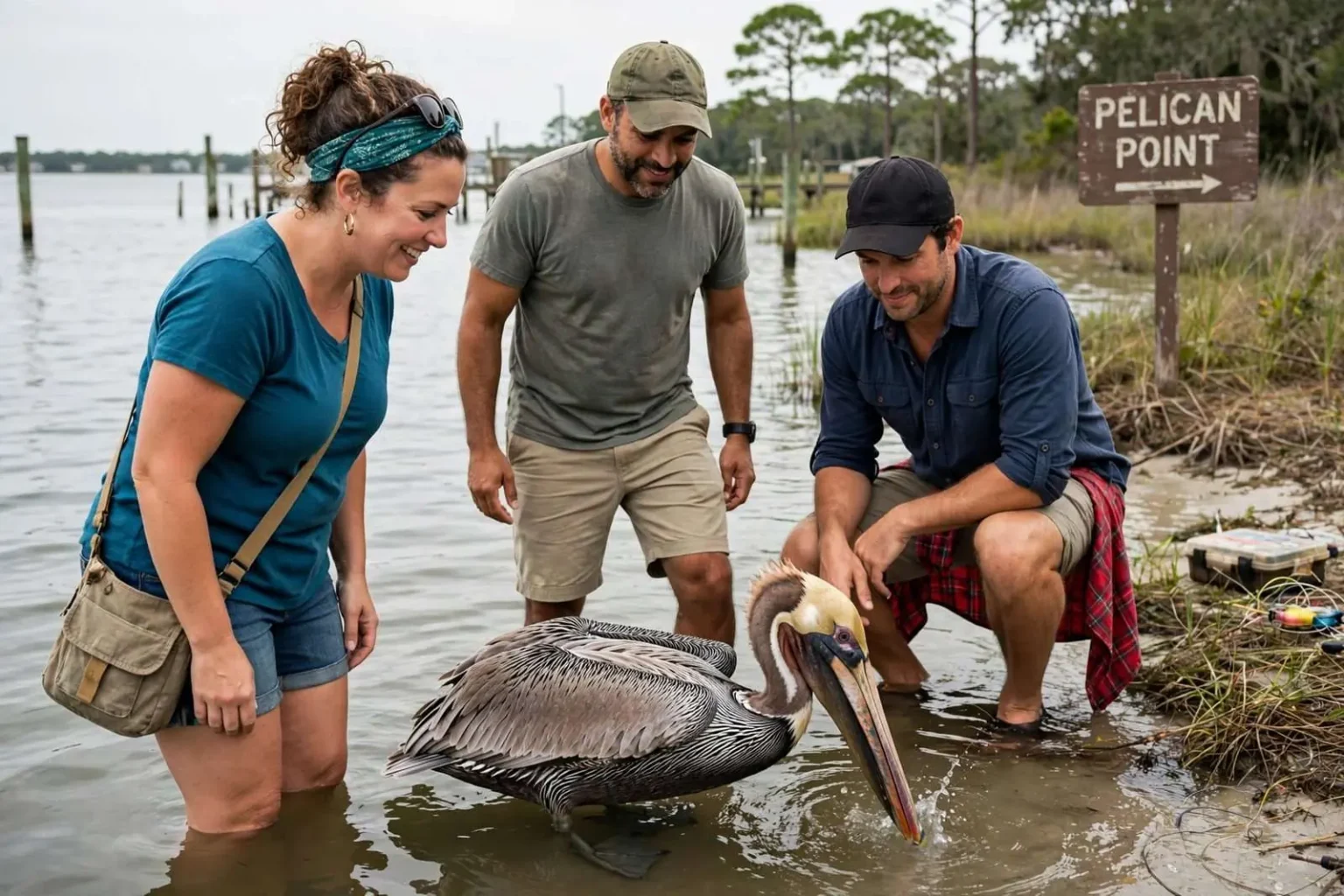
FAIRHOPE — A family outing at Pelican Point turned into an impromptu rescue when a Fairhope-area resident came across a pelican in distress with a fish hook lodged in its bill. What began as an ordinary day by the water became a small drama of the kind that plays out regularly along Mobile Bay, where the line between recreation and wildlife runs directly through the piers and shorelines that both people and birds share.
Dee Dee Robinson said she spotted the bird while she was out with her family and tried to move closer, but the pelican grew agitated and slammed its beak against the ground. The behavior is typical of a hooked brown pelican, a large and strong bird that can injure itself further when it panics, and it left Robinson in the delicate position of wanting to help without making the situation worse.
“I didn’t really know what to do except talk to it and keep it calm,” Robinson said. Her instinct to quiet the bird rather than grab at it aligned with what wildlife responders generally recommend, since a calm pelican is far easier to approach and far less likely to damage its bill or pouch while struggling against the embedded hook.
Help arrives from passing motorists
Two men driving past stopped and told Robinson to keep the bird where it was while they came to help. They said this kind of injury happens fairly often and that they knew how to handle it. Their familiarity with the situation showed in how quickly they assessed the bird and moved to secure it without unnecessary handling.
Within minutes the hook was out and the pelican was back at the water’s edge, dunking its beak. The bird’s quick return to the water offered the kind of immediate confirmation rescuers rarely get, as the pelican resumed the feeding behavior that defines its days along the bay.
The two men left without giving their names. Their departure left Robinson with the rescue itself and, just as valuable, with a working knowledge of what to do the next time a hooked bird crosses her path — something she had not gone looking for but walked away with anyway.
Rescues like this one depend on exactly that kind of improvisation. At Pelican Point and the other public access points around Mobile Bay, the people nearby when a bird is injured are usually the only help available in the moment, and the difference between an injured bird and a dead one often comes down to whether a passerby stops.
What they taught her for next time
Before leaving, the men walked Robinson through the technique in case she encountered another hooked bird. “They told me to hold their wings down and head steady to pull the hook out,” Robinson said. “They didn’t use a knife or anything sharp probably to avoid hurting it more. They said to be aware of the tip of their beaks — that it’s really the only sharp part.”
The advice captures the essentials of handling a pelican: pin the wings to control the bird’s strength, steady the head and long bill to keep the sharp tip away from the handler’s face, and work the hook out with hands rather than cutting tools that can turn a minor wound into a serious one. A pelican’s pouch is delicate tissue, and rough handling while extracting a hook can leave the bird unable to feed even after the hook is gone.
The men’s warning about the beak reflects the one genuine hazard a rescuer faces. A brown pelican’s bill is not designed to bite in the way a raptor’s talons threaten a handler, but the hard tip can slice skin when the bird strikes, and keeping the head controlled is the first rule of any pelican rescue.
A recurring hazard along Mobile Bay
Hook and fishing-line injuries are a recurring hazard for pelicans and other shorebirds along Mobile Bay, where the birds gather near piers and popular fishing spots. The brown pelicans that patrol the bay’s shoreline have learned that fishing piers and cleaning stations mean an easy meal, whether it is a discarded carcass, a bait bucket left unattended or a fish struggling on a line, and that familiarity puts them in constant contact with hooks, lines and tackle.
The injuries they sustain range from hooks caught in the bill, like the one at Pelican Point, to swallowed hooks, tangled wings and line wrapped around legs or pouches. Discarded fishing line is particularly dangerous because it persists in the environment, snagging birds long after the angler who lost it has gone home. Birds that become entangled can starve, drown or lose limbs to circulation cutoff if no one intervenes.
Fairhope’s waterfront, with its public pier, beach access and the parks that line the bay, draws anglers and pelicans into the same waters every day of the year. Pelican Point sits at the northern edge of the city’s shoreline, and its position makes it a natural gathering spot for the birds as they move along the bay’s eastern shore between feeding areas.
When to help and when to call
Wildlife officials generally advise people who are not confident handling an injured bird to call a licensed wildlife rehabilitator rather than attempt a rescue alone. A pelican that appears tame or sluggish may be exhausted or badly injured, and an untrained rescue can aggravate wounds, separate a bird from its rescue documentation or expose the rescuer to bites and scratches that need medical attention.
Rehabilitators who handle coastal birds can treat hook wounds, repair pouch injuries and recondition birds before releasing them back to the bay, and they rely on the public to be their eyes along the shoreline. Knowing how to contain a bird safely, keep it quiet and get it to a licensed facility is the skill set that turns a sighting into a successful rescue when hands-on extraction is beyond what a bystander can manage.
Robinson’s experience sat in the middle of that spectrum: she lacked the technique at first, but the two strangers who stopped supplied it, and the pelican was feeding at the water’s edge within minutes rather than spending days with a hook in its bill. Their parting lesson gave her the confidence of a practiced handler for whatever the next encounter brings.
Sharing the shoreline
The rescue at Pelican Point ended the way such stories rarely do, with the bird unharmed and no professional intervention needed. For the family that witnessed it, the morning offered a closer look at the pressures facing the bay’s pelicans than any aquarium could provide, and a demonstration that the outcome depends on someone stopping.
Anglers along the bay can reduce the hazards with a few habits: discarding line in receptacles rather than the water, not leaving bait or tackle unattended at the water’s edge, and retrieving tangled line when it snags on piers. Each hook kept out of the water is one less encounter like the one at Pelican Point.
For its part, the pelican returned to the routines of the bay — gliding along the shoreline, plunging after fish, drying its wings on the pilings — with no memory of the morning and no way to thank the strangers who stopped. Robinson, though, carries the technique forward, and the next hooked bird she finds will meet a rescuer who knows exactly what to do.
The pelicans of Mobile Bay
The brown pelicans that frequent Fairhope’s shoreline are a conservation success story that residents of a certain age still marvel at. The species suffered severe declines across the Gulf Coast decades ago from pesticide contamination that thinned eggshells, and its recovery to the point of being routinely seen diving along the bay is part of why the birds are so closely identified with the region’s waterfront communities.
Today the birds are a fixture from the Causeway to the Fairhope pier, working the shallows in formation and resting on pilings and sandbars between feedings. Their comfort around people is part of their charm and part of their vulnerability: a bird that has learned to loiter near anglers is a bird that will eventually meet a hook, a lure or a length of abandoned line.
Each year, rehabilitators and volunteers along the Alabama coast handle a steady stream of these cases, pulling hooks from bills and pouches, freeing tangled wings and nursing the worst injuries back to release condition. The caseload tracks the fishing calendar, rising in seasons when piers and shorelines are busiest, and every case begins the same way the Pelican Point rescue did — with someone noticing a bird in trouble and deciding to act.
Robinson’s morning at Pelican Point fit that pattern in every detail but the outcome’s speed. With two experienced strangers on hand and a bird calm enough to work with, the entire rescue took minutes, and the story ended with a wet pelican dunking its beak at the water’s edge and two anonymous teachers driving on down the road.