Veterans groups convene in Mobile to address mental health crisis
A veterans mental health summit at GulfQuest in Mobile brought community agencies and the VA together to coordinate suicide-prevention services.
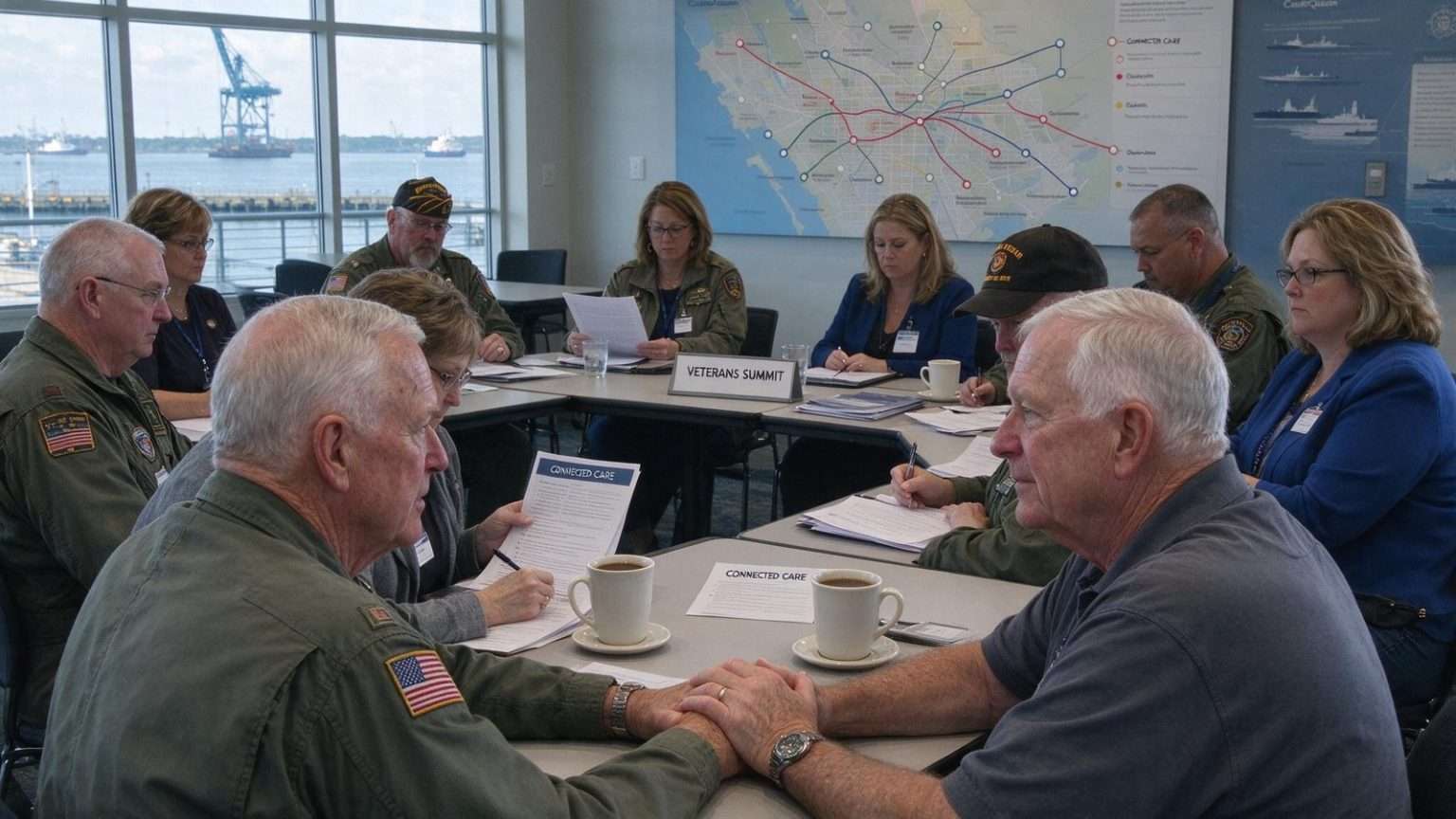
MOBILE, Ala. — The GulfQuest Maritime Museum became the gathering point Wednesday for a summit aimed at coordinating help for veterans facing a mental health crisis. The museum, a landmark on Mobile’s downtown waterfront, filled with counselors, nonprofit leaders, veterans advocates and federal agency representatives who spent the day trying to answer a question that has troubled the Gulf Coast for years: why do so many veterans in crisis fall through the gaps between the organizations that are trying to help them?
The U.S. Department of Veterans Affairs estimates as many as 20 veterans a day die by suicide, deaths linked to depression, post-traumatic stress or substance abuse. That figure — an average of one death roughly every seventy minutes — has become the driving number behind suicide-prevention efforts across the country, and it was the unspoken backdrop for every panel and conversation at the Mobile summit.
Community agencies met with the VA to align on the services available across the region, comparing what each organization offers, where their programs overlap and — more importantly — where the holes are. The premise of the summit was straightforward: veterans in crisis rarely interact with a coordinated system. They encounter one organization at a time, often by accident, and the difference between recovery and tragedy is frequently whether that one organization knows where to send them next.
Why coordination is the problem
The Gulf Coast is not short of veterans or of organizations that want to serve them. Alabama is home to hundreds of thousands of veterans, and Mobile — with its military installations, its large veteran population and its history as a port and military city — supports a dense network of service providers: the VA medical system, county veterans service offices, faith-based ministries, peer-support groups, crisis lines and charities of every size.
What the region has lacked, advocates say, is a map. A veteran who walks into a church counseling program may need housing help that the church cannot provide; a veteran who calls a benefits office may be quietly struggling with substance abuse that a benefits counselor is not equipped to address. Every provider sees a slice of the need, and no single organization sees the whole picture. The summit’s working sessions were built around changing that, by having agencies in the same room describe their programs to one another and commit to referral pathways.
The VA has pushed this model nationally in recent years, after internal reviews concluded that most veterans who die by suicide had little or no contact with VA facilities in the months before their deaths. The conclusion is sobering: the veterans most at risk are precisely the ones not already inside the system, which means community organizations — churches, employers, barsbershops, fishing clubs, neighbors — are the real front line. Coordination events like the GulfQuest summit are the VA’s attempt to equip that front line.
Dryhootch: veterans helping veterans
One resource highlighted at the summit was Dryhootch.org, a veterans-helping-veterans organization founded in Milwaukee that has assisted about 10,000 veterans over a decade. The organization’s model is unusual in its simplicity: a coffeehouse. Dryhootch operates community coffee shops staffed and run by veterans, where former service members can gather without paperwork, appointments or the institutional feel of a clinic.
The coffeehouse is the hook; the support structure behind it is the point. Veterans who congregate at a Dryhootch location are surrounded by peers trained to recognize the signs of crisis, and the organization connects them with benefits counseling, peer mentorship and clinical care when they are ready for it. The design acknowledges a hard truth about veteran culture — many will never walk into a mental health clinic voluntarily, but they will sit down for coffee with someone who has worn the same uniform.
Vietnam veteran Bob Curry, one of the organization’s founders, is working to bring the Dryhootch model to Mobile. Curry described a community center run by veterans as a low-key, non-threatening place for peers to connect and get support — a front porch for the veteran community rather than a checkpoint. His pitch at the summit was that Mobile’s size, its veteran population and its existing network of agencies make it a natural site for the model’s next location.
Why the peer model works
The Dryhootch approach reflects two decades of research into what actually helps veterans in crisis. Studies of veteran suicide prevention consistently find that connection — a sense of belonging and purpose — is one of the strongest protective factors, and that veterans respond best to people who understand military life from the inside. Peer support programs, in which veterans mentor and check on other veterans, outperform expectations across a range of settings because they lower the barrier to the first conversation.
The model also addresses the transition problem. A service member leaving the military loses, in a single stroke, the structure, mission and camaraderie that defined daily life. Many veterans describe civilian life as the first time no one checked on them, and the descent into isolation, depression or substance abuse often begins in that quiet gap. A veteran-run gathering place rebuilds the unit — informally, one conversation at a time — and gives struggling veterans a place to be seen before the crisis becomes acute.
For Mobile, a Dryhootch-style center would plug into the network the summit was designed to build. The coffeehouse becomes a known referral point: police officers encountering a distressed veteran, hospital emergency rooms, county veterans service officers and churches could all steer people toward a place that is easy to enter and hard to feel judged in. From there, the center’s trained peers make the connections to clinical care, benefits and housing help.
What the summit produced
Summits of this kind are measured less by announcements than by the relationships formed across a day of meetings. Organizers at GulfQuest pushed agencies to commit to specific actions — sharing contact directories, designating referral liaisons, and scheduling follow-up gatherings — so that the coordination built in the museum’s meeting rooms would outlast the event itself.
The VA representatives present used the gathering to walk community partners through the department’s suicide-prevention resources, including the Veterans Crisis Line, which connects any veteran — enrolled in VA care or not — with trained responders around the clock. Officials stressed that callers do not need to be in a full-blown emergency to use the line, and that family members and friends of veterans can call as well when they are worried about someone.
The timing of the event reflects a wider reckoning. Veteran suicide rates have remained stubbornly high even as overall awareness has grown, and communities across the country have concluded that federal programs alone cannot close the gap. Mobile’s version of that conclusion was on display Wednesday: if 20 veterans a day are dying nationwide, then the response has to live in the places veterans actually go, run by people they actually trust.
The road ahead for Mobile’s veteran community
Bringing Dryhootch to Mobile would take funding, a location and a core of veteran volunteers, and Curry’s work is at the beginning of that road rather than the end. But the summit gave the idea something every startup nonprofit needs — visibility among the agencies that would refer veterans to it and the donors that would sustain it.
The broader work continues too. The agencies that gathered at GulfQuest left with a clearer picture of the region’s service landscape and, advocates hope, a habit of picking up the phone for one another. Veterans on the Gulf Coast will keep facing the pressures that follow military service home — injuries, trauma, transition, isolation — but the network meeting them at the door is now more connected than it was before Wednesday.
For the veterans themselves, the message from the summit is the one the day was built around: help in Mobile is closer, more varied and easier to reach than most realize, and the first step can be as simple as a cup of coffee with someone who has been there.
Understanding the crisis in numbers
The estimate that as many as 20 veterans a day die by suicide has been the anchor of national prevention campaigns for years, and it deserves unpacking. The VA’s analysis of death records found that veterans die by suicide at rates substantially higher than the general adult population, with the gap widest among older veterans and those who did not use VA services. The deaths trace back to a familiar cluster of struggles — depression, post-traumatic stress, substance abuse, chronic pain, financial stress and isolation — that compound one another until a crisis becomes unbearable.
The 20-a-day figure also reframes who is at risk. Public imagination often pictures young combat veterans returning from deployments, but the data shows the burden spans generations, from recent retirees of the post-9/11 wars to aging Vietnam veterans who have carried their experiences for fifty years. Curry’s generation — the Vietnam veterans the country once failed to welcome home — is among the most affected, which is why peer models designed by Vietnam veterans carry particular weight in communities like Mobile.
For local planners, the numbers translate into a practical conclusion: prevention has to happen outside the hospital. If only a fraction of at-risk veterans are engaged with clinical care, then the grocery store clerk, the fishing buddy, the employer and the neighbor are the ones positioned to notice the change in a person’s routine that signals trouble. Summits like the one at GulfQuest exist to turn those civilians into a trained, connected safety net.
How residents can help now
The summit’s organizers and the agencies present left the public with clear guidance. Anyone worried about a veteran — a family member, friend, coworker or neighbor — can call the Veterans Crisis Line and talk through the situation with a trained responder, whether or not the veteran is in danger at that moment. Emergency rooms at VA facilities accept veterans in crisis regardless of enrollment status, and the Mobile VA medical center and its clinics maintain same-day mental health access for urgent needs.
Community members can also support the local organizations that do the daily work: veterans’ charities, peer groups and church ministries that operate on small budgets and volunteer labor. And for veterans themselves, the invitation extended at the summit was the one Dryhootch has built its reputation on — come sit down, have a cup of coffee, and talk to someone who understands. No appointment, no paperwork, no explanations required.