University of South Alabama Dauphin Island
82nd Alabama Deep Sea Fishing Rodeo Set to Open on Dauphin Island
<p>The 82nd Alabama Deep Sea Fishing Rodeo opens Friday on Dauphin Island, with ADSFR president Kevin Maurin leading a weekend expected to draw more than 3,000 anglers and 75,000 spectators.</p>
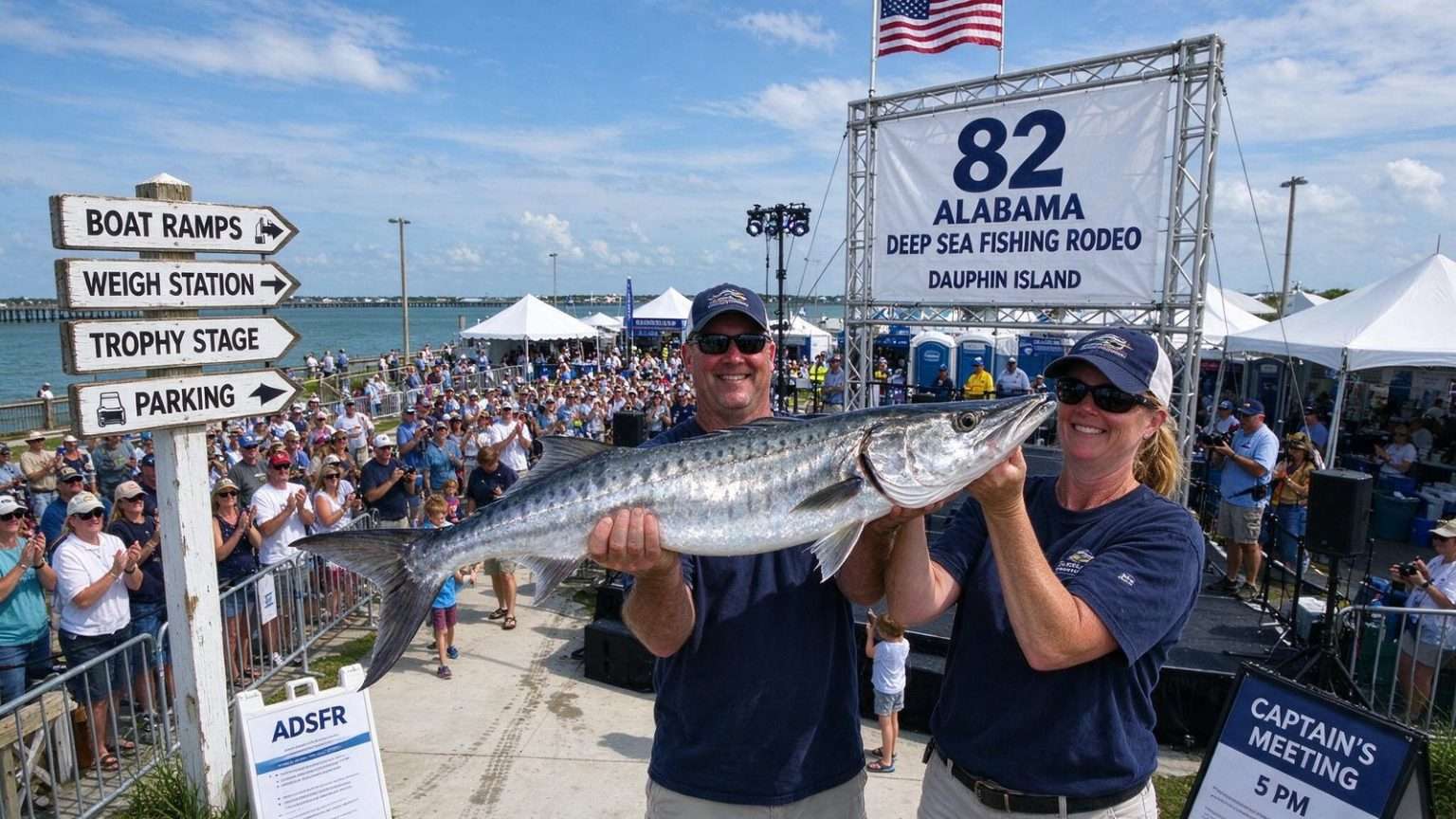
Dauphin Island is bracing for the arrival of thousands of anglers and tens of thousands of spectators this week as the Alabama Deep Sea Fishing Rodeo (ADSFR) prepares to celebrate its 82nd year, a milestone organizers say has only grown bigger since the event was recognized in 2011 as the world’s largest fishing tournament.
Leading this year’s tournament is Kevin Maurin, who was elected president of the Mobile Jaycees-sponsored event after more than a decade of volunteering behind the scenes. Maurin said he never expected the role to become a lifelong commitment when he first signed on shortly after his 21st birthday.
“I thought it would be fun just to volunteer and help out, and when I got here there were a bunch of people I knew who were already in it, and I’ve just never left,” Maurin said.
That arc — a young volunteer drawn in by friends and staying for decades — is the story of the rodeo itself. The Mobile Jaycees have run the event since its beginnings, and the tournament’s leadership pipeline runs through its own volunteer ranks, with each generation of presidents rising from the weighing stations, the dock crews and the weighmaster’s stand.
How the Weekend Runs
The rodeo officially gets underway Friday, July 17, with a cannon blast at 5 a.m. marking the start of three days of competition. More than 3,000 anglers are expected to compete across 30 categories, chasing top prizes for barracuda, tuna, cobia, swordfish, king mackerel, wahoo, tarpon, speckled trout and shark, among other species. Winners in each category will be recognized with awards for first, second and third place.
Organizers anticipate more than 75,000 spectators will pass through the tournament grounds over the weekend to watch weigh-ins, browse vendor booths and take part in activities geared toward families and children.
The scale is hard to overstate. An island whose year-round population counts in the thousands hosts a crowd that rivals a small city’s, with boat ramps, the rodeo site and the island’s restaurants all running at capacity for three straight days. Local businesses plan their year around it, and the town’s summer rhythm bends entirely to the tournament calendar.
The University of South Alabama plans to run an educational program during the rodeo featuring a display of the many fish species found in Gulf waters, giving young visitors an up-close look at marine life alongside the competition. The university’s involvement is more than decoration: researchers have long used the rodeo’s weigh-ins as a data source, sampling thousands of fish in a single weekend in ways no scientific expedition could manage.
A Carnival at the Water’s Edge
Maurin described the atmosphere at the rodeo grounds as something akin to a carnival, with families arriving early and staying well into the evening.
“There’s a real carnival atmosphere at the rodeo site,” Maurin said. “There’s plenty to do, and it’s an all-day event. People start filing in at around 7 or 8 in the morning and don’t leave until 8 or 9 at night.”
The description captures what separates the rodeo from a fishing contest alone. The weigh-in stage is a spectacle — oversized fish hoisted to the scales, crowds packed around the rail, spectators cheering for species they may never have seen brought ashore. Around it, vendors and children’s activities keep non-anglers occupied for hours, which is why the attendance figure dwarfs the number of competitors many times over.
The Roy Martin Young Anglers
The festivities actually began the previous weekend with the Roy Martin Young Anglers Tournament, a rodeo tradition reserved exclusively for children.
For Maurin, it remains the most meaningful part of the entire event.
“That’s my favorite memory of any of the tournaments I’ve ever been a part of, the Roy Martin, every year,” Maurin said. “The kids having fun. I don’t have kids myself, but hopefully one day I will, and I see all the parents taking their kids out. It’s enjoyable to see them do the same thing that my father did with me, taking me fishing, and hopefully I’ll be able to do that with my kids in the future.”
The young anglers’ tournament has its own weigh-ins, its own awards and its own crowds, and it functions as the rodeo’s on-ramp: children who catch their first fish off a pier or a party boat during the Roy Martin frequently return as adult competitors. Families treat it as a rite of passage, and the main event’s organizers treat it as the tournament’s heart.
Captain’s Meeting and the Cannon
The main tournament begins Thursday, July 16, with a captain’s meeting held simultaneously at the ADSFR site on Dauphin Island and at J&M Tackle in Orange Beach, both starting at 5 p.m. The dual-site meeting lets the eastern shore’s charter fleet and the island’s own anglers get their rules briefing without a drive across the bay.
The evening continues with the rodeo’s long-running Liar’s Contest at 6:30 p.m., a lighthearted competition among anglers swapping tall tales, before the cannon sounds at 5 a.m. Friday to formally open the tournament.
The Liar’s Contest is one of the rodeo’s oldest traditions, a barstool-storytelling competition in which the tall tales grow taller each year and the judging is entirely unserious. It sets the tone for the weekend: the rodeo has always been as much a festival as a competition, and the rules that matter most — the ones about species, weigh-in deadlines and qualifications — are enforced with considerably more rigor than the rules governing the stories told the night before.
For Maurin and the volunteers who run the event, the days leading up to the rodeo are as demanding as the tournament itself.
“This is what we work for all year long,” Maurin said. “We have been working 20-hour days, and now that it’s here, we’ll work 24-hour days, but it’s what we love doing.”
The volunteer math behind those hours is staggering. Setting up the grounds, coordinating weigh stations, staffing security and parking and shuttles for a crowd of 75,000 — all of it is done by Jaycees and their volunteers, most of whom hold day jobs and spend their vacation week on the island working the event. The rodeo’s longevity, 82 years running, rests on that generational handoff of unpaid labor.
What Anglers Need to Know
Anglers and spectators planning to attend can find weigh-in schedules, category rules and other tournament details ahead of the weekend’s competition. The categories span the Gulf’s big-game species and its inshore favorites alike, which is part of the rodeo’s design: a family fishing off the pier and a charter boat running to deep water for tuna are competing under the same organizational roof, with prizes calibrated to each fishery.
Competitors should note the essentials. Fish must be brought to the rodeo site’s scales within the specified weigh-in hours to be eligible, and each category carries its own qualification standards. The tournament’s rules have evolved over eight decades to keep pace with changing fisheries, conservation practices and record-keeping standards, and a captain who fished the rodeo a decade ago would still be wise to attend the captain’s meeting.
For the island, the week brings the year’s largest economic infusion and the year’s largest logistics challenge at the same time. Traffic backs up at the bridge, the ferry runs heavy, and the beach roads fill before dawn. Residents have learned to either embrace the crowd or plan their errands around it — and after 82 years, most have made their peace with the cannon.
Eight Decades on the Same Shoreline
A rodeo that has reached its 82nd year has outlasted most of the institutions around it. The tournament began in the era of hand-carried ice and paper records, survived hurricanes that flattened the island, and grew through the years when Gulf fishing transitioned from a subsistence pastime into the charter-boat industry that now works out of Dauphin Island and Orange Beach.
Recognition in 2011 as the world’s largest fishing tournament formalized what regulars already knew. No other event combines the rodeo’s open-entry format, its 30 categories and its five-figure spectator crowds on a single weekend, and the title has become part of the event’s identity — printed on the shirts, repeated by the announcers and cited every year when the cannon goes off.
The categories themselves tell the Gulf’s ecological story. Species availability shifts with regulation and with the health of the reefs: some of the fish on this year’s prize list carry seasons and size limits that did not exist a generation ago, and the tournament’s record board doubles as a rough historical index of what the Gulf has given up and what it has protected. The organizers’ cooperation with university researchers on the weigh-in stage has made the rodeo one of the most productive fish-sampling events in the region, generating data used in studies long after the tents come down.
For the anglers, though, the rodeo’s appeal is simpler. It is the chance to weigh a fish on the same stage their fathers and grandfathers used, in front of a crowd that applauds a good speckled trout as loudly as a shark. Eighty-two years in, that tradition is the real prize the event awards every July — and the one no entry fee can buy.