University of South Alabama Mobile
A Closer Look at Mobile Botanical Gardens, the 100-Acre Living Museum Near Spring Hill
Mobile Botanical Gardens near Spring Hill spans 100 acres of azaleas, camellias and rare plant collections, with new curator Seth Allen joining the staff.
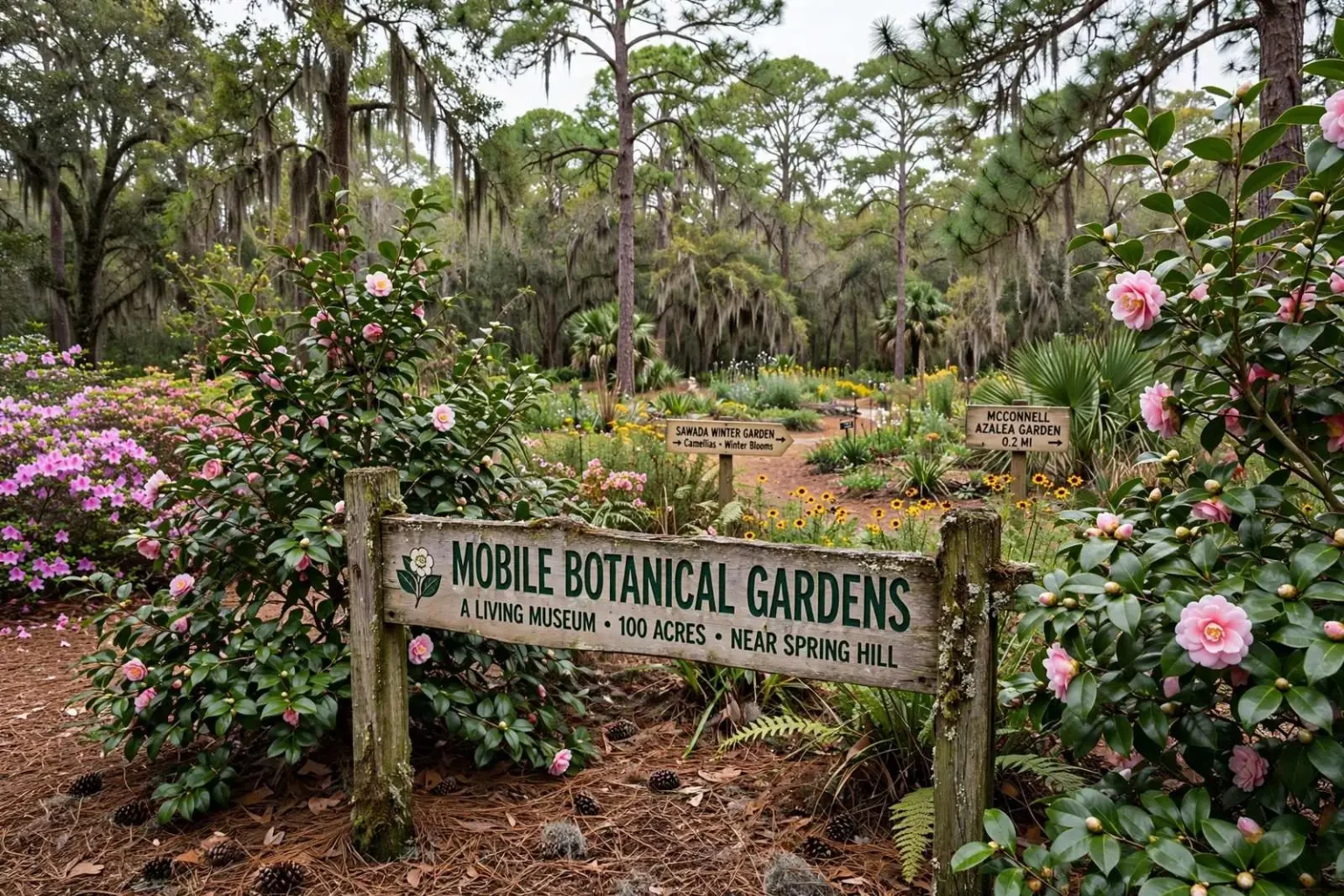
Tucked against the shoulder of Spring Hill, just above the lake in Municipal Park, sits a 100-acre garden that many nearby residents have never fully explored. Mobile Botanical Gardens is located just five minutes from both the University of South Alabama and Interstate 65, yet it is often confused with a separate, larger home-and-garden property in south Mobile County along Fowl River.
The confusion is understandable — Mobile has two well-known garden destinations and only one botanical garden. The sprawling estate along Fowl River draws tour buses and national attention, while the gardens on Museum Drive remain a quieter, more local experience: walking trails through longleaf pine, a plant sales area beloved by Gulf Coast gardeners, and collections of camellias and azaleas that draw specialists from across the country. For those who know it, the botanical gardens are less a tourist stop than a working horticultural institution, open to members and visitors nearly every day of the year.
Mobile’s position in one of the most biologically diverse parts of North America has drawn plant collectors and researchers to the area for generations. The region sits at the meeting of temperate and subtropical zones, with mild winters, generous rainfall and soils that support everything from carnivorous pitcher plants in the coastal bogs to ancient longleaf pine stands — a combination that makes the Gulf Coast one of the nation’s great natural gardens. Mobile Botanical Gardens has built on that natural advantage over the years, assembling plant collections that function as a living museum, including some specimens found nowhere else on Earth.
A new curator with deep roots in the craft
Executive Director Robin Krchak recently announced that Seth Allen, a former curator at the historic Magnolia Plantation & Garden in Charleston, South Carolina, is joining the Mobile Botanical Gardens staff as horticultural curator.
The hire connects the gardens to one of the most storied horticultural landscapes in America. Magnolia Plantation’s gardens trace their lineage to the colonial era and are widely credited as the birthplace of the American garden revival, famous for camellias, azaleas and romantic-style plantings that have been refined over generations. A curator who trained there brings both hands-on propagation skill and an understanding of how historic plant collections are maintained, documented and displayed for the public. Charleston’s garden tradition, like Mobile’s, was built on the same Gulf-influenced climate, making the transition a natural one.
For Mobile Botanical Gardens, the timing matters. The institution’s signature collections — particularly its camellias and azaleas — include cultivars with deep Gulf Coast histories that exist in few other places, and curatorial expertise is what keeps such collections alive: labeled, propagated, pruned correctly and protected from the diseases and storms that periodically sweep the Gulf Coast.
The gardens, collection by collection
The gardens themselves are organized into a series of distinct collections, each with its own season and following among local gardeners.
The Sawada Winter Garden is one of only seven gardens in the United States recognized as a Garden of Excellence by the International Camellia Society, drawing visitors for its blooms in the middle of winter. The recognition places Mobile alongside some of the most significant camellia collections in the country, and the timing is the point: when much of the nation is frozen, the Sawada garden reaches its peak, filling the winter landscape with the blooms that made the Gulf Coast famous among camellia enthusiasts. The collection’s history runs deep in the region — the Sawada name is tied to generations of camellia breeding on the Gulf Coast, and Mobile’s long identity as the Azalea and Camellia City is rooted in plants like these.
The McConnell Rhododendron Garden holds more than a thousand evergreen azaleas, making it the most comprehensive azalea collection along the Gulf Coast, along with the largest U.S. collection of Satsuki azaleas. Satsuki azaleas, the Japanese-bred group prized for enormous blooms in striking patterns and for their late spring flowering, extend the azalea season well past the weeks when the rest of the city’s azaleas have finished, and the McConnell garden’s comprehensiveness makes it a reference collection for growers throughout the Southeast.
The newer Aromi Hybrid Azalea Garden showcases work by Dr. Eugene Aromi, whose azalea breeding is nationally recognized and also represented in the National Arboretum in Washington, D.C. Aromi, a Mobile-area hybridizer, crossed hardy native azaleas with exotic varieties to produce deciduous hybrids with vivid colors and fragrance, and his creations blooming in the National Arboretum’s collections underscore that some of the most important American azalea breeding happened on the Gulf Coast.
The John Allen Smith Japanese Maple Garden offers striking tree architecture and vivid color in late autumn, while the Sybil Burnett Herb Garden lets visitors see fresh herbs that are more commonly encountered dried in jars. A dedicated Pollinator Garden draws butterflies and hummingbirds throughout the growing season.
The Japanese maple collection gives the gardens an unexpected second peak season. While camellias carry the winter and azaleas carry the spring, the maples turn the wooded garden into a show of reds, oranges and golds in late autumn — a display more often associated with the Appalachian Mountains than the Gulf Coast, and a favorite of photographers who know the timing.
The herb and pollinator gardens serve a different purpose: teaching. Herbs growing in the ground look and smell nothing like their jarred counterparts, and children who visit the gardens through school programs can see, touch and smell rosemary, basil and mint at their source. The pollinator garden, planted to provide nectar and host plants from spring through fall, turns the same lessons toward the bees, butterflies and hummingbirds that keep both gardens and food crops producing — a message that has taken on urgency as pollinator populations have declined nationwide. Together the two gardens give the institution a year-round educational rhythm that complements the showier seasonal collections.
More than a garden
The grounds reach well beyond the formal collections. Acres of longleaf pine and mixed woodland shelter walking trails that wind through one of the most characteristic Gulf Coast landscapes, giving visitors a taste of the native ecosystem alongside the cultivated gardens. The longleaf preserve has become a teaching tool in its own right, as the gardens and conservation groups work to maintain the fire-adapted ecosystem that once covered millions of acres across the Southeast and now survives only in managed fragments.
That native landscape is also why the site matters scientifically. The Gulf Coast’s soils and climate support plants found almost nowhere else, and collections like the gardens’ — including specimens found nowhere else on Earth — represent a safeguard for plant material that could otherwise be lost to development, storms or disease. Botanical institutions across the Southeast treat such collections as genetic libraries, and Mobile’s gardens sit in the middle of one of the richest regions for native flora in the country.
Through the year, the gardens anchor a calendar of events that has made them a fixture of Mobile’s horticultural community. Plant sales — most famously the spring and fall sales that draw gardeners from across the Gulf Coast — offer varieties chosen for the region’s climate, many of them propagated from the gardens’ own collections. Workshops, member events and school programs extend the institution’s reach beyond its fences, and the plant sales in particular have become the way many local gardeners stock their yards with camellias, azaleas and natives that nurseries elsewhere simply do not carry.
Membership and volunteer support sustain much of that work. Like most botanical gardens of its size, Mobile Botanical Gardens relies on a mix of admissions, memberships, donations and volunteer labor, and the addition of a full-time horticultural curator represents an investment in the professional care that keeps a living museum living. Volunteers assist with propagation, sales and trail work, while members get first access to the plants everyone else lines up for on sale weekends.
What the new curator brings
A horticultural curator’s work is largely invisible when it is done well. Collections are mapped and labeled; rare plants are propagated so a hurricane or hard freeze does not erase them; pruning is timed to each species’ cycle; and the beds are maintained to a standard that makes the difference between a garden and a park. Allen’s background at Magnolia Plantation & Garden suggests an emphasis on exactly those disciplines, learned at an institution that has managed historic plantings for generations.
For visitors, the practical effect of the hire should show up gradually — healthier collections, better interpretation of what they are walking through, and continued expansion of the gardens’ role as a center for Gulf Coast horticulture. For the region’s gardeners, it means the living museum on Spring Hill’s shoulder, five minutes from USA and Interstate 65, should keep growing into the institution its collections have always promised.