Accused Cop Killer Marco Perez Faces New Assault Charge in Jail Shanking
Marco Perez, accused in the 2019 killing of Mobile Police Officer Sean Tuder, faces a new assault charge after allegedly shanking a fellow inmate.
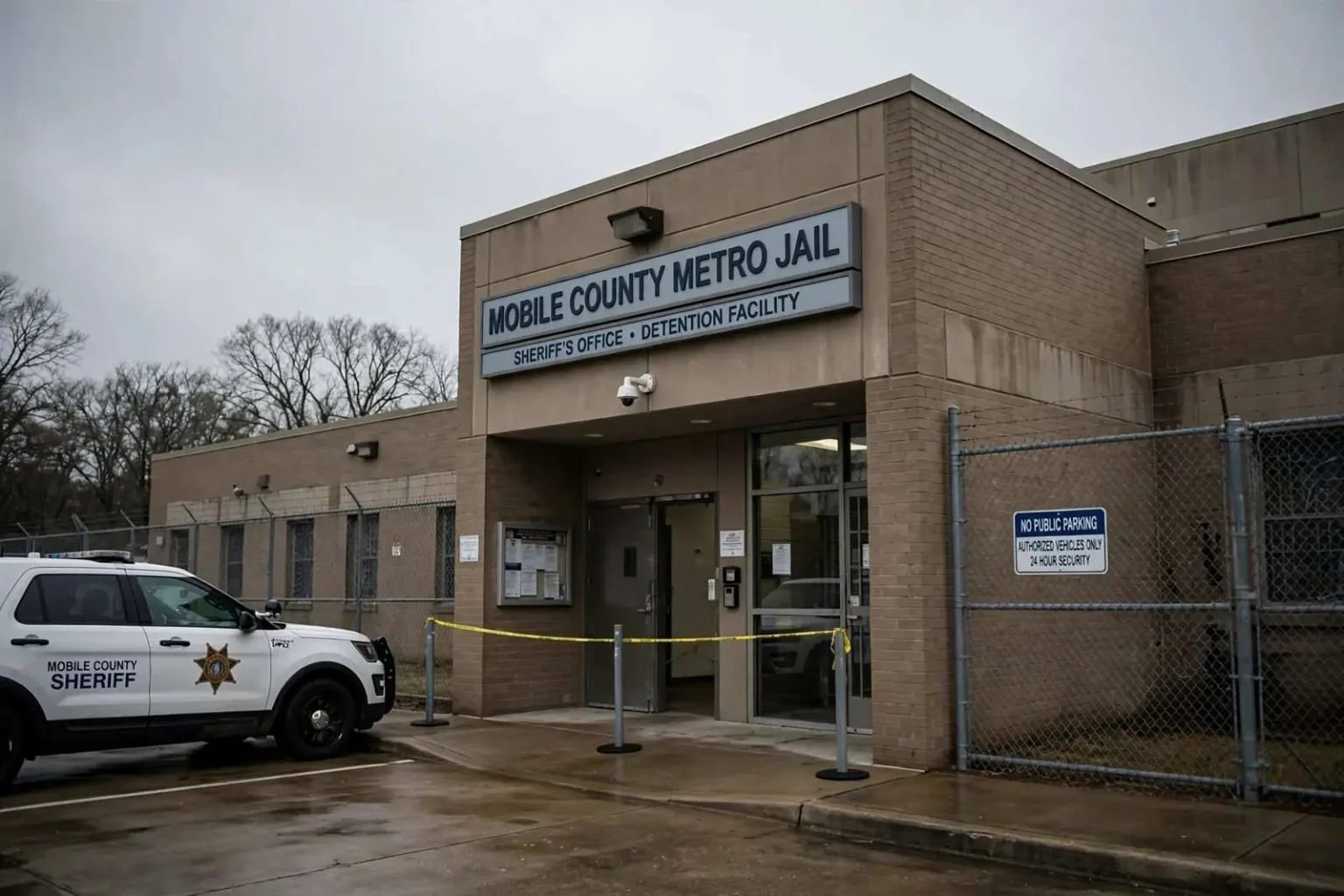
MOBILE, Ala. — A man already accused of killing a Mobile Police officer more than a year ago has picked up new charges while behind bars at the Mobile County Metro Jail. Court documents say Marco Perez injured another man with a shank on Feb. 13, and he now faces a charge of second-degree assault in connection with the jail incident.
Perez is accused of killing Mobile Police Officer Sean Tuder in early 2019, a case that drew widespread attention across the Gulf Coast and prompted an outpouring of support from the law enforcement community and the public. Tuder’s death sent shock waves through the department, where officers mourned a colleague lost in the line of duty, and the case has moved slowly through the court system in the time since.
The new assault charge adds a second criminal matter to Perez’s legal situation. According to court records, the judge in his case previously denied Perez’s application for youthful offender status in late 2019, a ruling that kept his case in the adult system where proceedings are public and penalties are far more severe. The Feb. 13 jail incident — in which documents say he injured another man with a shank, a homemade weapon — will be handled as its own case, with its own court file and its own potential consequences if a conviction is entered.
The Case Behind the Headlines
Officer Sean Tuder was a Mobile police officer whose killing in early 2019 made him one of the department’s officers lost to violence in recent memory. The death of a police officer in the line of duty resonates far beyond the department — it draws responses from agencies across the region, brings officers from neighboring jurisdictions to funerals and memorials, and becomes a touchstone for the community’s relationship with its police force. In the months that followed, Mobile officers and residents held memorials and fundraisers in Tuder’s honor, and his name joined the list of officers the department remembers each year.
The prosecution of an officer’s killing is among the most serious matters a district attorney’s office handles. When a police officer is killed in the line of duty, Alabama law allows prosecutors to pursue capital murder charges, which carry the most severe penalties available under state law. Decisions about how to charge such a case rest with the district attorney, who weighs the evidence, the circumstances of the killing, and the resources a capital case demands. Capital prosecutions take years to move from indictment to resolution, with extensive pretrial litigation, and cases of this kind remain on the court calendar long after the headlines fade.
The denial of youthful offender status was a significant turning point in the case. In Alabama, youthful offender status is a special designation available to people who were under twenty-one at the time of an alleged offense. If granted, it closes the courtroom, seals the record, and caps the potential sentence at a fraction of what the adult system allows. The application process happens early in a case, and judges consider the nature of the alleged offense, the defendant’s prior record, and other factors. When an application is denied, as Perez’s was in late 2019, the case proceeds in the ordinary adult system.
Violence Inside the Jail
The new charge against Perez stems from an alleged assault inside the Metro Jail, where defendants in serious cases spend months or years awaiting trial. Jail incidents involving homemade weapons are a persistent challenge for detention facilities everywhere. A shank — a sharpened object converted into a blade — can be fashioned from ordinary items available in any jail, and discovering and confiscating them is an ongoing task for correctional officers who conduct searches of cells and common areas.
Assaults between inmates are investigated much like assaults on the street. Correctional staff document injuries, interview witnesses, collect the weapon if it can be recovered, and refer the matter to investigators who prepare the case for prosecutors. The resulting charges go through the same court system as any other criminal matter, though the setting — a jail where both the accused and the alleged victim are in custody — shapes how the evidence is gathered. Surveillance cameras throughout the facility often play a central role in these cases.
Second-degree assault in Alabama is a Class C felony, punishable by up to ten years in prison for someone with no prior record, with longer exposure for defendants whose criminal histories place them in higher sentencing ranges. For a defendant already facing the most serious charges in the state, an additional felony conviction would compound an already severe legal situation, and prosecutors would factor the jail assault into any negotiations in the original case.
The Metro Jail, operated by the Mobile County Sheriff’s Office, houses thousands of inmates daily — pretrial detainees, people serving sentences, and those awaiting transfer to state facilities. Housing decisions within the jail take into account the charges inmates face, their behavior records, and safety assessments intended to separate people who cannot be housed together. High-profile inmates, including those charged in officer killings, are typically managed under heightened restrictions, with movement through the facility coordinated to limit contact and risk.
Correctional work is among the most demanding jobs in law enforcement. Officers who staff the jail manage a population that includes people in crisis, people awaiting trial on violent charges, and people serving misdemeanor sentences, all within the same walls. Assaults on staff and between inmates are tracked and reviewed, and facilities adjust policies — from search frequency to classification procedures — based on incident patterns over time.
What Comes Next in Both Cases
Perez’s new assault charge will move through Mobile County District Court initially, the venue where felony cases begin before they are bound over to a grand jury for indictment. If indicted, the case would proceed in Circuit Court alongside the machinery of the original case. Defendants facing charges of this severity typically remain in custody without bond or with bond conditions set high enough to ensure detention, and jail behavior can influence how courts view risk going forward.
The original case, meanwhile, continues its course through the system. Cases charging the killing of a police officer attract intense scrutiny at every stage, from the initial charging decision through any trial. The defense and prosecution litigate pretrial motions that can run to hundreds of filings, addressing everything from evidence suppression to trial publicity. Court schedules in capital and potential-capital cases stretch out over years, and the parties work under a framework designed to balance thoroughness with the rights of the accused.
For the Mobile Police Department and the community that followed Tuder’s case, the years-long legal process is a familiar reality. Families of fallen officers often attend hearings, and prosecutors keep them informed as the case moves forward under Alabama’s victims’ rights provisions. The department, for its part, continues to honor Tuder among its fallen, and his death remains part of the department’s institutional memory — a reminder of the risks officers take on every shift.
The Feb. 13 incident inside the Metro Jail adds a new chapter to a case that has already spanned more than a year of court proceedings. With a new felony charge on the docket and the original case still pending, the legal matters involving Perez will occupy the Mobile County courts well into the future, with each case resolved on its own evidence and its own timeline.
Assault charges arising inside detention facilities are common enough that Alabama courts handle them through an established routine. The alleged victim is typically interviewed by investigators, medical records document the injuries, and correctional officers who responded to the incident provide statements about what they saw. Prosecutors weigh whether the evidence supports the charge as filed or whether the circumstances warrant a different degree of assault, and the case proceeds from there like any other felony filing.
For jail administrators, every assault inside the facility prompts an internal review alongside the criminal investigation. Reviews look at whether the incident could have been prevented — whether housing assignments were appropriate, whether staff-to-inmate ratios were adequate at the time, and whether the weapon should have been detected in an earlier search. Findings feed back into training and procedure, and facilities that identify patterns adjust their operations. The Metro Jail has undergone management and staffing changes in recent years as it has worked through crowded conditions and aging infrastructure, and incident reviews are part of how the leadership measures progress.
How Youthful Offender Status Works in Alabama
Because the denial of youthful offender status figured so prominently in the early stages of this case, it is worth understanding what the designation means. Alabama is one of a limited number of states with a youthful offender statute, which allows eligible defendants — generally those who were under twenty-one when the alleged offense occurred — to apply to have their cases handled under special rules. If a judge grants the application, the case proceeds in a closed courtroom, the records are sealed, and the maximum sentence is capped at three years regardless of what the charge would otherwise carry.
The application is decided by the judge alone, after a hearing in which the prosecution and defense present their positions. Judges weigh the seriousness of the alleged offense, the defendant’s age and maturity, prior record, and prospects for rehabilitation. Violent allegations — and especially the killing of a police officer — make a grant far less likely, since the statute is aimed primarily at giving young offenders a path to a clean record and a short sentence when the offense and circumstances support that leniency.
Once an application is denied, the case moves forward exactly as it would for any adult defendant, and the denial itself cannot be appealed as a separate matter in most circumstances. That ruling in late 2019 meant Perez’s case would be heard in open court, under the public record, with the full range of adult penalties on the table — a fact that continues to shape the trajectory of the case as it moves through the system alongside the new assault charge.
The combination of the pending capital-range case and the new jail assault means Perez’s legal future will be settled in stages. The assault case could be resolved independently — by plea or trial — or folded into broader negotiations that address both matters at once. What remains constant is that the Mobile County courts will be dealing with the fallout of both cases for years, and that the memory of the officer whose death started it all remains close at hand for the department and the community that mourned him.