Alabama Activates Statewide ALalert System for Flood and Disaster Notifications
Gov. Kay Ivey announced the activation of Alabama's statewide ALalert emergency notification system, allowing residents to opt in for flood and disaster alerts by phone, text, TV and radio.
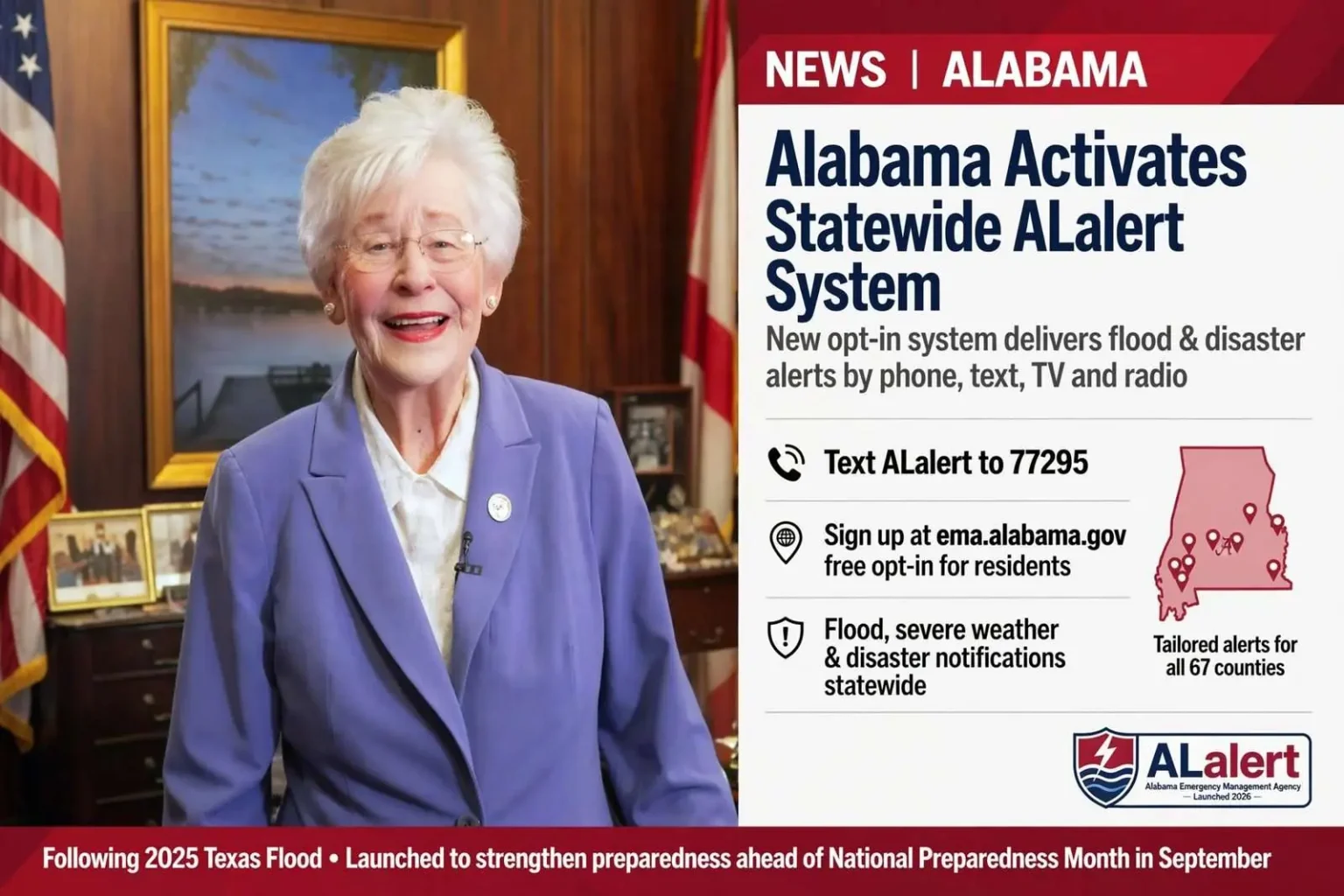
Gov. Kay Ivey has announced the activation of a statewide emergency notification system designed to more quickly alert Alabamians in the event of floods and other disasters, allowing residents to opt in for alerts by phone, text, television and radio.
The action follows Ivey’s January 13, 2026, state of the state address, during which she revealed that $1.2 million had been set aside to launch the new emergency notification system this year. The funding was included in the state’s education trust fund budget and is being used to build the technical infrastructure needed to push emergency messages to residents through several channels at once.
“As I announced in January, our new statewide notification system will ensure all Alabamians have the greatest access to warnings of disasters including flooding,” Ivey said. “Protecting the safety of all Alabamians, especially our children, is our top priority and this statewide flood notification system will enable families to receive more timely alerts to prepare and stay safe.”
How to sign up
Under the new system, Alabamians will be directly alerted to impending floods and other disasters through their cell phones and landlines, as well as through local television and radio broadcast stations. The system is designed to supplement, not replace, existing weather radio and Wireless Emergency Alerts already in use across the state.
Residents can enroll in several ways:
Visit ema.alabama.gov, click on the ALalert section and complete the opt-in form.
For emergency alerts and notifications, text ALalert to 77295.
For general preparedness information and updates, text ALinfo to 77295.
Signing up is free, and residents are encouraged to register multiple phone numbers — including landlines at home and mobile devices — so that warnings can reach them whether they are at work, at school or away from home. The ALinfo opt-in provides general safety tips and program updates from the Alabama Emergency Management Agency without sending urgent alerts during an active emergency.
A response to the 2025 Texas flood
Ivey called for the implementation of the new statewide notification system in the wake of the July 2025 Texas flood, which claimed the lives of 27 people, including 25 children at Camp Mystic. Eight-year-old Sarah Marsh of Homewood also lost her life in that flood. Investigations determined that camp leadership did not properly prepare for or warn victims ahead of the deadly flood, an outcome that drew national attention to gaps in emergency alerting at youth camps.
On April 8, 2026, Ivey signed the Sarah Marsh Heaven’s 27 Camp Safety Act into law, reinforcing her commitment to the safety and preparedness of Alabama’s summer camps. The new law requires summer camps operating in Alabama to maintain written emergency plans, train staff in severe weather response and use standardized notification procedures when dangerous weather threatens their facilities.
The activation of the statewide notification system comes ahead of National Preparedness Month in September. Throughout her administration, Ivey has prioritized strengthening Alabama’s ability to prepare for and respond to emergencies, particularly as severe weather and natural disasters can develop quickly. The new system marks another step in that effort, putting timely, potentially life-saving information directly into the hands of Alabamians when they need it most.
“The watchword for all Alabamians is preparedness, and the activation of the new statewide notification system will provide the most effective tools for all our citizens to be prepared in the event of catastrophic floods and other disasters,” Ivey said. “I encourage all Alabamians to sign up for the new alert system today.”
State officials say the opt-in model is intended to supplement — not replace — existing weather warning channels such as NOAA Weather Radio and local emergency alerts, giving families an additional layer of notice when flooding or other disasters threaten their communities.
What ALalert Will and Will Not Do
ALalert is designed to deliver short, action-oriented messages during fast-moving emergencies such as flash floods, severe thunderstorms, tornadoes, tropical weather and hazardous material incidents. The system works alongside the federal Integrated Public Alert and Warning System, which already broadcasts Wireless Emergency Alerts to most modern cell phones for the most serious weather warnings, and it provides an additional path for state and county emergency managers to share information with residents who have opted in.
Because the system is opt-in, officials are emphasizing that registration is the single most important step residents can take ahead of severe weather season. The Alabama Emergency Management Agency is working with county emergency management agencies, schools, hospitals and major employers to spread the word about sign-up options and to encourage households to build emergency plans alongside their alert registrations.
Why Flood Alerts Matter in Alabama
Alabama’s geography makes it unusually vulnerable to flooding. Portions of the state sit within the Tennessee Valley watershed, the Mobile River basin and the Gulf Coast drainage, and heavy rainfall events regularly push rivers and creeks over their banks in both rural and urban areas. Flash flooding along low-water crossings, in particular, has been a leading cause of weather-related deaths in the state for decades.
Hurricane season, which runs from June through November, brings additional flood threats to the Gulf Coast and can affect communities hundreds of miles inland as tropical systems track northward. Officials say ALalert is particularly useful in those situations because it allows the state to push tailored, location-specific warnings to residents who have registered their addresses, rather than relying solely on broad regional alerts.
How the Sign-Up Process Works
The online enrollment form on ema.alabama.gov asks residents for a primary contact method — typically a mobile number — and optional secondary channels such as an additional mobile number, a landline or an email address. Users can also indicate the kinds of alerts they want to receive, which helps the state avoid sending notifications about hazards that do not affect a given area.
For households without reliable internet access, the text-based sign-up process offers an alternative that takes only a moment on any mobile phone. Texting ALalert to 77295 initiates the registration sequence and walks users through the same preferences available online, with reply prompts that confirm enrollment and walk through opt-in settings one question at a time.
A Layer of Preparedness for the Whole State
For families, the new system is intended to add redundancy to the warning channels they already use. Many Alabamians already rely on NOAA Weather Radio, commercial weather apps, local television meteorologists and Wireless Emergency Alerts that automatically pop up on most cell phones during severe weather warnings. ALalert’s opt-in model means the state can reach households that may not otherwise be tuned in to those sources during an emergency.
Officials stress that registration is just one piece of emergency preparedness. Households are still encouraged to keep a battery-powered weather radio on hand, maintain a go-bag with essential supplies and review evacuation routes with family members before severe weather threatens. Combined with ALalert, those steps give Alabama families the tools they need to act quickly when minutes matter.
Coordinating With County Emergency Managers
ALalert works hand-in-hand with Alabama’s 67 county emergency management agencies, which are responsible for activating local alerts, coordinating evacuations and staffing emergency operations centers when severe weather strikes. The state’s role is to provide the technical platform and consistent messaging, while county officials decide how and when to send alerts within their jurisdictions. That balance keeps decisions close to the communities that know their flood-prone roads, mobile home parks and storm vulnerabilities best.
Looking Ahead to Peak Severe Weather Season
Alabama’s peak severe weather season typically runs from March through May, with tornadoes, severe thunderstorms and flash floods all posing major threats during those months. Hurricane season adds another layer of risk during the late summer and early fall, especially along the coast. By activating ALalert ahead of National Preparedness Month in September, state officials are hoping residents will sign up while the weather is calm and review their household emergency plans before the next round of dangerous storms arrives.
For more information about ALalert, or to register, Alabamians can visit ema.alabama.gov or text ALalert to 77295. General preparedness updates are available by texting ALinfo to 77295.
How ALalert Fits With Existing Warning Tools
Many Alabamians are familiar with the short, attention-grabbing alerts that pop up automatically on cell phones during severe weather warnings. Those Wireless Emergency Alerts, issued through the federal Integrated Public Alert and Warning System, are not going away — ALalert is layered on top of them. Where ALalert differs is in giving residents the ability to opt in for state and county messages about a wider variety of hazards and to choose how they want to be reached, whether by text, voice call or both.
For families with children in school or with elderly relatives who live alone, that flexibility can be especially valuable. A parent at work can register a mobile number to receive alerts about severe weather headed for a child’s school zone, while a relative living in a different county can register separately to receive notices relevant only to their own address.