Alabama Appeals Court Upholds Life Sentence in Gulf Shores Killing of Raymond Dudley
The Alabama Court of Criminal Appeals has affirmed the murder conviction and life sentence of Michael Robert Burns, who was found guilty of fatally shooting Raymond Dudley near a Gulf Shores gas station in 2018.
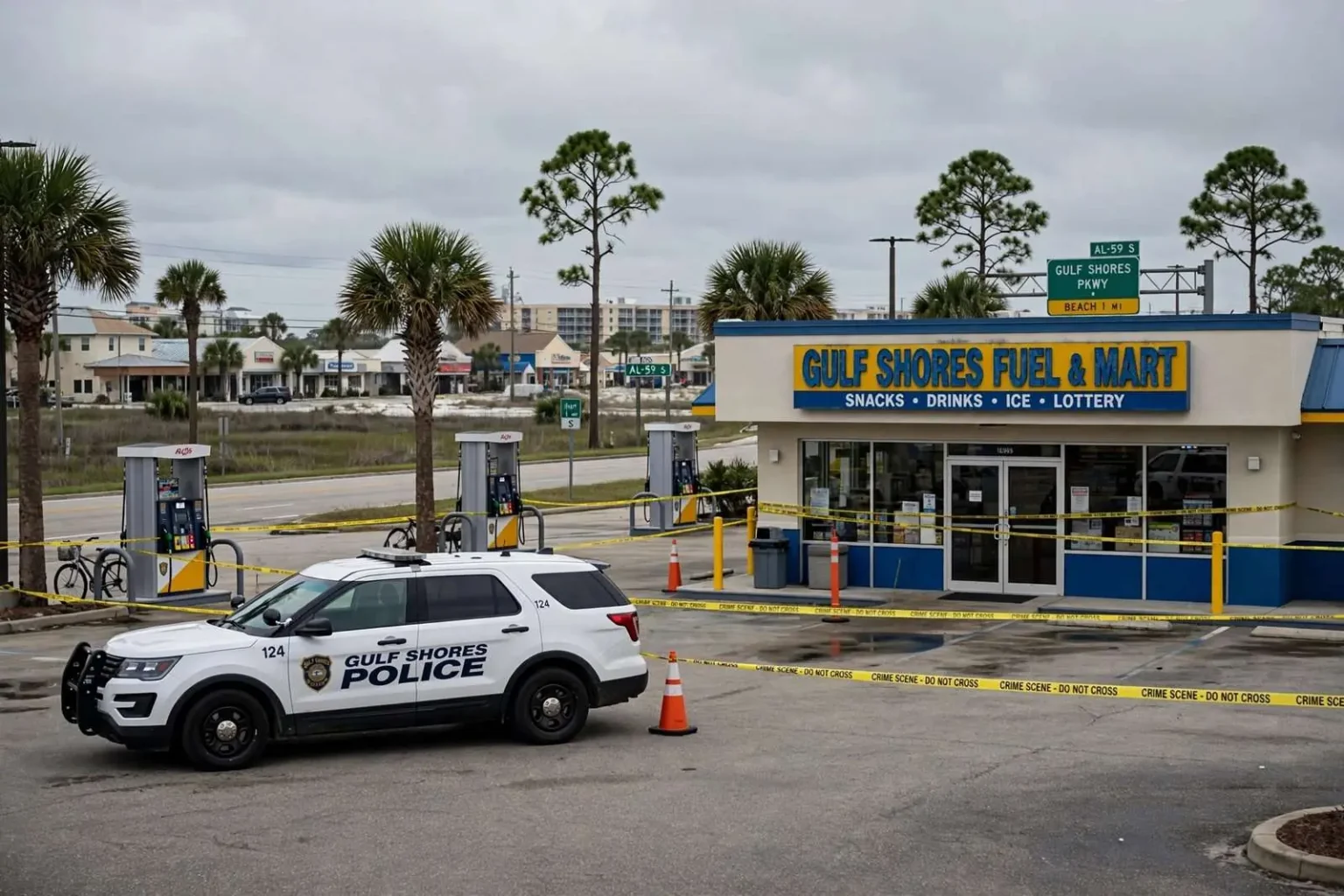
The Alabama Court of Criminal Appeals has upheld the murder conviction and life sentence of a man found guilty of gunning down an acquaintance near a Gulf Shores gas station in 2018, closing out an appeal that had kept the case in legal limbo for more than a year after the original trial. The ruling ends the appellate chapter of a case that moved from a coastal crime scene to a Baldwin County courtroom and, finally, to the state’s intermediate appellate bench in Montgomery.
The court’s decision, issued Oct. 9, affirms the 2019 conviction of Michael Robert Burns, 51, in the shooting death of Raymond Dudley. The killing rattled the Gulf Shores community when it occurred in March 2018 and drew significant attention through a lengthy trial in Baldwin County Circuit Court. Gulf Shores, a resort city best known for its beaches and tourist economy, rarely sees homicide investigations of this kind, and the circumstances of the crime — a daytime confrontation near a busy commercial corridor — left a lasting mark on the community’s sense of safety.
According to evidence presented at trial, Burns became enraged after learning that Dudley, whom he knew as an acquaintance, was a registered sex offender. Witnesses testified that Burns told another acquaintance he intended to kill Dudley, and he was seen carrying a handgun in the days leading up to the shooting. That testimony formed the spine of the prosecution’s case, establishing both motive and premeditation in the days before the killing.
The crime and the evidence
On March 21, 2018, Burns went looking for Dudley at a gas station in Gulf Shores. Dudley arrived at the store on his bicycle sometime after Burns did. Surveillance video from the store later showed Burns’ car leaving the area while Dudley’s bicycle remained behind in the parking lot, evidence prosecutors say was central to establishing the timeline of the crime. The footage, pulled from the store’s camera system, gave jurors a visual anchor for the sequence of events that testimony alone might not have fixed so clearly.
Dudley’s body was discovered the following day, and an autopsy determined he had died from gunshot wounds. Several witnesses told jurors they heard gunfire in the area around the time of the killing, and at least one witness reported seeing a vehicle matching the description of Burns’ car nearby. Together, the autopsy findings, the gunshot reports, and the vehicle sighting wove a circumstantial net around the window of time in which prosecutors said the shooting occurred.
Baldwin County District Attorney Robert Wilters’ office prosecuted the case, securing a guilty verdict that resulted in Burns being sentenced to life in prison. The trial, held in the Baldwin County circuit courthouse, presented jurors with the surveillance video, the witness accounts, and the testimony about Burns’ statements and conduct in the days before the shooting — a body of evidence the jury weighed before returning its verdict.
Burns subsequently appealed the conviction, arguing it should be overturned, setting up the review that concluded this month. The appeal kept the case in a kind of procedural suspension: the conviction stood, but its finality awaited the appellate court’s ruling, and the years-long wait is a familiar rhythm in Alabama homicide prosecutions.
The prosecution’s theory rested on the days that preceded the shooting as much as the afternoon of it. Witnesses described Burns’ escalating anger after he learned of Dudley’s status as a registered sex offender, his stated intention to kill the man, and the handgun he was seen carrying in the period before the crime. When that account is joined with the store video, the gunshot reports from nearby residents, and the vehicle sighting, the case presented jurors with a path from motive to statement to act that the defense was left arguing against largely on circumstantial ground.
Trials of this kind also lean heavily on coordination among agencies. Gulf Shores police handled the initial investigation and the scene work after the body’s discovery, while the Baldwin County District Attorney’s office built the case for presentation to a county grand jury and, ultimately, to a trial jury. The gas station surveillance footage had to be preserved, authenticated, and walked through witness by witness — routine work that nonetheless determines whether circumstantial evidence carries the weight prosecutors need it to.
The appellate review
The Alabama Attorney General’s Criminal Appeals Division represented the state throughout the appellate process, urging the Court of Criminal Appeals to uphold the jury’s verdict. The division, which handles criminal appeals on behalf of the state when local district attorneys’ offices are stretched or when the state’s defense of a conviction requires centralized expertise, briefed the court on the trial record and defended each element of the prosecution’s case against the challenges Burns raised.
The court agreed with the state’s position, affirming the conviction in its Oct. 9 ruling. The decision means Burns’ trial conviction and life sentence now stand as final judgments, subject only to the narrow avenues that remain after a direct appeal is resolved — avenues that rarely succeed and that do not disturb the appellate court’s determination of the issues actually raised.
Attorney General Steve Marshall credited Assistant Attorney General Laura Irby Cuthbert for her work securing the affirmance, and he thanked Wilters and his staff for their assistance defending the conviction on appeal. The joint acknowledgment reflected the collaboration between the state’s appellate lawyers and the Baldwin County prosecutors who had tried the case and knew its evidentiary details best.
Under Alabama law, the Court of Criminal Appeals reviews felony convictions from circuit courts across the state, examining trial records for legal error — issues like evidentiary rulings, jury instructions, and the sufficiency of the evidence — rather than re-weighing facts the jury has already resolved. Appellate affirmances of murder convictions are common, but each requires the court to work through every issue an appellant preserves, which is why the process stretched more than a year beyond the trial.
Where the case stands
Burns remains in state custody at Fountain Correctional Facility in Atmore, according to the Alabama Department of Corrections, where he is serving his life sentence following the exhausted appeal. Fountain, a state prison in Escambia County near the Alabama-Florida line, houses inmates in medium-security conditions, and Burns will remain in the state prison system under a life sentence for the killing.
Life imprisonment in Alabama means exactly that in most murder cases: a sentence measured in decades, with parole eligibility governed by state parole board determinations rather than any fixed release date. For the family and friends of Raymond Dudley, the appellate ruling removes the uncertainty that hovered over the case since the trial — the conviction and sentence will not be undone on appeal.
The case underscores the multi-year process that often follows a homicide conviction in Alabama, where a guilty verdict at the circuit court level can still face months or years of appellate review before a sentence is considered final. From the March 2018 shooting, through the 2019 trial, to the October appellate ruling, the case ran its full course across more than two years — a timeline that is typical rather than exceptional for serious felony prosecutions in the state.
An appellate affirmance also has practical consequences for the people who testified. Witnesses in homicide trials — some of them residents who reported gunshots they heard from their own homes, others acquaintances who recounted Burns’ statements to them — can face uncertainty about whether their testimony will be challenged again in a retrial. The Oct. 9 ruling forecloses that possibility in this case, anchoring the verdict the jury reached in the spring of 2019.
For Baldwin County law enforcement and prosecutors, the ruling brings a formal close to a case that began with a violent crime in a quiet stretch of Gulf Shores more than two years earlier. The investigation that followed the discovery of Dudley’s body, the work of the officers who tracked Burns’ movements and secured the surveillance footage, and the trial team’s presentation of the evidence all reached their final validation in the appellate court’s brief ruling.
The case also illustrates how modern evidence shapes homicide prosecutions. The gas station’s surveillance camera — recording a routine commercial parking lot on an ordinary afternoon — captured the movement that tied Burns’ car to the scene, while store video gave jurors an independent check on the timeline prosecutors constructed from witness testimony. In prosecutions built without eyewitnesses to the shooting itself, that kind of documentary evidence is often decisive.
For the Gulf Shores community, the finality of the ruling closes a chapter that began with the shock of the March 2018 killing. A homicide in a resort town built around family vacations draws attention that outlasts the trial itself, and the appellate court’s decision gives residents, business owners, and Dudley’s family a definitive answer about how the case ends: with the man convicted of the shooting serving a life sentence in state custody, and the record of the case closed at every level of Alabama’s court system.