
Alabama boating deaths reach highest level since 1998, officials warn
Alabama boating deaths have reached their highest level since 1998, with 26 fatalities on state waterways so far in 2019, officials say.
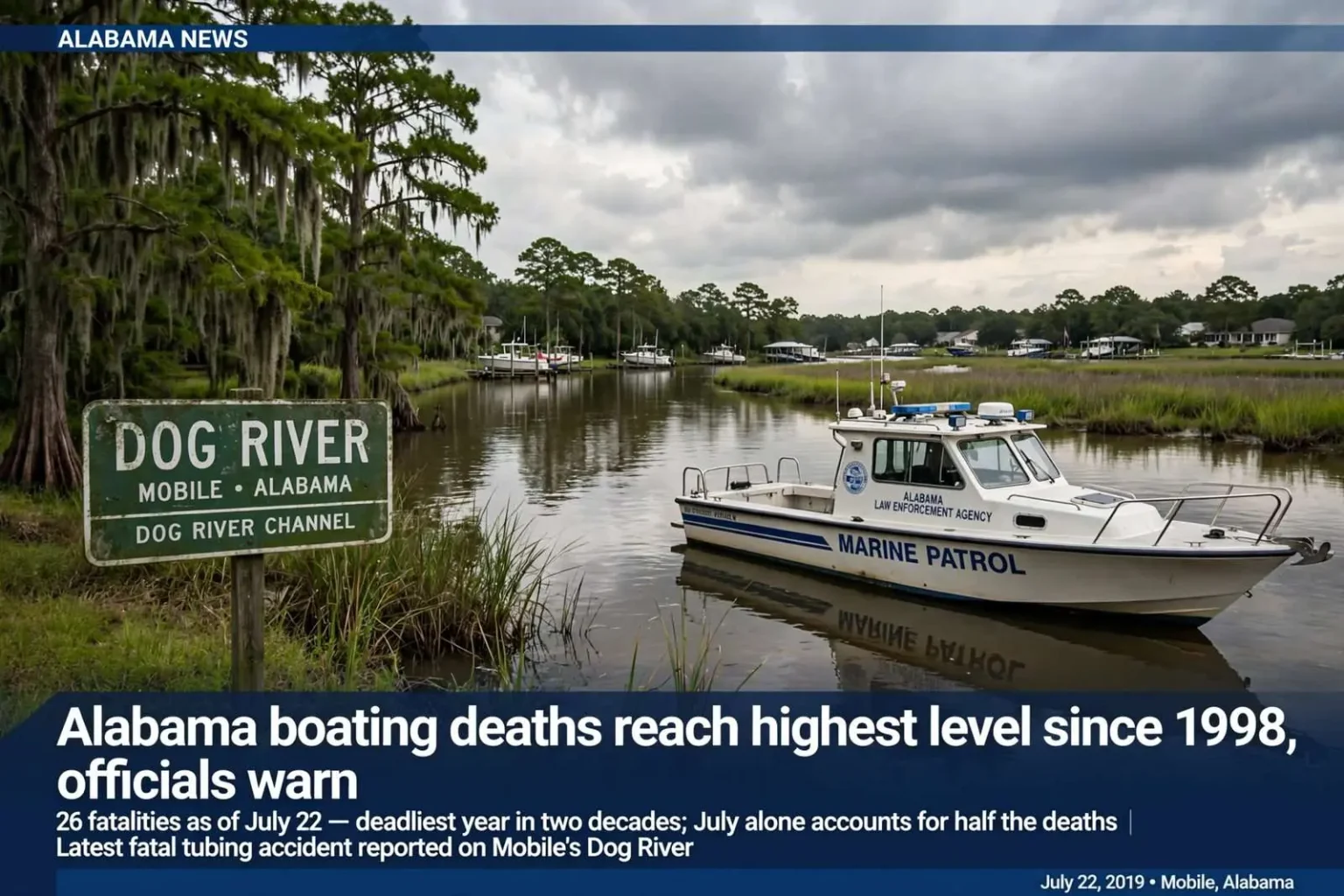
Just past the midpoint of the year, 2019 has become the deadliest year for boating accidents in Alabama in two decades. As of July 22, 26 people had died on the state’s waterways, compared with 17 by the same point a year earlier. Half of this year’s deadly accidents happened in July alone.
The latest fatal accident occurred Sunday on Mobile’s Dog River, where a man was killed in a tubing accident. The death added the city’s own waterway to a grim statewide count that has climbed steadily through the summer, and it came in a month that has proven the deadliest of the year on Alabama waters.
Thirteen people died in July boating accidents across the state, several of them on July 4, the traditional peak of the boating season. The last time recreational boating was this deadly in Alabama was 1998, when 32 people were killed over the course of the entire year — a total this year is on pace to approach with two months of warm weather still remaining.
Lt. Ryan Bennett with the Alabama Law Enforcement Agency’s Marine Patrol said several factors are at play, including more boaters on the water as gas prices drop, disposable income rises and the population grows. Bennett urged boaters to slow down, learn the rules of the waterway and take a boating safety course.
“Just make sure you’re aware of what the rules of the road are,” he said.
A deadly summer on Alabama waters
The numbers tell a stark story. Seventeen deaths by late July is a typical toll for the season’s first half; 26 is another matter entirely, and the gap between the two years grew as the summer went on. July alone accounted for half of the year’s fatalities, with the Independence Day holiday — the busiest weekend of the year on most Alabama lakes, rivers and bays — contributing several of the deaths in a single stretch.
Holiday weekends concentrate every risk factor Marine Patrol officers watch for: crowded boat ramps, congested channels, operators who rarely take the water out the rest of the year, alcohol, afternoon thunderstorms and long days that end in low-light conditions. When thousands of boats share the same water on the same weekend, small mistakes — a sharp turn, a towing rope across a channel, a boat running at night without lights — have more chances to become collisions.
The Dog River accident underscored the range of ways these fatalities happen. The victim was killed while tubing, an activity that seems casual but places a rider in the water, at the mercy of the boat operator’s judgment, the tow rope and every other vessel in the area. Tubing and other towed-water-sports accidents can involve propeller strikes, collisions and drownings, and they are among the accidents officers respond to most often on populated waterways near the city.
Dog River runs through west Mobile into Mobile Bay, lined with homes, docks and marinas, and it is one of the busiest urban waterways on the Alabama coast. On summer weekends its channel carries ski boats, fishing boats, personal watercraft and paddlers through the same narrow corridor — a mix that demands the kind of attention officers say this year’s accidents have lacked.
Why this year is different
Lt. Bennett pointed to a simple driver behind the rising numbers: more people on the water. Falling gas prices make a day on the lake or bay cheaper, rising disposable income puts more boats in driveways, and a growing population — especially along the Gulf Coast and in the suburban counties around Huntsville, Birmingham and Montgomery — sends more operators to the same popular launches. More hours on the water by more boaters means more chances for something to go wrong.
Population growth matters in Alabama in a way it does not everywhere. The state’s fastest-growing counties sit on or near major waterways — along Mobile Bay, on the Tennessee River lakes in the north, on Lake Martin and the Coosa River chain in the center of the state — so new residents arrive with new boats and unfamiliar water. Marine Patrol officers see the result at the ramp: crowded parking lots, inexperienced operators and channels busier than they were the summer before.
The rules of the waterway
Bennett’s advice — slow down, learn the rules, take a safety course — mirrors the core of Alabama’s boating law. The state requires operators of most motorized vessels to hold a boater certification, earned by passing a boating safety course, and vessels must carry life jackets for every person aboard. Children are required to wear personal flotation devices in moving vessels, and operators are expected to follow the navigation rules that govern right-of-way, speed and distance on the water.
Those rules function on the water much as traffic law functions on the highway. Boats approaching head-on pass to the right, vessels being overtaken keep their course, and the less maneuverable craft — sailboats under sail, paddlers, commercial traffic — generally have the right of way. A surprising share of accidents involves operators who simply do not know these rules, particularly occasional boaters who rent or borrow a boat a few weekends a year.
Speed is the other recurring factor. Unlike a highway, an Alabama waterway has no lane markings, no signage and no patrol car in the next lane, so safe speed is a judgment call the operator makes constantly — near docks, in narrow channels, around anchored boats and in congested evening traffic. Wake and speed restrictions exist on many waterways precisely because a boat’s wake can swamp paddlers, throw tubers into the water and shove smaller craft against docks and pilings.
What officers urge before the next weekend
Marine Patrol officers repeat a short list every summer, and it has not changed this year despite the rising toll. Wear the life jacket rather than stowing it under a seat; most drowning victims in boating accidents are found without one. Designate a sober operator; alcohol impairs judgment on the water as it does behind the wheel, and sun, wind and motion accelerate the effect. Check the weather before leaving the ramp; afternoon thunderstorms build fast over Alabama water in July and August. And file a float plan of sorts — let someone know where you are going and when you expect to return.
Towed sports like tubing add their own precautions. Riders should wear life jackets, know how to signal, and understand that a fall at speed can be disorienting; observers in the boat, not the operator, should watch the tube at all times. Operators should keep the tow rope clear of propellers, throttle down for turns and never tow in congested channels — the very conditions a crowded urban waterway like Dog River presents on a summer Sunday.
The boating safety course Bennett recommends covers most of this in a few hours: navigation rules, Alabama law, emergency procedures and the realities of hypothermia, carbon monoxide and propeller injuries. Courses are available in classroom and online formats, and completing one satisfies the state’s certification requirement for operators born after the state’s cutoff dates. Officers consider it the single most effective step a new boater can take.
The weeks ahead
The calendar offers little relief from here. August is traditionally as busy as July on Alabama waters, with school holidays still running, the weather at its hottest and the water at its most inviting. Labor Day weekend remains ahead, another holiday peak that officers staff heavily, and the fall fishing season keeps boats on Mobile Bay and the state’s rivers long after summer crowds thin.
Whether 2019 ends up matching 1998’s total of 32 deaths will depend on the habits of thousands of individual operators over the remaining warm-weather weekends. The count stood at 26 on July 22 — nine more than the same date a year earlier — and every weekend that passes without a fatality moves the year away from the state’s worst mark in two decades.
The state’s message, in Lt. Bennett’s words, comes down to awareness: know the rules of the road, because the water is a road like any other, with traffic, right-of-way and consequences for those who ignore them. The Marine Patrol will be out on Dog River, Mobile Bay and every other Alabama waterway through the end of the season, and officers hope the next set of statistics they report looks more like a typical year than a record one.
Enforcement is part of the equation as well. Marine Patrol officers operate on the state’s major waterways throughout the season, checking safety equipment, watching for impaired operators and working the holiday weekends when traffic peaks. Visibility itself is a deterrent: boaters who know a patrol boat may be around the next bend tend to mind their wake, their speed and their coolers. The agency’s message this summer has been that the rising fatality count makes every one of those checks more important, not less.