Alabama Contemporary to Host Artist Dinner at Colleen Comer’s Dog River Home
Alabama Contemporary's next Artist Dinner takes guests into artist Colleen Comer's Dog River home on Aug. 27, with proceeds supporting new education space at AC Satellite in Downtown Mobile.
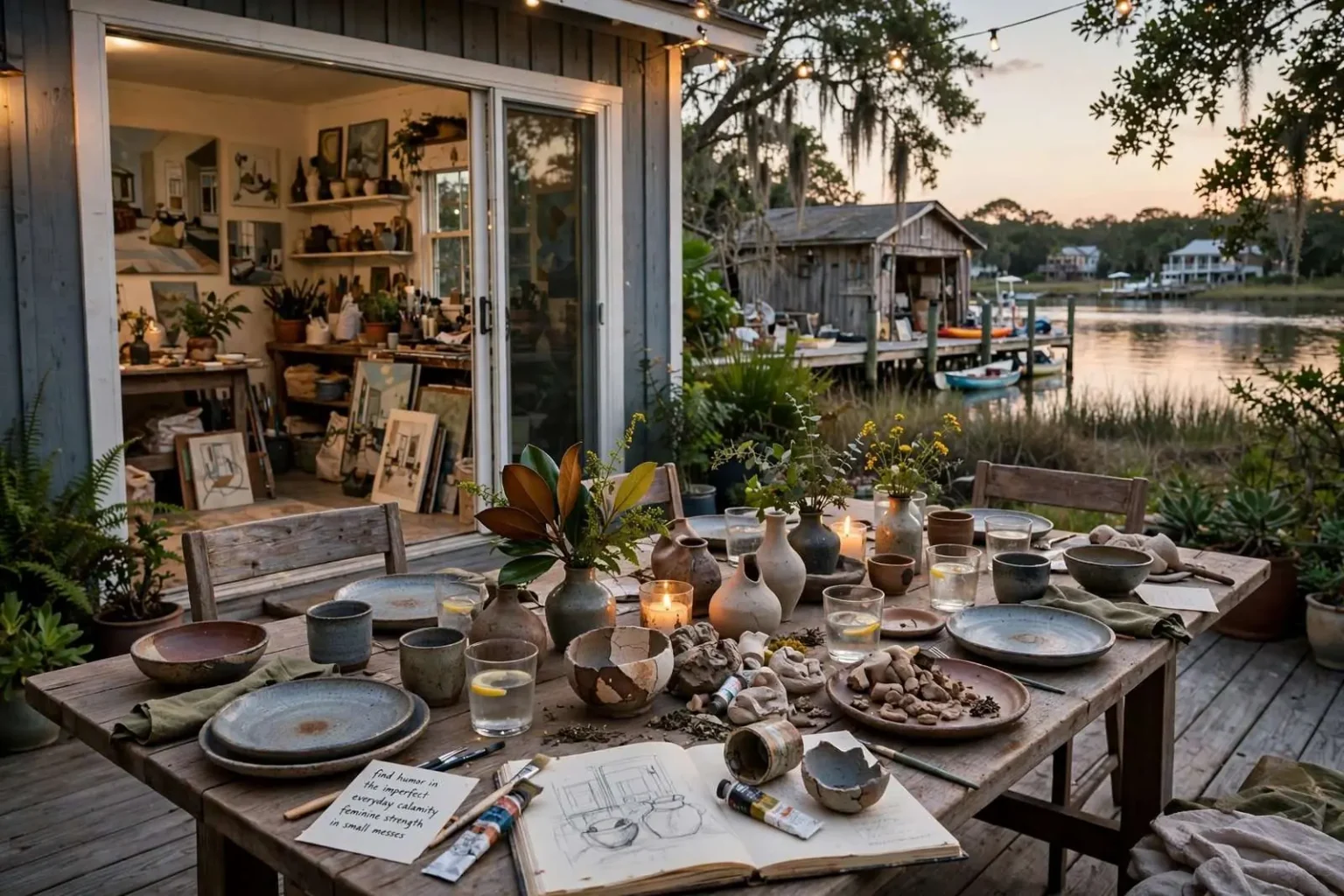
Alabama Contemporary is inviting guests into the home of a local artist for its next Artist Dinner, part of the organization’s ongoing effort to reimagine its programming as it transitions into what it calls a “museum without walls.” The event is scheduled for Thursday, Aug. 27, from 6 to 9 p.m. at The Artist’s Home in Mobile, Alabama, with the exact address to be provided to registered guests ahead of time.
The Artist Dinners have long been among Alabama Contemporary’s most popular offerings, prized for the intimate look they give patrons and neighbors into individual artists’ creative practices. This year, however, the organization is changing the format, moving the gatherings out of traditional galleries and event spaces and into the actual homes and studios of the local artists being featured. The change is more than cosmetic. It reflects a deliberate decision to treat the artist’s own environment as part of the experience, letting visitors see where work is imagined, stored, tested and, in many cases, made.
For this installment, guests will gather at the Dog River home of artist Colleen Comer to share a meal and a conversation about what it takes to sustain a creative practice in the Deep South. The setting is a departure from the white-wall formality of a museum opening. Rather than viewing finished work from across a gallery floor, attendees will sit down at the same table where the artist eats, plans and works, with her studio life visible all around them.
Dog River, which winds south into Mobile Bay on the city’s western side, is lined with the kind of modest waterfront homes, boat sheds and working docks that have long defined Mobile’s residential relationship with its waterways. Generations of Mobilians have built their lives along these creeks and bayous, and the neighborhood setting underscores the organization’s new approach, which treats the entire city, from downtown warehouses to residential peninsulas, as potential ground for its programming.
An Intimate Evening With Colleen Comer
Comer is expected to discuss her recent work during the evening, including how she finds humor and inspiration in imperfection, along with themes of feminine power drawn from everyday calamities and banalities. Those themes run through a body of work that looks for meaning in domestic accidents, small failures and the unglamorous routines of ordinary life, an approach that resonates with audiences who recognize their own households in it.
The dinner format is designed to give attendees a more personal connection to the artist’s process than a typical gallery opening or reception might allow. Conversation over a shared meal replaces the usual structure of a formal art talk, and the absence of a podium, microphone or projection screen is part of the point. Organizers say the questions behind an artwork, including why it was made, what it cost the artist to make it and where it fits in a life, tend to surface more naturally in a living room than in a lecture hall.
Guests are expected to come from a mix of backgrounds, from longtime supporters of contemporary art in Mobile to residents who have never attended one of the organization’s programs before. That blend is intentional. The Artist Dinner series has functioned as both a fundraiser and a doorway, giving newcomers a low-pressure, high-warmth introduction to work that can otherwise feel intimidating or out of reach.
For working artists across Mobile County, the dinner also represents a form of visibility that larger institutions do not always provide. By centering a local artist’s home rather than a civic venue, Alabama Contemporary signals that the region’s creative life is rooted in its neighborhoods as much as in its cultural districts, and that the people making work here are part of the community rather than apart from it.
Tickets and How Proceeds Will Be Used
Tickets are $75 per person and include both dinner and drinks. Organizers note that space is limited and registration is required in advance, as the dinner is designed to remain an intimate, small-group gathering rather than a large public event. The size cap is not a marketing tactic; it is what allows a single evening of genuine conversation around one table, and officials caution that seats typically go quickly once the host artist is announced.
Proceeds from the evening will benefit the construction of an education pavilion, a community kiln and a sculpture garden at AC Satellite, an arts education hub located in Downtown Mobile. The project reflects Alabama Contemporary’s broader push to expand hands-on arts education opportunities in the Mobile area, giving the community access to facilities like a shared kiln and dedicated outdoor space for sculpture work.
Each of the three planned additions fills a practical gap in the local arts landscape. A community kiln addresses one of the most persistent barriers for ceramics students and independent potters in the region, since kilns are expensive to buy, costly to run and impractical for most schools, home studios and neighborhood programs to maintain on their own. A shared, professionally managed kiln lets teachers, hobbyists and emerging artists fire work they could otherwise never complete.
The education pavilion will provide covered space for classes and workshops year-round, an important consideration on the Gulf Coast where summer heat, humidity and sudden storms routinely drive outdoor programming indoors. Dedicated, weather-protected room means drawing classes, printmaking demonstrations and youth camps can run on a dependable calendar rather than being canceled whenever the weather turns.
The sculpture garden, meanwhile, will give visitors a public place to encounter three-dimensional work without admission barriers, and will serve as an outdoor classroom where students can see large-scale fabrication and installation up close. Together, the three elements are meant to turn AC Satellite into a full-cycle arts education site, where a student might throw a first pot, watch it come out of the kiln, and study finished sculpture a few steps away.
Organizers describe the fundraising model behind the project as deliberately incremental, with events like the Aug. 27 dinner building the construction budget piece by piece rather than waiting on a single large grant. Each ticket sold moves the pavilion, kiln and garden closer to completion, giving attendees a direct, measurable stake in what gets built.
A “Museum Without Walls” Takes Shape
The Aug. 27 dinner is one of several ways Alabama Contemporary has restructured its signature programs this year as it moves away from a single physical museum location and toward a model built around partnerships, satellite spaces and events held throughout the community. Under the new approach, exhibitions, classes and social gatherings are distributed across venues and neighborhoods rather than concentrated under one roof, with AC Satellite serving as the growing anchor for education.
The strategy places the organization alongside a broader movement among mid-sized arts institutions nationally, which have increasingly looked past the traditional standalone building in favor of programming that travels to audiences. In a city like Mobile, where cultural participation varies widely from one neighborhood to the next, that distribution matters. An event in a Dog River home reaches residents who might never drive downtown for an opening, and a class at a satellite site reaches students whose schools offer little in the way of arts instruction.
Mobile’s wider arts calendar gives the new model plenty of ground to work with. The city already sustains a dense cycle of gallery nights, museum exhibitions, theater productions and festivals, anchored downtown and spreading outward through historic districts and commercial corridors. Alabama Contemporary’s shift positions it to plug into that existing rhythm rather than competing with it, showing up where audiences already gather.
For residents interested in the region’s contemporary art scene, the dinner offers a rare chance to spend an evening in direct conversation with a working artist, in the artist’s own home, rather than viewing finished work from a distance. Few formats short of a studio residency put patrons that close to the practical realities of making art, from the clutter of materials to the views and routines that feed a particular body of work.
The dinner also doubles as an introduction for anyone new to collecting or simply curious about contemporary art. Attendees see original pieces in a lived-in setting rather than a commercial one, which organizers hope lowers the psychological barrier that keeps many people from ever walking into a gallery. The message is that art belongs in ordinary homes, beginning with the host’s own.
Organizers frame the evening as both a celebration and an investment. Guests leave having met an artist personally, shared a meal on her own waterfront, and contributed to facilities that will serve students across the city for years. Registration and ticketing details are available through Alabama Contemporary, and those interested are encouraged to reserve early given the deliberately limited seating. As the organization’s “museum without walls” continues to take shape, the Dog River dinner stands as a clear statement of what the institution wants to become: less a building to visit than a presence woven through the neighborhoods of Mobile.