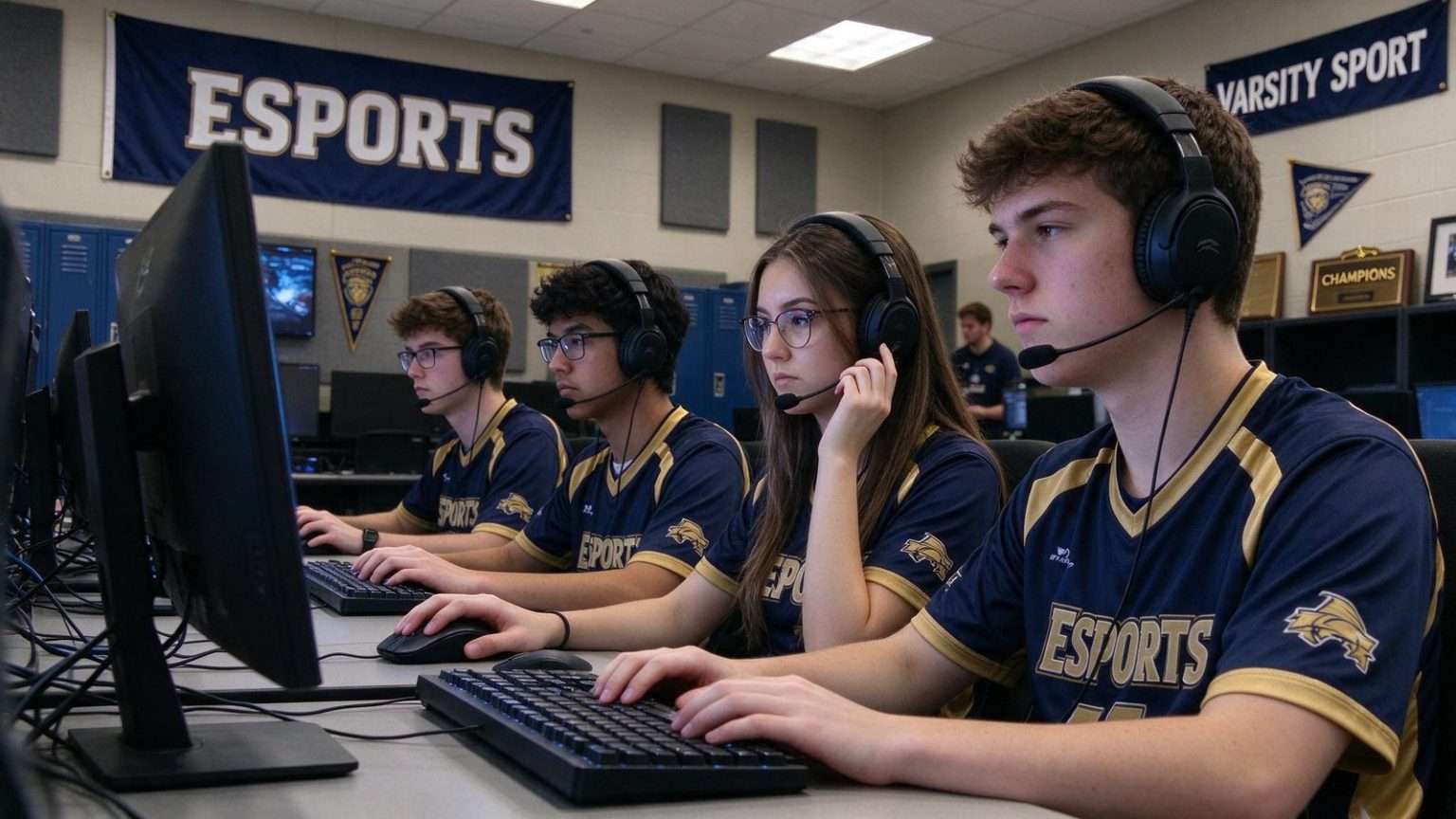
Electronic sports have arrived at high schools across Alabama, with the state becoming one of nine in the nation to offer ESports as a varsity sport. Students at Citronelle High School, Baker High School, and several other schools in Mobile and Baldwin counties are preparing for the official kickoff of the ESports season, trading cleats and courts for keyboards, mice and controllers. The move places competitive video gaming alongside football, basketball and baseball in the eyes of school administrators, complete with organized practices, official rosters and a regular-season schedule that counts toward league standings.
The shift represents one of the fastest expansions in the history of scholastic athletics in the state. Where schools once treated gaming as an extracurricular club that met after hours in a computer lab, it now carries the same varsity designation as any sport played under the Friday night lights. Athletic directors in Mobile and Baldwin counties say the low cost of entry has made adoption easier: most of the equipment schools need is already in place, and matches can be hosted in existing computer labs or media centers without building a single new facility.
How the League Works
The competitions are run by Play-VS, a platform that organizes scholastic ESports leagues and handles scheduling, matchmaking and standings for participating schools nationwide. The Alabama season features three games: League of Legends, a team-based strategy game that rewards coordination and long-range planning; Smite, a mythological battle-arena title played from a third-person perspective; and Rocket League, a fast-paced hybrid of soccer and driving that has become one of the most accessible competitive games for newcomers. Each title tests a different mix of reflexes, communication and strategy, and schools field separate teams for each game.
The structure mirrors traditional varsity sports in ways familiar to coaches and athletic directors. Teams hold regular practices, submit lineups before matches and compete on a published schedule, with results feeding directly into league standings on the Play-VS platform. Matches are played on campus rather than in distant arenas, which keeps travel costs near zero and allows schools of any size to participate. For smaller schools in north Mobile County and rural Baldwin County, that accessibility has been one of the strongest selling points of the program.
Because the games are played online, opponents can be matched across the region without buses, fuel or missed class time. A team in Citronelle can face a squad from the Eastern Shore in an afternoon match and still make it to after-school jobs and family dinners. Administrators say that flexibility has helped the sport spread quickly among schools that could never afford the travel budgets required by traditional away games, and it has opened competitive athletics to students who never tried out for a traditional team in the first place.
A Pathway to Higher Education
For students like Citronelle High School senior Jeremy Wilson, the new sport provides a pathway to higher education that simply did not exist a few years ago. “I’m a gamer at heart. I play games every time I go home, so having a way into college through gaming, that’s perfect,” Wilson said. His view is common among players who spent years honing their skills with no thought of reward, only to discover that the same pastime now appears on college recruiting forms alongside track times and batting averages.
The opportunities are significant. Play-VS reports that 200 colleges and universities across the country are offering almost $10 million in ESports scholarships. For families weighing the rising cost of tuition, the idea that hours spent gaming could translate into financial aid has changed the conversation at kitchen tables across the state. Recruiters now attend high school ESports matches, and universities have built dedicated gaming arenas, hired coaches and awarded roster spots the way they once scouted only quarterbacks and point guards.
University of Alabama ESports team member Erin Spaulding said the competitive gaming scene has grown dramatically in a short span of years. “League is one of the biggest games played competitively. The prize pool for that is absolutely insane. There’s a lot of money that goes into that game,” Spaulding said. Her program in Tuscaloosa is part of a broader wave of collegiate investment in competitive gaming, a wave that high school players in Mobile and Baldwin counties are now positioned to ride.
The scholarship pipeline also reshapes how students think about their screen time. What parents once framed as a distraction can now be presented as a discipline, with practice schedules, coaching feedback and measurable improvement. Guidance counselors in the area say the sport gives them a new way to connect with students who were never reached by traditional athletics, and early interest in the Alabama program suggests the pipeline from high school rosters to college tryouts will only widen in the years ahead.
More Than Button Mashing
ESports commentator and content creator Dustin Mouret noted that while competitive gaming may not require the same athletic ability as traditional sports, it demands great reaction speed, dexterity, accuracy and strategic thinking. “If you’re not going to stop them from playing a sport, why would you stop them from playing ESports?” Mouret said. His argument reflects a growing consensus among educators that the skills cultivated in competitive gaming deserve the same institutional support as those cultivated on a field or a court.
“I think it’s just as likely, if not more likely, they might be able to be successful in the industry,” Mouret said. The industry he describes extends well beyond the players themselves. Coaching, broadcasting, shoutcasting, graphic design, event operations and content production all support the competitive gaming economy, and students who enter high school programs are exposed to every one of those career paths. Supporters argue that the teamwork, communication and discipline students build on an ESports roster mirror exactly what traditional sports have always promised to teach.
Streaming as a Second Frontier
Beyond competing, students can also earn money through Twitch streaming, the live-broadcast platform where gamers play in front of real-time audiences. Paid streamers can earn income through subscriptions and donations, with dedicated streamers putting in four to ten hours daily to grow their channels. For teenagers already comfortable with cameras, chat windows and online communities, streaming offers a second route into the industry that does not depend on making a varsity roster or winning a championship.
Educators are quick to caution that the streaming route is demanding and unpredictable, with only a small fraction of broadcasters ever earning substantial income. Still, the skills involved — public speaking, marketing, video production and community management — transfer to plenty of conventional careers. The visibility of successful streamers has also given students another reason to take the varsity program seriously, treating practice time as an investment rather than a hobby.
School districts in both counties have also pointed to the academic side of the program. Eligibility rules for varsity ESports follow the same standards as other sports, meaning players must keep their grades up to stay on the roster. Teachers report that the requirement has already pushed some students to take coursework more seriously, since losing a spot on the team over grades is a risk no one wants to take during the sport’s debut season. That built-in accountability, administrators say, may prove to be one of the program’s most valuable byproducts.
Getting Ready for Kickoff
Wilson and his teammates at Citronelle High School have been preparing for weeks, practicing against advanced artificial intelligence opponents and scrimmaging against Baker High School to sharpen their coordination before the first official match. The scrimmages give coaches a chance to evaluate rosters, settle players into specific roles and work out communication habits before results begin to count. They have also built an early rivalry between the two schools, one that players expect to continue for years as the sport takes root.
Competitions officially began the week of February 25, putting Alabama’s first full varsity ESports season into motion. Students at Citronelle, Baker and the other participating schools in Mobile and Baldwin counties now settle in for a schedule of weekly matches, with standings updated on the Play-VS platform and a path that could eventually lead to playoff brackets and collegiate attention. For the seniors on this first roster class, the timing is bittersweet but exciting: they are the pioneers whose seasons will define what ESports looks like in Alabama for everyone who follows.
What happens next will be watched closely by administrators across the state. If the inaugural season produces competitive teams, engaged students and even a few scholarship offers, more school systems are expected to join the league in future years. Either way, the students who gathered in computer labs this winter have already made history as the first varsity ESports athletes in Alabama, and their opening week of competition marks the beginning of a new chapter in state high school athletics.