Alabama Issues Three Medical Cannabis Dispensary Licenses, Approves Five Certifying Physicians
Alabama regulators issued three medical cannabis dispensary licenses and approved five physicians to certify patients for the state program.
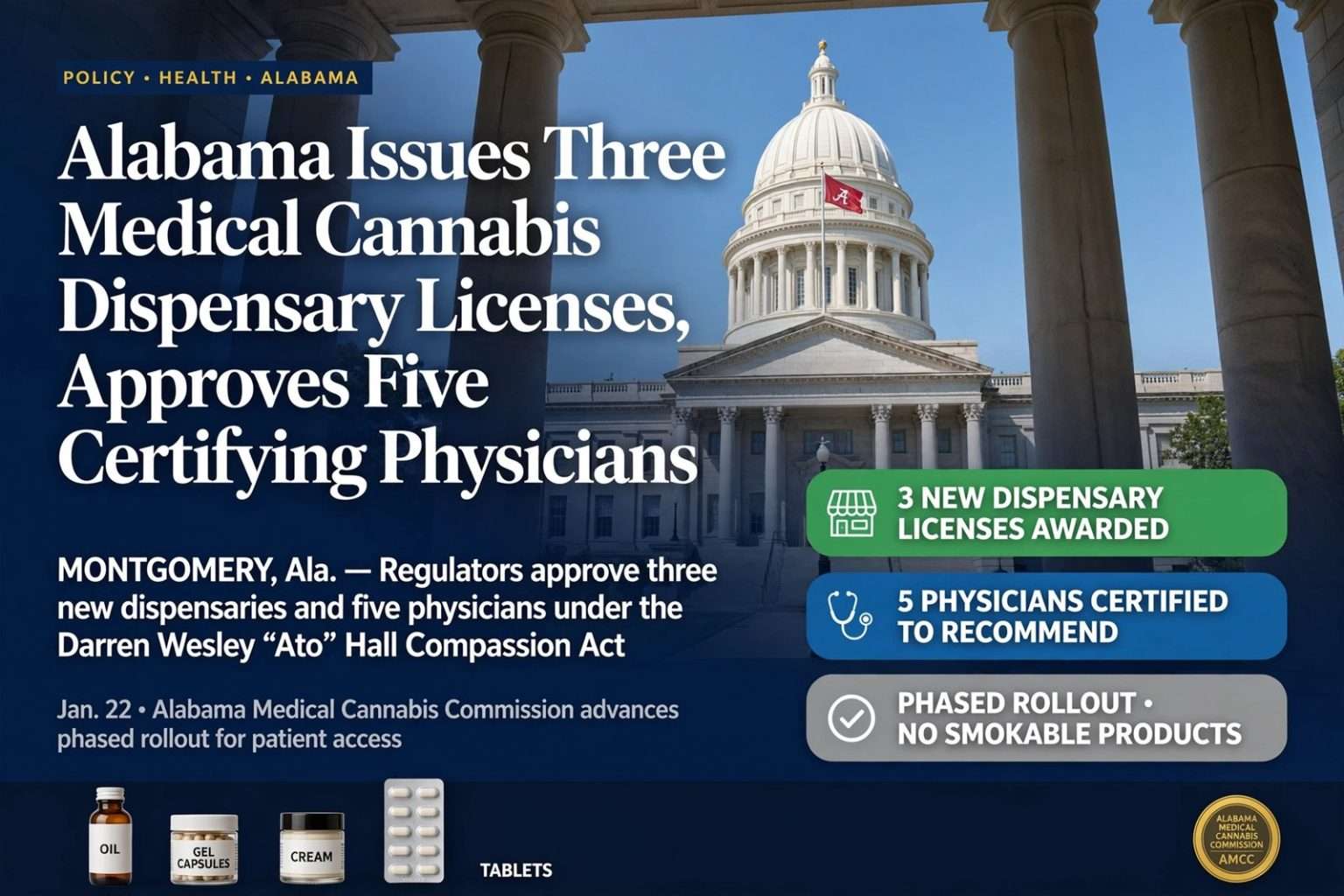
MONTGOMERY, Ala. — Alabama regulators this week issued three new medical cannabis dispensary licenses and approved five physicians to certify patients for the state’s medical cannabis program.
The actions are part of the continuing implementation of the Darren Wesley “Ato” Hall Compassion Act, the law that legalized medical cannabis in Alabama and placed oversight with the Alabama Medical Cannabis Commission (AMCC).
The announcement was made in a Jan. 22 press release from Chey Lindsey Garrigan, president of the Alabama Cannabis Industry Association.
Dispensary licenses
The AMCC confirmed that the three dispensary licenses have been awarded, expanding the number of locations authorized to dispense medical cannabis products to qualified patients.
Licensed dispensaries may sell approved products, including tablets, gels, oils, creams and other non-smokable forms allowed under Alabama law. State officials said dispensaries must meet regulatory requirements, including product tracking, security protocols and patient verification procedures, before becoming fully operational.
Physician approvals
The five physicians were approved by the Alabama Board of Medical Examiners and the Medical Licensure Commission. Under Alabama law, only physicians who meet statutory training and registration requirements may recommend medical cannabis.
Qualifying conditions include chronic pain, post-traumatic stress disorder, cancer-related symptoms, epilepsy, Crohn’s disease and other conditions specified in the statute and in AMCC rules.
Phased rollout
Regulators said full statewide access will occur in phases. Before opening to patients, dispensaries must complete final inspections, inventory approvals and integration with the state’s seed-to-sale tracking system.
The AMCC has said additional licensing actions and regulatory updates are expected in the coming months as the program moves toward full operation. Alabama’s program prohibits smokable products.