Alabama Opens Red Snapper Season to Private Anglers for July 4th Weekend
Alabama's Marine Resources Division will open state and federal waters to red snapper harvest for private and charter anglers on July 4th, with a two-fish daily limit and a 16-inch minimum size.
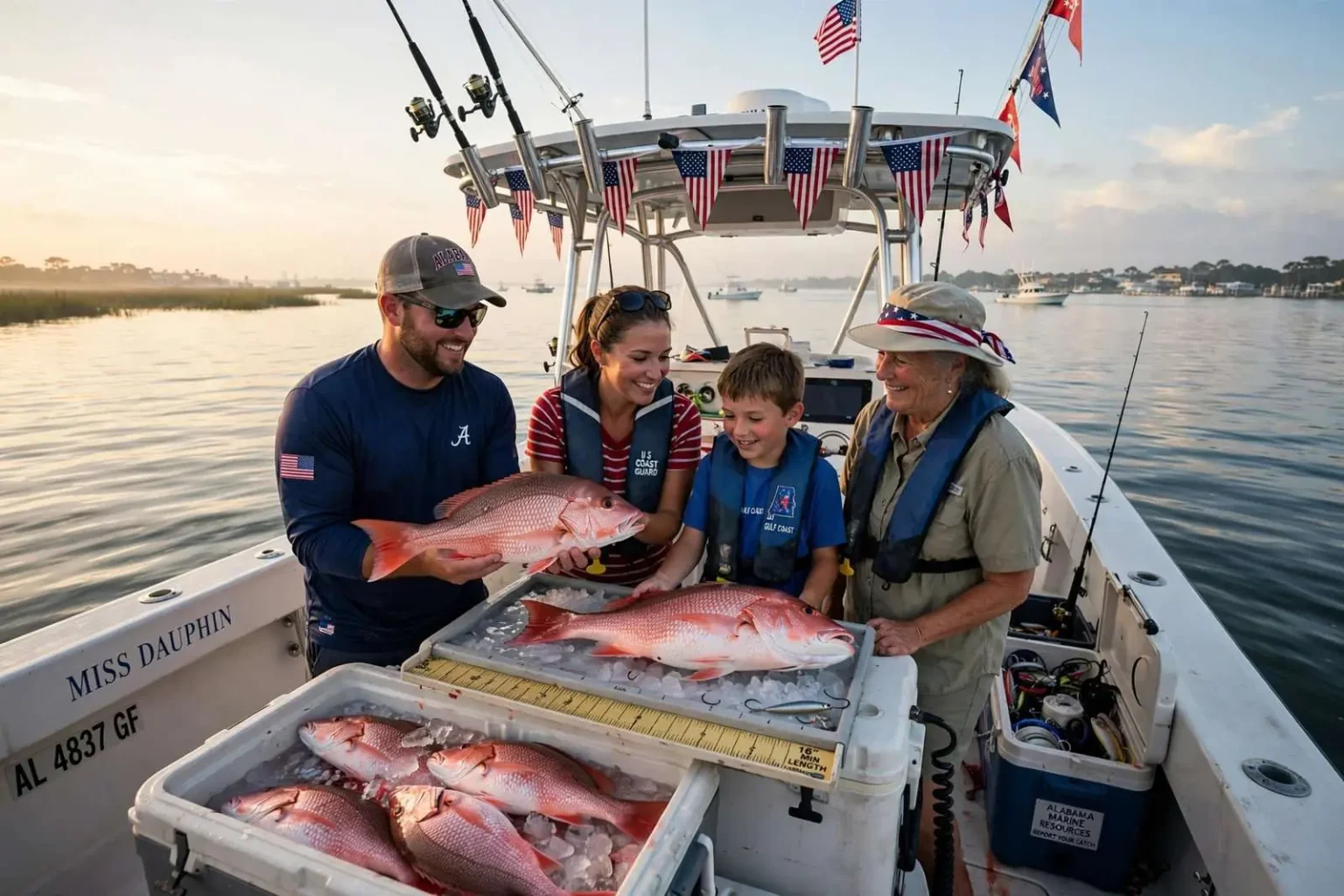
Alabama’s Marine Resources Division has announced that both state and federal waters off the Alabama coast will open to red snapper harvest for private recreational anglers and state-licensed charter vessels on Independence Day, giving Gulf Coast fishing families a chance to bring in one of the region’s most sought-after catches for the holiday. The synchronized opening means a boat leaving from Gulf Shores, Orange Beach, Dauphin Island or Fort Morgan can target red snapper across state and federal waters alike on the Fourth of July without worrying about a jurisdictional line changing what is legal midway through the trip.
“The Fourth of July is traditionally a day when families spend time together on the water,” said Marine Resources Division Director Scott Bannon. “We are thankful to be in a position to provide the opportunity for people to catch red snapper this independence day.”
The announcement carries particular weight along the Alabama Gulf Coast, where a Fourth of July fishing trip is a tradition for many families and where charter boat operations count on holiday weekends for a large share of their annual business. Opening day falling on the holiday itself means the busiest boating day of the summer and the most anticipated day of the fishing calendar arrive together, with marinas, bait shops, and boat ramps from Mobile Bay east to Perdido Pass expecting heavy traffic before dawn.
A Tightly Managed Fishery
Red snapper season along the Gulf Coast is tightly managed, with state and federal fisheries regulators setting specific open dates and catch limits each year to keep the fish population sustainable. Alabama’s Marine Resources Division, part of the Alabama Department of Conservation and Natural Resources, oversees both the recreational and commercial rules that govern the fishery in state waters and coordinates with federal regulators on days when state and federal waters open in tandem, as is the case for this July 4th opening.
The division’s biologists and enforcement officers work from a base that includes facilities on Dauphin Island, putting agency staff close to the boat launches and passes where much of the red snapper fleet begins its run offshore. The coordination with federal partners matters because federal waters begin where Alabama’s state jurisdiction ends, and anglers who range farther offshore in pursuit of larger snapper need to know that the rules they left port under still hold miles from land.
Alabama’s state waters extend farther out than those of most Gulf states, giving private anglers a broader inshore zone where state seasons and limits govern. That expansion of state authority was pursued in large part because of the importance of the snapper fishery to coastal Alabama, and it has made the state a frequent advocate for maximizing recreational fishing opportunity while conservation data is used to guide quota decisions year to year.
Know the Limits Before You Go
Anglers heading out for the holiday are reminded of the specific limits that apply. The daily bag limit is two red snapper per person, per day, and any fish kept must meet a minimum size limit of 16 inches in total length. Wildlife officials routinely stress that these limits apply per angler on the boat, not per boat, and that anglers should be prepared to measure their catch accurately before deciding whether to keep it.
Measuring a fish on a rocking deck is harder than it sounds, and enforcement officers stress that a short fish should go back immediately rather than being placed on ice in the hope that nobody checks. Total length is measured from the tip of the snout to the tip of the tail, and a fish that measures 15 and three-quarter inches does not round up. Charter customers should also understand that the two-fish bag limit counts the fish they keep, so crew members who help customers sort through a mix of sizes are working within the same rules as everyone else on the water.
The per-angler distinction is worth emphasizing for families. A boat carrying four licensed anglers can keep up to eight red snapper in a day if every fish meets the size minimum, while a boat with two anglers is capped at four fish regardless of how much room remains in the cooler. Keeping a written tally on deck is a simple habit that prevents an honest mistake from becoming a violation when officers board for a routine check at the ramp or offshore.
The seasonal openings also carry a learning curve for newer anglers. Red snapper gather tightly around structure, so a boat that anchors or holds position directly over a wreck typically catches faster than one drifting across open bottom, and circle hooks with natural bait tend to produce fewer gut-hooked fish than treble-hook rigs. Handling a fish quickly and releasing it with care helps more of the short fish survive to grow past the size limit, a practice regulators point to when they weigh how much fishing the population can absorb in future years.
Why Red Snapper Matters Here
Red snapper has long been one of the signature catches of the Alabama Gulf Coast, prized both for its size and its taste, and the species draws recreational anglers from across the region during the limited windows when the season is open. The fish favor the hard-bottom areas and artificial reefs scattered across the Gulf floor off Alabama, where the state has spent decades building one of the most extensive artificial reef programs in the country. Old ships, concrete structures and other materials deposited on permitted reef sites have created habitat that holds snapper within reach of even modest bay boats on calm summer days.
That proximity is part of what makes Alabama’s snapper fishery distinctive. Anglers fishing out of Orange Beach or Dauphin Island can be over productive bottom in less time than it takes boaters in many other ports just to reach their first stop, which helps explain why the fishery supports such a deep network of charter businesses, tackle shops, and marine trades along the coast. When a season opening coincides with a holiday weekend, the economic ripple runs from the fuel dock to the fish cleaning stations to the restaurants that cook the day’s catch for visiting families.
Planning a Holiday Trip
Families planning a Fourth of July run offshore should build in extra time for the realities of a holiday launch. Public ramps along Mobile Bay and at the beach communities fill well before sunrise on the holiday, and lines at the fuel dock can stretch long as operators top off tanks for the season opening. Experienced anglers recommend having all safety equipment inspected, licenses purchased and cooler space organized the night before so the boat can leave the dock at first light, when the ride offshore is smoothest and the fish are most active.
Weather is the other constant variable on the Gulf in early July. Afternoon thunderstorms build quickly over the water this time of year, and the same compressed season structure that makes a holiday opening valuable also encourages anglers to push their window. Anyone heading out should check the marine forecast before leaving the dock, keep an eye on the western sky while fishing, and remember that a full bag limit is never worth outrunning a squall to reach the ramp.
Season Dates Can Shift
Because red snapper season dates can shift from year to year based on quota calculations and population data, anglers are encouraged to check current Marine Resources Division information before making plans. The number of open days available in a given year depends on how quickly the recreational quota is projected to be reached, and regulators adjust the calendar to keep total harvest within the limits set for the stock. A season that stretches across much of the summer one year may be far shorter the next, which is why a fixed date like July 4th carries so much weight with the fishing public when it lands on the calendar.
Anglers should also confirm whether any harvest reporting requirements are in place before they leave the dock, since the division uses reported landings to track how the quota is being used and to inform future season decisions. The agency posts current openings, limits, and reporting instructions through its official channels, and checking that information the evening before a trip takes only minutes.
For Gulf Coast families, though, the bottom line this Independence Day is simple. State and federal waters will both be open, the weather outlook is a matter for the forecast rather than the rulebook, and one of the region’s favorite fish is on the table of legal targets for anyone with a boat, a bait, and a plan. Banners of red, white and blue will fly over the marinas as usual, and this year the red will be swimming in the coolers of anglers who made the most of the opportunity the division has opened for the holiday.