The Alabama Department of Conservation and Natural Resources (ADCNR) is urging hunters and anglers to practice social distancing as the state’s spring turkey season opens Saturday, March 21, amid the COVID-19 outbreak. With public health officials asking Alabamians to keep their distance from one another, the state’s conservation agency is adapting how it serves the public while keeping the outdoors open for the season that draws thousands of hunters into Alabama’s woods each spring.
Conservation Commissioner Chris Blankenship said the department takes the precautions and recommendations seriously, acknowledging that many Alabamians want to get outdoors during spring for recreational opportunities. “We know many Alabamians want to get outdoors during the spring and enjoy some recreational opportunities that can refresh in these challenging times; just remember, we must do so safely,” Blankenship said. The message pairs two things the department considers compatible: continuing the state’s outdoor traditions and following the health guidance that public officials have asked everyone to observe.
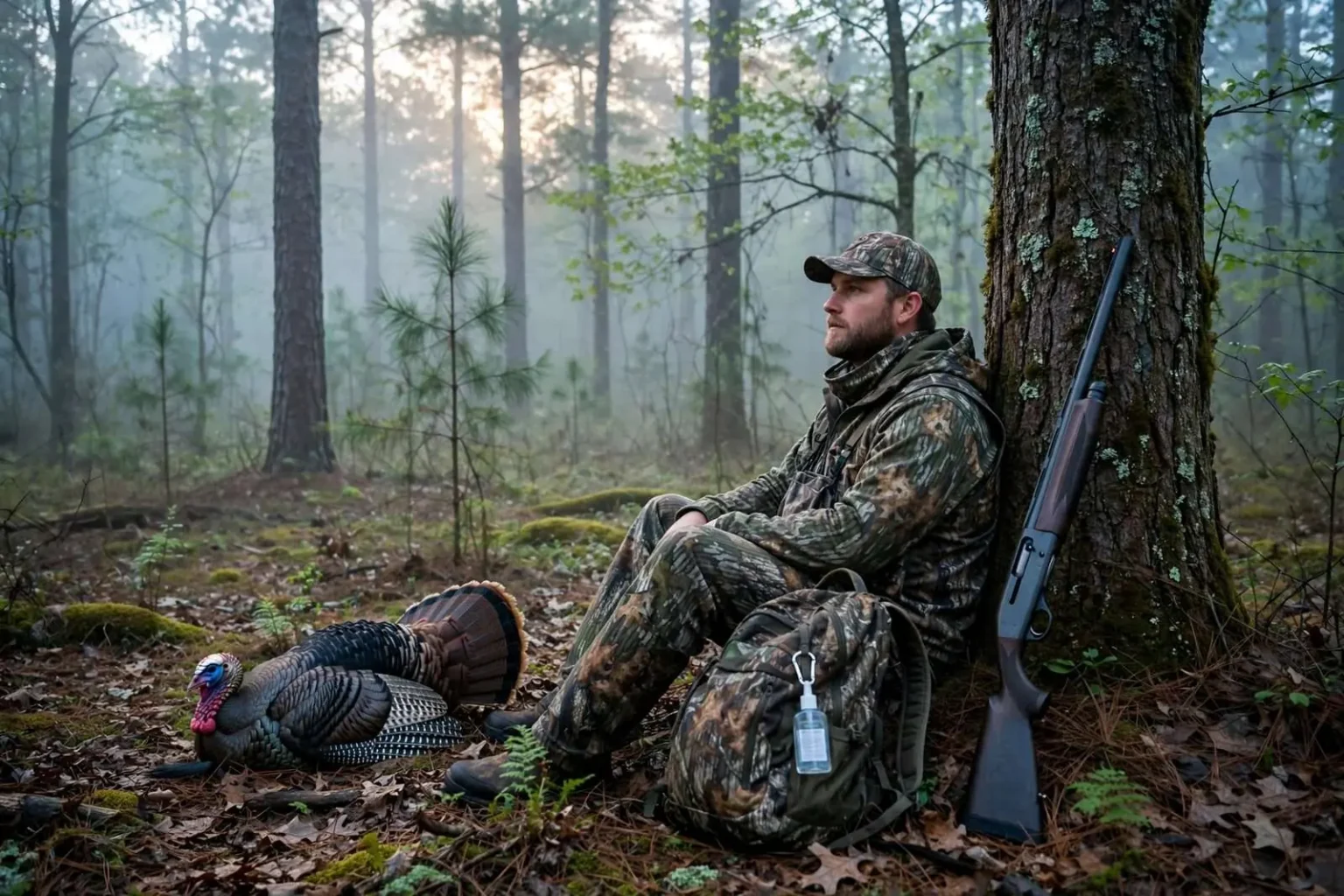
Hunting, by its nature, lends itself to solitude. Turkey hunting in particular is a solitary pursuit — a hunter sits alone against a tree in the dark, calls to a gobbler at first light, and spends the morning in the woods without another person in sight. That structure makes the sport one of the easiest to enjoy under social distancing guidelines, a point not lost on the officials balancing public health against public access during the pandemic’s first spring in Alabama.
What Changes for the Division
Chuck Sykes, director of Alabama Wildlife and Freshwater Fisheries (WFF), said his division’s operations will not change much under the new measures. He noted that WFF staff have essentially been practicing social distancing for years, working alone and outdoors for the most part. The division’s biologists, technicians and law enforcement officers spend their days in the field — checking deer harvest data, surveying habitat, patrolling WMAs — rather than in crowded offices, so the core work of managing Alabama’s wildlife continues largely as before.
The main change the public will notice is that WFF district offices and the Montgomery headquarters will be closed to walk-in traffic. The closure affects hunters and anglers who would normally stop by to buy licenses, ask questions or drop off samples for testing. Business that would have been conducted across a counter now moves to the telephone and the state’s online licensing system, which the division has urged customers to use during the closure period.
A skeleton staff will remain to handle phone calls and answer Game Check questions, which will be forwarded to officers and biologists in the field. Game Check — the state’s mandatory harvest reporting system for deer and turkey — remains in effect during the season, and hunters who have trouble with the system are asked to call rather than skip the requirement. Conservation enforcement officers and biologists in the field can resolve reporting questions directly, keeping the data flowing even with the offices closed to visitors.
Public Lands Remain Open
Wildlife management areas, public shooting ranges, and public lakes remain open — a decision that keeps Alabama’s sprawling public hunting and fishing infrastructure available at a moment when demand for outdoor recreation is expected to rise. The state’s wildlife management areas cover hundreds of thousands of acres across every region of Alabama, from the pine hills of the coastal plain to the mountains of the northeast, and they anchor the state’s tradition of public hunting. Public shooting ranges give hunters a place to pattern a shotgun or sight in a rifle before the season, and the state’s public fishing lakes offer bank and boat fishing in communities across the state.
Keeping those facilities open comes with an expectation that users follow the same distancing guidance that applies everywhere else. Hunters gathering at a WMA check station, shooters waiting for a lane at a range, and families launching boats at a public lake have all been asked to maintain appropriate space from other parties, bring their own equipment and supplies, and avoid congregating. The outdoors has room for everyone, officials note, but only if users spread out to use it.
Blankenship encouraged families to explore the state’s natural wonders responsibly, especially with children out of school and many parents at home. The sudden closure of schools and workplaces in March 2020 left families searching for activities that are both enriching and safe, and the department has positioned Alabama’s outdoors as an answer: state parks, WMAs, rivers and public lakes offer recreation that requires no ticket counter and no crowd, only a license, a little gear and a willingness to get outside.
The Season Ahead
Spring turkey season is one of the most anticipated dates on Alabama’s outdoor calendar. The season’s opening brings hunters afield at first light, calling to gobbling toms as the woods wake up, in a ritual that generations of Alabama families have passed down. The pursuit demands patience, woodsmanship and more than a little luck, and its participants prize the solitude of the spring forest as much as the harvest itself.
Hunters heading to leases or state land for the opening of turkey season are reminded to maintain appropriate distance from others and follow all public health guidelines while enjoying Alabama’s outdoor traditions. On private leases, that generally means hunting with members of your own household or alone; on public WMAs, it means choosing entry points away from other vehicles and giving other parties space at check stations and parking areas.
The department’s approach in the pandemic’s first weeks became a template other states watched: keep the outdoors open, move office business online and to the phone, and lean on the natural spacing of the state’s traditional outdoor sports. For Alabama hunters and anglers, the message from Montgomery is straightforward — the fish are still biting, the gobblers are still talking, and the woods are open to anyone willing to enjoy them safely, responsibly and at a distance.
Why the Outdoors Matters in a Crisis
The department’s push to keep recreation available reflects a broader understanding of what happens to people during prolonged public health emergencies. Health professionals have long linked outdoor activity to reduced stress, better sleep and improved mental well-being, and the disruptions of March 2020 — closed schools, remote work, empty schedules and constant news — made those benefits more valuable than ever. Alabama’s conservation leadership has argued that the state’s woods and waters are, in a real sense, part of the public health infrastructure during a crisis.
The state’s outdoor economy also has stakes in the outcome. Hunting, fishing and wildlife watching generate billions of dollars in economic activity nationally, and in rural Alabama counties — where outfitters, sporting goods stores, motels, restaurants and fuel stations depend on season traffic — a shut-down spring season would have rippled through local economies already fragile. Keeping seasons open, where health guidance allows, protects both tradition and livelihood.
Licenses matter in this equation as well. Sales of hunting and fishing licenses fund the very programs that maintain WMAs, ranges and public lakes, with federal excise taxes on equipment channeled back to states through conservation programs. Hunters who buy their licenses and check their harvests are, in effect, financing the public lands they hunt — a cycle officials hope continues even with offices closed, since the online licensing system keeps the pipeline running without face-to-face contact.
A Reminder About the Rules That Never Paused
Even amid the pandemic adjustments, the state’s hunting regulations remain fully in force. Season dates, bag limits, legal shooting hours and equipment rules apply exactly as published, and conservation enforcement officers continue to patrol public lands and check hunters in the field. The closure of district offices does not suspend enforcement — officers remain on duty, and the skeleton staff answering phones keeps the agency’s lines of communication open.
Hunters are also reminded that Game Check reporting remains mandatory for turkey and deer harvests, and that the reporting system exists to give biologists the harvest data used to set seasons and manage populations. A spring season conducted during a pandemic still produces data, and biologists still need it; hunters who report their birds promptly help the division make sound decisions for future seasons regardless of what else is happening in the world.
As the season opens, the department’s guidance boils down to a few practical habits: hunt close to home when possible, keep groups to household members, carry hand sanitizer alongside the usual gear, and treat other hunters in the field with the same distancing courtesy the state has asked of everyone. Alabama’s spring woods offer more room than almost anywhere else a person could be in these weeks — and for the hunters carrying on one of the state’s oldest traditions, that solitude has always been part of the draw.